
Best Cardio Workout for Endurance: Ultimate 2025
Why Building Endurance is Your Ultimate Fitness Goal
The best cardio workout for endurance depends on your fitness level and preferences, but research consistently shows these options deliver the strongest results:
- High-Intensity Interval Training (HIIT) – Improved endurance by 38-79% in studies
- Steady-State Cardio (running, cycling, swimming) – Builds aerobic base when done 3-5 days weekly for 150+ minutes
- Sprint Interval Training – Boosted endurance by 4-13.5% in just 2-8 weeks
- Cross-Training (rowing, elliptical, stairs) – Prevents injury while building diverse cardiovascular capacity
Ever feel like your energy levels are stuck on low? Wishing you had the stamina to chase after your kids, tackle that ambitious hiking trail, or simply power through your workday without hitting the afternoon slump?
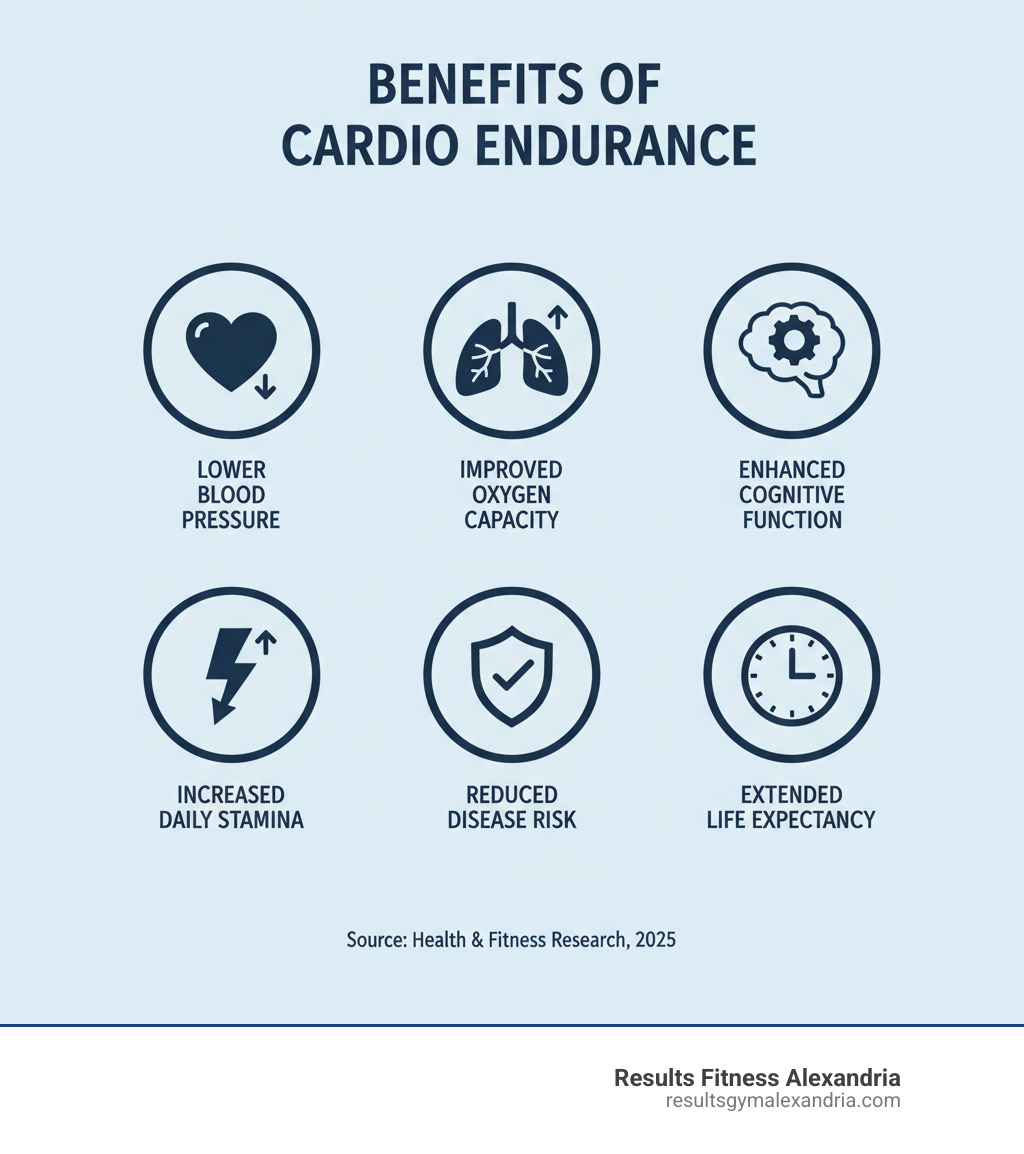
Cardiovascular endurance – your heart and lungs’ ability to supply oxygen to your muscles during sustained activity – is the foundation of lasting fitness. When you improve this aerobic fitness, you’re not just training for performance. You’re investing in a healthier heart, lower blood pressure, reduced disease risk, and more energy for everything life throws at you.
The rewards extend beyond the gym. Strong cardiovascular endurance means carrying groceries without getting winded, playing with your kids without exhaustion, and completing everyday tasks with ease. Research shows it can help lower your resting heart rate, improve cholesterol levels, boost brain function, and even extend your lifespan.
Getting started doesn’t require fancy equipment or hours of free time. Adults should aim for at least 150 minutes of moderate-intensity cardio weekly – that’s just 30 minutes, five days a week. Start small if you’re new to exercise, gradually building up duration and intensity. The key is finding activities you actually enjoy, because consistency beats perfection every time.
I’m Jennifer Rapchak, Fitness Director at Results Fitness Alexandria with over 14 years of experience designing cardio programs that help members find the best cardio workout for endurance based on their unique goals and fitness levels. Through personalized coaching and structured programming, I’ve helped hundreds of people transform their cardiovascular health and build the stamina they need for life. Let’s explore how you can do the same.
Basic best cardio workout for endurance glossary:
Structuring Your Endurance Program for Success
Building lasting endurance isn’t about jumping into intense workouts and hoping for the best. It’s about following a smart, structured approach that gets you results while keeping you healthy and motivated. That’s where the FITT Principle becomes your best friend.
FITT stands for Frequency (how often you exercise), Intensity (how hard you work), Time (how long each session lasts), and Type (which activities you choose). This framework helps us design the best cardio workout for endurance based on where you’re starting and where you want to go.
Here’s what research shows works: The Physical Activity Guidelines for Americans, 2nd edition recommend 150 to 300 minutes of moderate-intensity activity each week for adults. That might sound like a lot, but it breaks down to just 30 minutes a day, five days a week. If you prefer pushing harder, 75 minutes of vigorous activity weekly does the trick. At Results Fitness Alexandria, we typically aim for three to five cardio sessions weekly as a solid foundation.
Every smart workout starts with a proper warm-up. This isn’t just about injury prevention (though that’s important). It’s about preparing your body to actually perform well. Spend 5-10 minutes gradually raising your heart rate and increasing blood flow through the activity you’re about to do, just at a lower intensity. Light jogging, arm circles, or leg swings get your muscles ready for action.
The cool-down matters just as much. After you’ve pushed your limits, take another 5-10 minutes to gradually bring your intensity down. This helps your heart rate return to normal, prevents blood from pooling in your legs, and creates the perfect opportunity for stretching. These flexibility exercises, like the ones we explore in How Yoga Can Help Improve Your Flexibility, speed up recovery and keep your muscles functioning properly.
Now let’s talk about the secret sauce of endurance training: progressive overload. This principle is simple but powerful. As your body adapts and gets stronger, you need to gradually increase the challenge. Maybe you add five minutes to your session, bump up the resistance, or pick up your pace slightly. The key word here is gradually. Listen to your body and avoid increasing your time or distance by more than 10-20% each week. This steady approach, which we dive deeper into in The Power of Progressive Overload: How to Keep Getting Stronger, prevents burnout and injury while delivering consistent results.
Gauging Your Effort and Tracking Progress
How do you know if you’re working hard enough? Or maybe too hard? Measuring your intensity takes the guesswork out of endurance training. We rely on two primary methods that work together beautifully.
The Rate of Perceived Exertion (RPE) scale is wonderfully straightforward. You rate your effort from 0 (sitting on the couch) to 10 (absolute maximum). According to the National Academy of Sports Medicine, moderate intensity typically feels like a 3-4, where you can still chat but you’re clearly exercising. Vigorous intensity, where the real endurance magic happens, sits at 5-7. At that level, holding a conversation becomes challenging.
For a more precise approach, Target Heart Rate zones give you objective numbers to work with. Start by calculating your maximum heart rate (MHR) by subtracting your age from 220. For steady-state cardio that builds endurance, aim for 60-80% of your MHR. Zone 2 training, which keeps you between 60-70% of maximum, is particularly effective for building mitochondria and improving how efficiently your body uses oxygen.
Tracking your progress keeps you motivated and helps us fine-tune your program. While elite athletes measure VO2 max (the maximum oxygen your body can use per minute), you can track progress with simpler methods. Time yourself walking or running a set distance, or simply note how much longer you can sustain an activity compared to last month. Cleveland Clinic’s guide on How To Improve Cardiovascular Endurance explains more about these measurements. Celebrating these milestones, no matter how small, keeps you moving forward.
The Importance of a Balanced Routine
Cardio might be the star of your endurance journey, but it performs best with a strong supporting cast. The most effective fitness routines balance cardiovascular work with strength training and flexibility.
Strength training isn’t just about building muscle. It’s a game-changer for endurance. Stronger muscles generate more power, work more efficiently, and withstand the repetitive stress of cardio activities better. This means you can sustain your efforts longer and with less risk of injury. Our article on Maximizing Results: Integrating Strength Training into Your Cardio Routine shows exactly how strength work supports your cardiovascular efforts. We typically recommend two to three strength sessions weekly, hitting all major muscle groups.
Flexibility and mobility often get pushed to the side, but they’re essential for recovery and performance. Regular stretching and practices like yoga, detailed in How Yoga Can Help Improve Your Flexibility, improve your range of motion, reduce muscle soreness, and help prevent injuries. When you’re more flexible, you show up for your cardio workouts feeling better and ready to perform.
This balanced approach creates natural cross-training benefits. Different activities work different muscle groups, preventing your body from adapting too much to any single exercise. Plus, variety keeps things interesting, which is absolutely vital for staying motivated over the long haul.
The goal isn’t perfection. It’s creating a sustainable schedule you actually enjoy and can stick with for years. At Results Fitness Alexandria, we help you find that sweet spot where challenge meets enjoyment, building endurance that lasts.
Finding the Best Cardio Workout for Endurance
Here’s the truth about finding the best cardio workout for endurance: it’s deeply personal. What works brilliantly for your neighbor might bore you to tears, and that matters more than you might think. The secret ingredient isn’t the trendiest workout or the most intense program – it’s choosing activities you genuinely enjoy.
Why does enjoyment matter so much? Because you’ll actually stick with it. You can have the most scientifically perfect training plan in the world, but if you dread every session, you won’t last long enough to see results. Consistency beats perfection every single time when it comes to building endurance.

At Results Fitness Alexandria, we’re big believers in mixing and matching workouts. Variety keeps things fresh, challenges your body in different ways, and helps prevent the mental burnout that comes from doing the same thing day after day. Our approach, detailed in Cardio Training for Better Endurance, helps you find which combinations work best for your lifestyle and goals.
Steady-State Cardio: The Foundational Workout
Think of steady-state cardio as the reliable friend who’s always there for you. This approach involves maintaining a moderate, consistent intensity for an extended period – typically 30 minutes or longer. You’re working hard enough that you know you’re exercising, but not so hard that you can’t hold a conversation.
This is where you build your aerobic base, the foundation that supports everything else you’ll do. Your heart becomes more efficient at pumping blood, your lungs get better at processing oxygen, and your muscles learn to use that oxygen more effectively. It’s like building a strong house – you need a solid foundation before you add the fancy features.
Steady-state training is particularly ideal for beginners who are just starting their fitness journey. If you’re new to cardio, our guide Building Cardio Endurance for Beginners walks you through exactly how to get started without overwhelming yourself.
The beauty of steady-state cardio is its versatility. Running or jogging remains a classic choice because it’s straightforward and effective – just lace up your shoes and go, whether that’s outdoors or on our Treadmill Endurance Workouts. Brisk walking is an often underestimated powerhouse, especially when you add inclines or vary your pace. Cycling, whether on a stationary bike or out on the road, builds incredible leg endurance while being gentle on your joints. And swimming delivers a complete full-body workout that strengthens your cardiovascular system while being one of the best Low Impact Cardio options available.
High-Intensity Interval Training (HIIT): The Ultimate Endurance Booster
If steady-state cardio is your reliable friend, HIIT is the exciting adventure that pushes you to new heights. High-Intensity Interval Training alternates short bursts of maximum-effort exercise with brief recovery periods, and the results can be dramatic.
The science behind HIIT is impressive. A study found that HIIT improved people’s cardiovascular endurance by an astounding 38% to 79%. That’s not a typo – we’re talking about massive improvements in relatively short periods. The magic happens because HIIT creates what’s called the “afterburn effect,” where your body continues burning calories at an liftd rate long after you’ve finished exercising.
A typical HIIT session might look like this: 30 to 60 seconds of all-out effort where you’re giving everything you’ve got, followed by 60 to 90 seconds of active recovery where you’re moving but catching your breath. Repeat this cycle for 20 to 30 minutes, and you’ve completed a workout that delivers serious endurance gains.
The best part? You don’t need a fancy gym or expensive equipment to do effective HIIT workouts at home. Burpees challenge your entire body and send your heart rate soaring. Mountain climbers work your core while building cardiovascular capacity. Squat jumps develop explosive power in your legs while testing your endurance. Jumping jacks provide a quick, effective way to spike your heart rate between other exercises.
Our article Why You Should Give HIIT Exercises a Try offers more detailed guidance on incorporating this powerful training method into your routine safely and effectively.
Cross-Training: Your Secret Weapon for a Lasting Cardio Habit
Let’s be honest – doing the same workout every single day gets old fast. That’s where cross-training becomes your secret weapon. By mixing different cardio activities throughout your week, you’re not just fighting boredom; you’re actually building better, more sustainable endurance.
Cross-training prevents overuse injuries by distributing the stress across different muscle groups and joints. When you run every day, you’re constantly pounding the same muscles and joints in the same way. Add swimming or cycling to the mix, and suddenly you’re giving those overworked areas a break while still building cardiovascular capacity.
Beyond injury prevention, cross-training keeps your workouts engaging and fun. The variety means you’re less likely to hit that wall where you dread your next workout. Each activity challenges your cardiovascular system and muscles in unique ways, leading to more well-rounded fitness. Take cross-country skiing, for example – it’s an incredibly demanding full-body workout that recruits numerous muscle groups and offers a resistance training element you simply don’t get from running alone.
Imagine you’re a runner looking to build endurance while staying injury-free. Your cross-training week might include two days of running to maintain your primary focus, one day of swimming for cardiovascular health without impact, one day of cycling to build leg endurance differently, and one day of rowing for a complete full-body cardiovascular workout that engages the majority of your muscles.
This varied approach builds comprehensive cardiovascular capacity while giving specific muscle groups the recovery time they need. We explore this concept in depth in How to Create a Balanced Fitness Routine Combining Cardio, Strength, and Flexibility, showing you exactly how to structure a week that keeps you excited about exercise while delivering real results.
Fueling and Recovery: The Keys to Open uping Your Stamina
Think of your body like a car preparing for a long road trip. You wouldn’t drive cross-country without filling the tank, checking the oil, or planning rest stops, would you? Building endurance works the same way. Nutrition and recovery aren’t just nice-to-haves – they’re essential fuel and maintenance that determine whether you’ll reach your fitness destination or sputter out halfway there.

The role of nutrition in performance is straightforward: you need the right fuel to power through your workouts and recover afterward. Carbohydrates are your body’s preferred energy source during cardio exercise. They break down into glucose, which your muscles use to keep you moving through that 45-minute bike ride or long run. We’re talking about quality complex carbs here – whole grains, fruits, vegetables, and legumes that provide steady energy rather than quick spikes and crashes.
Protein plays a different but equally vital role in your endurance journey. After you’ve pushed your limits with the best cardio workout for endurance, your muscle fibers need repair. Protein provides the building blocks for this reconstruction process, helping you bounce back stronger for your next session. Aim to include lean protein sources like chicken, fish, eggs, or plant-based options within a few hours after your workout.
Here’s something many people overlook: hydration strategies matter just as much as what you eat. Water isn’t glamorous, but it’s critical for every function your body performs during exercise. It regulates your temperature, transports nutrients to working muscles, and helps flush out waste products. Drink water consistently throughout the day, not just during workouts. A good rule of thumb is to drink enough that your urine stays pale yellow.
Now, let’s talk about what happens when you’re not exercising. The critical role of sleep in recovery cannot be overstated. While you’re sleeping, your body is anything but resting. It’s busy repairing muscle tissue, balancing hormones, strengthening your immune system, and consolidating the physical adaptations you’ve earned through training. Skimp on sleep, and you’re essentially throwing away much of the hard work you put in at the gym. Most adults need 7-9 hours of quality sleep to fully recover and adapt.
Beyond sleep, we encourage both active and passive recovery methods. Active recovery involves light movement on your rest days – maybe a gentle walk, easy swim, or foam rolling session. This low-intensity activity increases blood flow to your muscles, helping clear out metabolic waste without creating additional stress. Passive recovery includes complete rest days, stretching sessions, or treating yourself to a massage. Both approaches have their place in a well-rounded program.
Your body doesn’t actually get stronger during your workouts. It gets stronger during recovery, when it adapts to the stress you’ve placed on it. Our article, 10 Post-Workout Recovery Tips to Maximize Results, dives deeper into specific strategies you can use to optimize this crucial phase. Remember: training breaks your body down. Recovery builds it back up, better than before.
Frequently Asked Questions About Cardio Endurance
We hear these questions all the time at Results Fitness Alexandria, and they’re great ones! Let’s explore what you really want to know about building your endurance.
How long does it take to see improvements in my endurance?
Here’s the honest answer: it depends on where you’re starting from and how consistently you show up. But here’s the exciting part – you won’t be waiting forever. Most people start noticing real improvements in their endurance within 4 to 12 weeks of consistent training.
Your starting fitness level, the intensity of your workouts, and how regularly you exercise all influence your timeline. But studies have shown some pretty encouraging results: people improved their cardiovascular endurance by 4% to 13.5% after just two to eight weeks of sprint exercises. That’s less than two months to feel a genuine difference in your stamina!
The secret ingredient? Consistency. It’s not about crushing yourself with one heroic workout. It’s about showing up regularly, challenging yourself progressively, and trusting the process. Your body adapts gradually, building strength and capacity week by week. For more insights into realistic expectations and proven strategies, check out our article The Best Health and Fitness Tips Backed by Science.
What is the best cardio workout for endurance if I have joint pain?
Joint pain doesn’t mean your endurance goals are off the table – not even close! You just need to be strategic about choosing low-impact cardio options that give your heart and lungs a fantastic workout without aggravating your joints.
Swimming is an absolute game-changer for joint-friendly cardio. The water’s buoyancy reduces your body weight by about 90%, taking enormous pressure off your knees, hips, and ankles while still providing a full-body cardiovascular challenge. It’s particularly effective for building lung capacity. We offer Aquatics Classes at Results Fitness Alexandria that are perfect for anyone dealing with joint pain.
Cycling is another excellent choice, whether you prefer a stationary bike or outdoor riding. The smooth, circular motion supports your joints rather than jarring them. Elliptical training mimics the movement of running without the impact, making it incredibly popular for those with sensitive joints. And water aerobics combines the joint-protective benefits of water with structured, energizing exercise routines.
These options aren’t just “easier” alternatives – they’re genuinely effective ways to build the best cardio workout for endurance while respecting your body’s needs. Learn more about how Aquatic Exercise Can Help You Lose Weight and Get in Shape.
Can I build cardio endurance without running?
Absolutely, and I can’t emphasize this enough! While running gets a lot of attention as an endurance builder, it’s just one option in a whole universe of possibilities. Many people actually build superior endurance through activities they enjoy more than running.
Rowing is a full-body powerhouse that engages nearly every major muscle group while delivering an incredible cardiovascular challenge. It’s one of the most efficient endurance-builders available. Our Rowing Machine Workout guide can help you get started with proper form and technique.
Swimming remains one of the best alternatives, building remarkable lung strength and overall endurance with zero joint impact. Cycling – whether on a spin bike or road bike – develops excellent leg endurance and cardiovascular capacity. Dancing offers a fun, expressive way to lift your heart rate while improving coordination. Even stair climbing, whether on a machine or actual stairs, provides a vigorous workout that simultaneously builds leg strength and cardiovascular fitness.
For something more dynamic, our Circuit Training Cardio: Complete Guide shows you how to build serious endurance through varied, engaging workouts that keep things interesting. The real key is finding activities you genuinely enjoy – because when you look forward to your workouts, consistency becomes natural, and that’s when the magic happens.
Start Your Endurance Journey Today
You’ve learned about the principles, explored the workouts, and finded the strategies that make endurance training effective. Now comes the exciting part – putting it all into action. Building lasting cardiovascular endurance is one of the most rewarding fitness goals you can pursue, changing not just your workouts but your entire life.

The path to finding the best cardio workout for endurance for your unique situation starts with remembering three essential principles: consistency, variety, and progressive overload. Show up regularly, mix up your activities to keep things fresh and prevent overuse injuries, and gradually challenge yourself to do a bit more over time. Your endurance journey truly is a marathon, not a sprint – and that’s exactly as it should be. Lasting changes happen through steady, sustainable effort, not through pushing too hard too fast.
At Results Fitness Alexandria, we’ve helped countless members find their capacity for endurance they never knew they had. If you’re feeling overwhelmed by all the options or unsure where to begin, a Personal Trainer can create a customized plan custom to your unique goals, fitness level, and any physical limitations you might have. They’ll help you steer the different types of cardio, set realistic milestones, and ensure you’re training safely and effectively. Our guide, How to Choose a Personal Trainer: Everything You Need to Know, offers valuable insights into finding the right coach for your journey.
We invite you to explore our state-of-the-art cardio equipment and experience the difference a supportive, well-equipped environment makes. Whether you’re drawn to treadmills, rowing machines, ellipticals, or stationary bikes, you’ll find everything you need to build the stamina and energy you’re after. And here’s the best part – you can try it all with our free 1-day pass, giving you a chance to see if Results Fitness Alexandria feels like the right fit for your endurance goals.
The benefits of improved cardiovascular endurance – more energy for daily life, better heart health, reduced disease risk, and the confidence that comes from getting stronger – are waiting for you. Come visit us at Results Fitness Alexandria, and let’s get you moving towards a stronger, more energetic version of yourself. Your endurance journey starts today.