
Building Cardio Endurance for Beginners: Amazing 5 Steps
Why Building Cardio Endurance Matters for Your Health
Building cardio endurance for beginners is one of the most important steps you can take for your long-term health and daily quality of life. Here’s what you need to know to get started:
Quick Start Guide:
- Start with 10-15 minutes of low-impact activity 3 times per week
- Use the talk test – you should be able to speak short sentences while exercising
- Progress gradually by adding 2-5 minutes each week
- Focus on consistency over intensity in your first month
- Always warm up and cool down to prevent injury
When you first start an intense aerobic activity such as running, you might find that you’re huffing and puffing. This is completely normal! Your cardiovascular system – your heart and lungs working together – simply needs time to adapt and become more efficient.
Cardiovascular endurance is your body’s ability to supply oxygen to working muscles during sustained physical activity. Think of it as your body’s engine getting stronger and more fuel-efficient over time.
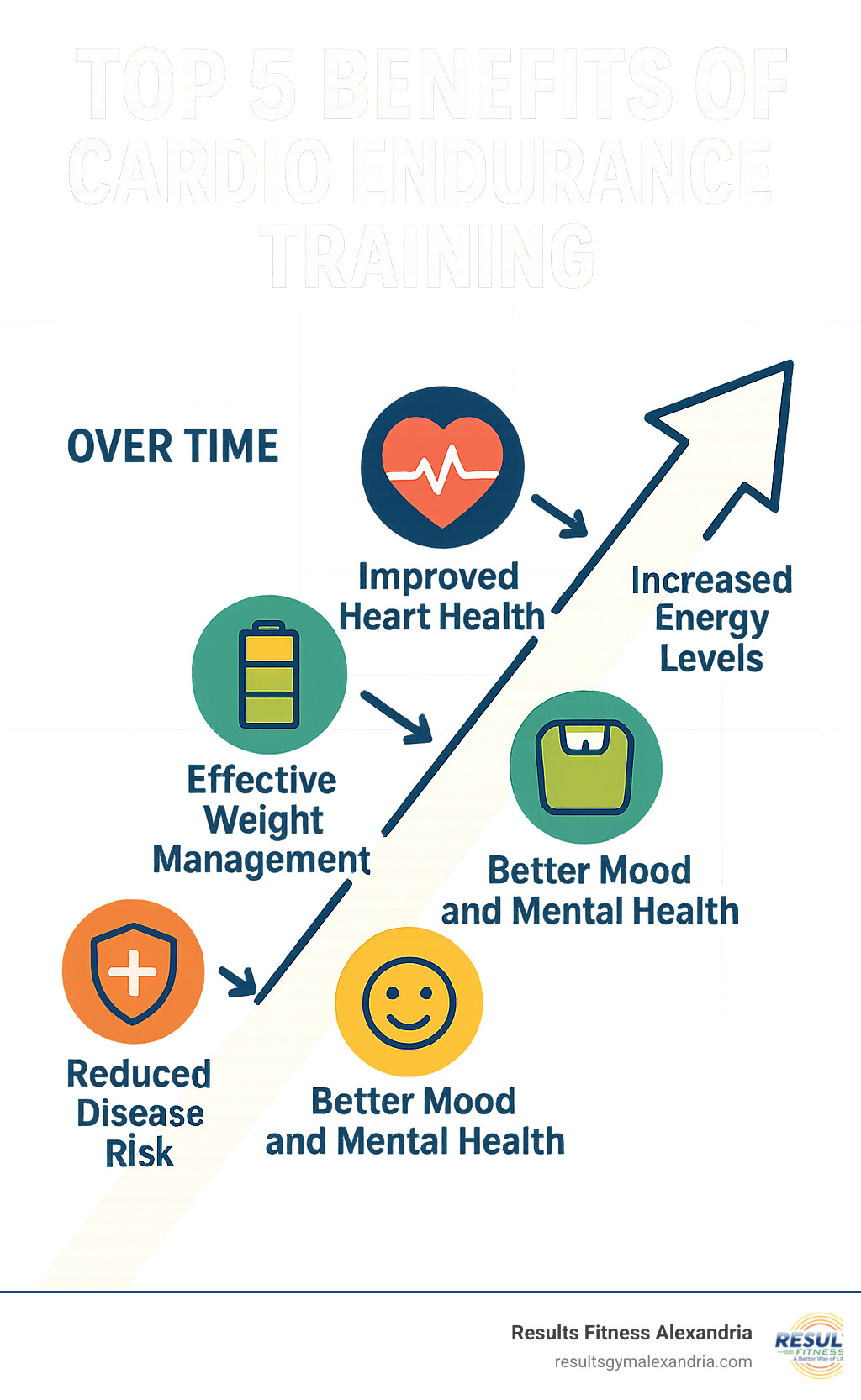
The benefits are immediate and long-lasting. Adults who get at least 150 minutes of moderate physical activity every week experience:
- Lower risk of heart disease and diabetes
- Increased energy for daily activities like climbing stairs
- Better mood and reduced stress levels
- Improved sleep quality
- Weight management support
As Jennifer Rapchak, Fitness Director at Results Fitness Alexandria with over 14 years of experience as an ACE-certified personal trainer, I’ve helped countless clients start their journey of building cardio endurance for beginners through structured, supportive programs. My expertise in designing beginner-friendly workouts ensures you’ll progress safely while staying motivated throughout your fitness journey.
Building cardio endurance for beginners terms you need:
Understanding Cardio Endurance: The ‘Why’ Behind the Workout
Think of your cardiovascular system as your body’s delivery service. Cardiovascular endurance – also known as aerobic fitness – is simply how well your heart and lungs work together to deliver oxygen to your muscles during physical activity. When you’re just starting out with building cardio endurance for beginners, you’re essentially training this delivery system to become faster and more efficient.
Here’s the beautiful thing: you don’t need to be training for marathons to see incredible benefits. Good cardio endurance means you can climb those stairs at work without feeling like you need a five-minute recovery break. It means carrying groceries from the car doesn’t leave you breathless. It’s about making your daily life feel easier and more enjoyable.
According to the Physical Activity Guidelines for Americans, adults need just 150 to 300 minutes of moderate physical activity each week to experience significant health improvements. That breaks down to as little as 20-30 minutes a day – totally doable!
When you start building cardio endurance for beginners, your body begins amazing changes. Your heart becomes a stronger pump, reducing your resting heart rate and blood pressure. Your lungs get better at processing oxygen, which means everything from walking your dog to playing with kids becomes less tiring.
The benefits extend far beyond just feeling less winded. Regular cardio activity supports weight management by burning calories efficiently. It’s also a powerful mood booster – those feel-good endorphins released during exercise can help reduce stress and anxiety naturally. Many people find their sleep quality improves dramatically once they establish a consistent cardio routine.
Perhaps most importantly, consistent cardiovascular exercise significantly reduces your risk of chronic diseases like type 2 diabetes, heart disease, and certain cancers. Think of it as an investment in your future self.
The Amazing Benefits of Consistent Cardio
Here’s where things get really exciting. When you commit to building cardio endurance for beginners, your body rewards you with some pretty incredible changes.
You’ll notice increased energy levels first – and yes, this might seem backwards! By exercising regularly, you’re actually teaching your body to use energy more efficiently. Instead of feeling drained, you’ll find yourself with more pep in your step throughout the day.
Your heart muscle gets stronger with each workout. Just like your biceps grow when you do arm exercises, your heart becomes more powerful and efficient. A stronger heart can pump more blood with each beat, which means it doesn’t have to work as hard during rest and daily activities.
Your muscles also become champions at using oxygen efficiently. This means you can do more activities with less effort – whether that’s chasing after your kids or tackling a challenging hiking trail.
The mental health benefits are equally impressive. Beyond the immediate mood lift from endorphins, regular cardio exercise helps manage stress, improves cognitive function, and can even boost your memory. The science behind fitness shows that consistent exercise is one of the most effective natural treatments for anxiety and depression.
Finally, there’s the longevity factor. People who maintain regular cardiovascular exercise tend to live longer, healthier lives. You’re not just adding years to your life – you’re adding life to your years by maintaining your independence and vitality as you age.
The bottom line? Starting your cardio journey today is one of the best gifts you can give your future self.
The Core Principles of Building Cardio Endurance for Beginners
Starting your fitness journey can feel overwhelming, but it doesn’t have to be! The secret to building cardio endurance for beginners lies in understanding a few simple, powerful principles that will guide you every step of the way.
Think of your cardiovascular fitness like learning to play a musical instrument. You wouldn’t expect to perform a concert after your first lesson, right? The same applies to your heart and lungs. They need time to adapt, strengthen, and become more efficient. That’s why consistency beats intensity every single time, especially when you’re just starting out.
Your body is incredibly smart and will adapt to whatever you ask of it – but only if you give it time. Gradual progression is your best friend here. We’re talking about building a foundation that will last for years, not trying to achieve everything in the first week. Small, steady improvements compound over time into remarkable changes.
Perhaps most importantly, you need to become an expert at listening to your body. There’s a big difference between the good kind of challenge (feeling your heart pump and breathing a bit harder) and the warning signs that you’re pushing too hard (sharp pain, dizziness, or feeling completely exhausted). Your body will tell you what it needs if you pay attention.
These principles work together within what fitness professionals call the F.I.T.T. Principle. This stands for Frequency (how often you exercise), Intensity (how hard you work), Time (how long you exercise), and Type (what kind of exercise you choose). We’ll use this framework to create a plan that’s perfectly custom to where you are right now.

Start Smart: Frequency and Duration
Here’s the question everyone asks: “How much should I actually be doing?” The answer might surprise you – less than you think, at least to start!
When you’re building cardio endurance for beginners, we recommend starting with 3-5 sessions per week. This gives your body enough stimulus to adapt while allowing plenty of time for recovery. Your muscles, joints, and cardiovascular system all need time to rebuild and get stronger between workouts.
Now, about those sessions – we’re talking 10-15 minutes each when you’re just beginning. I know it might not sound like much, but trust the process. These shorter sessions help you build the habit without overwhelming your system. Think of it as teaching your body a new language – you start with simple words before attempting full conversations.
As you get stronger and more comfortable, you’ll want to do more. That’s where the 10% rule comes in handy. Never increase your workout time or distance by more than 10-20% each week. This might feel conservative, but it’s the difference between steady progress and potential injury or burnout.
Your ultimate goal aligns with national health guidelines: 150 minutes of moderate physical activity per week. This could look like five 30-minute walks, three longer 50-minute sessions, or any combination that fits your lifestyle. The key is finding what works for you and sticking with it.
Showing up for shorter, regular workouts will always beat trying to cram everything into one exhausting marathon session. For more detailed guidance on creating effective beginner routines, check out our comprehensive guide here.
Finding Your Pace: How to Monitor Intensity
One of the biggest mistakes beginners make is either going too easy (and not seeing results) or pushing too hard (and burning out quickly). Learning to find your “just right” intensity is crucial for building cardio endurance for beginners safely and effectively.
The Rate of Perceived Exertion (RPE) scale is your new best friend. This simple 1-10 scale asks you to rate how hard your body feels like it’s working. For moderate-intensity cardio, aim for an RPE of 3-4 out of 10. For more vigorous exercise, you can work up to 5-7 out of 10.
| RPE Level | Description |
|---|---|
| 1-2 | Very light activity, like slow walking |
| 3-4 | Moderate effort, breathing slightly harder |
| 5-6 | Vigorous effort, breathing hard but can still talk |
| 7-8 | Very hard effort, difficult to maintain conversation |
| 9-10 | Maximum effort, can only say a few words |
An even simpler method is the Talk Test. During moderate exercise, you should be able to carry on a conversation, though you might be breathing a bit harder than usual. If you can sing, you’re probably going too easy. If you can’t speak more than a few words, you’re pushing too hard.
For those who like numbers, you can calculate your target heart rate using the MAF Method (Maximum Aerobic Function). Simply subtract your age from 180. For example, if you’re 40 years old, your target heart rate would be around 140 beats per minute for aerobic base building.
The beauty of these methods is that they’re all free, require no special equipment, and help you develop a better relationship with your body’s signals.