Low Impact Cardio: High-Reward Guide 2025
Why Low-Impact Cardio is Your Gateway to Better Fitness
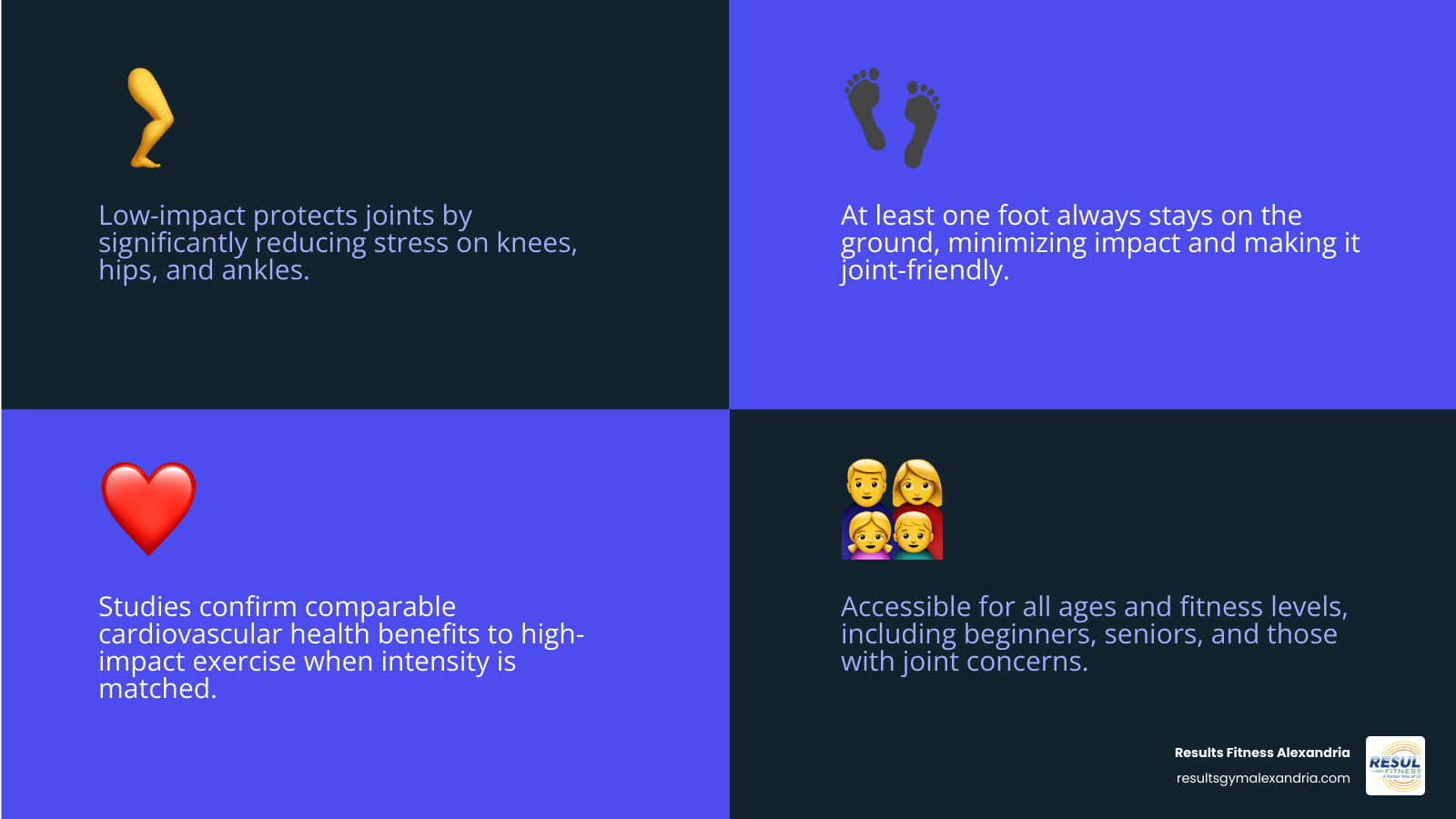
Low impact cardio exercises keep at least one foot on the ground at all times, reducing stress on your joints while still delivering excellent cardiovascular benefits. Unlike high-impact activities like running or jumping, these gentle movements protect your knees, hips, and ankles from excessive force.
What qualifies as low-impact cardio:
- Walking, swimming, cycling, elliptical training
- Water aerobics, rowing, yoga flows
- Stationary biking, dancing (without jumping)
Key benefits:
- Joint-friendly – Minimal stress on knees, hips, and ankles
- Heart-healthy – Offers comparable benefits to high-impact exercise
- Sustainable – Lower injury risk means more consistent workouts
- Accessible – Perfect for all fitness levels, including beginners and seniors
Whether you’re starting your fitness journey, dealing with joint pain, or want a sustainable way to stay active, low-impact cardio is an effective solution. As a fitness professional with over 14 years of experience, I’ve seen how low impact cardio can transform a fitness journey without the usual wear and tear. Let’s explore how you can use these gentle yet powerful exercises to achieve your health goals.
Terms related to Low impact cardio:
What is Low-Impact Cardio and Why Should You Choose It?
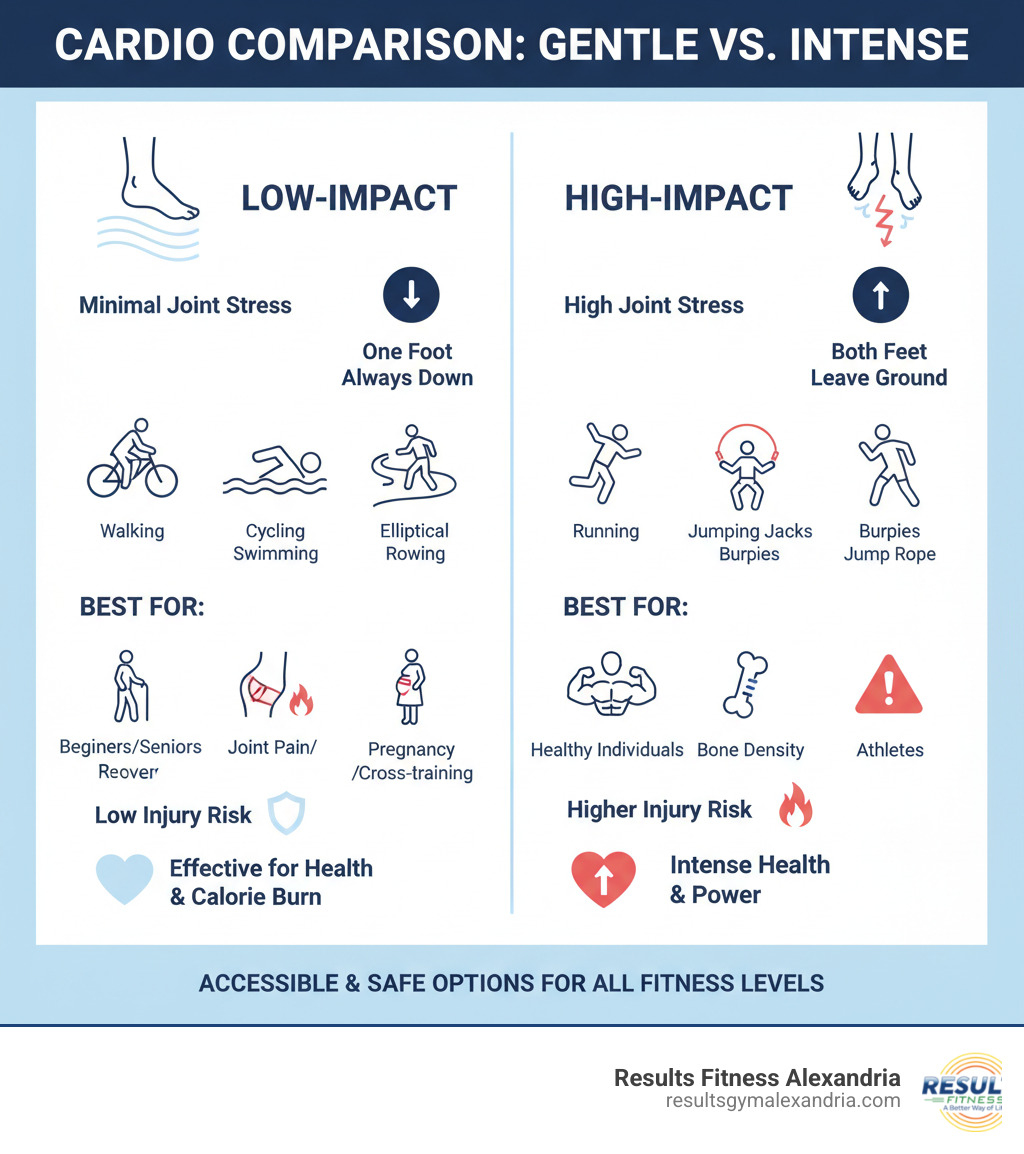
Low impact cardio follows a simple rule: at least one foot stays on the ground. This dramatically reduces joint stress compared to high-impact activities where both feet leave the ground, like running or jumping. When you land from a jump, your joints absorb the force of your body weight plus gravity.
While high-impact exercise is great for building bone density, it carries a higher risk of injury. Low impact cardio isn’t an “easy” option—it’s a smart one. You can still get your heart pumping and break a sweat without the jarring impact that leads to wear and tear.
| Feature | Low-Impact Cardio | High-Impact Cardio |
|---|---|---|
| Examples | Walking, cycling, swimming, elliptical, rowing, yoga, tai chi | Running, jumping jacks, burpees, plyometrics, jump rope |
| Joint Stress | Minimal (one foot always on ground or body supported) | High (both feet leave ground, significant landing force) |
| Best For | Beginners, individuals with joint pain, injury recovery, seniors, cross-training, pregnant individuals | Healthy individuals with strong joints, bone density improvement, athletes seeking explosive power |
| Injury Risk | Relatively low | Higher, especially with improper form or overuse |
Research backs this up. A major study found that moderate-intensity walking offered comparable heart-health benefits to running, with similar reductions in high blood pressure, high cholesterol, and diabetes risk. You don’t need to pound the pavement for better heart health.
The Major Health Benefits
The benefits of low impact cardio go far beyond being easy on your joints.
- Improved cardiovascular fitness: Your heart strengthens in response to increased demand for oxygen, whether you’re walking or running. Low-impact activities are just as effective at making your heart muscle stronger.
- Better weight management: Consistency is key for weight management. The lower risk of injury with low-impact exercise means fewer setbacks, leading to a greater total calorie burn over time.
- Lowered blood pressure: Regular, moderate-intensity exercise is proven to lower blood pressure and reduce the risk of developing type 2 diabetes.
- Improved joint health and mobility: Gentle movement lubricates joints and increases blood flow. Studies show activities like swimming or cycling can lead to significant improved joint pain and stiffness for those with osteoarthritis.
- Reduced injury risk: Fewer injuries mean you can maintain a consistent routine, which is crucial for long-term results.
- Improved mental well-being: Exercise is a natural mood booster and stress reducer. Studies also link regular walking to a significantly lower risk of developing dementia.
For more on exercise types, see our comparison of Cardio vs Strength Training for Weight Loss: Which is Better?.
Who Benefits Most?
While low impact cardio is for everyone, certain groups find it especially beneficial.
- Beginners: It’s a welcoming entry point to fitness, allowing you to build confidence and endurance without feeling overwhelmed. Get started with our guide on Creating an Effective Workout Routine for Beginners.
- Seniors: These exercises help maintain cardiovascular health and independence while respecting age-related changes in joint health.
- Individuals with arthritis: Gentle movement can reduce pain and maintain joint function.
- People recovering from injury: It provides a safe way to rebuild fitness without risking re-injury.
- Pregnant individuals: Low-impact activities support maternal and fetal health without unnecessary physical stress.
- Athletes on recovery days: Use it for active recovery to maintain fitness while allowing joints to heal.
- Anyone looking for sustainable fitness: It supports long-term adherence, which is the key to lifelong health.
The Best Low-Impact Cardio Exercises
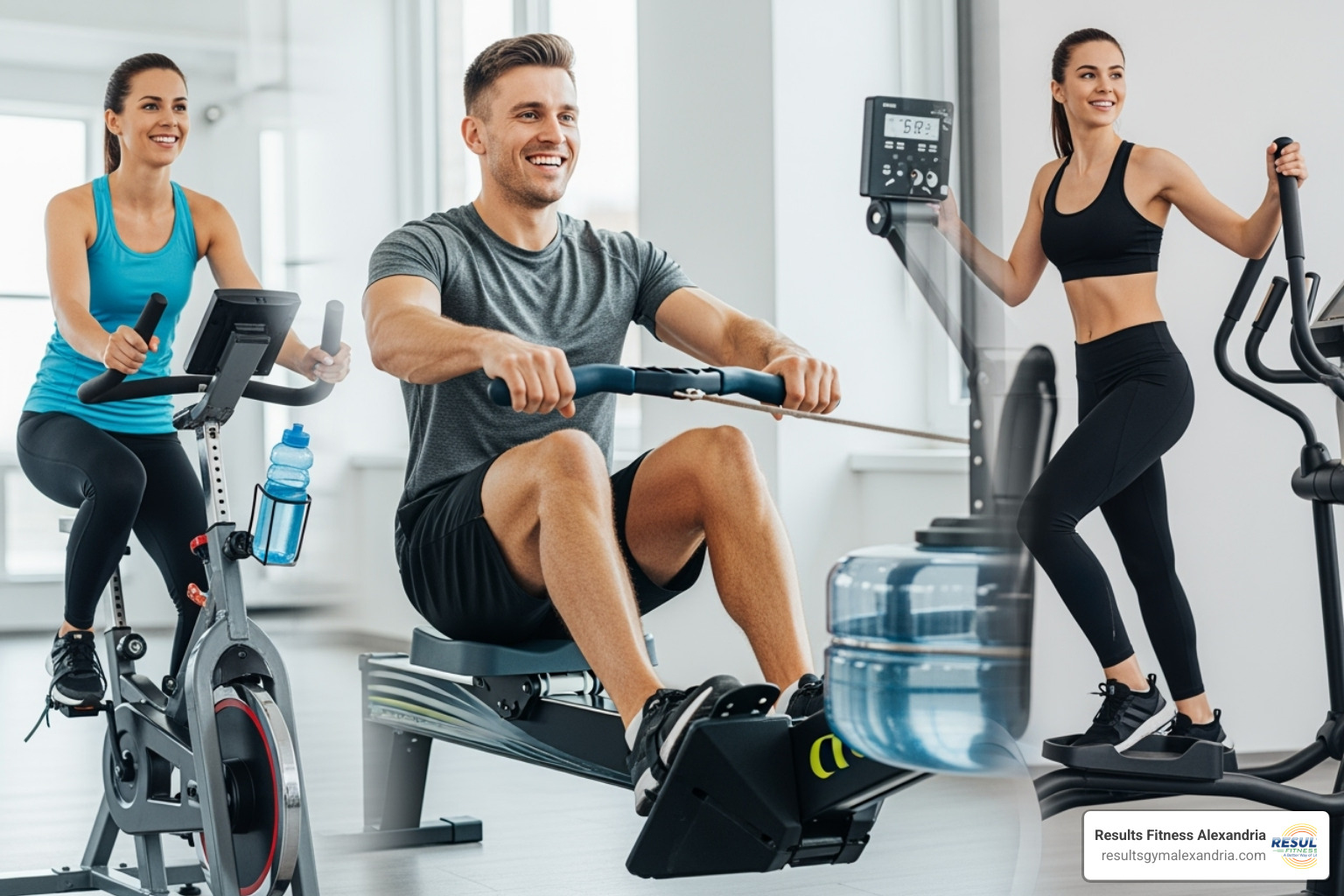
The beauty of low impact cardio is its versatility. You can get a great workout at home with no equipment or use the state-of-the-art machines at Results Fitness Alexandria. The key is finding activities you enjoy, as consistency is what brings results.
Effective At-Home Exercises (No Equipment Needed)
Your living room can be your personal fitness studio with these simple yet effective exercises.
- Marching in place: Lift your knees high and pump your arms to get your heart rate up.
- Bodyweight squats: Stand with feet shoulder-width apart and lower your hips as if sitting in a chair. Focus on quality movement, not speed.
- Lateral lunges: Step out to one side, bending one knee while keeping the other leg straight. This targets your glutes and inner thighs.
- Step-ups: Use a sturdy stair or low platform. Step up with one foot, then the other, and step back down. Alternate your lead leg.
- Standing oblique crunches: Stand tall and bring one elbow toward the opposite knee, engaging your side abdominal muscles.
- Arm circles: Extend your arms and make circles, starting small and getting larger, in both forward and backward directions.
- Butt kicks: Without jumping, bring your heel toward your glute in a controlled manner, alternating legs.
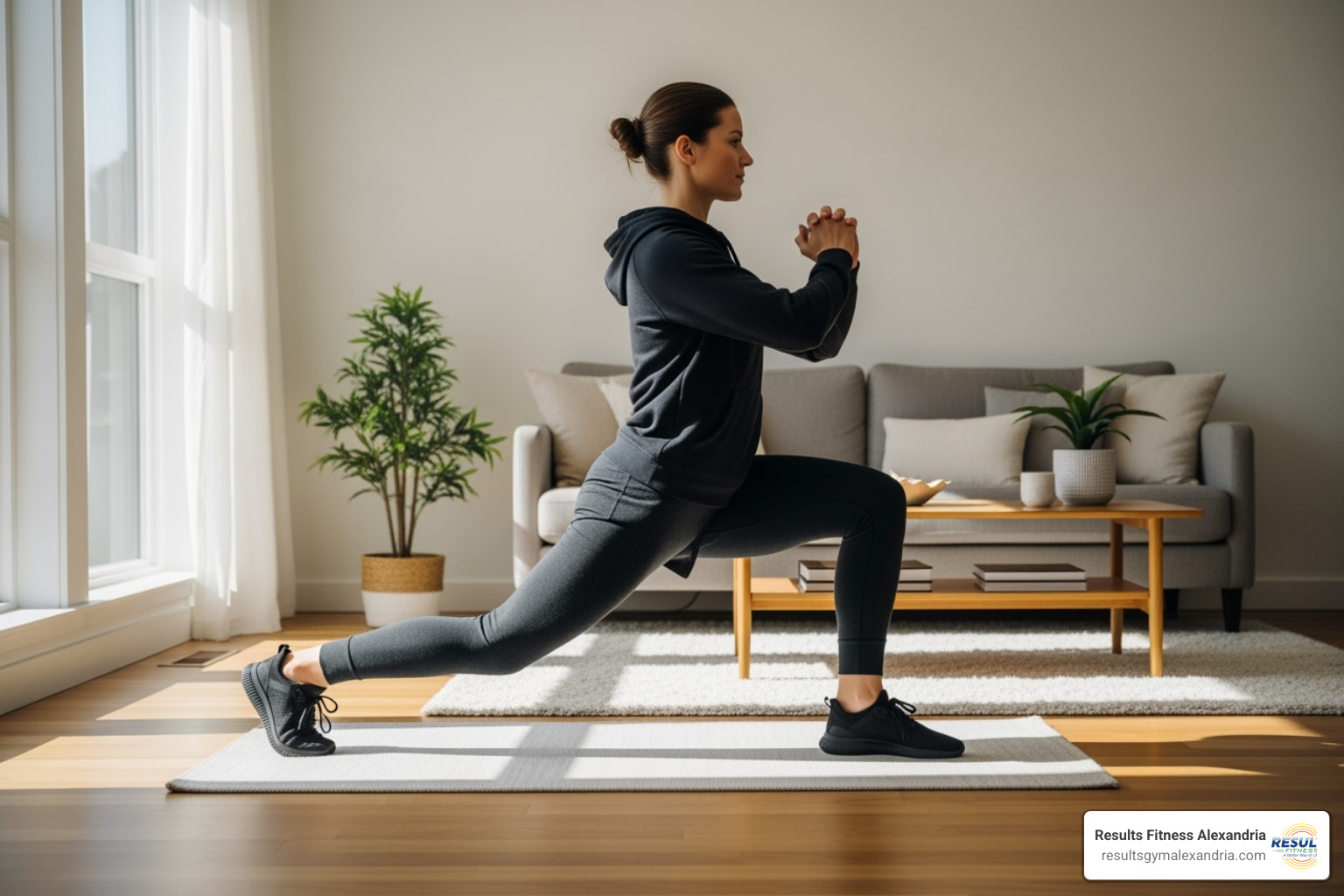
These exercises work well in a circuit format: perform each for 45 seconds with 15 seconds of rest, and repeat the circuit for a complete workout.
Top Gym-Based Low-Impact Cardio
Our gym offers an impressive array of low impact cardio equipment to take your workouts to the next level.
- Walking on a treadmill: A highly effective and accessible exercise. You can adjust both speed and incline to perfectly match your fitness level. Check out our treadmill endurance workouts for ideas.
- Elliptical training: This “zero-impact” machine mimics running without the jarring force on your joints. It engages both your upper and lower body for a full-body workout.
- Stationary cycling: An excellent way to improve aerobic capacity and blood pressure. Proper bike setup is key to protecting your knees and maximizing comfort.
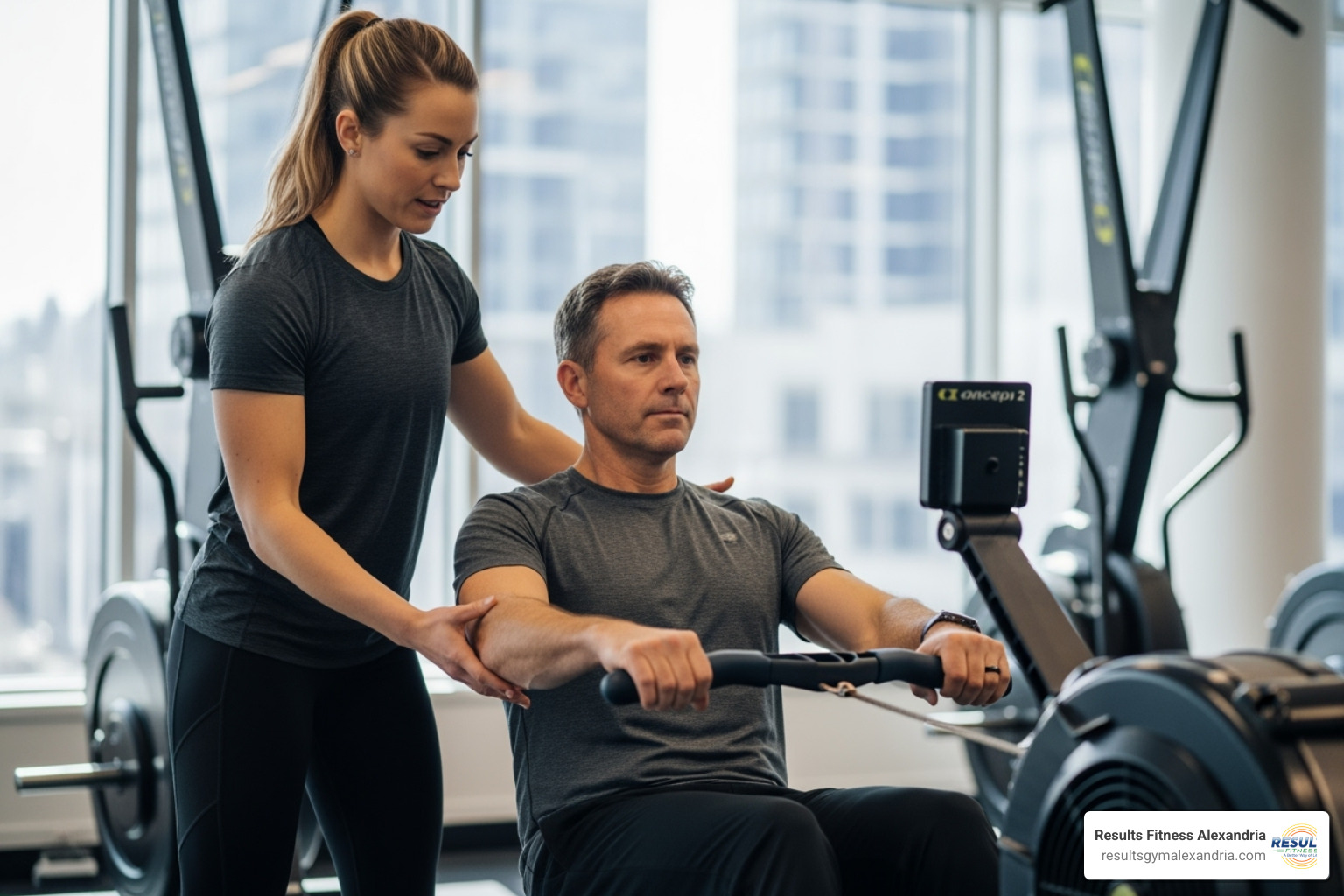
- Rowing machines: A hidden gem that provides a full-body workout. It strengthens your legs, core, back, and arms in one fluid, joint-friendly motion.
- Swimming: The ultimate no-impact workout. The water’s buoyancy supports your body, eliminating stress on joints while providing both cardio and strength training. Learn more about our swimming for fitness: how aquatics classes can transform your workout routine.
- Water aerobics: Uses water’s natural resistance for a challenging workout that feels gentle on the body. It’s a favorite for building strength and endurance, especially for those new to exercise.
How to Maximize Your Workouts and Stay Safe
Getting the most from your low impact cardio routine is about working smarter. Focus on proper form, consistency, and listening to your body. The flexibility of low-impact exercise allows you to adjust intensity daily while still getting an effective workout. The key to improvement is progressive overload—gradually challenging yourself a little more over time.
Modifying for Intensity and Challenge
Bust the myth that low-impact means “easy.” You can get your heart pounding with these joint-friendly methods:
- Increase Speed: Picking up the pace on any machine or exercise will lift your heart rate.
- Add Incline: Walking on an incline on the treadmill engages your glutes and hamstrings for a serious cardiovascular challenge.
- Increase Resistance: On a bike or elliptical, increasing resistance forces your muscles to work harder, burning more calories.
- Use Interval Training (HIIT): Alternate between short bursts of high intensity and periods of recovery. This is a powerful way to boost fitness. Learn Why You Should Give HIIT Exercises a Try.
- Reduce Rest Periods: In a circuit, shortening rest times keeps your heart rate liftd for improved cardiovascular conditioning.
- Add Light Weights: Incorporating light weights or resistance bands can increase the challenge while maintaining proper form.
This all ties into The Power of Progressive Overload: How to Keep Getting Stronger.
Potential Risks and Starting Safely
While low impact cardio is remarkably safe, it’s always wise to consult your healthcare provider before starting a new program, especially if you have pre-existing health conditions. The National Institute on Aging offers valuable advice for older adults starting exercise.
- Warm-ups and Cool-downs: Always start with a 5-10 minute warm-up to prepare your body and end with a cool-down to help it transition back to rest.
- Proper Footwear: Supportive shoes designed for your activity are essential for comfort and safety.
- Listen to Your Body: Normal muscle fatigue is fine, but sharp pain is a signal to stop or modify.
Our certified personal trainers can help you create a customized plan, ensuring proper form and progression. Learn about The Amazing Benefits of Working with a Personal Trainer.
The Role of Nutrition
Nutrition is the foundation that supports your hard work.
- Pre-workout Fuel: A small, carb-rich snack like a banana about 45 minutes before your workout can provide an energy boost.
- Post-workout Recovery: Within an hour after exercise, consume a mix of carbs and protein (like Greek yogurt with fruit) to aid muscle repair.
- Hydration: Drink plenty of water before, during, and after your workout to support performance and recovery.
Sample Low-Impact Cardio Workouts
Ready to put low impact cardio into action? Here are three structured workout plans for different fitness levels. These routines use timed intervals to maximize results. Feel free to adapt them based on your comfort level and the equipment you have available.
Beginner Routine (20 Minutes)
This gentle introduction helps build confidence and endurance.
- Warm-up (5 minutes): Start with a light walk, either in place or on a treadmill. Add gentle arm circles and leg swings.
- Main Circuit (10 minutes): Perform each exercise for 45 seconds, followed by 15 seconds of rest. Complete two rounds.
- Bodyweight squats
- Marching in place with high knees
- Lateral lunges
- Standing oblique crunches
- Step-ups (using a low step)
- Cool-down (5 minutes): Finish with a gentle walk and static stretches for your legs and arms.
Intermediate Routine (30 Minutes)
This routine introduces interval training on gym equipment to boost your cardiovascular fitness.
- Warm-up (5 minutes): Use an elliptical or stationary bike at an easy pace.
- Main Workout (20 minutes): On a stationary bike, alternate between 1 minute at a fast, challenging pace and 1 minute at an easy recovery pace. Repeat this 2-minute cycle 10 times.
- Cool-down (5 minutes): End with slow cycling, followed by static stretches for your quads, hamstrings, and glutes.
Advanced Low-Impact HIIT (30 Minutes)
This workout combines low impact cardio with high-intensity interval training for a serious challenge.
- Warm-up (5 minutes): Use a rowing machine or perform dynamic stretches.
- Main Circuit (20 minutes): Perform each exercise for 45 seconds of maximum effort, followed by 15 seconds of rest. Complete two full rounds, taking a 60-second break between them.
- Rower sprints
- Walking lunges
- Elliptical with high resistance
- Bodyweight squats with a resistance band
- Light kettlebell swings (ensure proper form)
- Cool-down (5 minutes): Finish with gentle rowing or walking, followed by comprehensive static stretches.
These workouts show that why you should give HIIT exercises a try doesn’t mean punishing your joints.
Frequently Asked Questions about Low-Impact Cardio
Can low-impact cardio be as effective as high-impact for improving fitness?
Yes, absolutely. Your heart responds to intensity, not impact. Research shows that when energy expenditure is matched, low impact cardio like brisk walking provides similar cardiovascular benefits to high-impact running, including reduced risk of heart disease and high blood pressure. The key is to challenge yourself by increasing your pace, adding resistance, or using intervals to lift your heart rate.
What are the best low-impact cardio exercises for weight loss?
The best exercise for weight loss is one you’ll do consistently. However, some options are particularly effective because they engage large muscle groups and burn more calories. Top choices include:
- Swimming: A full-body workout with zero impact.
- Rowing: Engages nearly every muscle for a highly efficient calorie burn.
- Incline walking: Dramatically increases intensity and muscle activation compared to flat walking.
- Cycling: Allows for sustained effort and high-calorie burn through intervals and resistance.
For best results, combine low impact cardio with strength training and a balanced diet.
How often should I do low-impact cardio?
The Physical Activity Guidelines for Americans recommend at least 150 minutes of moderate-intensity aerobic exercise per week. This breaks down easily into five 30-minute sessions of low impact cardio. If you prefer higher-intensity workouts, you can aim for 75 minutes per week. Consistency is more important than duration, so find a routine that fits your life and stick with it.
Conclusion
Low impact cardio offers a powerful path to better health, protecting your joints while strengthening your heart and helping you manage your weight. Its accessibility makes it perfect for everyone, from beginners to seasoned athletes. Fitness is a long-term journey, and these sustainable exercises provide the longevity you need to stay active for years to come.
At Results Fitness Alexandria, we believe everyone deserves to move with confidence. Our facility is equipped with everything you need for an effective low impact cardio routine, including smooth-running ellipticals, comfortable stationary bikes, a refreshing pool, and supportive rowing machines. Our certified personal trainers are here to guide you, ensuring you get the most out of every workout safely and effectively.
Ready to find how good gentle movement can feel? We invite you to join our fitness family. Explore our top-of-the-line cardio equipment and see how low impact cardio can transform your relationship with exercise.