
Lose weight cardio: 5 Best Exercises
Why Cardio Is Your Weight Loss Ally
Lose weight cardio works by creating a calorie deficit—burning more calories than you consume. Here’s what you need to know to get started:
Quick Answer: How to Use Cardio for Weight Loss
- Minimum Goal: 150 minutes of moderate-intensity cardio per week (like brisk walking)
- Better Results: 200+ minutes per week shows greater weight loss
- The Math: A 3,500-calorie deficit equals approximately 1 pound of weight loss
- Best Approach: Combine cardio with strength training and a healthy diet
- Examples: Running, cycling, swimming, rowing, or jumping rope
If you’ve ever felt frustrated by the scale or confused about how much cardio you need, you’re not alone. The good news is that cardio can be incredibly effective for weight loss when you understand the fundamentals.
The science is simple: cardiovascular exercise lifts your heart rate and increases calorie expenditure. When you consistently burn more calories than you eat, your body taps into stored fat for energy. But it’s not just about hours on a treadmill—the type, duration, and intensity of your cardio all matter.
Beyond the number on the scale, cardio offers benefits that transform your overall health: better cardiovascular fitness, improved sleep quality, reduced stress, and increased stamina for daily activities. These changes often show up before the weight does, making them powerful motivators to keep going.
I’m Jennifer Rapchak, Fitness Director at Results Fitness Alexandria. With over 14 years of experience, I’ve helped countless members design effective cardio programs for sustainable weight loss. I’ve seen how the right cardio strategy—combined with strength training and proper nutrition—creates lasting results for lose weight cardio goals. Let’s explore how to make cardio work for you.
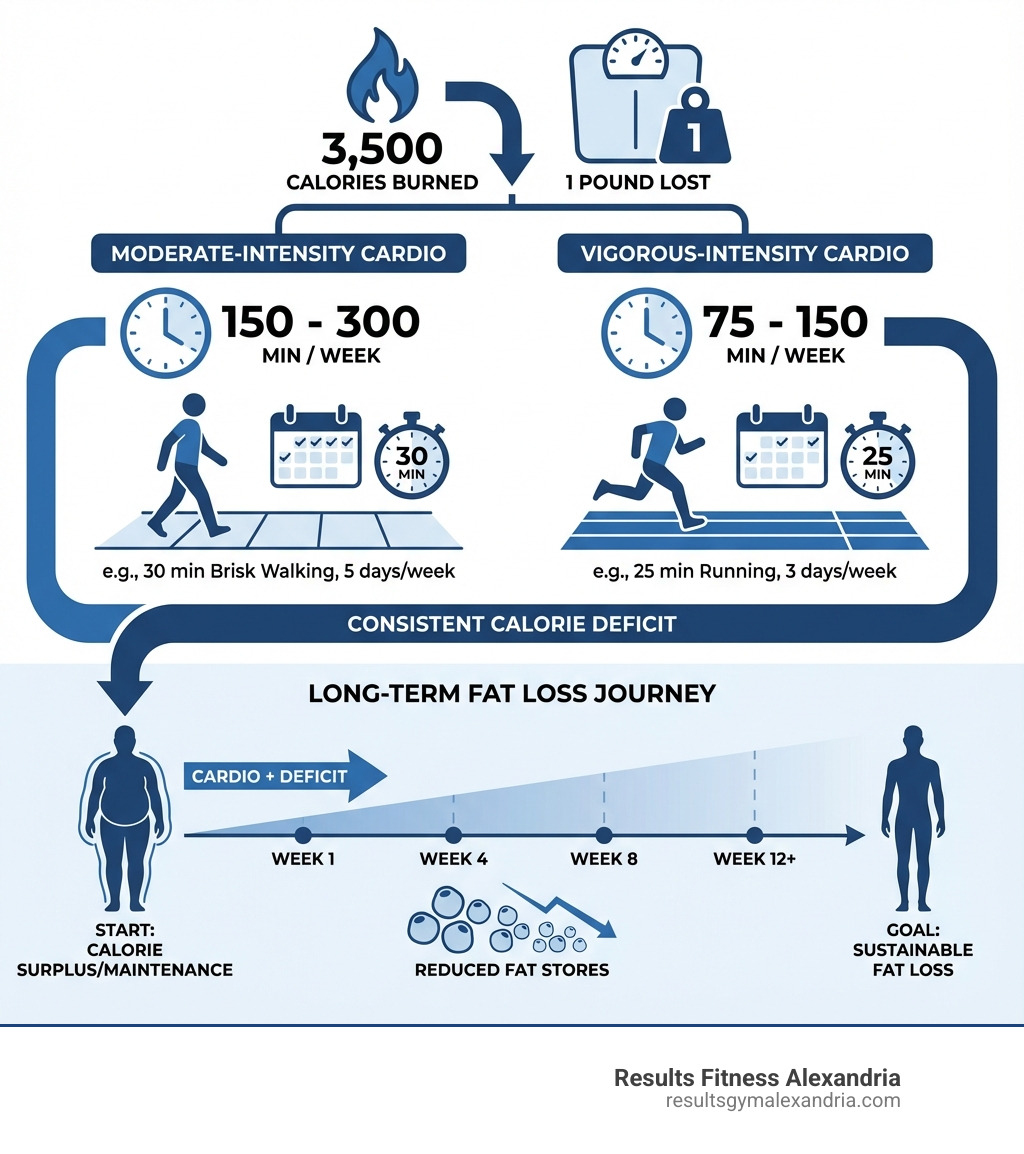
Simple guide to Lose weight cardio terms:
Understanding Cardio’s Role in Weight Loss
When we talk about lose weight cardio, we’re referring to any physical activity that lifts your heart rate for a sustained period. This type of exercise, also known as aerobic activity, is a cornerstone of any effective weight loss strategy because it directly contributes to burning calories—the fundamental requirement for weight loss.
Cardio workouts are efficient at burning calories because they demand more oxygen, fueling your body to use stored fat as energy. As your heart rate increases, your body becomes a better fat-burning machine. The benefits also stretch beyond shedding pounds. Good cardiorespiratory fitness can significantly lower your risk of heart disease and all-cause mortality, as noted in a study in Progress in Cardiovascular Diseases. Regular cardio helps you lose weight and sets you up for a longer, healthier life.
Beyond physical health, cardio offers other advantages. It can lead to improved sleep quality, helping you feel more rested and energized. It’s also an excellent tool for stress reduction, providing a healthy outlet for daily pressures and boosting your mood. At Results Fitness Alexandria, we’ve seen countless members experience these profound benefits, changing their overall well-being alongside their waistlines.
What is Cardio Exercise?
At its core, cardio exercise involves rhythmic, repetitive movements of large muscle groups that increase your heart rate and breathing. Think of activities that make you huff and puff a little, but still allow you to carry on a conversation (moderate intensity) or make talking difficult (vigorous intensity).
- Moderate-intensity activities mean your breathing and heart rate are noticeably faster. You might be able to talk, but you can’t sing. Examples include brisk walking, dancing, light gardening, or a casual bike ride.
- Vigorous-intensity activities push your heart rate substantially higher. You’ll be breathing hard and won’t be able to say more than a few words without pausing for breath. This category includes running, swimming laps, jumping rope, or a cycling session.
Whether you’re exploring our aerobic exercise complete guide or joining one of our dynamic group fitness classes, the goal is to get your heart pumping and your body moving.
How Cardio Burns Calories
The secret to weight loss is creating a calorie deficit, which means burning more calories than you consume. When you consistently achieve this, your body taps into its stored energy reserves—primarily fat—to make up the difference.
Cardio exercise is a direct way to increase your daily calorie burn. When you engage in activities like running or cycling, your muscles require more energy. This energy comes from the breakdown of carbohydrates and fats, burning off extra fuel that would otherwise get stored as fat. The more intense or longer your cardio session, the more calories you’ll burn. For instance, a 30-minute session on a treadmill at 6 mph can burn approximately 350 calories for an average person.
Understanding this principle is crucial. While diet largely dictates your calorie intake, cardio significantly impacts your calorie output. By strategically incorporating cardio, we can help you accelerate your progress towards a sustainable calorie deficit. You can learn more about this core concept in our detailed explanation of a calorie deficit.
How Much Cardio Do You Really Need to Lose Weight?

This is one of the most common questions we hear at Results Fitness Alexandria. The “right” amount of cardio for weight loss isn’t a one-size-fits-all answer, but clear guidelines can help tailor a plan for you. The key is consistency and finding a routine you can stick with.
The Physical Activity Guidelines for Americans provide an excellent starting point. They recommend adults get at least 150 to 300 minutes of moderate-intensity exercise per week, or 75 to 150 minutes a week of vigorous-intensity aerobic exercise. This forms the foundation of a healthy, active lifestyle.
For those focused on lose weight cardio goals, the numbers often lean towards the higher end of these recommendations. Studies show that adults who exercise more than 200 minutes per week lose more weight and are more likely to maintain that loss long-term. The Mayo Clinic suggests that up to 300 minutes of moderate physical activity a week may be needed to lose or maintain weight.
Recommended Weekly Minutes for Weight Loss
Let’s break down the weekly targets for your lose weight cardio journey:
- Moderate-Intensity Cardio: Aim for 150 to 300 minutes per week. This could look like five 30-minute brisk walks, or three 60-minute elliptical sessions, spread across your week. The beauty of moderate intensity is that it’s sustainable and enjoyable for most.
- Vigorous-Intensity Cardio: If you prefer higher intensity, 75 to 150 minutes per week can achieve similar results. This might be three 25-minute runs or a few intense cycling classes.
The important takeaway from studies on exercise duration is that a higher volume of exercise generally correlates with greater weight loss. Don’t feel overwhelmed, though! We can help you build up to these targets gradually. For more ideas on how to structure your week, check out our daily cardio routine guide.
Finding the Right Duration and Frequency for You
Your ideal cardio plan will depend on your current fitness level, lifestyle, and how quickly you want to reach your goals.
- Beginners: If you’re just starting, don’t try to hit 300 minutes right away. We recommend beginning with 20-30 minutes of moderate-intensity cardio, 3-4 times a week. Focus on consistency and building a habit. As you get fitter, you can gradually increase the duration or intensity. Our building cardio endurance for beginners resource offers great starting points.
- Intermediate Goals: Once you’re comfortable, start pushing towards 45-60 minute sessions, 4-5 times a week, or incorporating some vigorous activities. This is where you’ll start seeing more significant calorie burn.
- Advanced Levels: For those who are already active, maintaining 200-300+ minutes of cardio, including a mix of moderate and vigorous intensity, will help sustain weight loss and continue to improve cardiovascular health.
The best plan is one you can stick with long-term. It’s not about punishing yourself; it’s about finding activities you enjoy and integrating them into your life. We can help you find the perfect balance to fit your how often should you work out based on your goals and lifestyle.
The Most Effective Cardio Workouts for Torching Calories

When it comes to lose weight cardio, not all exercises are equal in calorie burn. While any activity that raises your heart rate is beneficial, some are more efficient at torching calories. At Results Fitness Alexandria, our equipment and classes are designed to help you maximize your calorie expenditure.
Here are some of the most effective cardio exercises for burning calories, along with approximate calorie burn for a 154 lb person per hour, based on moderate to vigorous intensity:
- Running: This is one of the simplest and most effective ways to burn calories. Running at 5 mph can burn approximately 590-606 calories per hour. Our treadmill endurance workouts can help you get started.
- Cycling: Whether outdoors or on a stationary bike, cycling is a fantastic calorie burner. Riding at over 10 mph can burn approximately 590 calories per hour. A medium intensity 30-minute session can even burn about 450 calories!
- Rowing: Often called a “powerhouse cardio exercise,” rowing engages all major muscle groups and can burn anywhere from 500 to 700+ calories per hour depending on intensity. It’s also low-impact, making it joint-friendly. Check out our rowing machine workout guide.
- Jumping Rope: Don’t let its simplicity fool you; jumping rope is one of the fastest and most effective cardio exercises for weight loss, burning an incredible 1,000-1,300 calories per hour for continuous effort! It’s also great for coordination.
- Stair Climbing: This often-underrated exercise is a phenomenal calorie burner. A landmark study found that 9 weeks of stair-climbing exercise yielded almost identical results to 9 weeks of treadmill running. You can burn around 450-600 calories per hour on a stair climber.
- Swimming: A full-body workout that’s incredibly joint-friendly, swimming laps (slow freestyle) can burn approximately 510 calories per hour. Being in the water makes your body more buoyant, reducing pressure on joints.
- Elliptical Training: This low-impact option allows you to work your glutes, legs, triceps, and biceps simultaneously, burning around 250-350 calories per 30 minutes.
High-Impact vs. Low-Impact Cardio for Weight Loss
The choice between high-impact and low-impact cardio often comes down to personal preference, joint health, and fitness level. Both can be highly effective for weight loss.
- High-Impact Cardio: These exercises involve both feet leaving the ground, creating more stress on your joints but often leading to higher calorie burn in shorter periods. Examples include running, jumping rope, and high-intensity dance.
- Low-Impact Cardio: These activities keep at least one foot on the ground at all times, making them gentler on your joints. They are excellent choices for individuals with joint pain or those looking for a sustainable long-term option. Cycling and swimming are prime examples. Our low impact cardio guide offers more details.
HIIT vs. Steady-State: The Intensity Debate for how to lose weight with cardio
When designing your lose weight cardio program, you’ll often encounter two main approaches: High-Intensity Interval Training (HIIT) and Steady-State cardio (LISS). Both have their merits, and the best strategy often involves incorporating both.
- High-Intensity Interval Training (HIIT): This involves short bursts of intense exercise followed by brief recovery periods. For example, sprinting for 1 minute, then walking for 30 seconds, and repeating. A 2017 review suggested that HIIT can achieve similar reductions in body fat as moderate-intensity exercise, but in 40% less time. The “afterburn effect” or EPOC (Excess Post-exercise Oxygen Consumption) means your body continues to burn calories at an liftd rate even after your workout ends. HIIT is excellent if you’re short on time. If you’re curious to try, explore why you should give hiit exercises a try.
- Steady-State Cardio (LISS): This involves maintaining a consistent, moderate intensity for a longer duration, like a 45-minute brisk walk. While it doesn’t offer the same “afterburn” as HIIT, it’s highly effective for burning calories during the workout, is generally easier to sustain, and is less taxing on the body. It’s also a great way to build your aerobic base.
For optimal results, we often recommend a blend of both. HIIT can provide efficient calorie burn and metabolic boosts, while steady-state cardio builds endurance and contributes to overall weekly calorie expenditure without over-stressing your body.
Cardio vs. Strength Training: The Ultimate Fat Loss Combination
While lose weight cardio is effective for burning calories, it’s just one piece of the puzzle for sustainable fat loss. To truly maximize your results, we advocate for combining cardio with strength training. This synergy is crucial for changing your body.
Cardio excels at burning calories during your workout. Strength training, on the other hand, has a profound long-term impact on your metabolism. When you lift weights, you build lean muscle mass. Muscle helps you burn more calories even when you’re at rest, increasing your resting metabolic rate (RMR) and turning your body into a more efficient calorie-burning machine 24/7. This is a topic we dig into more deeply in our guide on cardio vs strength training for weight loss which is better.
Why You Shouldn’t Skip Strength Training
If your goal is to lose fat, not just weight, strength training is non-negotiable.
- Preventing Muscle Loss: In a calorie deficit, your body can break down muscle for energy, especially with cardio-only routines. Strength training signals your body to preserve muscle, ensuring you lose primarily fat. Without it, you risk becoming “skinny fat”—having a low body weight but a high body fat percentage, which carries health risks.
- Boosting Metabolism: As mentioned, more muscle means a higher RMR. Muscle is metabolically active, requiring more energy to maintain than fat. So, the more muscle you have, the more calories you burn simply by existing.
- Body Recomposition: Strength training allows you to sculpt your body, improving your physique as you lose fat. You might not see the scale move dramatically, but your clothes will fit better, and you’ll look and feel stronger. This is true for everyone, and we have specific resources like 10 benefits of strength training for women that highlight these advantages.
The best approach is to integrate both. This could mean alternating cardio and strength days, or combining them in the same session. If you combine them, we often recommend doing strength training before cardio. Doing cardio first can fatigue your muscles, making your strength workout less effective. For more on this, check out maximizing results integrating strength training into your cardio routine.
The Critical Role of Diet in Your Plan to lose weight with cardio
We can’t emphasize this enough: your diet plays the most significant role in weight loss. While exercise is a powerful tool, you can’t out-exercise a poor diet.
To truly lose weight cardio, you must create a calorie deficit. For most people, this means cutting daily calories by 500 to 750 to lose about 1 to 1.5 pounds (0.5 to 0.7 kilograms) a week.
Here’s why diet is so critical:
- Calorie Control: It’s far easier to reduce your calorie intake by a few hundred calories than it is to burn an equivalent amount through exercise.
- Nutrient-Dense Foods: Focus on whole, unprocessed foods like lean proteins, fruits, vegetables, and whole grains. These foods provide essential nutrients and keep you feeling full.
- Protein Intake: If you’re combining cardio with strength training, ensure you’re consuming plenty of protein. Protein helps rebuild muscle and aids in satiety, which can help manage hunger.
- Sustainable Eating Habits: Fad diets rarely work long-term. We encourage sustainable eating habits that nourish your body and support your activity levels.
- Hydration: Don’t forget water! Staying well-hydrated is crucial for overall health, metabolism, and can help manage hunger cues.
Think of it this way: exercise is a powerful accelerator, but diet is the steering wheel. Both are necessary to reach your destination. For women specifically, our womens weight loss guide provides custom advice on nutrition and exercise.
Building a Sustainable Routine to Lose Weight with Cardio
A challenge with lose weight cardio is sticking with it. Enthusiasm can fade due to boredom, lack of time, or lost motivation. At Results Fitness Alexandria, we believe sustainability is key. A routine you enjoy and can consistently maintain is far more effective than a grueling plan you abandon after a few weeks.
Beating Boredom: How to Keep Your Workouts Fresh
Boredom is a primary reason people fail to achieve their fitness goals. If you find your cardio workouts tedious, it’s time for a change!
- Vary Your Exercises: Don’t just stick to one machine or activity. Mix it up! Spend one day on the treadmill, the next on the elliptical, then try a cycling class. This keeps your body guessing and your mind engaged.
- Explore Fun fitness classes at Results Fitness Alexandria: Group classes like Zumba or cycling can be incredibly motivating. The energy of a group, led by an enthusiastic instructor, can make 60 minutes fly by. Our circuit training cardio complete guide offers another great option for variety.
- Workout Buddies: Grab a friend! Exercising with a partner can provide accountability and make workouts more enjoyable.
- Music and Podcasts: Curate killer playlists or catch up on your favorite podcasts. A good beat or an engaging story can make the time pass much faster.
- Outdoor Adventures: When the weather in Alexandria is nice, take your cardio outside! Running or cycling in a park can be a refreshing change of scenery.
Fitting Cardio into a Busy Schedule
“I don’t have enough time” is another common challenge. But even the busiest schedules can accommodate effective lose weight cardio sessions.
- Short, Intense Workouts: If you have limited time, HIIT is your best friend. As we discussed, HIIT takes up significantly less time than moderate-intensity exercise for similar fat reduction benefits. Even 15-20 minutes of high-intensity intervals can be incredibly effective.
- Split Your Workouts: You don’t have to do all your cardio at once. If a 60-minute session feels impossible, break it into smaller, 20-minute chunks throughout the day:
- 20 minutes in the morning before work.
- 20 minutes during your lunch break (a brisk walk).
- 20 minutes after dinner.
This still gets you to your 60-minute goal!
- Morning Exercise: Many find that getting their cardio done first thing in the morning ensures it actually happens before other commitments derail their plans.
- Lunch Break Activity: Use your lunch break for a quick walk or a session on one of our cardio machines.
- Efficiency at the Gym: When you are at the gym, make the most of your time. Have a plan, minimize distractions, and focus on your workout. Our tips for maximizing your gym sessions tips for efficient workouts can help.
Creating an effective and sustainable routine is about finding what works for you. We’re here to help you build a plan that fits your life and helps you reach your weight loss goals.
Frequently Asked Questions about Losing Weight with Cardio
How much weight can I realistically lose in a month with cardio?
Realistically, with a consistent cardio routine and a proper calorie deficit, most people can expect to lose 4 to 8 pounds in a month. This aligns with the safe rate of 1 to 2 pounds per week. Since losing 1 pound requires a 3,500-calorie deficit, a daily 500-calorie deficit from diet and cardio will result in about 1 pound of loss per week. Larger deficits are often not sustainable.
Is 30 minutes of cardio a day enough to lose weight?
Yes, 30 minutes of cardio a day can be enough to lose weight, especially when combined with a balanced diet. Aiming for 30 minutes of moderate-intensity cardio five days a week hits the recommended 150 minutes of weekly activity, which is a great start for weight loss. The key factors are:
- Intensity: If your 30 minutes are vigorous, you’ll burn more calories than if they’re light.
- Consistency: Doing it daily (or most days) is crucial.
- Diet: Even 30 minutes of cardio won’t counteract a diet consistently high in calories.
For substantial changes, aiming for 200-300 minutes per week (closer to 40-60 minutes daily) tends to yield more significant results.
Can I just do cardio to lose belly fat?
While cardio is excellent for overall fat loss, the idea of “spot reduction” (losing fat from a specific body part, like the belly) is a myth. When you engage in lose weight cardio, your body burns fat from all over, not just your midsection.
To effectively reduce belly fat, you need to focus on overall body fat reduction through a consistent calorie deficit (primarily diet-driven, supported by cardio) and incorporate strength training. Strength training helps build muscle, which can improve your body composition and metabolism, leading to a leaner physique, including a flatter stomach. So, while cardio is a vital component, it’s part of a larger strategy that includes diet and strength training for the best results.
Conclusion
Starting on a lose weight cardio journey is a powerful step towards a healthier you. Cardio is more than just burning calories; it’s about boosting your metabolism, improving heart health, reducing stress, and building the stamina to enjoy life to the fullest.
The path to success involves understanding calorie deficits, finding the right balance of moderate and vigorous intensity, and strategically combining cardio with strength training. Most importantly, it’s about building a routine that you enjoy and can sustain, overcoming challenges like boredom and time constraints with variety and smart planning.
At Results Fitness Alexandria, we believe in empowering you with the knowledge, tools, and support you need to achieve your health and fitness goals. Whether you’re lacing up your running shoes, hopping on a bike, or trying a new group fitness class, we’re here to guide you every step of the way.
Ready to take the next step? We invite you to experience our state-of-the-art facilities and diverse offerings. Explore our top-of-the-line cardio equipment and find how Results Fitness Alexandria can help you maximize your cardio for lasting weight loss success.