Row Your Heart Out with These 20 Minute Workouts
Why a 20 Minute Rowing Workout Deserves a Spot in Your Routine
A 20 minute rowing workout is one of the most efficient ways to get a full-body cardio session done — no matter how packed your day is. Here’s a quick look at what you’ll find in this guide:
Quick Answer: What to Expect from a 20-Minute Rowing Workout
| Routine Level | Format | Avg. Stroke Rate | Key Benefit |
|---|---|---|---|
| Beginner | Warm-up + intervals + cool-down | 20–28 SPM | Build confidence and base fitness |
| Intermediate | Endurance intervals | 22–24 SPM | Improve aerobic capacity |
| Advanced | HIIT supersets | 28–30 SPM | Maximum calorie burn and strength |
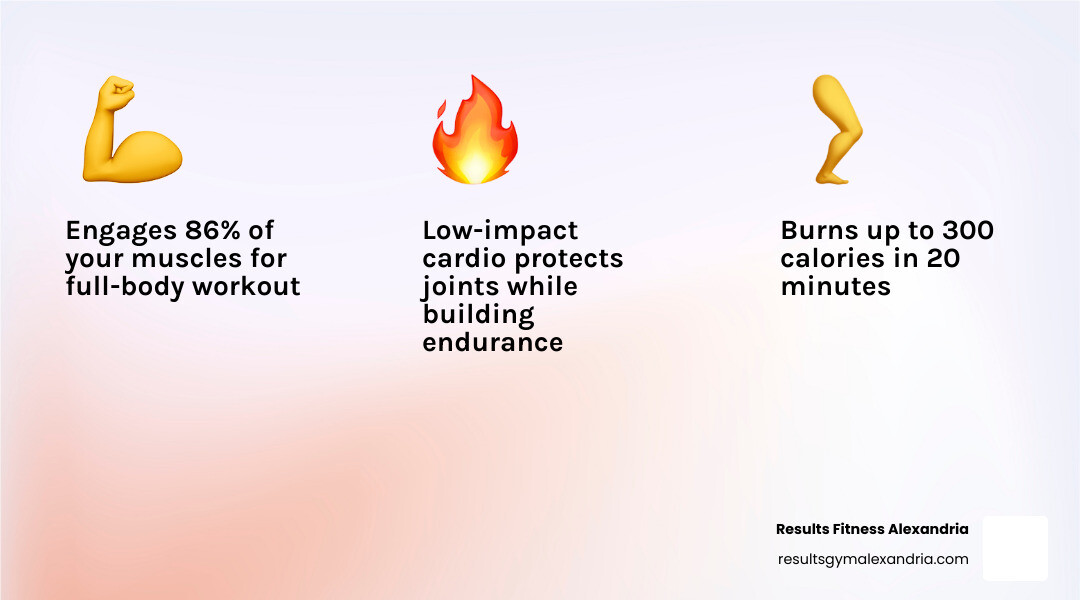
Rowing is unique because it engages 86% of your muscles in a single session — all while being low-impact on your joints. That means you get cardio and strength work done at the same time, in just 20 minutes.
Whether you’re squeezing in a lunch break session or looking for a smarter way to train after a long day, this guide covers three ready-to-use routines, proper technique, performance benchmarks, and common mistakes to avoid.
I’m Jennifer Rapchak, Fitness Director at Results Fitness Alexandria, with over 14 years of experience as an ACE-certified personal trainer designing effective programs — including the 20 minute rowing workout formats I’ll walk you through here. My background in HIIT and strength training means every routine in this guide is built for real results, not just filling time.
20 minute rowing workout word roundup:
Why a 20 minute rowing workout is Your Secret Weapon

When we talk about efficiency in the gym, the rowing machine is the undisputed heavyweight champion. It is often called the “Swiss Army knife” of exercise equipment because it tackles fat burning, muscle building, and cardiovascular health simultaneously. If you only have 20 minutes to spare in May 2026, you won’t find a better return on your investment.
The most incredible statistic is that rowing engages 86% of your muscles. Unlike running, which is primarily lower-body focused, or cycling, which can sometimes lead to hip tightness, rowing recruits your legs, core, back, and arms in every single stroke. This massive muscle recruitment leads to a significant metabolic boost, meaning you continue to burn calories long after you’ve stepped off the machine.
Furthermore, it is a Cardio Training For Better Endurance powerhouse. Because it uses more than 80 percent of your muscle mass, your heart has to work extra hard to pump blood to all those active tissues. This strengthens your cardiovascular system without the jarring impact on your knees and ankles that comes with pavement pounding. As noted in Up The Intensity With This 20-Minute Rowing Workout, pushing the pace on a rower can exhaust you quickly, making it the perfect tool for high-intensity training.
Mastering the Machine: Setup and Technique
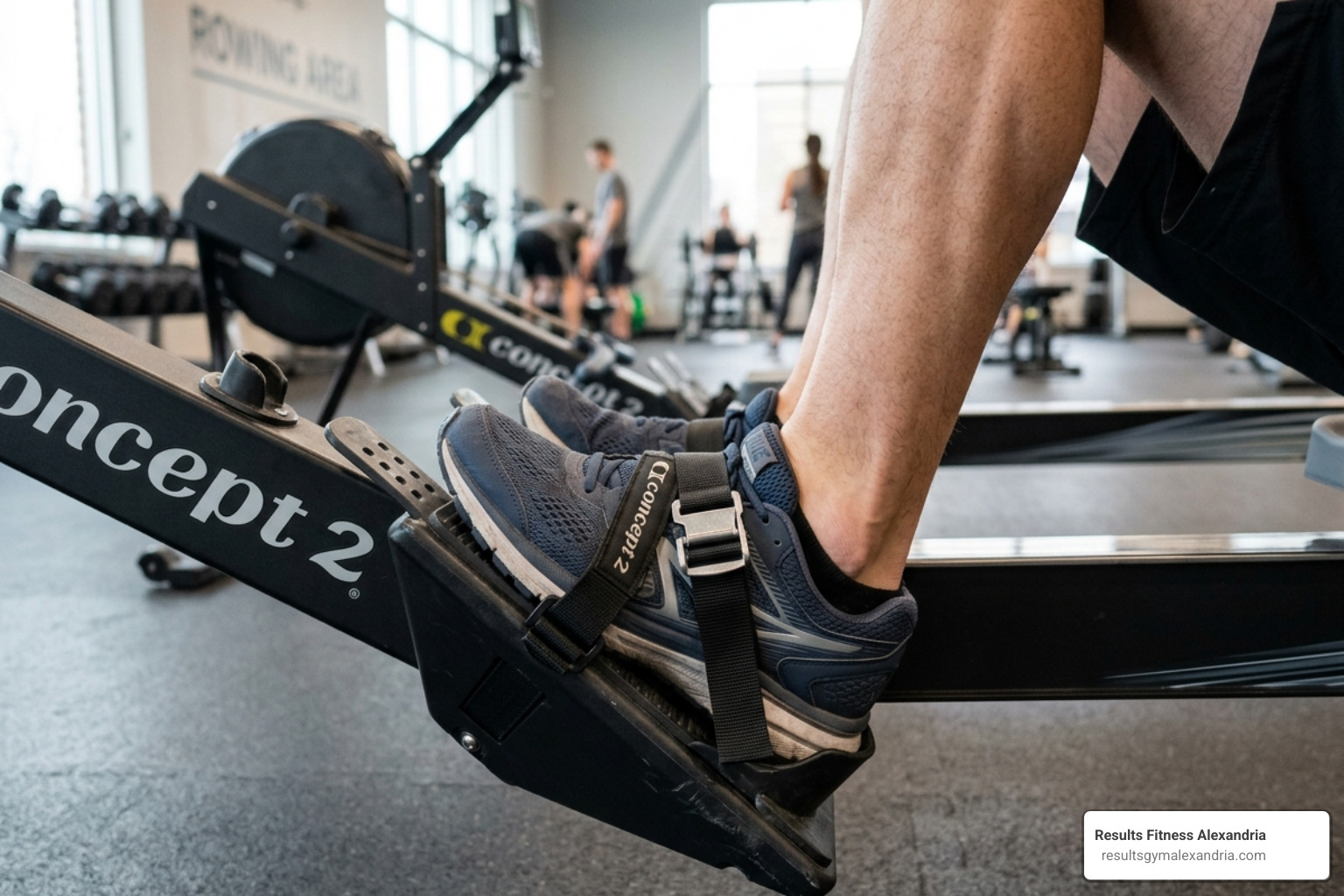
Before you start your 20 minute rowing workout, you need to make sure the machine is set up for your body. A poor setup leads to poor form, which can lead to injury or simply an ineffective session.
Machine Setup
- Damper Setting: Think of the damper (the lever on the side of the flywheel) like gears on a bike. It doesn’t strictly mean “intensity,” but rather how much air flows into the cage. For most people, a setting between 3 and 5 is ideal. It simulates the feel of a sleek boat on the water. Setting it to 10 often leads to early muscle fatigue before you’ve reached your cardio goals.
- Foot Straps: Adjust the footplates so the strap crosses over the widest part of your foot (the ball of the foot). Pull them snug!
- The Monitor: Set your display to show SPM (Strokes Per Minute) and Split Time (your pace per 500 meters). These are the gold standards for tracking your Rowing Machine Workout progress.
The Four Phases of the Stroke
To row effectively, you must follow a specific sequence. We like to use the “60-30-10” rule: 60% of the power comes from your legs, 30% from your core, and 10% from your arms.
- The Catch: This is the starting position. Your shins should be vertical, your back straight, and your arms extended. Lean forward slightly (about 15 degrees) from the hips.
- The Drive: This is the “work” phase. Start by pushing off with your legs. Once your legs are nearly straight, swing your torso back to about a 15-degree lean, and finally, pull the handle to your chest (just below the ribs).
- The Finish: Your legs are extended, your core is engaged, and the handle is pulled in. Don’t “chicken wing” your elbows; keep them tucked and relaxed.
- The Recovery: This is the “rest” phase. It should be the exact reverse of the drive. Extend your arms first, hinge your torso forward, and then bend your knees to slide back to the catch.
Pro Tip: Aim for a 1:2 drive-to-recovery ratio. The drive should be quick and powerful, while the recovery should be twice as long to allow for a brief “active rest.”
Three Effective 20-Minute Routines for Every Level
Ready to row? We’ve designed these three routines to help you progress, whether you are just starting or looking to shatter your personal records. For more on the basics, check out our guide on Building Cardio Endurance For Beginners.
The Beginner-Friendly 20 minute rowing workout
This routine focuses on rhythm and building a “feel” for the machine. Set your damper to 3-5.
- 0:00-3:00: Warm-up at a steady 20 SPM. Focus on the “legs-core-arms” sequence.
- 3:00-7:00: Moderate pace at 24 SPM. You should be able to speak in short sentences but feel your heart rate rising.
- 7:00-9:00: Speed burst! Increase to 28 SPM. Focus on pushing harder with your legs, not just moving your arms faster.
- 9:00-12:00: Active recovery at 20-22 SPM. Keep moving, but let your breathing settle.
- 12:00-16:00: Power push at 26-28 SPM. Maintain a consistent split time.
- 16:00-20:00: Cool down at 18-20 SPM. Focus on deep breathing and full range of motion.
This structured approach is a great example of Cardio Endurance Exercise that builds a solid foundation.
Intermediate Endurance Intervals
Once you’ve mastered the rhythm, it’s time to build your aerobic base. This workout uses UT1 intensity (intense but sustainable). Set the damper to 4-6.
- 0:00-5:00: Warm-up, gradually increasing SPM from 18 to 22.
- 5:00-15:00: The Main Set. Row at a consistent 22-24 SPM. The goal here is “split consistency.” Try to keep every 500m split within 1-2 seconds of each other. As noted in A 20-Minute Rowing Workout That Targets Every Muscle, focusing on the power of the pull rather than just the speed of the seat is key.
- 15:00-20:00: Pyramid Finisher. 1 min at 24 SPM, 1 min at 26 SPM, 1 min at 28 SPM, 2 mins easy cool down.
Advanced HIIT and Strength 20 minute rowing workout
This is a metabolic conditioning “spicy” workout that combines rowing with functional movements.
- The Format: 10 Rounds.
- The Work: 30 seconds of maximum effort rowing (aim for 30+ SPM) followed immediately by 30 seconds of walking lunges (1010 tempo).
- The Rest: 30 seconds of complete rest or very light rowing.
- The Goal: Power over speed. Every stroke should feel like a heavy deadlift. This high-intensity approach is designed to make you “cry sweat” and build lean muscle while blasting calories.
Performance Benchmarks and Tracking Progress
How do you know if you’re getting better? In the rowing world, we look at distance covered in a set time and your “split.”
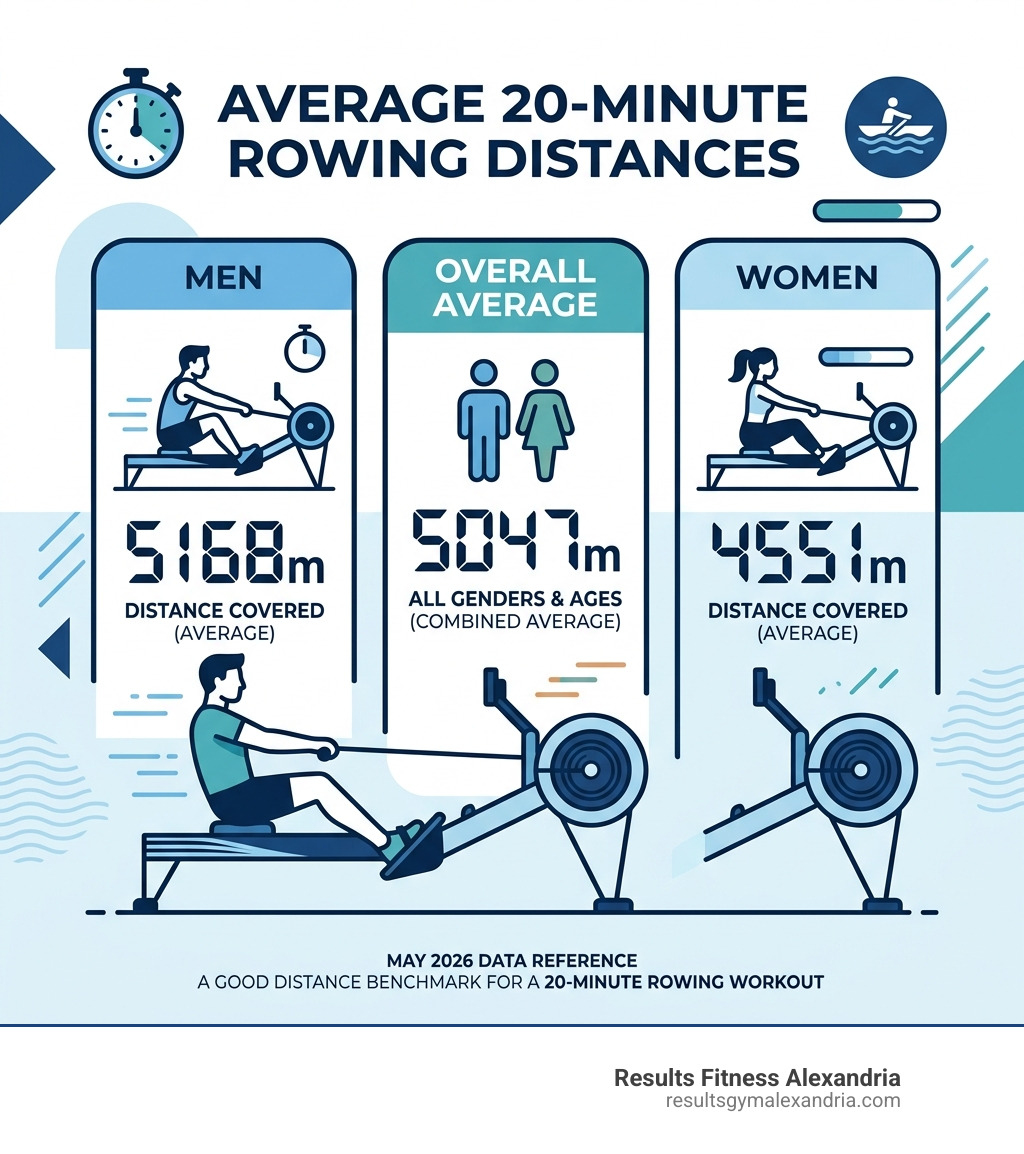
According to May 2026 data, a good distance for a 20 minute rowing workout is approximately 5047 meters across all ages and genders. Here is a breakdown of what to aim for based on ability level:
| Ability Level | Male Distance (20 min) | Female Distance (20 min) | Avg. Split Time |
|---|---|---|---|
| Beginner (Top 95%) | 3800m – 4200m | 3300m – 3700m | 2:30 – 2:45 |
| Intermediate (Top 50%) | 5168m | 4551m | 1:56 – 2:12 |
| Advanced (Top 20%) | 5500m+ | 4900m+ | 1:45 – 1:55 |
| Elite (Top 5%) | 6000m+ | 5400m+ | 1:35 – 1:40 |
To track your progress, keep a log of your total meters and your average split. If you want to dive deeper into metrics, our guide on How To Rowing Machine Workout 5 Effective Methods offers more ways to measure your output.
Common Mistakes and Post-Workout Recovery
Even experienced gym-goers can fall into bad habits on the rower. Avoid these “form killers” to stay safe:
- Shooting the Tail: This happens when your butt slides back before your shoulders move. It means you aren’t engaging your core. Keep your torso leaned forward until your legs are nearly extended.
- Rounding the Back: Do not slouch! Keep a proud chest and a flat back to protect your spine.
- Over-reaching: Don’t try to pull the handle past your chest or hit the flywheel with the seat. Stay within a comfortable, powerful range of motion.
- Death Grip: Relax your hands. Your fingers should act like hooks. Tension in the hands leads to tension in the neck and shoulders.
Recovery and Stretching
After your 20 minute rowing workout, don’t just walk away. Rowing can tighten the hamstrings and hip flexors. We recommend:
- Hamstring Stretch: Reach for your toes while seated on the floor.
- Hip Opener: A deep lunge or “pigeon pose” to release the tension from the drive phase.
- Active Recovery: A few minutes of very light movement helps clear lactic acid. For a shorter recovery-day option, try our 10 minute rowing machine workout.
Frequently Asked Questions
Is 20 minutes of rowing enough for weight loss?
Absolutely. Because rowing uses 86% of your muscles, a 20-minute session can burn significant calories (often 200-300+ depending on intensity). When done as HIIT (High-Intensity Interval Training), it also raises your resting metabolic rate, helping you burn fat even after you leave Results Fitness Alexandria.
What is a good distance for a 20 minute rowing workout?
The average distance is about 5047 meters. For men, a solid intermediate goal is 5168m, and for women, it is 4551m. If you are a beginner, don’t worry about the numbers yet—focus on finishing the 20 minutes with consistent form!
What damper setting should I use?
For most workouts, stay between 3 and 5. This provides enough resistance to build muscle without putting unnecessary strain on your joints or causing you to “burn out” your muscles before your heart rate gets high enough for a cardio benefit.
Conclusion
At Results Fitness Alexandria, we believe that fitness should be effective, efficient, and—most importantly—accessible. Whether you are using our top-tier rowing machines during a solo session or incorporating them into your personal training program, the 20 minute rowing workout is a tool that will help you reach your May 2026 goals faster.
Ready to see why rowing is the “new cardio”? We invite you to come in and try our amenities for yourself. We offer a free 1-day pass for all fitness levels, so you can test out these routines in a supportive, professional environment. From our expert personal training to our diverse fitness classes, we have everything you need to row your heart out.