Dive Into Fitness with Adult Swimming Exercise Classes
The Best Way to Start Swimming Fitness Classes Near Me
If you’re looking for swimming fitness classes near me, here’s a quick overview of what’s available and how to get started:
- Aqua aerobics – Low-impact cardio in shallow water, no swimming experience needed
- Deep water fitness – High-intensity, zero-impact workout using flotation belts
- Aqua Zumba – Latin dance moves in the pool for full-body toning
- Aqua HIIT / Tabata – Interval training adapted for shallow or deep water
- Beginner / adaptive classes – Designed for all fitness levels, including those with joint pain or injuries
Most facilities offer drop-in passes so you can try before committing to a membership.
Getting fit doesn’t have to mean pounding a treadmill or fighting for a weight machine. Water fitness is one of the most effective — and most underrated — workouts available to adults. It burns serious calories, builds strength, and protects your joints at the same time. One participant shared burning over 600 calories in a single 63-minute class. Yet most people never try it simply because they don’t know where to start or what to expect.
That changes here. This guide walks you through every type of adult aquatic fitness class, how to pick the right one for your goals, what to bring, and how to sign up.
I’m Jennifer Rapchak, Fitness Director at Results Fitness Alexandria, and with over 14 years of experience in certified personal training and group fitness programming, I’ve seen how swimming fitness classes near me can transform the way adults train — especially for those who need a lower-impact option without sacrificing results. Let’s get you in the water.
Related content about swimming fitness classes near me:
Why Choose Swimming Fitness Classes Near Me Over Land Workouts?
When you step into a pool for a workout, you are entering an environment that completely changes how your body moves and responds to effort. Many people view water-based workouts as a leisurely alternative to land-based training, but the physical reality is quite the opposite. Water provides a unique environment where you can work harder with less wear and tear on your skeletal system.
The magic of water fitness comes down to two primary physical principles: buoyancy and resistance.
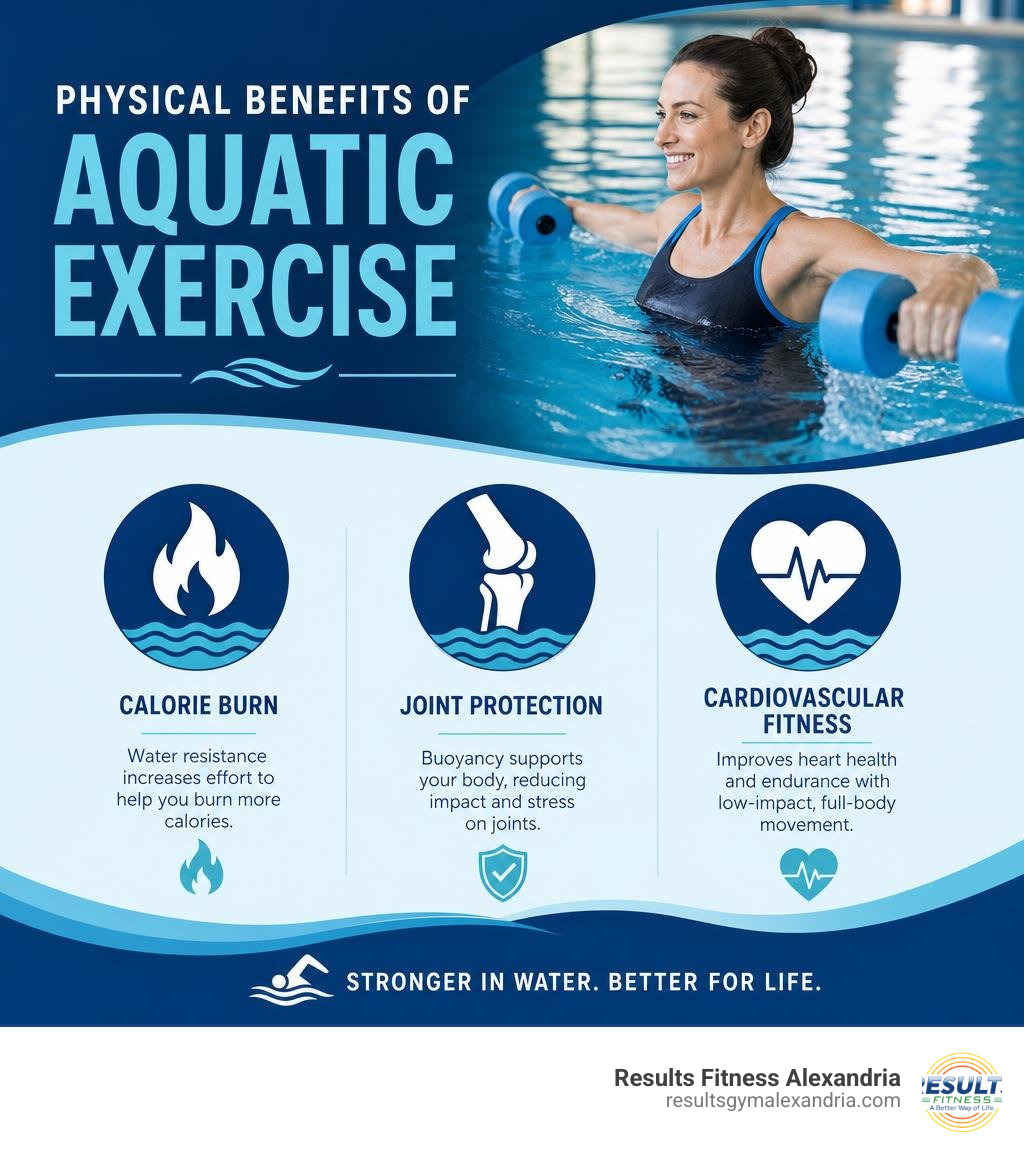
First, buoyancy acts as a natural cushion. When you are submerged to your chest, water supports up to 90% of your body weight. This dramatic reduction in gravity means your ankles, knees, hips, and spine are spared from the heavy impact associated with running, jumping, and lifting weights on land. To learn more about this gentle yet highly effective training environment, check out our guide on Dive into Fitness: Why Low-Impact Water Aerobics is Perfect for You.
Second, water provides multi-directional, natural resistance. Unlike land-based weights, which only pull in one direction due to gravity, water surrounds your body and resists every move you make in every direction. Whether you push, pull, kick, or twist, you are constantly working against a substance that is roughly 800 times denser than air. This creates a built-in safety mechanism: the harder you push, the more resistance you face, making it incredibly easy to customize your workout intensity on the fly. This constant resistance is highly effective for body composition; find out how in our article on How Aquatic Exercise Can Help You Lose Weight and Get in Shape.
Low-Impact Joint Protection
For adults managing joint pain, recovering from injuries, or looking to build strength sustainably, traditional land workouts can sometimes do more harm than good. High-impact exercises like running or heavy weight training can strain sensitive joints, leading to inflammation or further injury.
Water-based fitness classes offer an ideal solution. By taking the weight off your joints, you can perform deep squats, high knee lifts, and jumping jacks without the harsh landing forces. This makes aquatic exercise highly recommended for individuals with arthritis, fibromyalgia, or lupus, as the warm water helps relax muscles while the buoyancy keeps joint friction to a minimum.
Additionally, water workouts are excellent for physical rehabilitation. If you are recovering from a surgery or injury, the pool allows you to maintain your cardiovascular fitness and rebuild muscle tissue without risking reinjury. While the impact is low, the resistance is still high enough to stimulate bone health and muscular endurance, giving you all the benefits of a challenging workout with none of the joint pain.
High Calorie Burn and Cardiovascular Conditioning
Don’t let the low-impact nature of the pool fool you into thinking it’s an easy ride. Because you are constantly fighting the natural resistance of the water, your heart and lungs have to work incredibly hard to keep your muscles supplied with oxygen.
An active 60-minute water fitness class can easily burn between 500 and 600+ calories depending on your effort and the class format. The continuous, full-body engagement required to stabilize yourself in the water turns every movement into a calorie-burning opportunity.
Furthermore, swimming and water fitness classes are fantastic for building lung capacity and cardiovascular endurance. The pressure of the water against your chest naturally forces your respiratory muscles to work harder, which over time strengthens your diaphragm and improves your overall breathing efficiency. If you’re ready to see how these dynamics can reshape your weekly routine, explore Swimming for Fitness: How Aquatics Classes Can Transform Your Workout Routine.
Types of Adult Water Fitness Classes Available
Water fitness has evolved far beyond basic pool exercises. Today, there are diverse formats designed to meet different fitness levels and goals. To help you understand the landscape of swimming fitness classes near me, we’ve broken down the two main environments you’ll encounter.
| Feature | Shallow Water Classes | Deep Water Classes |
|---|---|---|
| Water Depth | Waist to chest deep (feet touch pool floor) | 6 to 9 feet deep (feet do not touch floor) |
| Impact Level | Low impact (buoyancy reduces joint stress) | Zero impact (completely non-weight-bearing) |
| Equipment Used | Water dumbbells, kickboards, resistance bands | Flotation belts, noodles, hand paddles |
| Focus Areas | Balance, footwork, strength, and agility | Core stabilization, cardiovascular endurance |
| Swimming Ability | No swimming experience required | Comfort in deep water required |
If you are trying to decide which format fits your personal style, you can read our breakdown of The 10 Best Aquatics Classes Compared to find your perfect match.
Shallow Water Aerobics and Aqua Zumba
Shallow water classes are perfect for beginners, non-swimmers, and those who love high-energy group workouts. Typically held in water that reaches between your waist and chest, these classes allow you to keep your feet firmly planted on the pool floor while utilizing the water’s resistance to tone your body.
One of the most popular shallow-water variations is Aqua Zumba. This format takes the vibrant Latin rhythms and dance moves of a traditional Zumba class and adapts them for the pool. The water cushions your joints during quick footwork and hip movements, while the resistance of the water forces you to engage your core and upper body to stay balanced. It is an incredibly fun, high-energy way to achieve full-body toning without feeling like you are doing a chore.
Other shallow water formats include H2O Bootcamp, circuit training, and water walking, which focus on athletic drills, agility, and functional strength exercises.
Deep Water Fitness and HIIT Workouts
If you want a truly zero-impact workout that challenges your core and cardiovascular system, deep water fitness is the way to go. These classes take place in the deep end of the pool—usually around 9 feet deep—where your feet cannot touch the bottom.
To keep you upright and properly aligned, you will wear a specialized flotation belt. This weightless environment allows you to perform high-intensity movements like running, cross-country skiing, and tuck jumps without any impact on your joints.
Deep water is also the perfect setting for high-intensity interval training (HIIT) and Tabata workouts. An Aqua Tabata class alternates between 20 seconds of ultra-high-intensity effort (such as rapid water running or power punching) and 10 seconds of active recovery. Because there is absolutely zero impact, you can push your heart rate to its maximum safety limit without worrying about landing hard on your joints.
Specialized and Beginner-Friendly Swimming Fitness Classes Near Me
For those who need a gentler introduction to the pool, there are plenty of specialized classes designed with accessibility in mind. Many community pools and local wellness centers offer arthritis-friendly classes. These sessions focus on gentle range-of-motion exercises, light stretching, and balance work to help reduce joint stiffness and improve daily mobility.
Additionally, adaptive aquatics programs are available for individuals with physical disabilities, sensory sensitivities, or developmental challenges. These classes feature highly trained instructors who can modify every movement to match the participant’s unique abilities, ensuring that everyone can experience the freedom of movement that water provides. To learn more about inclusive pool options, read our guide on Aquatics for All Levels and Ages.
How to Choose and Prepare for Your First Class
Taking the plunge into your first water fitness class is exciting, but it’s completely normal to have a few questions about how to prepare. Having the right gear and mindset will ensure you feel confident the moment you step onto the pool deck.

If you’re feeling a bit nervous about your very first group class, don’t worry. We have a helpful primer on Your First Aerobics Class: Fun, Low-Impact Workouts to Get You Started to help ease your mind.
Selecting the Right Level for Your Goals
Before you sign up for a class, take a moment to assess your current fitness level, your personal goals, and any physical limitations you might have.
If you are new to working out, recovering from an injury, or uncomfortable in deep water, starting with a shallow water class is highly recommended. It allows you to build confidence, learn the basic movements, and adjust to the unique feeling of water resistance while keeping your feet on the ground.
If your goal is high-intensity conditioning, weight loss, or athletic training, look for deep-water cardio, HIIT, or advanced endurance swim classes. Always communicate any injuries, joint pain, or pregnancy to your instructor before the class starts so they can provide customized modifications. For a deeper look at finding the right fit, check out Make a Splash: Your Guide to Finding the Perfect Local Swim Class.
Essential Gear and Equipment for Water Workouts
One of the best things about water fitness classes is that the facility usually provides most of the heavy equipment, such as water dumbbells, kickboards, and flotation belts. However, there are a few personal items you should bring to ensure a comfortable workout:
- Swimwear: Choose a supportive, secure one-piece swimsuit or athletic swim trunks that will stay in place during dynamic movements.
- Water Shoes: Highly recommended for shallow water classes. They provide traction on the pool floor, protect your feet from scrapes, and cushion your steps.
- Swim Cap and Goggles: Essential if you are taking a class that involves putting your head under water or swimming laps.
- Water Bottle: It is easy to forget that you sweat in the pool! Keep a plastic water bottle on the pool deck to stay hydrated.
- Resistance Gear: For advanced classes, you might eventually want to invest in your own hand paddles, pull buoys, or short swim fins to increase the resistance of your workouts.
Finding and Registering for Aquatic Programs
Now that you know what to expect, the next step is finding a high-quality program in your area. For residents of Alexandria, Virginia, there are several local resources available to help you get active in the water.
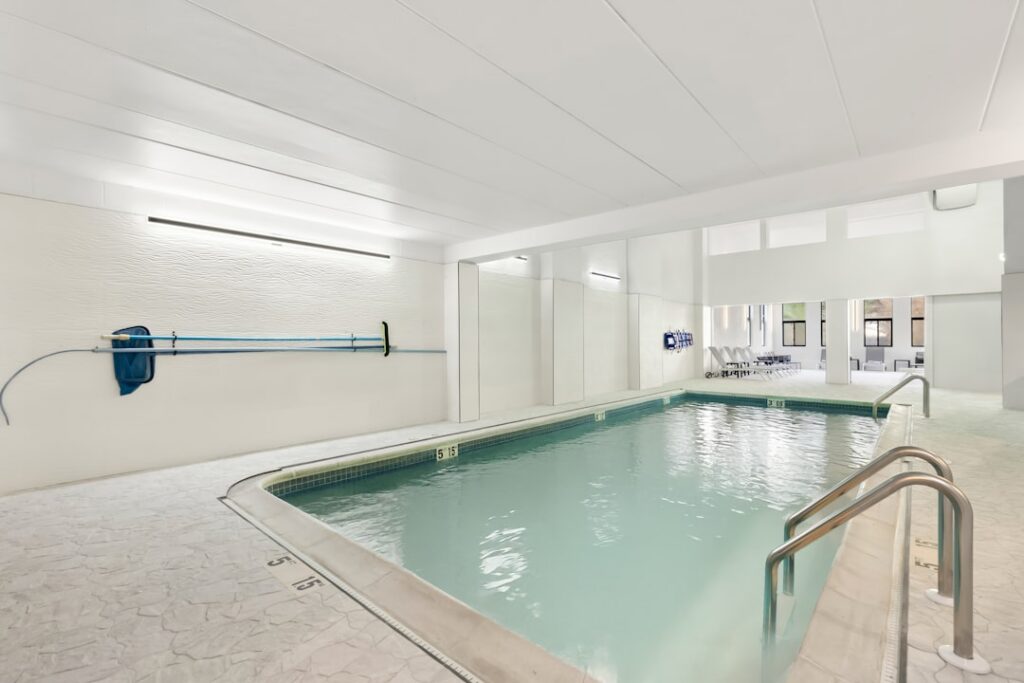
If you want to read more about why local indoor pools are such a fantastic asset for your weekly routine, check out our article on Why You Should Just Keep Swimming at These Local Gyms.
How to Find and Register for Swimming Fitness Classes Near Me
Finding the right class is all about knowing where to look. In Alexandria, you have several excellent avenues:
- City Recreation Centers: The City of Alexandria Aquatics Division manages several indoor and outdoor pools that offer public swim hours, swim lessons, and water fitness classes.
- Community Wellness Centers: Facilities like the YMCA Alexandria feature heated indoor pools with robust weekly schedules of water aerobics, deep-water conditioning, and family swim times.
- Specialized Swim Schools: If you are looking to build your basic swimming skills or find structured programs for your family, local specialized schools like the Goldfish Swim School in Alexandria offer dedicated instructional programs.
- Adult Swim Programs: If you are looking for structured, coach-led swim training or open-water preparation, look for regional programs such as those offered by Waterloo Swimming or seasonal training clinics like the TBF Training Open Water Swim Class and regional summer master classes like Neptunes WPSC Masters.
For a complete breakdown of how to navigate local pool schedules, check out our comprehensive resource, The Ultimate Guide to Finding Recreational Swimming for Adults Near You.
Frequently Asked Questions About Water Fitness
What is the typical cost and membership requirement for aqua classes?
Costs vary depending on the facility. Many community pools and recreation centers offer drop-in daily passes for around $10 to $20, allowing you to try a class without a long-term commitment. For regular attendees, monthly memberships or class punch cards are usually the most cost-effective option. If you are a member of a full-service gym with a pool, water fitness classes are often included in your monthly dues. Always check the facility’s cancellation policy, as some popular classes require you to unregister at least 12 to 24 hours in advance to free up spots for other participants.
Do I need to know how to swim to attend water aerobics?
No! For shallow water classes, you do not need any swimming experience whatsoever. Your feet will remain securely on the pool floor, and your head will stay above water throughout the entire class. For deep water classes, while you will wear a highly supportive flotation belt that keeps you effortlessly afloat, you should feel comfortable and relaxed in deep water.
How far in advance should I register or reserve a spot?
Because water fitness classes have strict capacity limits to ensure everyone has enough room to move safely, spots can fill up quickly. Many facilities open their online registration windows between 48 and 73 hours before the class start time. It is highly recommended to download the facility’s reservation app (such as Motionvibe or a custom member portal) so you can secure your spot as soon as the registration window opens.
Conclusion
Water fitness is one of the most versatile, joint-friendly, and highly effective ways to transform your health. Whether you are dancing your way to fitness in an Aqua Zumba class, testing your limits in a deep-water HIIT session, or recovering from an injury in a gentle range-of-motion class, the pool provides an environment where you can succeed.
At Results Fitness Alexandria, we are dedicated to helping you find the perfect workout routine for your lifestyle, goals, and fitness level. While we specialize in premier land-based fitness classes, personal training, yoga, and convenient childcare, we believe in a well-rounded approach to health.
If you’re ready to jumpstart your fitness journey, we invite you to claim a free 1-day pass to experience our welcoming community, meet our expert personal trainers, and try our dynamic land classes.
Ready to dive deeper into aquatic wellness? Dive into our premier aquatics programs and find your perfect flow today!