Make a Splash: Your Guide to Finding the Perfect Local Swim Class
Why Swimming Lessons Near Me Are Worth Finding Right Now
If you’ve been searching for swimming lessons near me, here’s a quick answer to help you get started:
How to evaluate swimming lessons near you:
- Confirm instructor credentials – Look for CPR, First Aid, lifeguarding, and recognized swim-instruction training
- Ask for a skill assessment – A quick placement check helps beginners, kids, adults, and returning swimmers start at the right level
- Compare class ratios – Smaller groups usually mean more personal attention, better safety, and faster skill development
- Match lessons to your goal – Choose based on water safety, adult confidence, stroke refinement, lap swimming, or low-impact fitness
- Review safety and scheduling policies – Ask about pool rules, sanitation, makeup lessons, cancellations, and weather-related closures
- Plan for your fitness next step – Once basic skills are in place, swimming can support cardio training, joint-friendly conditioning, and personal training goals
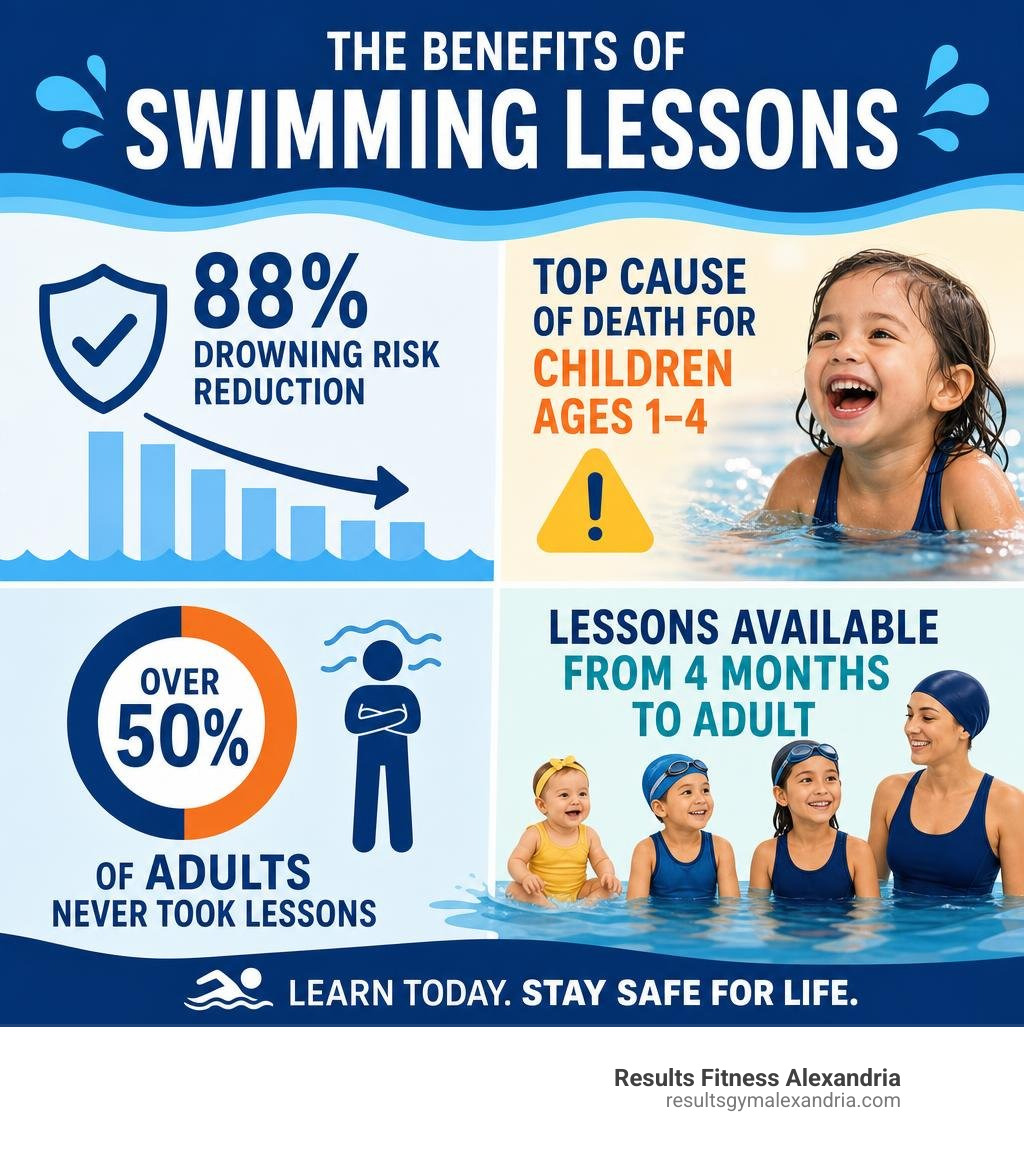
Swimming is one of the most important life skills a person can learn – and the numbers make that clear. Drowning is the leading cause of death for children ages 1 to 4 in the United States. Yet swim lessons can reduce that drowning risk by as much as 88%. Despite this, more than half of American adults have never taken a single swim lesson.
Whether you’re a parent looking to keep your child safe, or an adult who never learned to swim, finding the right local class can feel overwhelming. This guide breaks it all down simply.
I’m Jennifer Rapchak, Fitness Director at Results Fitness Alexandria, with over 14 years of experience designing fitness and aquatics programming for people at every level. I’ve guided countless members – including complete beginners – toward finding swimming lessons near me that match their goals, schedule, and comfort level. Let’s find the right fit for you.
Simple swimming lessons near me glossary:
Understanding Swim Lesson Levels and Finding Your Fit

When searching for the ideal program, the first step is understanding where you or your child fit into the learning progression. Swim lessons are not one-size-fits-all; they are structured in progressive stages designed to build confidence, safety, and physical endurance step-by-step.
Most programs break their curriculum down into three primary phases:
- Water Acclimation and Comfort: Overcoming fear, learning to submerge the face, and mastering basic breath control.
- Water Movement and Stamina: Learning basic self-rescue skills, front and back glides, and treading water.
- Stroke Mechanics and Development: Introducing formal strokes like the front crawl, back crawl, and breaststroke, while building the cardiovascular stamina required for continuous swimming.
To determine where you or your child should begin, most quality programs offer a quick skill assessment. If you are looking for a comprehensive overview of how these stages fit into a lifelong fitness journey, check out our guide on Aquatics for All Levels and Ages.
Determining the Right Level for Kids
For parents, selecting the right class level ensures your child stays engaged without feeling overwhelmed.
- Parent-Tot / Swim Starters (Ages 4 Months to 3 Years): These classes require a parent or guardian to be in the water. The focus is entirely on water discovery, basic safety, bonding, and helping infants and toddlers become comfortable with splashes, floating, and gentle movement.
- Preschool Aquatics (Ages 3 to 5): Children transition to being in the pool with an instructor. They learn to voluntarily go underwater, blow bubbles, perform basic front and back floats with minimal assistance, and practice safe entry and exit.
- School-Age Progression (Ages 5 and Up): As kids grow, the curriculum shifts toward building stamina. They practice swimming 10 to 15 yards on their front and back, treading water, and eventually learning proper stroke mechanics.
Enrolling your child in the correct developmental level is the single most effective way to achieve a massive drowning risk reduction and build a healthy, lifelong relationship with the water.
Adult Swimming Lessons Near Me
It is a common misconception that swim lessons are only for children. In reality, over half of U.S. adults cannot swim comfortably or have never taken a formal lesson. If you fall into this category, searching for adult-specific swimming lessons near me is a highly rewarding step.
Adult swim classes are typically divided into:
- Adult Beginners: Focused on overcoming a fear of water, learning to float, treading water, and developing basic water safety skills.
- Stroke Refinement: Designed for adults who can swim basic laps but want to improve their breathing, efficiency, and technique to use the pool as a primary source of cardiovascular exercise.
Learning to swim as an adult opens up a completely new world of low-impact training. To see how a pool can fit into your overall wellness routine, explore our resources on utilizing an Aquatics Swimming Pool for health and conditioning.
Adaptive Swim Programs for Different Abilities
Every individual deserves the opportunity to learn how to swim safely. Adaptive swim programs are specifically designed for children and adults with physical, developmental, or cognitive differences.
These specialized classes feature:
- Highly trained instructors who understand sensory processing, physical limitations, and customized teaching methods.
- Accommodations such as visual aids, specialized pool entry ramps, and adjusted class structures to reduce sensory overload.
- A focus on individualized self-rescue skills, core strength, and water comfort.
For those looking at water activities from a therapeutic or low-impact conditioning perspective, adaptive swimming can serve as an incredible bridge to broader Aquatic Exercise programs.
What to Expect: Class Sizes, Ratios, and Preparation
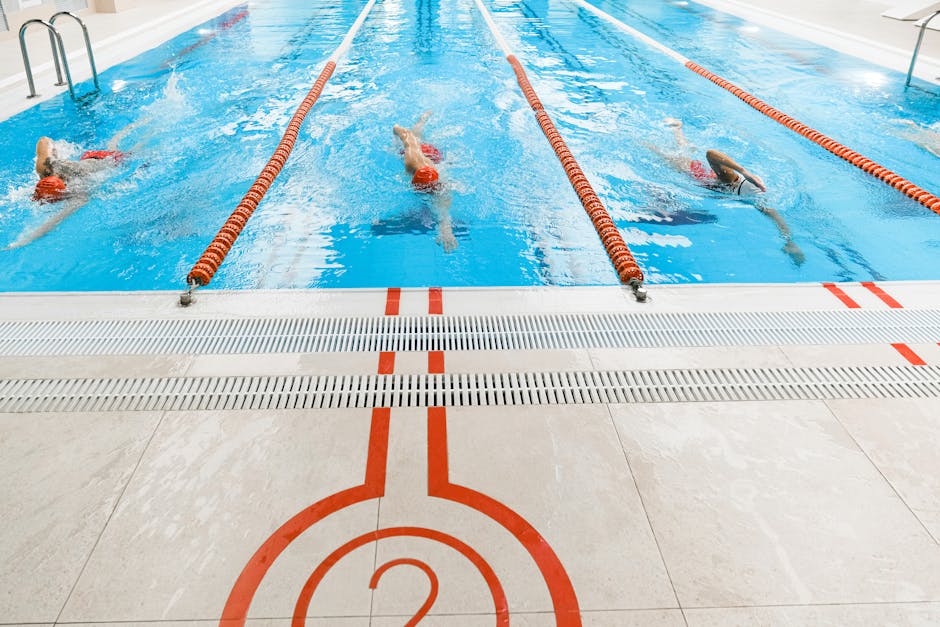
Walking into your first swim lesson is much easier when you know exactly what to expect. From the physical gear you need to the safety protocols in place, being prepared ensures a stress-free and successful first day in the water.
When researching local options, pay close attention to the pool environment itself. Many premium programs utilize indoor heated pools, which are kept at comfortable temperatures (often between 88 and 90 degrees Fahrenheit) to prevent shivering and keep young children or tense beginners relaxed. To learn more about the structure of these group environments, take a look at our breakdown of Aquatics Aquatics Classes.
Essential Gear for Your First Lesson
You don’t need a massive amount of gear to start swimming, but having the right essentials makes a big difference:
- Appropriate Swimwear: Choose comfortable, snug-fitting swimwear. Avoid loose cotton clothing or heavy t-shirts, as cotton absorbs water, becomes heavy, and can drag a swimmer down. Rash guards made of synthetic materials are perfectly fine.
- Swim Diapers: If your child is not yet fully potty-trained, a reusable or disposable swim diaper is strictly required by pool sanitation codes. Regular diapers will absorb pool water and swell, rendering them useless.
- Goggles: While not strictly necessary for absolute beginners learning basic water comfort, goggles are highly recommended once students begin putting their faces in the water and practicing stroke mechanics.
- Swim Caps: Recommended for anyone with long hair to keep it out of their eyes and mouth. Alternatively, make sure long hair is securely pulled back into a ponytail.
- A Warm Towel and Change of Clothes: Always bring a dry towel and a dry set of clothes to change into immediately after showering post-class.
Safety Protocols and Class Ratios for Swimming Lessons Near Me
A high-quality swim school prioritizes safety above all else. When evaluating local facilities, always ask about their instructor-to-student ratios. Lower ratios ensure personalized attention, faster skill progression, and a much safer environment.
Standard industry guidelines for class ratios include:
- Infant/Toddler Classes: Typically a 1:8 to 1:10 ratio, as a parent or guardian is in the water with every child.
- Preschool Classes (Ages 3-5): Ideally a strict 1:4 ratio, ensuring the instructor can keep eyes and hands on all participants at all times.
- School-Age Classes: Generally a 1:5 or 1:6 ratio.
- Adult Group Classes: Usually maintained at a 1:8 ratio.
In addition to ratios, verify that all instructors are certified in CPR, First Aid, and Lifeguarding, and that the facility has clear, visible safety policies posted.
Finding the Best Swimming Lessons Near Me for Fitness and Recreation
To help you compare your options without getting overwhelmed, focus on the type of instruction, the safety standards, and how the program supports your long-term fitness goals:
| Program Type | Target Audience | Average Class Size | Typical Vibe & Facility | Key Focus Area |
|---|---|---|---|---|
| Beginner Water-Safety Instruction | Children, adults, and first-time swimmers | Small group or private | Calm, structured pool environment | Floating, breath control, safe entry and exit, basic self-rescue |
| Stroke Refinement Coaching | Adults, lap swimmers, and fitness-minded swimmers | Private or small group | Technique-focused sessions with clear feedback | Efficient breathing, body position, endurance, and stroke mechanics |
| Adaptive or Individualized Instruction | Swimmers with different abilities or specific comfort needs | Private or very small group | Supportive, personalized setting | Confidence, customized safety skills, mobility, and low-impact movement |
When comparing options, avoid choosing based on distance alone. Look for certified instructors, transparent instructor-to-student ratios, clean facilities, written safety policies, and scheduling that makes consistent practice realistic. For Alexandria residents reviewing public pool availability, rules, and facility information, the Aquatics Facilities | City of Alexandria, VA page is a useful public resource.
If cost is a barrier, ask whether financial assistance, sliding-scale fees, or scholarship options are available. Learning to swim is a lifesaving skill, and the right provider should be able to explain both pricing and safety policies clearly before you enroll.
Transitioning from Lessons to Swim Workouts
Once you or your child have mastered the fundamentals of floating, breathing, and basic strokes, the pool transitions from a place of learning to an incredible tool for overall health. Swimming is a full-body workout that builds lean muscle, burns calories, and improves cardiovascular endurance – all while being incredibly gentle on your joints.
At Results Fitness Alexandria, we love seeing members use new movement skills as a springboard for a stronger overall fitness routine. If your goal is weight loss, toning, conditioning, or cross-training, combining pool time with expert personal training can help you build a balanced plan that supports your progress in and out of the water. Discover how to take your routine to the next level by reading about How Aquatic Exercise Can Help You Lose Weight and Get in Shape.
Swimming for Fitness and Advanced Training
For those who already know how to swim but want to turn the pool into a primary fitness tool, advanced training is the way to go. This involves focusing on endurance building, stroke refinement, and structured interval training.
A typical advanced swim workout might include:
- A low-intensity warm-up of mixed strokes.
- Kickboard sets to build leg strength and core stability.
- Interval training, such as 50-yard sprints with designated rest periods, to elevate your heart rate.
- A cool-down lap to stretch out tight muscles.
If you are ready to transform your cardio routine into something dynamic and refreshing, check out our guide on Swimming for Fitness: How Aquatics Classes Can Transform Your Workout Routine.
Frequently Asked Questions about Swim Lessons
How long does it typically take to learn to swim?
The timeline for learning to swim varies based on age, initial comfort level, and consistency. For a young child or an adult with no fear of water, basic water competency (the ability to fall in, recover, float, tread water, and swim to safety) can often be achieved in 20 to 30 hours of consistent instruction and practice. Consistency is key — taking one lesson a week with zero practice in between will result in a much slower progression than attending lessons regularly and practicing during open swim sessions.
What happens if there is bad weather for an indoor or outdoor pool lesson?
For outdoor pools, lessons are immediately canceled or postponed at the first sound of thunder or sight of lightning. For indoor pools, policies vary but safety always comes first. Because indoor pools are connected to massive electrical, plumbing, and structural systems, many facilities will clear the water during severe electrical storms as a precaution. Most reputable swim schools have clear makeup class policies or account credits in place for weather-related cancellations.
Can adults with a fear of water benefit from beginner swim classes?
Absolutely. In fact, overcoming a fear of water is one of the most common reasons adults seek out swim instruction. Adult-focused beginner classes are designed to go at your own pace. Instructors focus heavily on building trust, teaching breath control, and showing you how the human body naturally floats. Many adults find that taking a few private lessons first helps them build the confidence needed to transition into a small-group class.
Conclusion
Learning to swim is a lifelong investment in your safety, health, and personal fitness. Whether you are searching for swimming lessons near me to protect your children, overcome a personal fear, or introduce a low-impact, highly effective cardio workout into your weekly routine, there has never been a better time to start.
At Results Fitness Alexandria, we are dedicated to helping our community live healthier, more active lives. While you work on your swimming goals, we invite you to experience our state-of-the-art gym, diverse group fitness classes, relaxing yoga sessions, and convenient childcare. We even offer a free 1-day pass so you can try out our amenities and see how we can support your fitness journey.
After a tough workout or a refreshing swim session, there is nothing quite like relaxing. Read more about winding down in our Aquatics Spa or explore our complete range of Aquatics offerings today. Stop by Results Fitness Alexandria, grab your free pass, and let’s make a splash together!