Beginner Weight Lifting for Women: 4-Week Easy Guide
Why Weight Lifting Is Your Secret Weapon for Strength and Confidence
Beginner weight lifting for women is one of the most powerful ways to transform your body, boost your metabolism, and build confidence—without getting “bulky.” Here’s what you need to know to get started:
Quick Start Guide:
- Start with bodyweight or light dumbbells (5-10 lbs)
- Focus on form first, not heavy weight
- Train 2-3 times per week with full-body workouts
- Use compound exercises like squats, rows, and presses
- Rest 1-2 days between sessions for recovery
For years, women have been told that endless cardio and light weights are the keys to “toning.” But research shows a different story. Strength training is imperative for body-fat loss, strength gain, and bone-density improvements. After age 30, you may lose 3-8% of muscle mass per decade. Weight training helps you fight back.
The gym floor can feel intimidating—especially if you’ve never ventured past the treadmills. But here’s the truth: everyone was a beginner once. The weights section isn’t just for men or experienced lifters. It’s for anyone who wants to get stronger, feel more capable, and improve their health for the long haul.
I’m Jennifer Rapchak, a certified personal trainer with over 14 years of experience at Results Fitness Gym in Alexandria, Virginia. I’ve helped countless women find the transformative power of strength training. In this guide, you’ll learn exactly how to start—with simple exercises, clear instructions, and a proven 4-week program designed for beginners.

Why Every Woman Should Lift Weights: The Surprising Benefits
If you grew up thinking cardio was the only answer to fitness, you’re not alone. While activities like running and cycling are great for your heart, if you’re only doing cardio, you’re missing out on something truly transformative.
Beginner weight lifting for women offers benefits that go far beyond what you can achieve with cardio alone. I’ve watched women completely transform not just their bodies, but their entire lives through strength training. Let me show you why this matters so much.
Building Lean Muscle and Boosting Metabolism
The more muscle you have, the more calories you burn—even while you’re sleeping. Muscle tissue is metabolically active, meaning it requires energy just to exist. When you start weight training, your body builds lean muscle, turning you into a more efficient calorie-burning machine. This metabolic boost continues long after your gym session has concluded.
Research confirms this. One study found that people who incorporated strength training lost significantly more body fat than those who only did aerobic exercise. This improved body composition—less fat, more muscle—is what creates that toned, strong look so many women are after. Want to dive deeper into how this works? Check out the science of building muscle.
Stronger Bones and Joint Protection
After age 30, women can lose 3-8% of muscle mass per decade, which directly impacts bone density and increases the risk of osteoporosis. Strength training is a superpower for your bones. The beneficial stress from lifting weights signals your body to make bones denser and stronger.
Research shows that as little as 30 minutes twice a week of high-intensity resistance training can improve bone density, structure, and strength in postmenopausal women with low bone mass. You can read more about improved bone strength in postmenopausal women in the research.
Your joints benefit too. Stronger muscles provide better support and stability around your joints, reducing your risk of injury. Learn more about how this applies across different life stages in our guide to strength training for all ages.
Improved Mental Health and Mood
The benefits of beginner weight lifting for women aren’t just physical—they’re deeply emotional and mental. I’ve seen countless women walk into the gym feeling stressed and leave standing taller, radiating confidence.
A meta-analysis of 33 clinical trials found that strength training can “reduce symptoms of depression.” Beyond the clinical research, there’s something incredibly empowering about getting physically stronger. Lifting a weight you couldn’t lift last month proves to yourself that you’re capable of more than you thought. That confidence spills over into every area of your life.
Longevity and Chronic Disease Management
Want to live a longer, healthier life? Studies show that “people who perform resistance training are less likely to die prematurely than those who don’t.” Strength training helps manage and prevent a wide range of chronic conditions, including arthritis, back pain, obesity, heart disease, depression, and diabetes. It helps control blood sugar, aids in weight management, and even improves cognitive function.
This is about being able to play with your grandchildren, carry your own groceries, and maintain your independence throughout your life. For a comprehensive overview, check out our article on the 10 Benefits of Strength Training for Women.
The bottom line? Cardio is great, but strength training is essential. Ready to experience these benefits for yourself? Let’s get you started.
Getting Started: Your Essential Guide to Beginner Weight Lifting for Women
Starting a new fitness journey can feel overwhelming, but beginner weight lifting for women doesn’t require a complicated routine. Every expert was once exactly where you are now. Most people in the gym are focused on their own workouts, and those who notice are usually just impressed that you showed up.

Necessary Equipment
You don’t need a garage full of fancy equipment. At a gym like Results Fitness Alexandria, everything you need is waiting for you.
- Dumbbells and Kettlebells: Versatile free weights for a wide range of exercises that build functional strength.
- Fixed Weight Barbells: Excellent for compound movements like squats and deadlifts once you build confidence.
- Weight Machines: Fantastic for beginners because they guide your movement, helping you maintain proper form.
- Resistance Bands: Lightweight, inexpensive, and surprisingly effective for adding resistance.
- Bodyweight: Incredibly powerful for exercises like push-ups, squats, and planks. It’s the perfect starting point.
Proper Form and Technique
Proper form is the most critical aspect of beginner weight lifting for women. Prioritizing correct form over heavy weights is essential for preventing injuries and ensuring you’re working the right muscles. A perfectly executed bodyweight squat is infinitely more valuable than a sloppy, heavy one.
Working with a personal trainer is one of the smartest investments you can make. They’ll teach you correct form from day one, providing personalized guidance that videos can’t match. At Results Fitness Alexandria, our certified personal trainers specialize in guiding beginners safely. If you’re considering working with a trainer, check out our guide on How to Choose a Personal Trainer.
Injury Prevention
To stay safe and injury-free, focus on strengthening supporting muscles, especially your core, which stabilizes your spine. Always warm-up with 5-10 minutes of light aerobic activity and dynamic stretching. Most importantly, listen to your body. If an exercise causes sharp pain (not the burn of working muscles), stop immediately. Pain is your body’s way of communicating; don’t ignore it.
Choosing Your Starting Weight
How much weight should you start with? Choose a weight that allows you to complete the prescribed repetitions with good form, where the last few reps feel challenging but still doable. There’s no shame in starting with 5-pound dumbbells or even just your bodyweight—we all start somewhere. If you can easily perform more reps than prescribed, it’s time to increase the weight slightly.
Common Mistakes and How to Avoid Them
- Lifting too heavy too soon: Sacrificing form for weight is a recipe for injury and slower progress. Start light, master the movement, and then gradually increase the load.
- Inconsistent training: Strength training requires consistency. Showing up regularly, even just two or three times a week, produces far better results than sporadic intense sessions.
- Not resting enough: Your muscles grow and repair during rest, not during the workout. Neglecting rest days can lead to overtraining, burnout, and stalled progress.
- Skipping warm-ups and cool-downs: A proper warm-up prepares your body and reduces injury risk. A cool-down aids recovery. Don’t skip these vital bookends to your workout.
- Fearing the weights section: Everyone in that weights section was a beginner once. Focus on your journey, not others’ perceptions. You belong there just as much as anyone else.
Your 4-Week Beginner Weightlifting Program
This 4-week program is designed for beginner weight lifting for women, using full-body workouts and compound exercises. Plan to train two days a week, with at least one full rest day between sessions. This rest is when your muscles repair and grow stronger. We’ll use progressive overload—gradually making things more challenging—so your body keeps adapting.
Program Guidelines:
- Warm-up: Before each workout, spend 5-10 minutes on light cardio (brisk walking, cycling) and dynamic stretches.
- Cool-down: After each workout, take 5-10 minutes for static stretching, holding each stretch for 20-30 seconds.
- Focus on Form: Perfect form beats heavy weight every time. If you’re unsure, ask a trainer or use a mirror.
- Choose a Challenging Weight: The last 1-2 reps of a set should feel difficult but be possible with good form.
Week 1: Building Your Foundation
This week is about learning the movements and establishing proper form with lighter weights.
- Frequency: 2 workouts per week
- Sets & Reps: 3 sets of 10-12 repetitions
- Rest: 60 seconds between sets
Workout A:
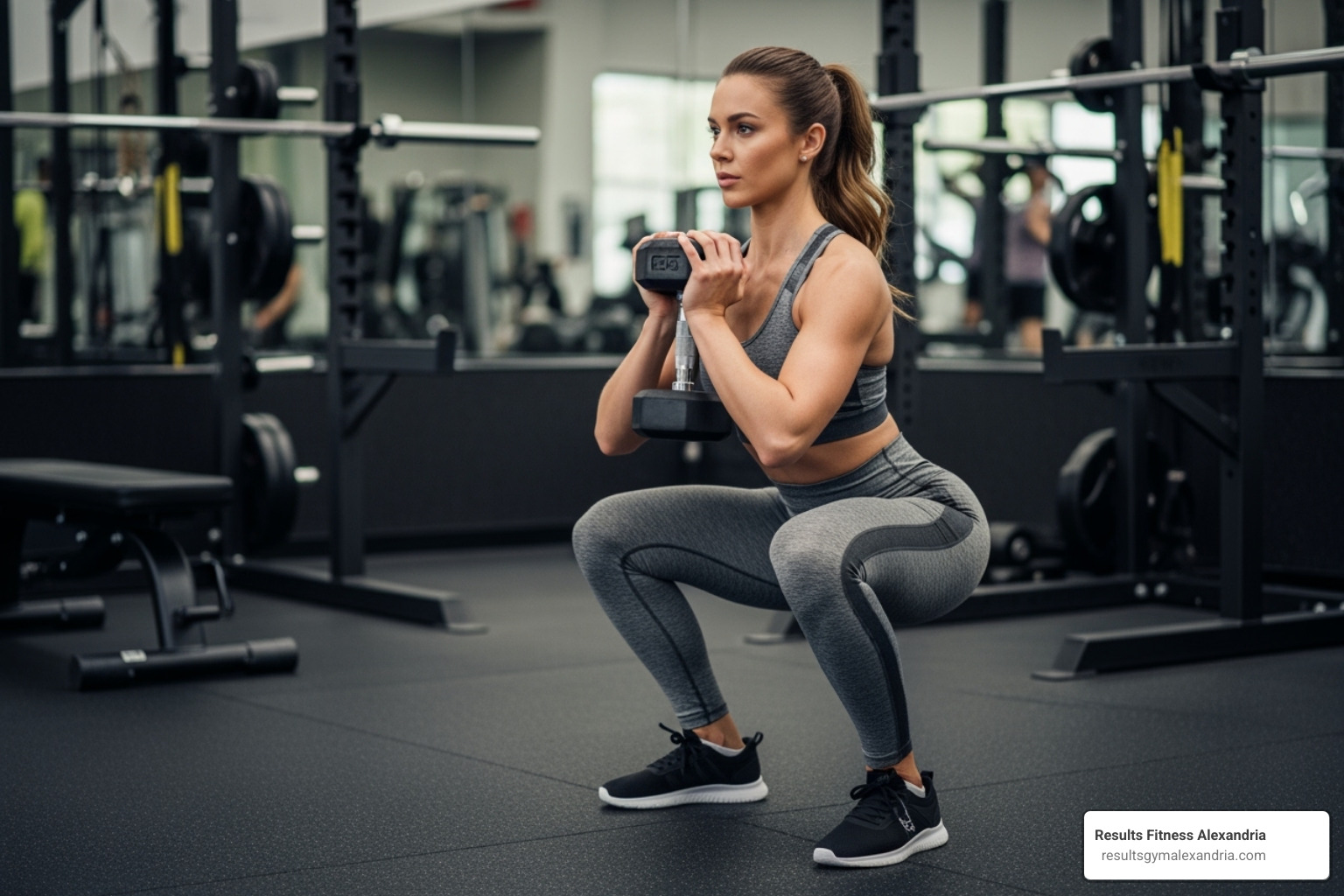
- Goblet Squats: Hold a dumbbell at your chest. Stand with feet shoulder-width apart. Squat down as if sitting in a chair, keeping your chest up and back straight. Push through your heels to return to the start.
- Dumbbell Bench Press: Lie on a bench with a dumbbell in each hand. Lower the weights to the sides of your chest with elbows at a 45-degree angle. Press them back up.
- Bent-Over Rows: Hinge at your hips with a straight back, holding dumbbells with palms facing you. Pull the dumbbells toward your chest, squeezing your shoulder blades. Lower with control.
Workout B:
- Romanian Deadlifts (RDLs): Hold a barbell or dumbbells in front of your thighs. With a slight bend in your knees and a flat back, hinge at your hips, lowering the weight. Squeeze your glutes to stand back up.
- Overhead Press: Sit or stand, holding dumbbells at shoulder height, palms forward. Press the weights directly overhead. Lower with control.
- Lunges (Alternating): Step forward with one leg, lowering your hips until both knees are at 90-degree angles. Push off your front foot to return to the start and alternate legs.
For more leg-focused exercises, check out our Best Women Leg Workout Guide.
Week 2: Increasing Repetitions
This week, you’ll increase reps and decrease rest time. If Week 1 felt too easy, increase the weight slightly.
- Frequency: 2 workouts per week
- Sets & Reps: 3 sets of 12-15 repetitions
- Rest: 45 seconds between sets
- Workout A: Goblet Squats, Dumbbell Bench Press, Bent-Over Rows
- Workout B: Romanian Deadlifts, Overhead Press, Lunges (Alternating)
To support your back strength, explore our Womens Back Workout.
Week 3: Reducing Rest and Adding a Challenge
This week introduces circuit training. Perform exercises back-to-back, resting only after the full circuit is complete.
- Frequency: 2 workouts per week
- Sets & Reps: 3 circuits, 12 repetitions per movement
- Rest: 30 seconds between exercises; 90 seconds after each full circuit
Workout A (Circuit):
- Glute Bridges: Lie on your back with knees bent. Drive through your heels to lift your hips, squeezing your glutes at the top.
- Push-ups (on knees or toes): In a plank position, lower your chest toward the floor, keeping your body in a straight line. Push back up.
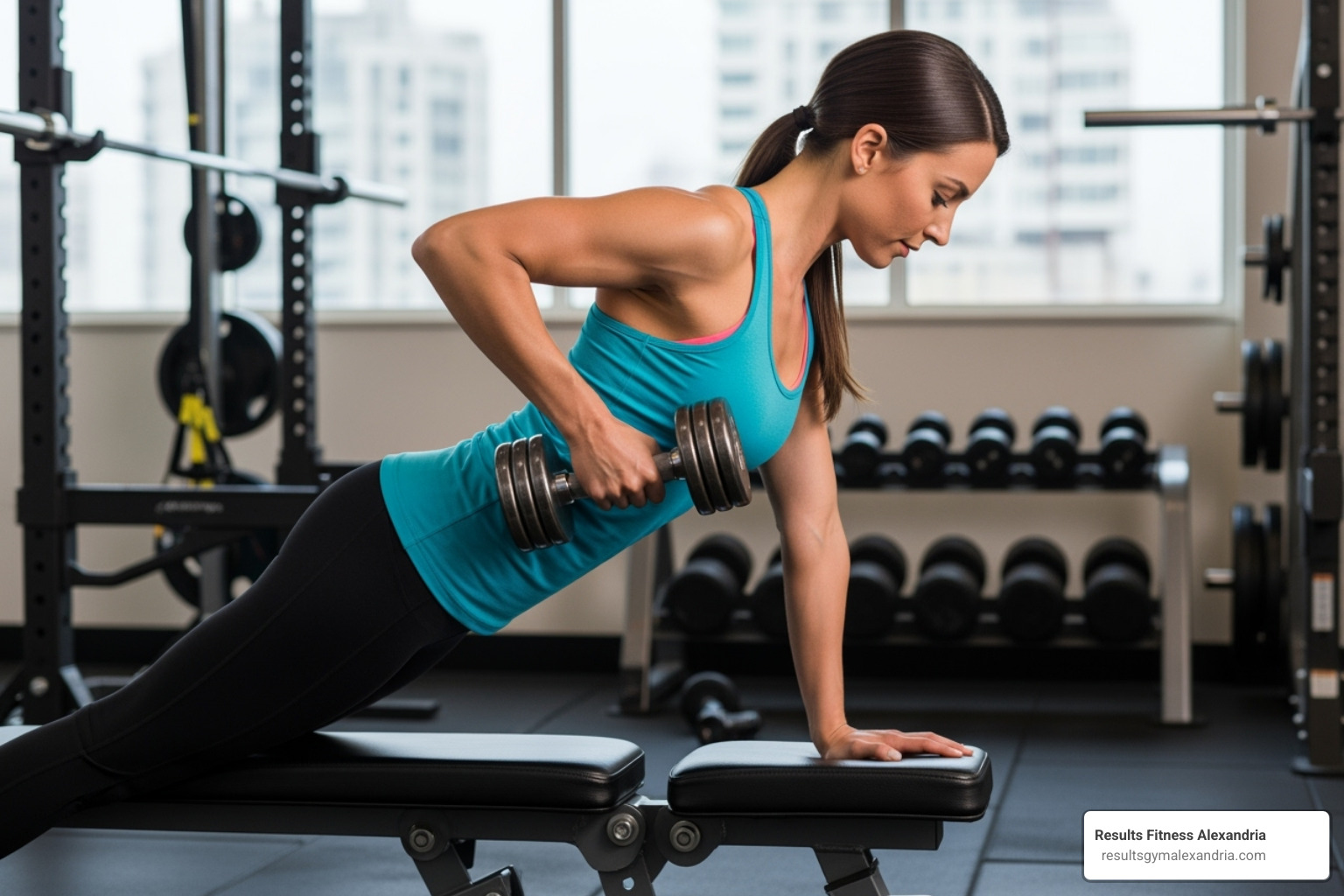
- Dumbbell Rows (Single Arm): Place one hand and knee on a bench. Hold a dumbbell in the opposite hand and pull it up towards your hip, squeezing your shoulder blade.
Workout B (Circuit):
- Bodyweight Squats: Perform a squat with no weight, focusing purely on form.
- Plank: Hold a push-up position on your forearms, keeping your body in a straight line from head to heels. Hold for 30-60 seconds.
- Alternating Lunges: Perform as in Week 1, moving smoothly between legs.
Week 4: Upping the Volume
In the final week, you’ll increase the volume by adding another circuit to build endurance and mental toughness.
- Frequency: 2 workouts per week
- Sets & Reps: 4 circuits, 12 repetitions per movement
- Rest: Minimal rest between exercises; 60 seconds after each full circuit
- Workout A (Circuit): Glute Bridges, Push-ups (on knees or toes), Dumbbell Rows (Single Arm)
- Workout B (Circuit): Bodyweight Squats, Plank, Alternating Lunges
This type of training is also excellent for fat loss, as discussed in our Fat Loss Gym Workout for Females.
Beyond the Basics: How to Keep Getting Stronger
Congratulations on completing your 4-week beginner weight lifting for women program! To continue making progress and avoid plateaus, you need to use progressive overload.
Progressive Overload Explained
Progressive overload is the gradual increase of stress placed on your body during training. Your muscles adapt quickly, so you must continually challenge them to keep growing stronger. You can do this by:
- Increasing weight
- Increasing reps or sets
- Decreasing rest time
- Increasing training frequency (adding another workout day)
- Increasing time under tension (slowing down your movements)
The key is to constantly give your muscles a new reason to adapt. For a deeper understanding, check out The Power of Progressive Overload: How to Keep Getting Stronger.
Tracking Your Progress
You can’t effectively use progressive overload if you don’t track your workouts. Use a simple notebook or a fitness app to log your exercises, sets, reps, and the weight you lifted for each session. This makes it easy to see where you can challenge yourself next. Seeing your numbers climb week after week is also incredibly motivating.
Listening to Your Body and The Importance of Recovery
As you advance, listening to your body becomes crucial. Some days you’ll feel strong, and other days you’ll feel tired. It’s okay to adjust your weights or reps based on your energy levels. Consistency matters more than a single perfect workout.
Recovery is where the magic happens. Your muscles don’t grow in the gym; they repair and grow stronger during rest. Prioritize getting 7-9 hours of sleep each night and allow enough time between working the same muscle groups. Rest days are not optional—they are an essential component of your training.
At Results Fitness Alexandria, we emphasize that sustainable progress comes from balancing challenge with recovery. For comprehensive strategies, explore our 10 Post Workout Recovery Tips to Maximize Results.
Frequently Asked Questions about Women’s Weight Lifting
Let’s address some common concerns about beginner weight lifting for women that might be holding you back.
Will weight lifting make me look “bulky”?
No. This is the most common myth, and it’s simply not true. Women have significantly lower levels of testosterone than men—the primary hormone responsible for building large muscles. Women tend to have less muscle mass to begin with. The level of muscle seen on professional bodybuilders requires years of highly specific training, nutrition, and often supplements.
Instead of bulk, you will build a lean, toned physique. Strength training creates the defined arms, sculpted shoulders, and strong legs you might admire.
How quickly will I see results from weight training?
You’ll feel the difference faster than you think. Many women feel stronger in as little as two weeks. Research shows that training two to three times a week can increase strength by around 10% in a fortnight. After a few consistent months, you could see strength increases of 20-30%.
Visible changes, like increased muscle definition and a more toned appearance, typically take a few consistent months. Everyone’s timeline is different and depends on factors like your starting point, nutrition, and consistency. Stay patient and celebrate non-scale victories, like lifting heavier or feeling more energized.
Should I do cardio or weights first?
This depends on your goals for the workout.
- For strength and muscle gain: Do weights first. You’ll have more energy to lift effectively with proper form.
- For fat loss: Doing weights before cardio can be effective. Strength training depletes your body’s readily available energy, so your body may tap into fat reserves sooner during your cardio session.
- For endurance: Do cardio first. This ensures you’re fresh to give your best effort to your aerobic activity.
Most of our female clients at Results Fitness Alexandria find that a weights-first approach works best for their strength and body composition goals. For more detail, see the guidance from the American Council on Exercise.
Start Your Strength Journey Today
You’ve made it through this complete guide to beginner weight lifting for women. You now have everything you need to walk into the gym with confidence. We’ve covered the benefits, proper form, and a complete 4-week program to get you started.
Consistency is key. You don’t need to be perfect. You just need to show up, do the work, and trust that your body will respond. Every single rep and every workout matters.
The empowerment that comes from getting physically stronger ripples into every other area of your life. Strength training isn’t just about what happens in the gym—it’s about building a more capable, confident, and resilient version of yourself.
At Results Fitness Alexandria, we’ve created a welcoming, supportive environment where women of all fitness levels feel comfortable and encouraged. Our certified personal trainers are here to guide you, answer your questions, and ensure you’re lifting safely and effectively.
You have the tools, the knowledge, and the program. Now it’s time to take action and start building the stronger, healthier, more confident you.
Ready to experience the life-changing benefits of strength training? Take the next step in your fitness journey with personalized guidance and a supportive community. Explore our women’s gym amenities and claim your free 1-day pass! We can’t wait to meet you.