Women Leg Workout: 10 Best for Toned Legs
Why Strong Legs Are Every Woman’s Secret Weapon
Women leg workout routines have evolved far beyond just getting “slimmer legs.” Today’s approach focuses on building strength, muscle definition, and confidence through targeted leg training.
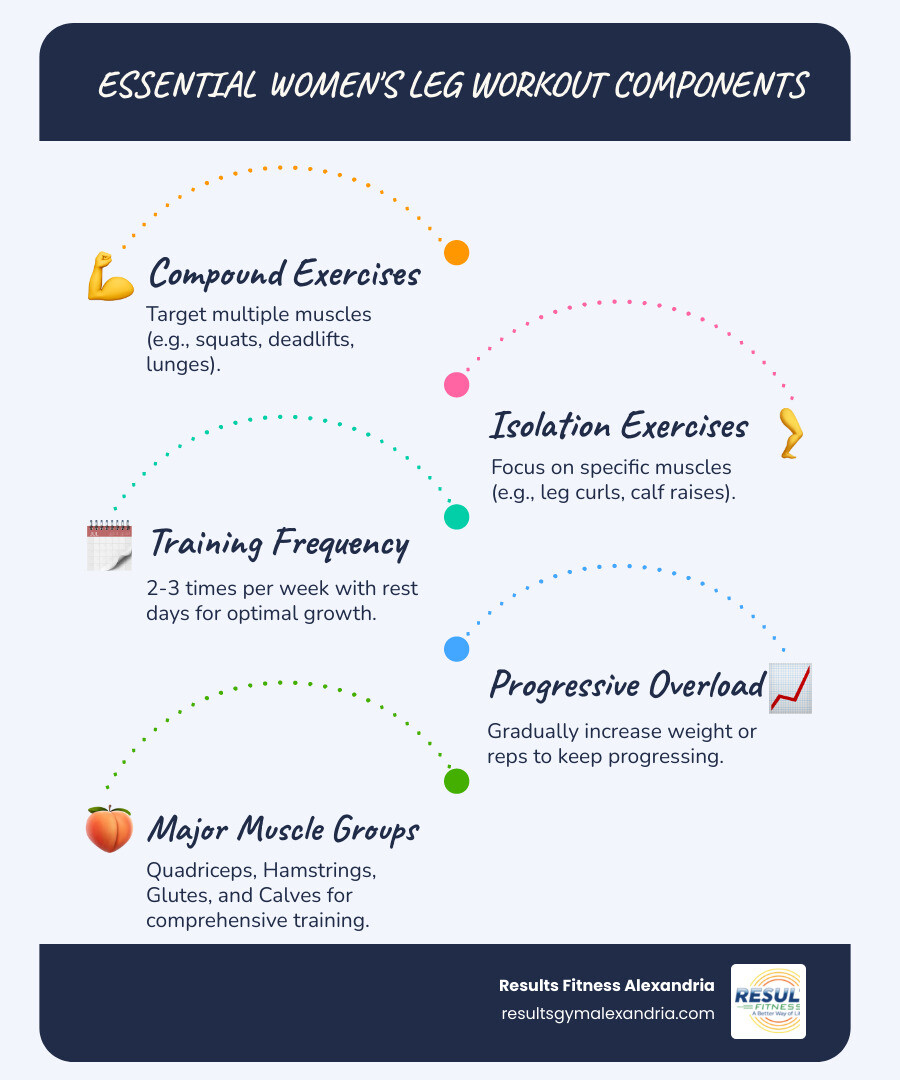
Essential Women’s Leg Workout Components:
- Compound exercises: Squats, deadlifts, lunges (target multiple muscles)
- Isolation exercises: Leg curls, calf raises (focus on specific muscles)
- Training frequency: 2-3 times per week with rest days
- Progressive overload: Gradually increase weight or reps over time
- Major muscle groups: Quadriceps, hamstrings, glutes, calves
Strong legs provide more than aesthetic benefits. They’re your foundation for daily activities, from climbing stairs to carrying groceries. Research shows that compound movements like squats activate more muscle fibers than isolation exercises, making them incredibly effective for building strength and burning calories.
The fitness industry has shifted, and women now accept building muscle. And for good reason: women have significantly lower testosterone levels than men (8-60 ng/dL versus 240-950 ng/dL), making it nearly impossible to develop “bulky” muscles without extreme dedication.
Training your legs twice per week with proper rest between sessions maximizes muscle growth while allowing adequate recovery. This approach builds the muscle definition that creates that coveted “toned” appearance.
I’m Jennifer Rapchak, Fitness Director at Results Fitness Alexandria. With over 14 years of experience as an ACE-certified trainer, I’ve seen how proper leg training transforms not just your physique, but your entire approach to fitness.
Glossary for women leg workout:
Why Leg Day is a Woman’s Best Friend: Unpacking the Benefits
Effortlessly walking up a flight of stairs or lifting a heavy box—that’s the power of strong legs. For women, women leg workout sessions aren’t just about looking good in jeans (a nice bonus), but about building a foundation that transforms your life.
Think about it: your legs house the biggest muscles in your body. When you train these powerhouse muscle groups, you’re essentially hitting the jackpot for your overall health and fitness.
Your metabolism gets a major boost when you work those large leg muscles. Exercises like squats and deadlifts don’t just burn calories during your workout – they keep your metabolic fire burning for hours afterward. Your quads, hamstrings, and glutes demand serious energy, which means higher calorie burn even when you’re relaxing on the couch later.
Here’s something that might surprise you: strong legs are the secret to improved posture. If you spend most of your day hunched over a computer, your glutes probably aren’t doing their job properly. When you strengthen your leg muscles, especially those glutes and hamstrings, you’re giving your spine and pelvis the support they desperately need. Say goodbye to that constant back ache.
Improved balance becomes second nature when you regularly challenge your legs with single-leg exercises like lunges. This isn’t just gym talk—better balance means fewer stumbles and more confidence in everyday situations.
Your joints will thank you too. Those leg muscles act like natural shock absorbers for your knees and hips. Stronger joints mean less pain and fewer injuries as you go about your daily activities. It’s like having built-in protection for your body’s most important moving parts.
For women especially, leg training offers something incredibly valuable: increased bone density. As we age and hormones shift, our bones naturally become more fragile. Weight-bearing exercises like squats and deadlifts actually stimulate your bones to become stronger and denser, providing powerful osteoporosis prevention. This is one of the most effective ways to protect your skeletal health for years to come.
And let’s talk about that toned appearance everyone’s after. When you build muscle definition in your legs, you create those beautiful, strong lines that make you feel confident and powerful. Muscle definition is what gives you that coveted “toned” look – not endless hours on the cardio machine.
Want to dive deeper into how strength training transforms women’s health? Check out our comprehensive guide on the 10 Benefits of Strength Training for Women.
The bottom line? Training your legs is about so much more than appearance. It’s about building a strong, functional foundation that supports everything else you want to do in life.
The Ultimate Women Leg Workout: Building Your Routine
Now that we understand the benefits, let’s structure an effective women leg workout. Success lies in combining compound movements (working multiple muscles at once) with isolation exercises that target specific areas for definition.
Think of compound exercises as your powerhouse moves—they’re efficient, burn tons of calories, and build serious strength. Isolation exercises are your sculpting tools, helping you fine-tune specific muscles and create that balanced, defined look you’re after.
Foundational Strength: Best Compound Leg Exercises
These are your heavy hitters—the exercises that give you the biggest bang for your buck. Compound movements engage multiple joints and muscle groups simultaneously, making them incredibly efficient for building overall strength and burning calories.
The barbell back squat is often called the “king of exercises” for good reason. It works your glutes, quadriceps, hamstrings, and core all at once. Position a barbell across your upper back, stand with feet shoulder-width apart, and lower your body as if sitting into a chair. Keep your chest proud and spine neutral, descending until your thighs are parallel to the floor, then drive through your heels to stand back up. For detailed guidance, check out this back squat form guide.
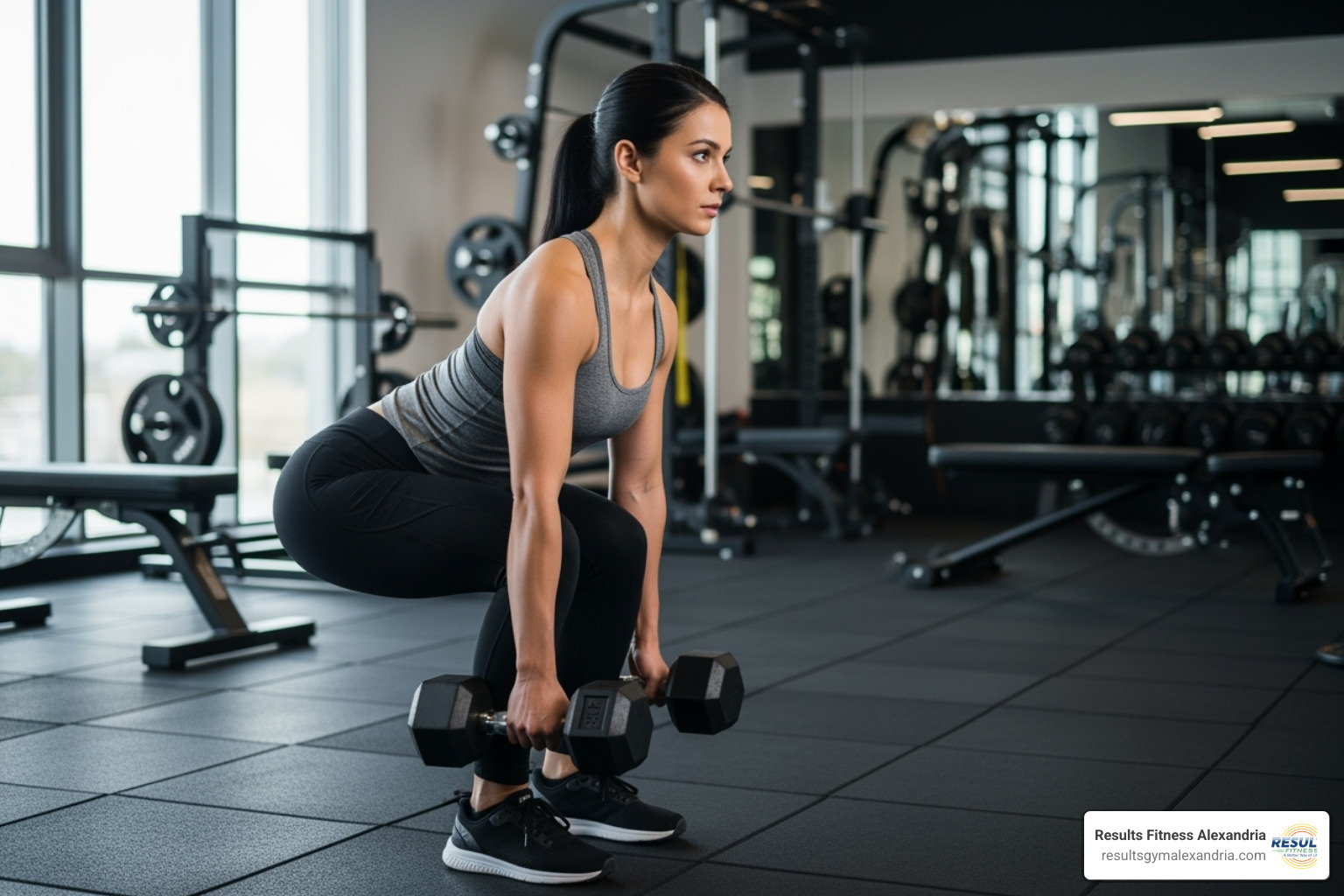
If you’re new to squatting, the dumbbell goblet squat is fantastic. Holding a single dumbbell vertically against your chest helps you maintain an upright torso and feels more natural for many women. Squat down, keeping your elbows inside your knees at the bottom.
Romanian deadlifts are best for building your posterior chain—that’s your hamstrings and glutes. Hold dumbbells or a barbell in front of your thighs, then hinge at your hips while keeping a slight bend in your knees. You’ll feel an amazing stretch in your hamstrings as you lower the weight, then squeeze your glutes to drive your hips forward and return to standing.
Walking lunges add a dynamic element to your routine while working your quads, hamstrings, and glutes. They also challenge your balance, making them excellent for functional strength. Step forward with one leg, lowering until both knees are bent at 90 degrees, then push off your back foot and continue “walking” forward.
The leg press allows you to target your major leg muscles with less spinal loading than free-weight squats. It’s perfect for challenging your legs when you want to focus purely on the muscles without worrying about balance.
Finally, barbell hip thrusts are unrivaled for building powerful glutes. Sit with your upper back against a bench, roll a padded barbell over your hips, then drive through your heels to lift your hips toward the ceiling. The glute activation you’ll feel is incredible!
Sculpt and Define: Top Isolation Leg Exercises
While compound movements build your foundation, isolation exercises are where the magic of sculpting happens. These single-joint movements allow you to target specific muscles for better definition, symmetry, and to address any imbalances.
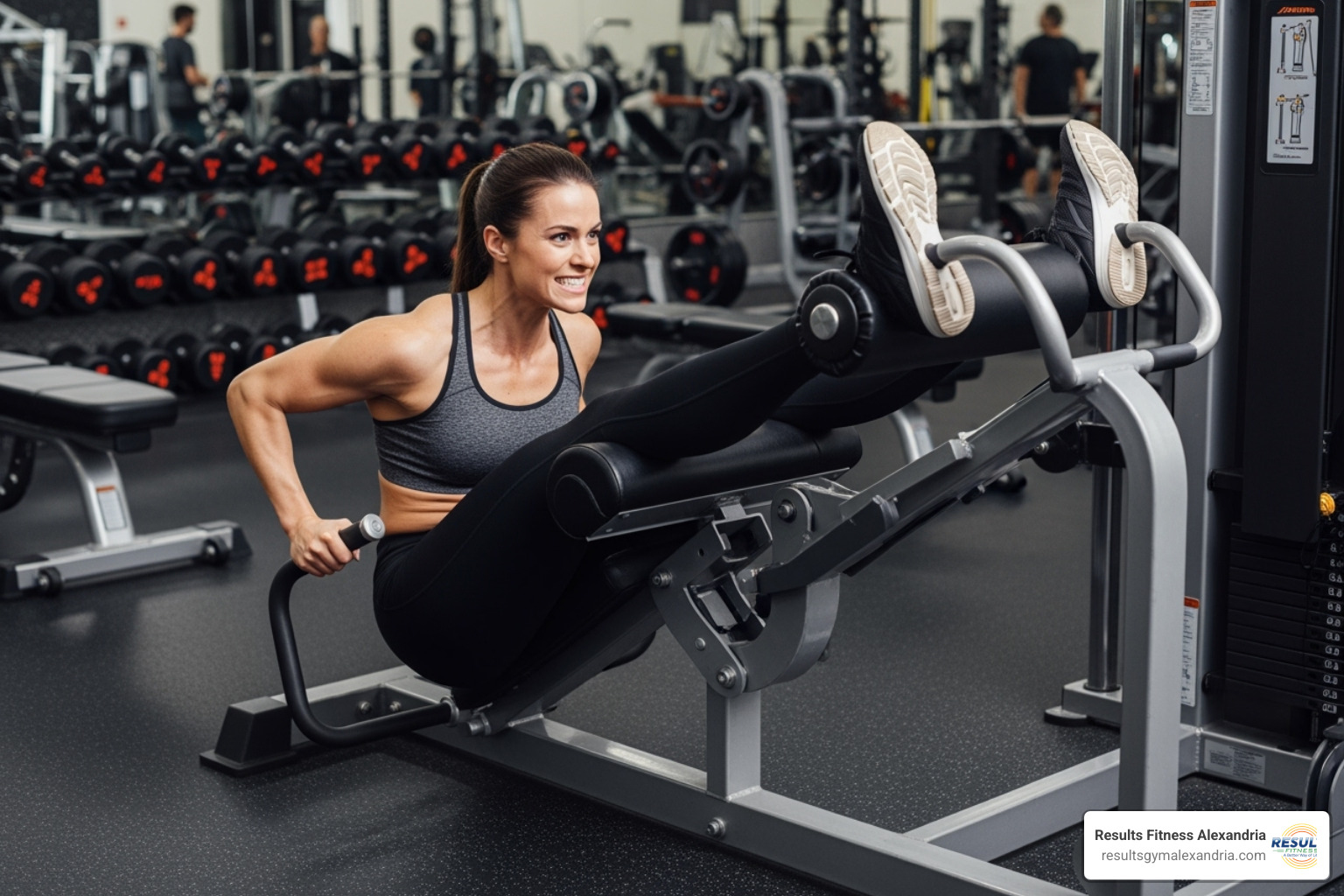
Hamstring curls directly target the back of your thighs, helping create that defined separation between your hamstrings and glutes. Lie face down on the machine with your Achilles tendons hooked under the pad, then curl your heels toward your glutes while keeping your hips down.
Leg extensions are perfect for isolating your quadriceps—the front of your thighs. Sit on the machine with your knees bent and shins under the pad, then extend your legs fully while contracting your quads at the top.
Don’t forget your calves! Seated calf raises target both the soleus and gastrocnemius muscles in your lower legs. Whether using a machine or placing dumbbells on your knees, place the balls of your feet on a raised platform and push up onto your toes, then slowly lower for a deep stretch.
Glute bridges are incredibly versatile—you can use them as a warm-up, add weight for strength building, or include them as a finisher to really feel the burn. Lie on your back with knees bent, then lift your hips toward the ceiling while squeezing your glutes at the top.
Banded hip abduction exercises target the often-neglected gluteus medius and minimus muscles. These smaller glute muscles are crucial for hip stability and creating that rounded, shapely appearance. Whether kneeling or standing, use a resistance band around your thighs or ankles and lift one leg out to the side.
Your Sample Women Leg Workout Plan
Ready to put it all together? Here’s a practical women leg workout plan. Consistency is more important than perfection—it’s better to do this workout regularly than to skip sessions.
Never skip your warm-up! Your muscles and joints need preparation for the work ahead. Spend 5-10 minutes on light cardio like brisk walking or cycling, followed by dynamic stretches. Think leg swings, hip circles, bodyweight squats, and walking lunges—movements that get your body ready to move.
After your workout, dedicate 5-10 minutes to static stretching. Hold stretches for your hamstrings, quads, calves, and glutes for 20-30 seconds each. This helps improve flexibility and aids recovery.
Here’s a beginner-friendly routine that you can build upon as you get stronger. For more guidance on starting your fitness journey, check out our guide on Creating an Effective Workout Routine for Beginners.
| Exercise | Sets | Reps | Rest Between Sets |
|---|---|---|---|
| Dumbbell Goblet Squat | 3 | 10-12 | 60-90 seconds |
| Dumbbell Romanian Deadlift | 3 | 10-12 | 60-90 seconds |
| Walking Lunges | 3 | 8-10 per leg | 60-90 seconds |
| Glute Bridges (weighted if comfortable) | 3 | 12-15 | 45-60 seconds |
| Seated Calf Raises | 3 | 15-20 | 30-45 seconds |
Start with weights that challenge you but allow you to complete all reps with proper form. As you get stronger, you’ll increase the weight or reps—that’s progressive overload in action, which we’ll discuss next!
Smart Training: Progress, Frequency, and Common Pitfalls
Building strong, toned legs isn’t just about showing up; it’s about training smart. Understanding how often to train, how to make consistent progress, and what pitfalls to avoid will accelerate your results and keep you safe.
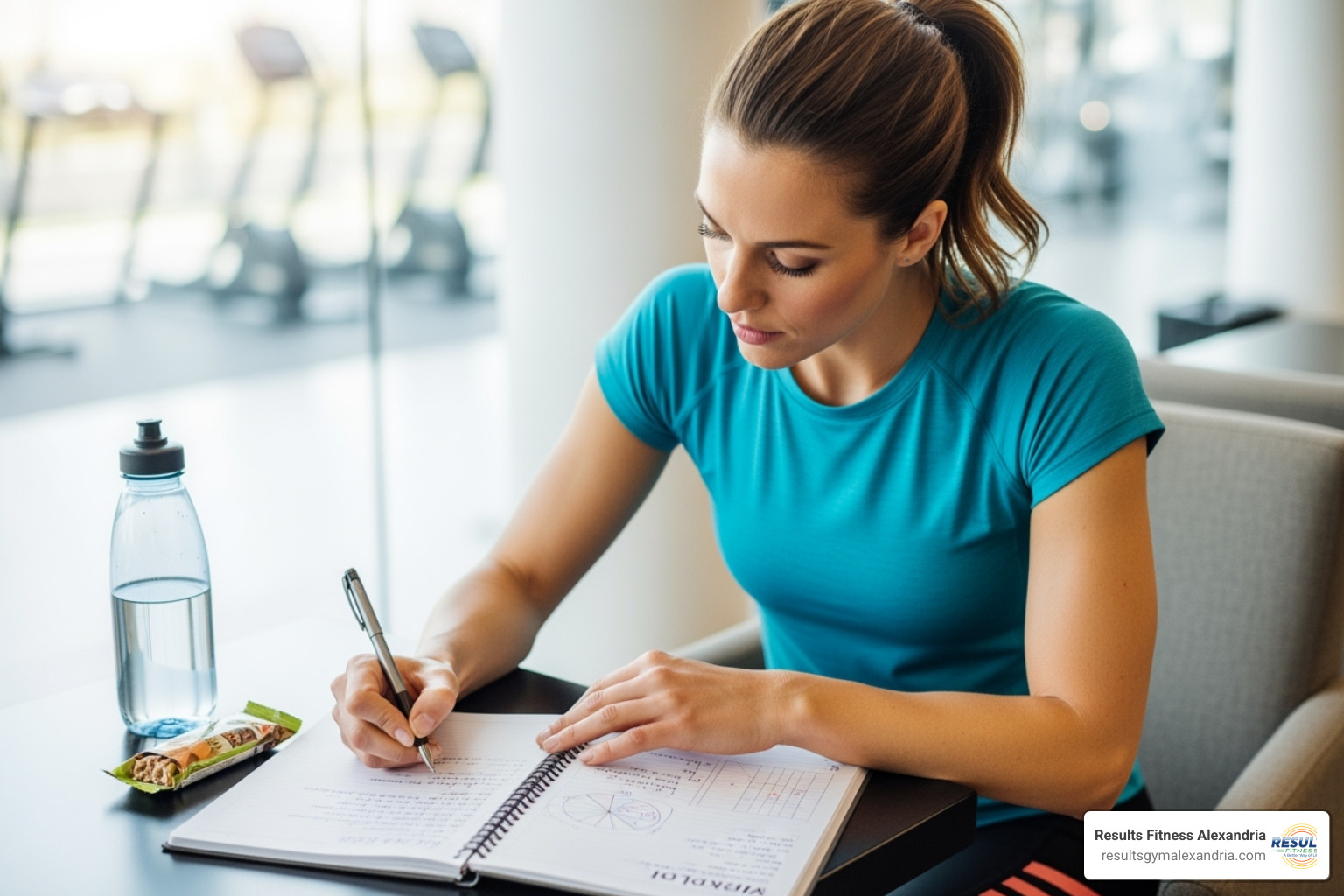
The difference between seeing amazing results and plateauing often comes down to three principles: proper training frequency, progressive overload, and avoiding common mistakes. Let’s explore each one to maximize your women leg workout.
How Often Should You Train Legs?
Here’s the good news: you don’t need to live in the gym to build strong, beautiful legs. Training your legs 2-3 times per week is the sweet spot for most women.
Twice a week is ideal for most people starting their fitness journey. This gives your muscles enough stimulus to grow while allowing adequate recovery time. Think Monday and Thursday, or Tuesday and Friday. Your muscles don’t actually grow during your workout – they grow during the 48-72 hours afterward when they’re repairing and rebuilding stronger than before.
If you’re more experienced and recovering well, three times per week can maximize muscle growth. However, recent research on training frequency shows something interesting: the total volume (your sets and reps) matters more than how often you train. This means doing six quality sets spread across two sessions can be just as effective as doing six sets across three sessions.
Rest days aren’t optional—they’re when the magic happens. Your muscles repair, strengthen, and grow during recovery. Skipping rest undermines your progress and just doesn’t work.
For workout structure, beginners often do best with full-body workouts three times per week or upper/lower splits that alternate between upper body and lower body days. Both approaches ensure balanced development while preventing overtraining.
Level Up Your Lifts: Mastering Progressive Overload
Many women get stuck in a comfortable routine and stop challenging themselves. Your body is adaptable; if you keep doing the same women leg workout with the same weights and reps, your progress will stall.
Progressive overload is the principle of gradually increasing the demands on your muscles over time. It’s the key to avoiding plateaus and seeing continuous results.
Increasing weight is the most straightforward approach. Once you can complete all your sets and reps with perfect form, it’s time to add a little more weight. Even adding 2.5 pounds can make a significant difference over time.
Adding more reps works beautifully when you can’t increase weight yet. If you’re doing 3 sets of 10 squats, try for 3 sets of 12. Your muscles will feel the difference.
Improving your form might not seem like overload, but perfecting your technique allows you to activate muscles more effectively and handle heavier weights safely. Sometimes slowing down the movement or going deeper into a squat creates more challenge than adding weight.
Time under tension is a game-changer many women overlook. Try taking 3-4 seconds to lower into your squat, then explode up. Those extra seconds under load create incredible muscle-building stimulus.
The key is consistency over intensity. Small improvements week after week compound into dramatic changes over months. For a deeper dive into this crucial concept, check out The Power of Progressive Overload: How to Keep Getting Stronger.
Common Leg Day Mistakes to Avoid
Even with the best intentions, certain mistakes can sabotage your progress or lead to injury. Let’s address the big ones so you can train smarter from day one.
Skipping warm-ups is like driving your car hard on a cold engine. Your muscles need time to literally warm up and prepare for the work ahead. Just five minutes of light movement and dynamic stretching can prevent weeks of injury recovery.
Sacrificing form for weight is probably the mistake I see most often. That extra 10 pounds on the bar means nothing if you’re not activating the right muscles or if you’re risking injury. Perfect form with lighter weight will always beat sloppy form with heavy weight.
Neglecting compound movements for isolation exercises is another common trap. While hip abductions and leg curls have their place, they can’t replace the muscle-building power of squats, deadlifts, and lunges. Compound movements work multiple muscles simultaneously, burn more calories, and build functional strength.
Overtraining happens when enthusiasm outpaces wisdom. Your muscles grow during rest, not during workouts. Hitting your legs hard every day will actually slow your progress and increase injury risk. More isn’t always better – better is better.
Ignoring recovery and nutrition undermines all your hard work in the gym. Without adequate protein, sleep, and hydration, your muscles can’t repair and grow. Think of recovery as part of your training program, not something that happens automatically.
The beauty of avoiding these mistakes is that small corrections lead to big improvements. Focus on consistency over perfection, and remember that every expert was once a beginner who refused to give up.
Frequently Asked Questions about Women’s Leg Training
When it comes to women leg workout routines, some questions come up again and again. These concerns are valid, so let’s tackle the big ones with science-backed answers.
Will lifting weights make my legs bulky?
This common concern comes from years of fitness myths. The truth is simple: lifting weights will not make your legs bulky.
Your body is simply not designed to pack on massive amounts of muscle. Women have testosterone levels ranging from 8-60 ng/dL, while men sit at 240-950 ng/dL. Testosterone is the primary hormone responsible for building large amounts of muscle mass. Without those sky-high testosterone levels, achieving a “bulky” look would require extreme dedication and specific training protocols that most women don’t have.
What you will achieve through consistent strength training is muscle definition and that coveted “toned” appearance. This comes from building lean muscle mass while often reducing body fat, allowing the underlying muscle to show through. It’s completely different from becoming bulky.
There are two types of muscle growth. Myofibrillar hypertrophy increases the actual muscle fibers, giving you strength and density – this is what we’re after. Sarcoplasmic hypertrophy increases fluid within muscle cells, contributing to a more “pumped” look, but this isn’t the primary driver of bulk without other factors.
Building significant muscle mass also requires eating more calories than you burn. If your goal is definition and toning, you’re likely eating at or slightly below maintenance calories to support fat loss. It’s nearly impossible to gain substantial muscle, let alone “bulky” muscle, without intentionally eating to support that growth.
Accept the strength training! It will lead to powerful, defined, and healthy legs – not unwanted bulk. For deeper insights into how muscles actually grow, check out our guide: The Science of Building Muscle: Tips for Effective Strength Training.
What are good leg exercises if I have knee pain?
Knee pain doesn’t have to derail your women leg workout goals. In fact, the right exercises can actually help by strengthening the muscles that support your knee joint. The key is choosing movements that minimize stress on your knees while building strength where you need it most.
Glute bridges are your best friend when dealing with knee issues. They activate and strengthen your glutes and hamstrings without putting direct pressure on your knees. You can make them more challenging by adding a resistance band around your knees, placing a dumbbell on your hips, or trying single-leg variations.
Wall sits work wonders for building quadriceps strength without joint movement. Simply lean against a wall, slide down until your knees are bent at 90 degrees (or less if that’s more comfortable), and hold the position. It’s an isometric exercise that builds serious strength.
Romanian deadlifts focus on the hip hinge movement, primarily working your hamstrings and glutes with minimal knee flexion. This makes them excellent for strengthening your posterior chain while being gentle on your knees.
Other knee-friendly options include controlled step-ups on a low platform (focus on driving through your heel), leg press with controlled range of motion (never go so deep it causes pain), and banded hip exercises that target the smaller muscles around your hips for better knee stability.
Here’s what’s crucial: proper form is non-negotiable. Incorrect form can make knee pain worse. Make sure your knees track over your toes during squats and lunges – never let them cave inward. Keep your core braced and spine straight.
Often, knee pain stems from weakness in other areas. Strengthening your glutes, hamstrings, and core provides better support for your knees and can actually reduce pain over time.
Always listen to your body. Mild muscle fatigue is normal, but sharp pain is a warning sign to stop. If knee pain persists, consider working with one of our certified personal trainers to assess your movement and design a personalized plan. Learn more about the transformative benefits: The Amazing Benefits of Working with a Personal Trainer.
How do hormones affect my training?
Understanding how hormones influence your women leg workout performance can be a game-changer for optimizing your training and being more in tune with your body’s natural rhythms.
Your menstrual cycle creates two distinct phases that can significantly impact how you feel during workouts. During the follicular phase (day 1 of your period through ovulation), estrogen levels are rising, and many women report feeling stronger, having higher energy levels, and better pain tolerance. This is often the perfect time to push for personal bests or increase the intensity and volume of your leg workouts.
The luteal phase (ovulation to the start of your next period) brings rising progesterone levels and dropping estrogen. You might experience lower energy, increased fatigue, and fluid retention. That’s completely normal! This might be when you reduce volume, focus on perfecting your form, or incorporate more recovery-focused exercises.
While women have significantly lower testosterone than men, this doesn’t mean we can’t build impressive strength. Our bodies are incredibly efficient. Progressive overload and consistent training matter far more than daily hormonal fluctuations for long-term gains.
Menopause brings its own considerations as estrogen levels decline, directly impacting bone density. This makes weight-bearing exercises in your women leg workout incredibly important for combating osteoporosis and maintaining strong bones throughout your life. The impact of strength training on bone health becomes even more critical during and after menopause.
Being aware of how your body feels throughout your cycle helps you tailor your workouts, but don’t let it become an excuse. Consistency remains the most important factor. Adapt when needed, but keep showing up – your body will thank you for it!
Build Your Strongest Legs and Confidence
You’re ready to transform your relationship with fitness. A dedicated women leg workout routine isn’t just about changing how your legs look—it’s about finding what your body is truly capable of.
Every time you climb stairs without getting winded or lift something heavy with confidence, that’s the power of strong legs. The benefits we’ve covered are real changes that happen when you commit to consistent training.
The journey starts with consistency. You don’t need to be perfect from day one. What matters is showing up, following the principles we’ve outlined, and trusting the process.
Strength training won’t make you bulky – it will make you powerful. Those compound movements like squats and deadlifts will become your best friends. Progressive overload will become your roadmap to continuous improvement. And listening to your body will keep you safe and motivated along the way.
Proper nutrition supports everything you do in the gym. Your muscles need fuel to grow stronger, and your body needs nutrients to recover. Don’t underestimate the power of eating well alongside your training routine.
At Results Fitness Alexandria, we know every woman’s fitness journey is unique. We’ve created a comfortable environment for you to push your limits. Our certified personal trainers can help build an effective women leg workout routine that fits your goals.
We’re especially proud of our dedicated women’s-only gym area, where you can focus entirely on your workout without any distractions. It’s a space designed for women who want to train seriously and see real results.
Ready to find your strongest self? We’d love to welcome you to the Results Fitness family. Experience our women’s-only gym area with a free pass and see how the right environment and support can accelerate your progress.
Your strongest, most confident legs are waiting. Let’s build them together.