Why Women Should Stop Fearing Heavy Weights and High-Intensity Intervals
Why Anaerobic Exercise for Women Builds Strength, Confidence, and Health
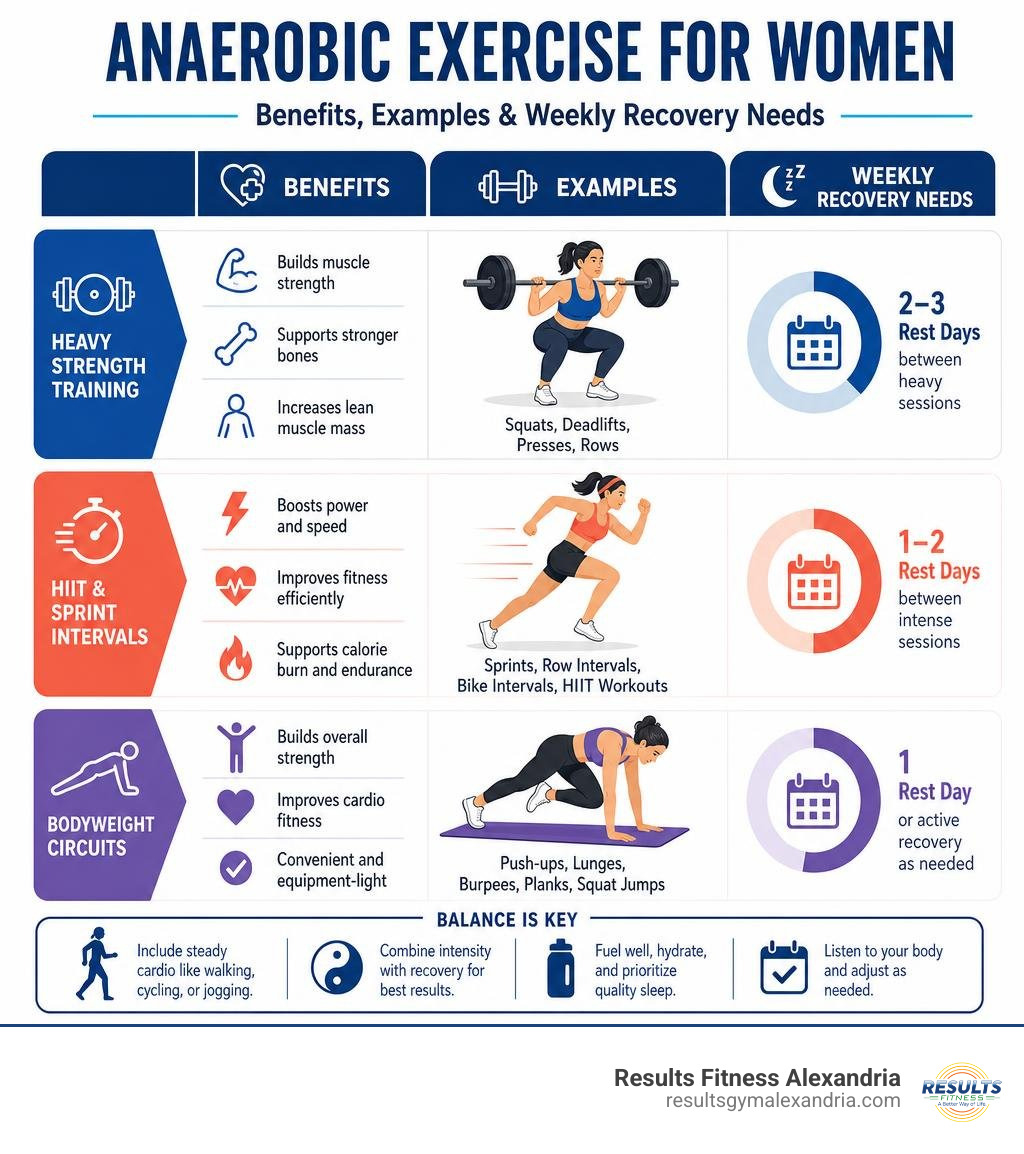
Anaerobic exercise for women means short, challenging efforts such as heavy weightlifting, sprint intervals, and HIIT that use stored muscle energy rather than a steady oxygen supply. It helps build strength and lean muscle, supports bone density, improves insulin sensitivity, and can make everyday movement feel easier.
| Anaerobic exercise | What it can support |
|---|---|
| Heavy strength training | Muscle strength, lean mass, and stronger bones |
| HIIT and sprint intervals | Power, fitness, and time-efficient conditioning |
| Bodyweight circuits | Strength and cardiovascular fitness with little equipment |
For too long, many women have been told to stay with light weights and endless cardio. But challenging your muscles is not about becoming “bulky.” It is about building a stronger body, improving metabolic health, and protecting muscle and bone as life changes.
Anaerobic training is intense by design, so it should complement rather than replace steady aerobic activity like walking, cycling, or jogging. The right mix can support heart health, mood, body composition, and blood glucose management – without requiring long workouts every day.
I am Jennifer Rapchak, Fitness Director at Results Fitness Alexandria and an ACE-certified personal trainer with more than 14 years of experience coaching strength training, HIIT, and group fitness. In this guide to anaerobic exercise for women, I will help you understand why heavy weights and well-planned intervals can be practical, safe tools for lasting fitness.
Anaerobic exercise for women basics:
Understanding Anaerobic Exercise for Women vs. Aerobic Workouts
When we look at exercise through a physiological lens, the primary distinction between aerobic and anaerobic training comes down to oxygen availability and energy systems. The word anaerobic literally translates to “without oxygen.” In contrast, aerobic means “with oxygen.”
During steady-state aerobic conditioning—such as walking, light jogging, or continuous cycling—our lungs and heart deliver enough oxygen to fuel working muscles continuously. This system relies predominantly on oxidative phosphorylation, burning fats and blood glucose to generate adenosine triphosphate (ATP), the primary energy currency of human cells. Because oxygen delivery keeps pace with cellular demand, aerobic movement can be sustained for long periods using slow-twitch (Type I) muscle fibers.
Anaerobic exercise operates on an entirely different mechanism. When you execute an explosive sprint, lift a heavy barbell, or power through a high-intensity interval, your exertion exceeds your body’s ability to deliver oxygen quickly enough. To meet this immediate energy demand, your cells switch to rapid energy pathways that break down muscle glycogen directly through glycolysis without relying on oxygen.
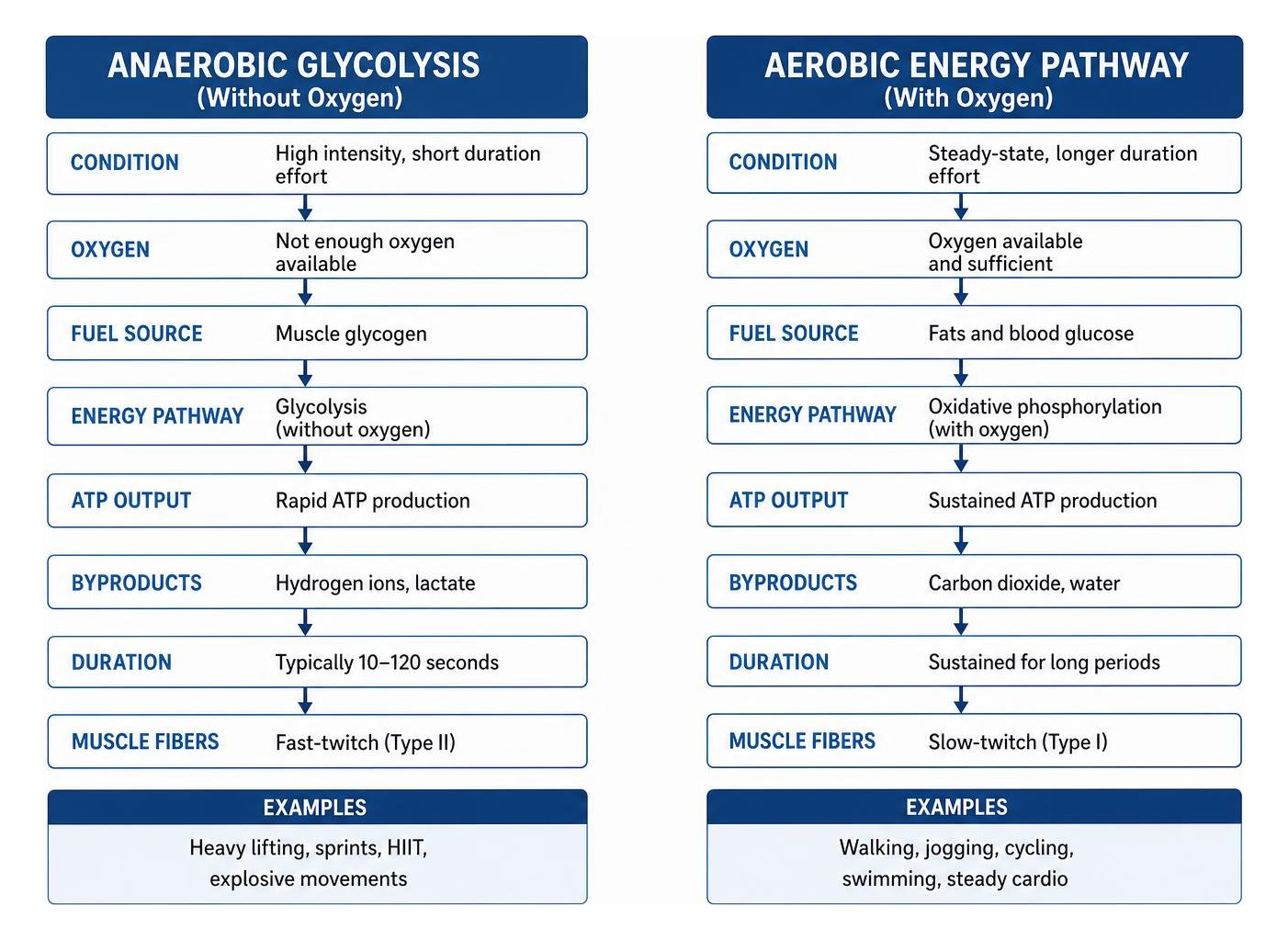
This metabolic shift relies heavily on fast-twitch (Type II) muscle fibers, which are designed for power, speed, and force output rather than long-term endurance. However, because anaerobic energy production accumulates metabolic byproducts like hydrogen ions and lactate in muscle tissue, these maximum-effort bursts can only be sustained for short durations—typically between 10 and 120 seconds.
| Feature | Aerobic Exercise | Anaerobic Exercise |
|---|---|---|
| Primary Energy Source | Oxygen + Fats / Blood Glucose | Muscle Glycogen (No Oxygen) |
| Muscle Fibers Engaged | Slow-Twitch (Type I) | Fast-Twitch (Type II) |
| Duration of Exertion | Continuous (15+ minutes) | Short Bursts (10 to 120 seconds) |
| Primary Fitness Outcome | Cardiovascular Endurance | Strength, Power & Lean Muscle |
| Lactic Accumulation | Low to Moderate | High (Triggers Burn) |
Understanding this metabolic boundary helps us structure workouts that deliver maximal results in less time. If you want a complete breakdown of non-oxygen energy pathways, explore our Ultimate guide to anaerobic exercises.
Energy Systems and Oxygen Requirements in Anaerobic Exercise for Women
The shift into anaerobic metabolism occurs at your anaerobic threshold—the exact intensity level where lactate production in the bloodstream exceeds the body’s capacity to clear it. When you cross this point during a hard interval or heavy lift, you create an “oxygen deficit.”
During these high-intensity efforts, your muscle cells rely on two primary anaerobic pathways:
- Phosphagen System (ATP-PCr): Supplies explosive energy for maximum efforts lasting up to 10–15 seconds (such as a 100-meter sprint or a heavy 3-rep squat).
- Anaerobic Glycolysis: Converts muscle glycogen into ATP for high-intensity work lasting up to two minutes, producing lactate as a metabolic byproduct.
Once the hard burst stops, your breathing remains deep and rapid. This phenomenon is known as Excess Post-Exercise Oxygen Consumption (EPOC), or the “afterburn effect.” Your body consumes extra oxygen post-workout to clear metabolic waste, replenish ATP and creatine stores, and restore resting physiological balance.
Cardiovascular Health and Mood Boosting Effects
While aerobic cardio gets most of the credit for heart health, anaerobic exercise for women provides intense, unique cardiovascular benefits. High-intensity interval training forces the heart muscle to pump rapidly against vascular resistance, building cardiac strength and arterial elasticity. Research confirms that anaerobic intervals improve VO2 max—the maximum amount of oxygen your body can utilize during exercise—faster than steady-state cardio alone. Furthermore, structured anaerobic training helps reduce resting blood pressure and improves blood lipid profiles by boosting high-density lipoprotein (HDL) cholesterol while reducing triglycerides.
Beyond the physical benefits, high-intensity exertion provides remarkable mental health support. Hard interval work stimulates the acute release of endorphins, dopamine, and irisin—a hormone triggered during intense muscle contraction that supports brain health and mood elevation. Many women report feeling an empowering surge of self-confidence after mastering heavy lifts, along with reduced daily anxiety and sharper cognitive function.
The Unique Physiological Benefits of Anaerobic Exercise for Women

As women age, maintaining hormonal harmony, joint health, and muscle mass becomes essential. From age 30 onward, baseline muscle mass slowly declines, and this loss accelerates significantly during perimenopause and postmenopause. This condition, known as sarcopenia, lowers resting metabolic rate and compromises functional stability.
Heavy resistance training and anaerobic work act as powerful physiological counters to this decline:
- Bone Density and Osteogenesis: Mechanical load and intense muscular tension pull on skeletal structures, stimulating osteoblasts (bone-building cells) to lay down new bone mineral content. This dramatically reduces the risk of osteopenia and osteoporosis in women.
- Sarcopenia Prevention: Dynamic loading engages Type II muscle fibers, preserving muscular volume, structural tone, and joint alignment.
- Metabolic Rate Maintenance: Muscle tissue is metabolically active. Preserving lean tissue protects daily calorie burn even when at rest.
Recent medical trials underscore these transformations. For instance, Research on bodyweight interval training published in Frontiers demonstrated that 8 weeks of high-intensity bodyweight resistance intervals yielded significant reductions in visceral fat mass, total cholesterol, and LDL cholesterol while elevating beneficial HDL cholesterol in young women. To build a solid foundation, check out our Complete guide to female strength training.
Blood Glucose Management and Insulin Sensitivity
One of the most valuable benefits of anaerobic exercise for women lies in its direct impact on blood sugar regulation and insulin sensitivity. Skeletal muscle serves as the primary storage depot for glucose in the body. Muscle cell walls are packed with specialized insulin receptors and GLUT4 glucose transporters.
When women engage in heavy resistance training or hard intervals, they drain stored muscle glycogen. To replenish these energy stores, muscle cells pull glucose directly out of the bloodstream—frequently through insulin-independent pathways during and immediately following exercise. Over time, building lean muscle mass increases the total number of insulin receptors available, enhancing glucose tolerance.
While high-intensity effort can trigger a short-term rise in blood glucose during the workout due to an acute release of catecholamines (stress hormones like adrenaline), this brief spike gives way to enhanced insulin sensitivity for up to 24 to 48 hours post-workout. A landmark trial on Study on strength training and insulin resistance confirmed that combining strength training with conditioning drastically decreased insulin resistance (HOMA-IR) and visceral fat in premenopausal women compared to dietary control or steady cardio alone.
Fat Loss and Body Composition Dynamics
Traditional weight-loss advice often pushed women toward long hours of low-intensity cardio. However, chronic long-duration cardio without resistance training can lead to muscle loss alongside fat loss, ultimately lowering your resting metabolic rate (RMR).
Anaerobic exercise reshapes body composition through a two-pronged mechanism:
- Preserving Lean Tissue: High-tension strength training signals the body to retain muscle mass even during a mild caloric deficit.
- Post-Exercise EPOC: Burning energy doesn’t end when your workout stops. High-intensity efforts elevate oxygen consumption and metabolic activity for hours post-exercise as your body repairs micro-tears in muscle tissue, clears metabolic byproducts, and restores cellular energy balance.
This targeted stimulus helps reduce harmful visceral fat—the metabolic fat stored deep around abdominal organs—while giving your body a firm, athletic baseline.
Key Anaerobic Modalities: HIIT and Heavy Weightlifting

To reap the full physiological rewards of anaerobic training, women can integrate two foundational training pillars: High-Intensity Interval Training (HIIT) and Progressive Resistance Training.
For optimal core stability during these movements, see our guide on Sculpting core with anaerobic exercise.
Designing HIIT Protocols in Anaerobic Exercise for Women
True HIIT requires structured cycles of near-maximal effort (80% to 90%+ of your heart rate maximum) balanced by complete or low-intensity recovery periods. If you can comfortably hold a conversation during a work interval, you are doing steady-state cardio, not true anaerobic HIIT!
Popular protocol variations include:
- Tabata Protocol: 20 seconds of maximum effort followed by 10 seconds of rest, repeated for 8 rounds (4 minutes total). Excellent for bodyweight moves like squat jumps or mountain climbers.
- Classic 1:2 or 1:3 Work-to-Rest Intervals: 30 seconds of high-effort work (e.g., treadmill sprinting or kettlebell swings) followed by 60 to 90 seconds of active recovery walking.
- High-Intensity Resistance Circuits: Combining compound movements (like dumbbell thrusters or push-ups) in rapid succession with fixed rest windows.
For a deeper dive into structuring intervals effectively, explore these HIIT workout strategies for women as well as cycle-adapted interval guidance at HIIT Workouts for Women: 6 Sessions and How to Train Around Your Cycle.
Progressive Resistance Training and Weightlifting
Weightlifting is the ultimate anaerobic modality for building structural strength and boosting metabolic health. The secret to long-term success lies in progressive overload—gradually increasing weight, reps, or control over time to continually challenge your neuromuscular system.
Focus your strength sessions on compound multi-joint movements:
- Barbell or Dumbbell Squats: Targets quadriceps, glutes, and core stability.
- Deadlifts: Strengthens the entire posterior chain, including hamstrings, glutes, and lower back.
- Push Movements (Bench Press or Overhead Press): Develops upper body pressing power in chest, shoulders, and triceps.
- Pull Movements (Bent-Over Rows or Lat Pulldowns): Builds back strength and reinforces upright posture.
If you are new to navigating equipment, take a look at our Beginner guide to female gym workouts.
How to Safely Build Your Weekly Anaerobic Routine
Because high-intensity workouts create significant neuromuscular fatigue and metabolic stress, more is not always better. When women overdo anaerobic training without adequate rest, elevation of chronic cortisol can lead to sleep disruption, persistent fatigue, and plateaus in fat loss.
A well-balanced weekly structure combines 2 to 3 anaerobic workouts with low-intensity active recovery, walking, and adequate rest days:
| Day | Workout Focus | Intensity Level |
|---|---|---|
| Monday | Full-Body Heavy Strength Training | High (Anaerobic) |
| Tuesday | Active Recovery: Walking or Mobility | Low (Aerobic) |
| Wednesday | Short HIIT Session or Sprint Intervals | Maximum Burst (Anaerobic) |
| Thursday | Full-Body Resistance Training | High (Anaerobic) |
| Friday | Gentle Yoga or Rest | Very Low |
| Saturday | Zone 2 Cardio (Jogging/Cycling) | Moderate (Aerobic) |
| Sunday | Full Rest Day | Rest |
Beginners can get started by following our step-by-step Beginner anaerobic exercise guide.
Precautions, Modifications, and Hormonal Cycle Syncing
To move safely and maximize progress, consider these essential guidelines:
- Warm-Up: Always dedicate 5 to 10 minutes to dynamic mobility work (leg swings, arm circles, bodyweight squats) to increase core body temperature and prepare joint tissues before lifting heavy or sprinting.
- Recovery: Allow at least 48 hours of recovery between high-intensity sessions targeting the same muscle groups.
- Menstrual Cycle Syncing:
- Follicular Phase & Ovulation (Days 1–14): High estrogen levels promote energy and recovery, making this an ideal time for personal bests in lifting and hard sprint intervals.
- Luteal Phase (Days 15–28): Progesterone increases core body temperature and perceived exertion. Consider extending rest periods between intervals or lowering external weights if fatigue sets in.
- Perimenopause & Menopause Adjustments: Focus heavily on weight-bearing strength work to protect bones, and choose lower-impact interval variations (like cycling or assault bikes) to protect joints.
Frequently Asked Questions About Anaerobic Fitness for Women
Will lifting heavy weights and high-intensity intervals make women bulky?
No. Women generally produce significantly lower levels of testosterone than men—typically 10 to 20 times less. Building excessive muscular size (hypertrophy) requires dedicated bodybuilder-style volume, continuous heavy caloric surpluses, and specific hormonal profiles. For women, lifting heavy weights paired with high-intensity intervals builds dense, strong, lean muscle tissue while helping burn fat, resulting in a firm, sculpted appearance rather than bulkiness.
Why does blood sugar temporarily rise during high-intensity anaerobic workouts?
When you push through an intense sprint or heavy set, your body perceives the intense effort as an acute physical stressor. This stimulates the adrenal glands to release stress hormones like adrenaline and cortisol. These hormones signal the liver to rapidly convert stored glycogen into circulating blood glucose to fuel immediate hard work. This acute glucose spike typically subsides within 30 to 60 minutes post-workout and ultimately translates into significantly improved insulin sensitivity over time.
How many days a week should women perform anaerobic exercise?
For most active women, 2 to 3 anaerobic sessions per week (combining heavy strength training and short HIIT bursts) is the sweet spot. Pushing beyond 3 to 4 high-intensity days per week without proper recovery increases the risk of joint strain, overtraining, elevated baseline cortisol, and overuse injuries. Balance your hard anaerobic days with steady aerobic recovery like walking, swimming, or active mobility work.
Conclusion
Overcoming the fear of heavy weights and hard intervals is one of the most transformative choices a woman can make for her long-term health. Anaerobic exercise for women delivers benefits that steady-state cardio alone simply cannot replicate: denser bones, vibrant muscle tone, superior insulin sensitivity, enhanced metabolic burn, and newfound physical confidence.
At Results Fitness in Alexandria, Virginia, we specialize in helping women of all fitness levels learn safe technique, select optimal weight loads, and execute time-efficient interval training in a welcoming environment. Whether you want personal training or supportive group fitness, we are here to support your journey.
Ready to see how anaerobic conditioning can reshape your health? Claim your free 1-day pass at Results Fitness Alexandria to tour our amenities, meet our coaches, and try a class. To jumpstart your routine, check out our specialized Anaerobic endurance training program.