Sweat in Your Living Room with These Anaerobic Exercise Examples at Home
Why Anaerobic Exercise at Home Deserves a Spot in Your Fitness Routine
Anaerobic exercise at home is more accessible than most people think — and it works fast.
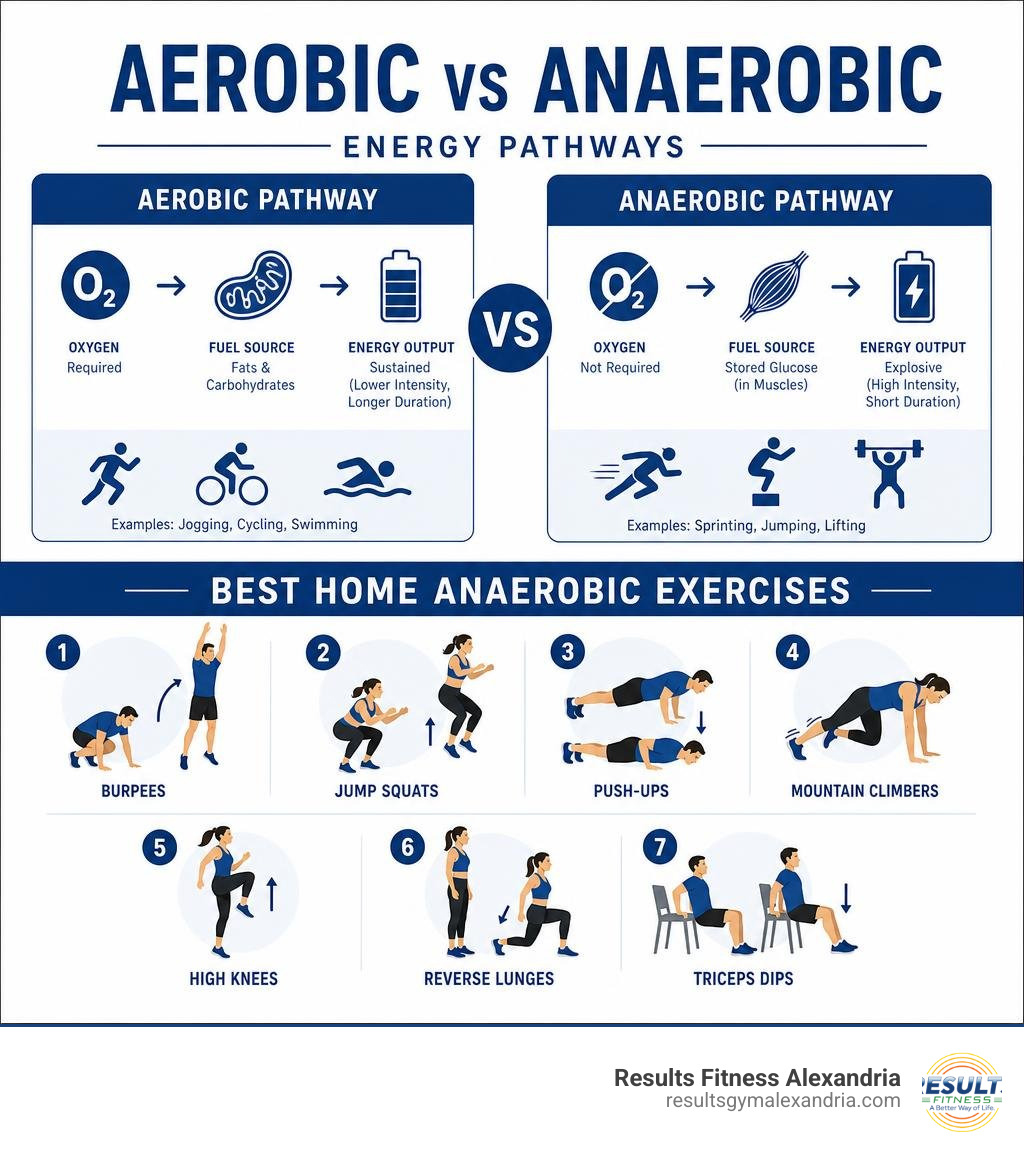
Here are the best anaerobic exercises you can do at home right now, with zero equipment:
- Burpees — full-body explosive movement
- Jump squats — power and lower-body strength
- Push-ups — upper-body and core strength
- Mountain climbers — cardio and core in one
- High knees — sprint-style effort in a small space
- Reverse lunges — single-leg strength and stability
- Triceps dips — arms and shoulders using a chair
Do these in short, intense bursts (20–45 seconds of hard effort, followed by rest) and you’ve got a solid anaerobic workout in under 30 minutes.
Most people know cardio — jogging, cycling, swimming. But anaerobic exercise is different. Instead of relying on oxygen for fuel, your body taps into glucose stored in your muscles for short, explosive bursts of energy. Think sprinting, jumping, and strength movements rather than long, steady effort.
The good news? You don’t need a gym, expensive equipment, or a lot of time to do it. Your living room is enough.
Anaerobic training builds lean muscle, burns fat, strengthens your heart, and can even improve your mood — all from home. Whether you’re short on time, unsure where to start, or just looking for something more effective than your current routine, this guide covers everything you need.
I’m Jennifer Rapchak, Fitness Director at Results Fitness Alexandria and a certified personal trainer with over 14 years of experience designing and leading anaerobic exercise programs, including HIIT and strength training. I’ve helped hundreds of people discover how to do anaerobic exercise at home safely and effectively — and I’ll walk you through exactly how to do the same.
Glossary for anaerobic exercise at home:
What is Anaerobic Exercise and How Does It Differ from Aerobic?
To understand how to master anaerobic exercise at home, we must first look at what is happening inside your muscles. The term “anaerobic” literally translates to “without oxygen.” This does not mean you stop breathing during your workout! Rather, it means that the physical demand of the exercise is so intense and rapid that your cardiorespiratory system cannot deliver oxygen to your muscles fast enough to generate energy.
In contrast, aerobic exercise (“with oxygen”) relies on a continuous supply of oxygen to keep you moving at a moderate, sustainable pace. Activities like steady-state jogging, walking, or cycling up a gentle hill are classic aerobic exercises. Your body uses oxygen to burn both carbohydrates and fats for fuel, allowing you to sustain the activity for 20, 30, or even 60 minutes.
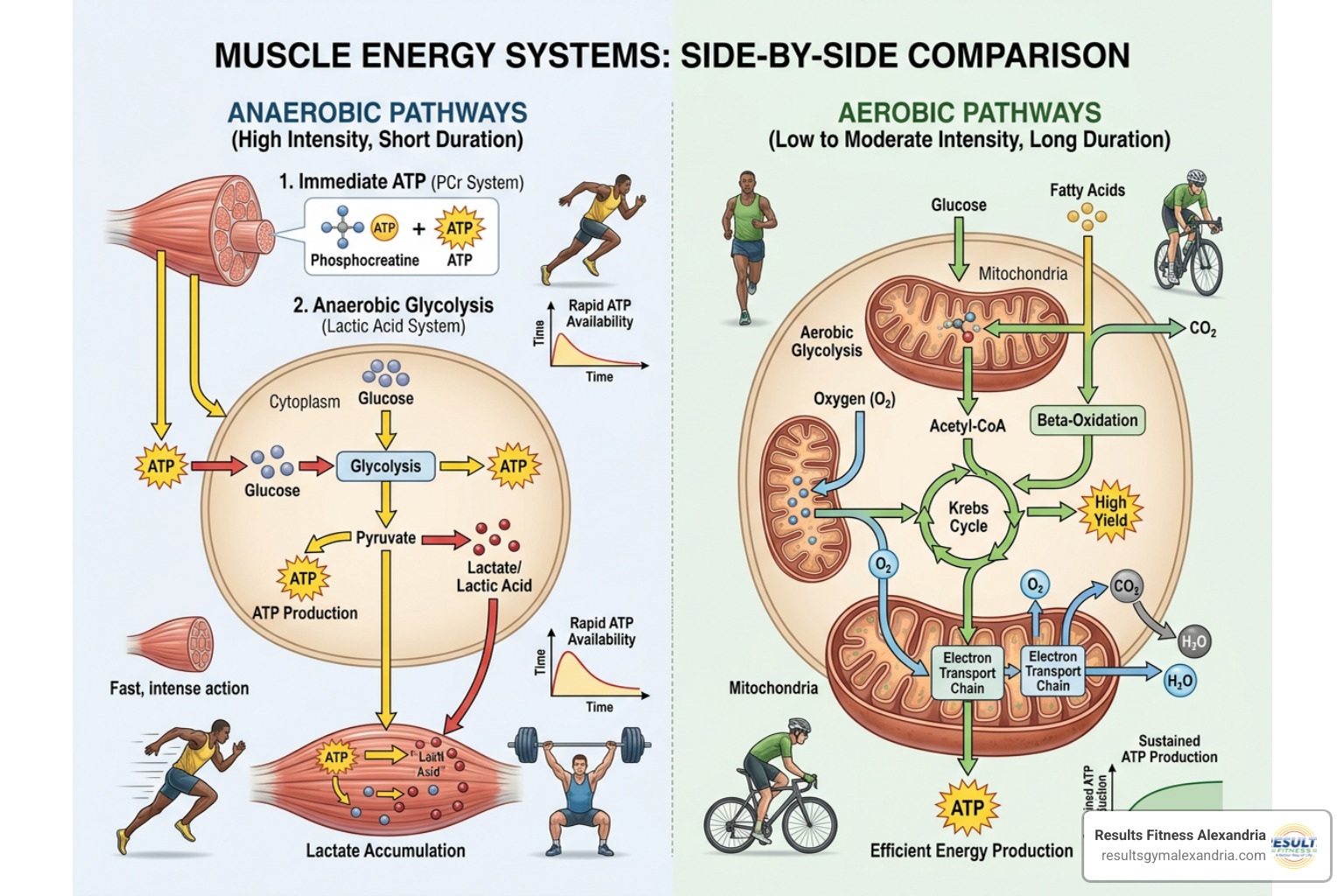
When you switch to anaerobic training, you are stepping on the gas pedal. Your body transitions from a slow-burning energy system to a high-octane, rapid-delivery system. Because oxygen takes too long to process and deliver, your cells must rely on energy pathways that do not require oxygen: the ATP-CP (adenosine triphosphate-creatine phosphate) system and the anaerobic glycolysis system.
To help you visualize these differences, we have outlined the core characteristics of both training styles below.
Aerobic vs. Anaerobic Exercise Comparison
| Characteristic | Aerobic Exercise | Anaerobic Exercise |
|---|---|---|
| Primary Fuel Source | Oxygen, Carbohydrates, Fats | Stored Muscle Glycogen (Glucose), ATP-CP |
| Intensity Level | Low to Moderate (50% to 80% Max HR) | High to Maximum (80% to 95%+ Max HR) |
| Duration | Sustained (20 minutes to several hours) | Short, explosive bursts (Seconds up to 2 minutes) |
| Primary Muscle Fibers | Slow-Twitch (Type I – Endurance) | Fast-Twitch (Type II – Power and Speed) |
| Key Benefits | Cardiovascular endurance, stamina, active recovery | Muscle power, strength, increased VO2 max, calorie burn |
| Examples at Home | Marching in place, light jumping jacks, basic yoga | Burpees, jump squats, heavy resistance band training |
For a deeper dive into how these metabolic pathways operate without relying on oxygen delivery, check out No Oxygen Required: The Ultimate Guide to Anaerobic Exercises.
The Science of Glycolysis and Lactic Acid
When you perform an explosive movement—such as a series of fast burpees in your living room—your body immediately initiates a process called glycolysis. Since oxygen is not readily available to help break down fuel, glycolysis steps in to break down stored glucose (carbohydrates) rapidly to produce ATP, the cellular currency of energy.
However, this rapid energy production comes with a byproduct. As your muscles burn through glucose without oxygen, they produce pyruvate, which is quickly converted into lactate (lactic acid) and hydrogen ions. It is a common myth that lactic acid alone causes muscle soreness the next day. In reality, it is the accumulation of those hydrogen ions that lowers the pH level in your muscle tissue, making it more acidic. This cellular acidity is what causes that familiar, intense “burning” sensation mid-workout and temporary muscular fatigue, eventually forcing you to slow down or rest.
Fortunately, consistent training teaches your body to clear lactate more efficiently, allowing you to work harder and longer before hitting that wall.
Understanding Your Anaerobic Threshold
Your anaerobic threshold (or lactate threshold) is the exact point during exercise where lactate begins to accumulate in your bloodstream faster than your body can clear it. Below this threshold, your workout feels comfortable and sustainable. Once you cross it, your breathing becomes heavy, your muscles burn, and you enter the anaerobic zone.
Your threshold varies based on your individual fitness level. While competitive athletes can maintain an aerobic state at very high intensities, beginners will cross their anaerobic threshold much sooner.
To track this at home without laboratory equipment, we recommend using the Rate of Perceived Exertion (RPE) scale, which runs from 1 to 10:
- RPE 1–3 (Low Intensity): Very easy. You can sing a song while moving.
- RPE 4–6 (Moderate Intensity): You are breathing harder but can easily carry on a conversation. This is your aerobic zone.
- RPE 7–8 (High Intensity): You can only speak in short, broken sentences. You are approaching your anaerobic threshold.
- RPE 9–10 (Maximum Effort): Complete breathlessness. You cannot speak, and you can only sustain this effort for a few seconds to a minute. This is the peak anaerobic zone.
Using this scale allows you to gauge your effort accurately during your home workouts, ensuring you are pushing hard enough to trigger anaerobic adaptations.
The Health and Fitness Benefits of Anaerobic Exercise at Home
Adding anaerobic exercise at home to your routine does more than just make you sweat—it triggers profound physiological adaptations that improve your health from the inside out. Let’s look at what the latest sports science tells us about these powerful benefits.
Boosting VO2 Max and Cardiovascular Health
VO2 max is the maximum amount of oxygen your body can utilize during intense exercise. It is one of the most reliable markers of cardiovascular health and longevity. Research shows that high-intensity interval training (HIIT)—a primary form of anaerobic exercise—is one of the most effective ways to improve VO2 max, often outperforming traditional, moderate-intensity aerobic exercise alone.
By forcing your heart to pump blood at its maximum capacity during high-intensity intervals, you strengthen the cardiac muscle, improve overall circulation, and enhance your blood vessels’ elasticity. Furthermore, high-intensity exercise has been shown to improve your lipoprotein profile and cholesterol efflux capacity, helping to raise healthy HDL cholesterol and protect your heart.
To learn more about how to structure your workouts to optimize these heart-healthy adaptations, take a look at our guide on Anaerobic Endurance Training.
Building Lean Muscle Mass and Bone Density
As we age, we naturally begin to lose muscle mass and bone density. Anaerobic training, specifically weight-bearing calisthenics and resistance exercises, is your best defense.
When you perform explosive or highly resistive movements, you recruit your fast-twitch muscle fibers, which have the greatest potential for growth and strength. These intense muscle contractions pull on your bones, signaling your body to deposit more minerals and strengthen your skeletal structure, reducing the risk of osteoporosis.
Additionally, anaerobic exercise upregulates the release of beneficial proteins called myokines. These signaling molecules support muscle health, reduce systemic inflammation, and promote healthy aging—offering incredible longevity benefits, particularly for older adults and postmenopausal women.
Burning Calories Long After the Workout Ends
One of the most exciting benefits of anaerobic exercise at home is the “afterburn” effect, scientifically known as Excess Post-Exercise Oxygen Consumption (EPOC).
Because anaerobic workouts place a high metabolic demand on your body, you do not stop burning extra calories when your workout ends. Your body must work incredibly hard for hours afterward to restore oxygen levels, clear lactate, repair muscle tissue, and replenish cellular energy stores. This elevated metabolic rate contributes significantly to daily calorie burn, fat loss, and long-term weight management.
The Best Anaerobic Exercise at Home Workouts and Movements
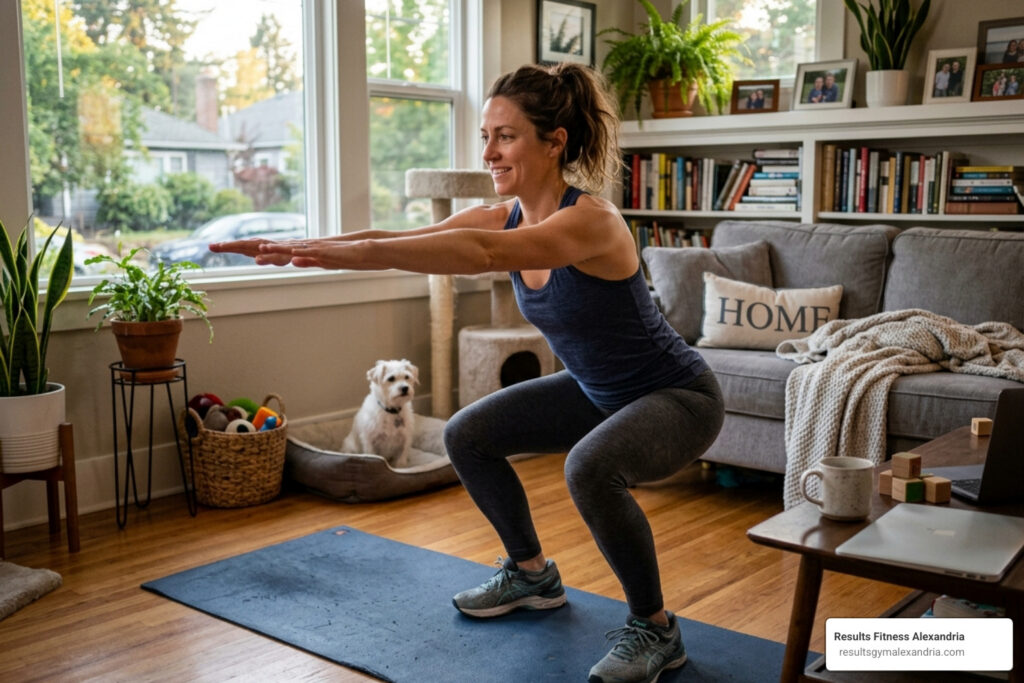
You do not need a room full of heavy weight machines to get an incredible anaerobic workout. By leveraging your body weight, adjusting your training angles, and manipulating your work-to-rest ratios, you can turn your living room into a highly effective training space.
Calisthenics: Equipment-Free Anaerobic Exercise at Home
Calisthenics is the art of using your own body weight to build strength, power, and coordination. Instead of adding physical plates to a barbell, you increase the difficulty of calisthenics by altering your body’s leverage, slowing down your tempo, or adding explosive elements. To learn more about the philosophy behind bodyweight strength, read through the excellent guide on Calisthenics Workouts at Home – Tonal .
Here are the essential bodyweight movements to build your home anaerobic foundation:
- Incline or Standard Push-Ups: Target your chest, shoulders, triceps, and core. Beginners can place their hands on a sturdy wall, countertop, or sofa to reduce the load, while advanced exercisers can elevate their feet on a chair. Aim for 3 sets of 5 to 12 controlled repetitions.
- Triceps Dips: Using the edge of a stable chair or couch, lower your hips toward the floor by bending your elbows to 90 degrees, keeping your shoulders down and away from your ears. Perform 3 sets of 5 to 10 repetitions.
- Reverse Lunge to Knee Drive: Step backward into a lunge, then explosively drive that back knee up toward your chest as you stand. This develops single-leg power and hip stability. Try 3 sets of 8 to 10 reps per side.
- Burpees: The ultimate full-body anaerobic movement. Start standing, drop into a plank, perform a push-up (optional), jump your feet forward, and leap explosively into the air. Perform 3 rounds of 20 to 30 seconds of continuous effort.
High-Intensity Interval Training (HIIT) and Plyometrics
Plyometrics, or jump training, focuses on rapid, explosive movements that teach your muscles to exert maximum force in minimum time. When combined with HIIT, these movements spike your heart rate into the anaerobic zone almost instantly.
A fantastic way to target your core anaerobically during these routines is detailed in our guide on how to Sculpt Your Abs Fast with These Intense Anaerobic Core Exercises.
For a complete, ready-to-use home routine, you can follow this highly rated HIIT Cardio and Abs Workout – No Equipment HIIT and Abs (Low Impact Mods) | Fitness Blender . This 32-minute session features a smart 20-seconds-on, 10-seconds-off interval structure that pushes your limits while offering excellent low-impact modifications.
If you are short on time, try this quick, high-energy option: A Sweaty 24-Minute Cardio HIIT Workout You Can Do In Your Living Room – Max Fit Fam . It uses a 45-second work and 15-second rest pattern to maximize cardiovascular efficiency.
For those who love a challenge, try the 25 MIN POWER HIIT Workout – No Equipment, Home Workout to make you feel POWERFUL! , which includes a demanding 2-minute plank finisher, or the 20 Minute Full Body Home Workout (No Equipment, No Repeats) | Halfway Foods , featuring a sequence of 20 unique exercises so you never have to repeat a single move.
How to Safely Structure Your Anaerobic Exercise at Home Routine
Because anaerobic training requires high-intensity effort, proper structure is essential. Jumping straight into explosive movements without a warm-up or skipping recovery can lead to injury and burnout.
Every home anaerobic session should follow this three-step formula:
- The Warm-Up (5–10 Minutes): Never skip this. A good warm-up increases your core body temperature, lubricates your joints, and prepares your nervous system. Spend 5 minutes performing dynamic movements like marching in place, arm swings, bodyweight squats, hip circles, and gentle scapular push-ups.
- The Main Workout (15–25 Minutes): This is where you perform your high-intensity intervals or strength circuits. Keep the total duration relatively short; if you can maintain a high-intensity workout for longer than 30 minutes, you are likely not pushing hard enough during your work intervals to make it truly anaerobic.
- The Cool-Down (5 Minutes): Help your heart rate return to baseline safely. Spend 5 minutes doing light walking in place followed by static stretches, such as a quad stretch, doorway chest stretch, and child’s pose.
Beginner Progressions and Exercise Modifications
If you are new to high-intensity training, remember: technique always comes before intensity. Pushing yourself to a level 9 RPE with poor form is a recipe for injury.
Start by slowing down your tempo, reducing your range of motion, or choosing low-impact variations. For example, instead of a jump squat, perform a fast bodyweight air squat while focusing on keeping your chest up and pushing your knees outward. If you want to explore more beginner-friendly strategies, read our comprehensive Beginners Guide to Anaerobic Exercise Workouts.
For those looking for a joint-friendly, highly targeted way to build strength at home, portable resistance systems can be incredibly helpful. The Flobody Gym | At-Home Pilates for Women — Results in 15 Min is an excellent example of a portable, low-impact system that uses progressive resistance bands to build lean muscle and improve posture without the need for heavy, expensive gym equipment.
If you are returning to high-impact activities like running after an injury or pregnancy, we highly recommend consulting with a professional. Residents in Northern Virginia can access specialized care through In-home PT for Return To Running in and near Alexandria, Virginia , which provides personalized physical therapy in the comfort of your home to ensure you transition back to impact sports safely.
Designing a Weekly Schedule for Anaerobic Exercise at Home
Because of the high stress anaerobic training places on your muscles and central nervous system, you must prioritize rest. We recommend allowing at least 48 hours of recovery between intense anaerobic sessions.
Below is a sample weekly schedule designed to balance high-intensity work with active recovery and rest:
- Monday: High-Intensity Anaerobic Home Workout (e.g., 20-minute bodyweight HIIT circuit)
- Tuesday: Active Recovery (Light walking, gentle yoga, or mobility work)
- Wednesday: Strength-Focused Calisthenics Routine (Push-ups, dips, lunges)
- Thursday: Active Recovery or Complete Rest
- Friday: High-Intensity Anaerobic Home Workout (e.g., 24-minute cardio HIIT)
- Saturday: Active Recovery (Outdoor walk or light stretching)
- Sunday: Complete Rest Day
Frequently Asked Questions About Home Anaerobic Workouts
How often should I do anaerobic exercise at home?
We recommend performing anaerobic workouts 2 to 3 times per week. Because these sessions place a high demand on your central nervous system and muscle tissues, your body needs adequate time to rebuild and repair. Pushing through high-intensity workouts every single day without rest can quickly lead to overtraining, persistent fatigue, and an increased risk of injury.
Do I need expensive equipment for home anaerobic workouts?
Absolutely not! Your own body weight and gravity are all you need to get started. Compound movements like burpees, mountain climbers, and jump squats are completely free and highly effective. If you want to progress, you can add affordable, space-saving tools like resistance bands, a sturdy chair for dips, or a jump rope.
What is the difference between the ATP-CP and lactic acid systems?
These are the two primary anaerobic energy pathways:
- The ATP-CP System (Phosphagen System): Fuels extremely short, maximal bursts of power lasting under 10 seconds (e.g., a single heavy lift or a 50-meter sprint). It relies on stored ATP and creatine phosphate in your muscles for instant energy.
- The Lactic Acid System (Anaerobic Glycolysis): Takes over for high-intensity efforts lasting between 10 seconds and 2 minutes (e.g., a 400-meter run or a 45-second set of burpees). It breaks down stored glucose without oxygen, producing lactate as a byproduct.
Conclusion
Mastering anaerobic exercise at home is one of the most efficient, cost-effective ways to transform your fitness, build lean muscle, and support your long-term cardiovascular health—all without stepping foot outside your living room. By understanding the science of glycolysis, tracking your RPE, and utilizing smart bodyweight movements like calisthenics and HIIT, you can unlock incredible results on your own schedule.
However, while home workouts are incredibly convenient, there is nothing quite like the energy, guidance, and community of a professional training environment. If you live in the Alexandria, Virginia area and want to take your training to the next level, we would love to welcome you to Results Fitness Alexandria.
Whether you are looking for expert-led fitness classes, customized personal training to perfect your form, or restorative yoga to aid your recovery, we have everything you need to reach your goals. We even offer on-site childcare to make your workout completely stress-free!
Ready to experience the difference for yourself? Claim your free 1-day pass to try our premium amenities and meet our passionate coaching team. For more expert tips, training templates, and step-by-step guidance, be sure to explore our master resource on Anaerobic Endurance Training. Come join us, and let’s build your strongest, healthiest self together!