Pilates for Cycling: 6 Moves for Power
Why Cyclists Are Turning to Pilates for Better Performance
Pilates for cycling delivers three key benefits that transform your ride:
- Stronger Core – Build the stable foundation needed to transfer more power through every pedal stroke.
- Injury Prevention – Address muscle imbalances and postural issues that cause lower back pain, knee discomfort, and neck strain.
- Better Endurance – Maintain proper form longer, reducing fatigue and improving efficiency on the bike.
If your body rocks side-to-side on long rides or your lower back aches in the saddle, your core strength can’t keep up with your leg power. Pilates strengthens the deep stabilizing muscles that cyclists often neglect, improves bone mineral density, and addresses the postural tightness from hours spent hunched over handlebars. Research shows that just 20-30 minutes of targeted core work can significantly improve your power-to-weight ratio without adding bulk.
The repetitive nature of cycling creates predictable problems: shortened hip flexors, tight hamstrings, a rounded upper back, and quad dominance. Pilates directly addresses each of these issues through controlled movements that lengthen tight muscles and strengthen weak ones.
As Fitness Director at Results Fitness Alexandria, I’ve seen how pilates for cycling transforms riders. The targeted core work and functional movement patterns translate directly to better bike handling, sustained power output, and pain-free rides.
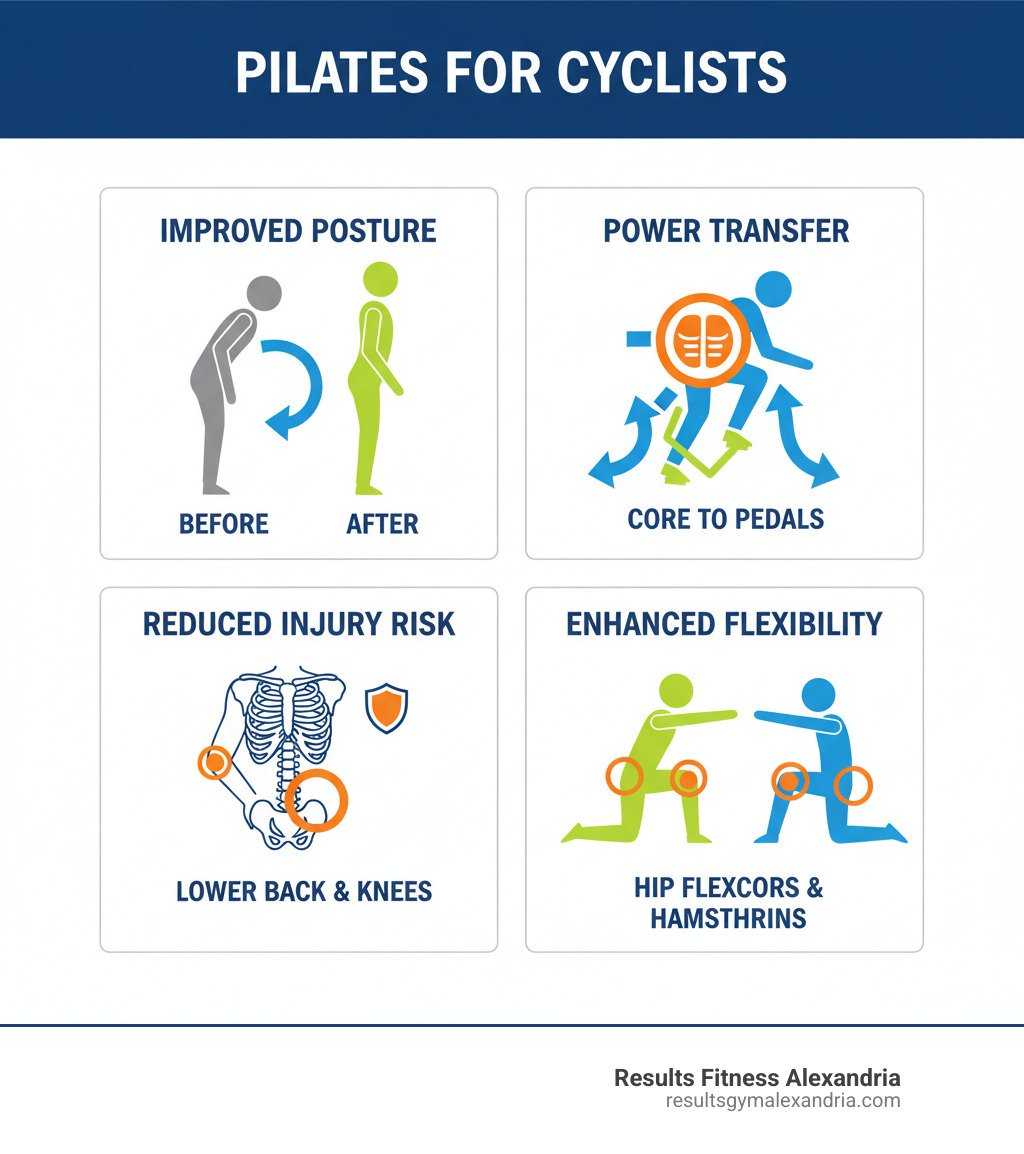
Pilates for cycling terms at a glance:
The Core Connection: How Pilates Boosts Cycling Power and Endurance
Your legs do the pedaling, but your core creates the stable platform that allows them to deliver maximum power. When cyclists neglect their core, power is wasted on side-to-side rocking instead of being channeled into forward motion.
Pilates for cycling builds the deep stabilizing muscles that transform how your body works on the bike. A strong, engaged core improves your watts/kg ratio by building functional strength without adding bulk. Your spinal alignment stays neutral even during hard efforts, which means better power transfer and less wasted energy.
Beyond raw power, core stability directly impacts efficiency. Pilates improves limb alignment and refines your pedal stroke, which boosts force production and protects your knees and ankles from repetitive stress. If you’re interested in how this type of targeted work fits into overall fitness, our guide on What is Functional Strength Training? A Simple Guide breaks down the bigger picture.
Stronger Core, Stronger Ride
Your core is more than just abs; it’s a complex system of deep abdominal muscles, back muscles, and the network surrounding your pelvis. When you engage this entire system, the force your legs generate travels efficiently through a solid torso straight into the pedals. Your upper body stays quiet and controlled while your legs do the work—this is what efficient power transfer looks like.
Pilates is centered around building this functional core strength. The controlled movements teach you to engage your deep stabilizers while moving your limbs, which is precisely what you need when pedaling. A stable pelvis reduces upper body rocking, meaning more of your effort goes into forward motion.
Strengthening your Abs and Glutes through Pilates creates a powerhouse combination. Your glutes generate force, while your core provides the stable platform to channel it effectively.
Improving Efficiency and Endurance
When your form breaks down miles into a ride—shoulders creeping up, back aching, swaying with each pedal stroke—it’s often your core giving out, not just your legs. Pilates for cycling delivers game-changing benefits by developing deep core endurance and body awareness, helping you maintain proper form even when fatigued.
Your body learns to rely on deep stabilizers that can sustain effort for hours. This energy conservation translates directly into riding longer without hitting the wall. When your core stays engaged, your breathing remains controlled and efficient, helping you sustain power output throughout your entire ride. Your body stops wasting energy on unnecessary stabilization and channels everything into moving the pedals. For more insights on building this kind of lasting power, check out our article on the Benefits of Endurance training.
Building a Resilient Body: Injury Prevention with Pilates for Cycling
Cycling is great for cardiovascular health but can be hard on the body. Spending hours in an aerodynamic position with a repetitive pedaling motion creates muscle imbalances and postural problems. Pilates for cycling is your secret weapon for staying injury-free.
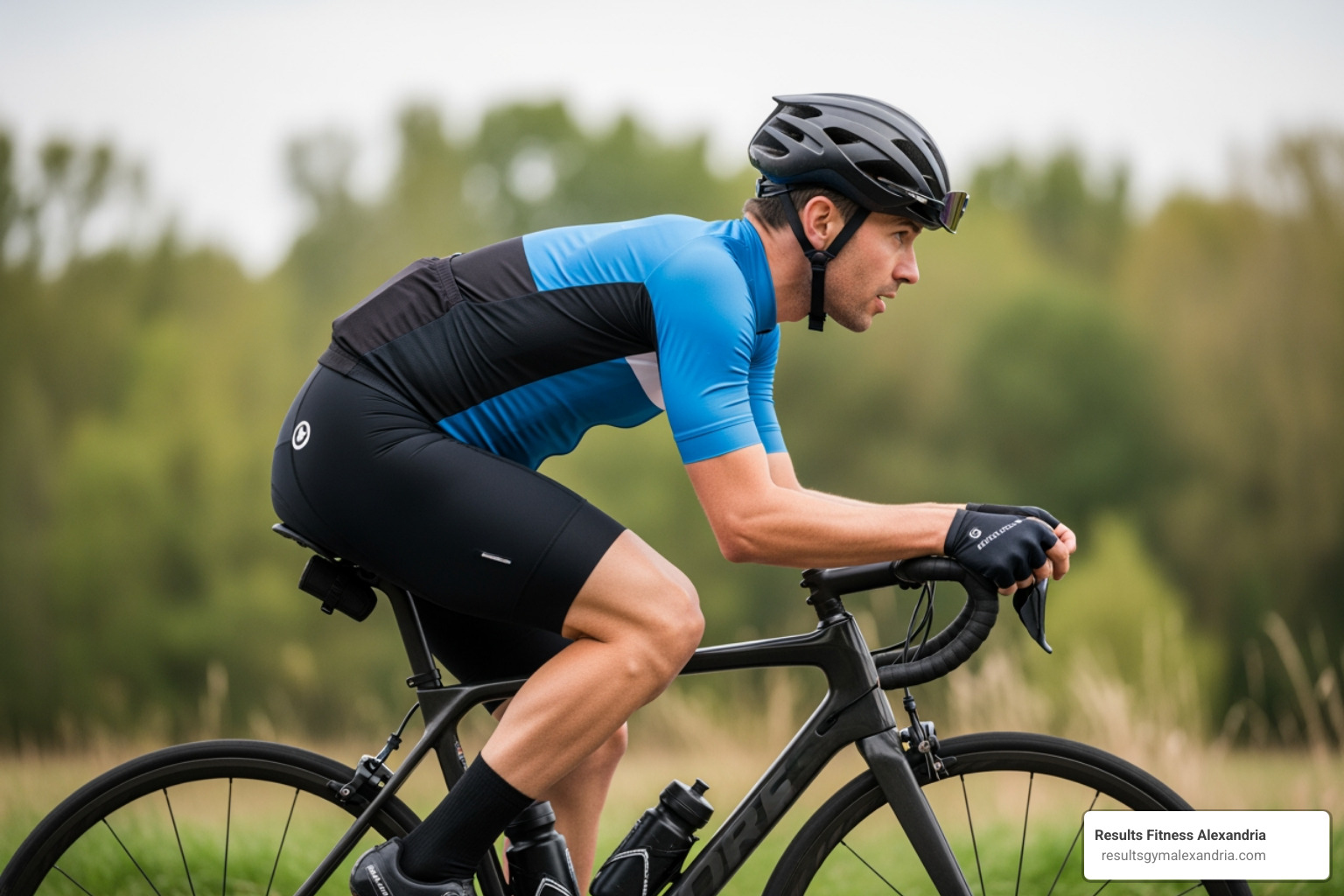
The locked-in riding position creates predictable issues: stiffness in the neck, shoulders, and lower back, along with tight hip flexors. Pilates addresses these problems by building strength, improving flexibility, and correcting posture. It lengthens tight muscles, mobilizes the spine, and creates a protective cushion around your joints.
Additionally, research shows cyclists often have lower bone mineral density because cycling is a low-impact sport. As a resistance-based method, Pilates puts a healthy load on your bones, which can increase their density and resilience, reducing fracture risk. For a deeper dive, check out this helpful article on Pilates for Cyclists.
Correcting Common Cyclist Posture
The distinctive “cyclist’s posture”—rounded upper back, forward head, and inwardly rolled shoulders—is an adaptation to hours on the bike that contributes to neck strain, shoulder discomfort, and lower back pain.
Pilates for cycling actively counteracts these changes. It improves body awareness and strengthens the muscles that keep you upright and elongated. Exercises focusing on spinal extension and mobility open up the chest and strengthen the upper back, reversing the forward hunch. The result is better form on and off the bike, with less pain and tension. If you’re looking for additional ways to improve your flexibility, you might also enjoy reading about How Yoga Can Help Improve Your Flexibility.
Addressing Muscle Imbalances
The repetitive pedaling motion creates predictable muscle imbalances. Hip flexors become short and tight, glutes become underactive, and quads dominate the hamstrings. This quad-dominant pattern can lead to tight hip flexors pulling on the lower back, improper knee tracking from weak glutes, and limited range of motion.
Pilates targets these imbalances with precision. It strengthens the glutes, teaching them to fire properly, while lengthening chronically tight hip flexors and hamstrings. This restoration of muscular balance improves limb alignment during the pedal stroke, leading to more stable, controlled movement. Your knees track correctly, reducing the risk of common overuse injuries. Our Best Women Leg Workout Guide emphasizes this same principle of balanced strength, which is exactly what pilates for cycling delivers.
Your At-Home Routine: 6 Essential Pilates Moves for Cyclists
You don’t need fancy equipment to bring pilates for cycling into your home. A simple mat and 20-30 minutes of focused practice can make a dramatic difference. These six essential moves rely on controlled movements and proper form to address the specific needs of cyclists.
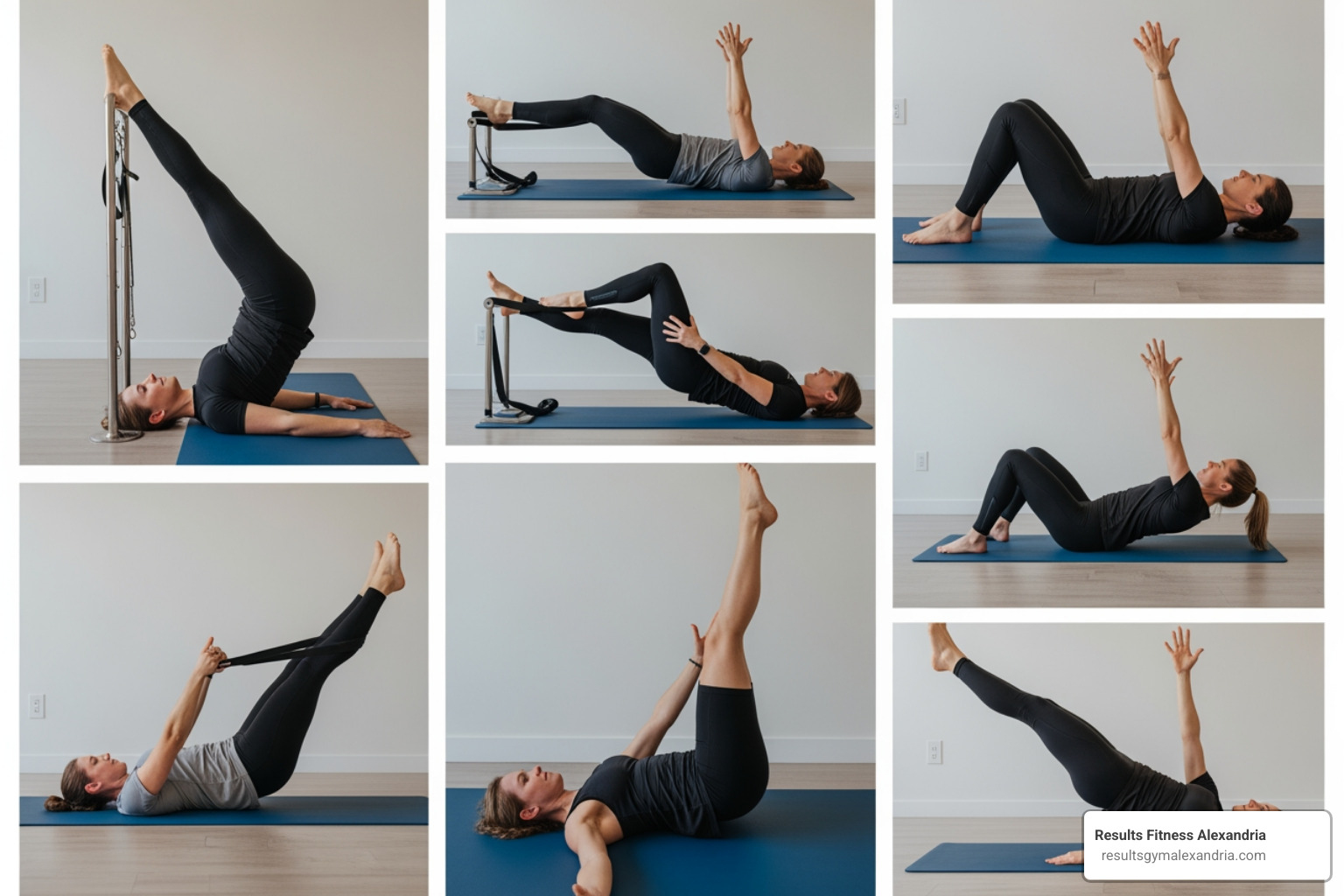
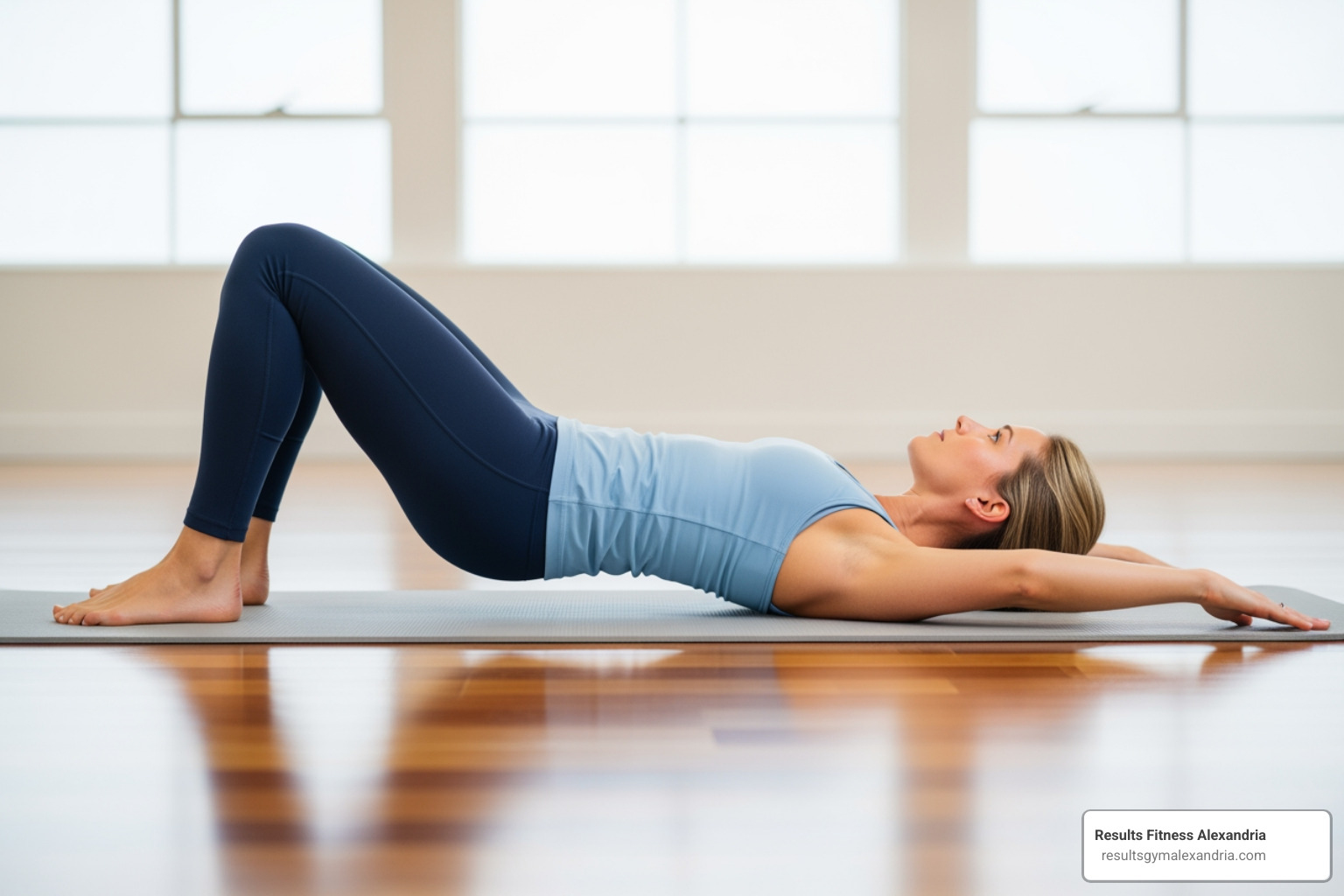
1. The Shoulder Bridge
This exercise strengthens your hamstrings and glutes to counteract cycling’s quad-dominant nature. It also stretches tight hip flexors and improves spinal articulation.
How to do it: Lie on your back with knees bent and feet flat on the floor, hip-width apart. Engage your core, squeeze your glutes, and slowly peel your spine off the mat until your body forms a straight line from shoulders to knees. Hold for a breath, then roll back down with control. Repeat 6-8 times.
2. The Hundred
A Pilates classic, The Hundred builds deep core strength and abdominal endurance while coordinating breath with movement, creating a stable torso for climbing.
How to do it: Lie on your back with knees bent at 90 degrees (tabletop). Lift your head and shoulders off the mat. Extend your arms straight by your sides and pump them up and down quickly while breathing: inhale for five pumps, exhale for five pumps. Work up to ten sets (100 pumps total).
3. The Clam
This move targets the gluteus medius to keep your pelvis stable and your knees tracking properly, which can help prevent knee pain.
How to do it: Lie on your side with knees bent and stacked. Keeping your hips stacked and feet together, lift your top knee toward the ceiling without letting your pelvis roll back. Lower with control. Repeat 6-8 times on each side. Add a resistance band for more challenge.
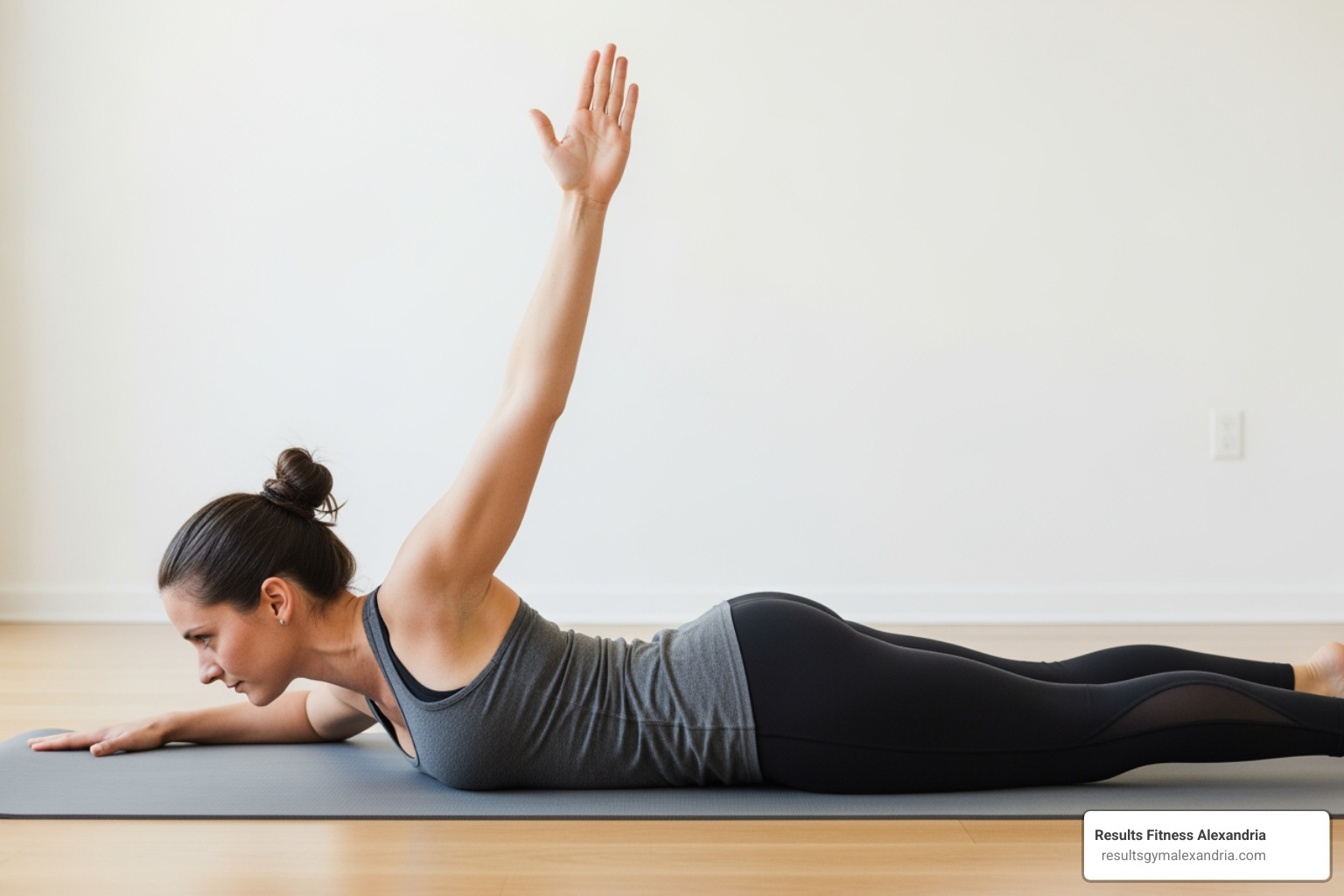
4. Swimming
This move strengthens the back extensors, glutes, and hamstrings to fight the rounded posture on the bike and build endurance for maintaining proper form.
How to do it: Lie face down with arms extended overhead. Engage your core to protect your lower back, then lift your head and shoulders slightly. Simultaneously lift your right arm and left leg, then switch in a swimming motion. Keep your torso completely stable. Repeat 6-8 times per side.
5. Single Leg Stretch
This move challenges your ability to keep your pelvis stable while your legs move independently, mimicking the pedal stroke and improving core control.
How to do it: Lie on your back in a tabletop position. Lift your head and shoulders, engaging your core. Extend one leg straight out while drawing the opposite knee toward your chest. Switch legs smoothly, keeping your torso and pelvis completely still. Repeat 10 times per leg.
6. Spine Stretch Forward
Perfect for post-ride recovery, this stretch improves spinal flexibility, releases back tension, and provides a deep hamstring stretch.
How to do it: Sit tall with legs extended straight in front of you. Reach your arms forward at shoulder height. Exhale and slowly roll forward from your head, reaching toward your feet while keeping your core engaged. Inhale to pause, then exhale as you roll back up to a tall seated position. Repeat 4-6 times.
These six moves form the foundation of an effective pilates for cycling practice. Start with two or three sessions per week, and you’ll notice improvements in your riding within just a few weeks.
How to Integrate Pilates into Your Cycling Schedule
The secret to making pilates for cycling work isn’t adding hours to your training week; it’s about smart placement and consistent effort. Think of it as enhancing your cycling workouts with the stability and strength your body needs to perform at its best.
Just 20-30 minutes of targeted core work after a ride or on a recovery day can transform how your body responds to training. This balanced approach—combining cardio, strength, and flexibility—creates lasting improvements. For a deeper look at building this kind of routine, check out our guide on How to Create a Balanced Fitness Routine Combining Cardio, Strength, and Flexibility.
Finding the Right Frequency
For most cyclists, 2-3 Pilates sessions per week creates noticeable change within weeks. Consistency is more important than duration; a 20-minute session three times a week is more effective than one long session a month.
Listen to your body. On heavy training weeks, you might dial back to two lighter sessions focused on recovery. During easier weeks or on recovery days, you can push a bit harder. This allows you to build strength while giving your cardiovascular system a break. If you’re wondering how this fits into your overall training volume, our article on How Often Should You Work Out Based on Your Goals? offers helpful guidance.
On-Season vs. Off-Season Focus
Your Pilates routine should shift with your cycling seasons.
During your on-season, keep Pilates short and purposeful (15-30 minutes). Focus on maintaining core strength, staying flexible, and supporting recovery between rides. Gentle core activation before rides and stretching after are key. The goal is maintenance, not adding fatigue.
In the off-season, you have more time to address deeper work. Dedicate 30-60 minutes to sessions that correct imbalances and build a robust foundation. This is the time to strengthen your glutes, improve posture, and address chronic tightness. This foundation work pays dividends when the next season rolls around.
At Results Fitness Alexandria, we understand how to structure training that complements your cycling goals. Whether you’re in peak season or building your base, we can help you find the right balance.
Frequently Asked Questions about Pilates for Cycling
Here are answers to the most common questions we get from cyclists about adding Pilates to their training.
How long does it take to see benefits from Pilates?
Consistency is key. While everyone is different, most cyclists notice improved body awareness within a few sessions. After a few weeks of practicing 2-3 times per week, you’ll likely experience reduced soreness and gradual strength gains.
The improvements are often subtle at first—less back ache or shoulder fatigue—but they add up quickly. Think of it as an investment in your long-term riding enjoyment, as every session builds a stronger, more resilient foundation.
Can Pilates also improve my mental focus on long rides?
Absolutely. The mind-body connection is at the heart of Pilates. Every movement requires focused breathing and deep concentration, which trains you to be fully present. This mental training translates directly to cycling, helping you maintain awareness of your form and stay calmer during challenging efforts.
Both Pilates and cycling are proven to boost mental health, improve brain function, and reduce stress. This can make a huge difference on long rides when mental fatigue sets in. If you’re interested in exploring this connection further, check out our guide to Mind-Body Fitness.
Is Mat Pilates enough, or do I need a Reformer?
Mat Pilates is absolutely enough to see significant benefits. It uses your own body weight for resistance to build the core strength, flexibility, and body awareness that cyclists need. All the exercises in this article can be done on a mat.
That said, Reformer Pilates offers unique advantages with its adjustable resistance for targeted strengthening or deeper stretches. Wall Pilates is another popular variation that uses a wall for leverage to increase resistance. The best approach is to start with Mat Pilates to build your foundation. If you want more variety, exploring other forms can be a great next step. At Results Fitness Alexandria, our Pilates Circuit Class introduces you to different approaches to help you find what works best for your goals.
Conclusion
If you’ve made it this far, you already know that pilates for cycling isn’t just another fitness trend—it’s a practical, powerful way to transform your time on the bike. We’ve covered how a stronger core translates directly to more efficient power transfer, how targeted exercises can address those nagging muscle imbalances that lead to injury, and how even just 20-30 minutes a few times a week can help you ride longer and stronger without pain.
The beauty of Pilates is that it meets you where you are. Whether you’re training for your first century ride or simply want to enjoy weekend spins without the lower back ache, the principles remain the same: build stability, improve flexibility, and create balance in your body. The result? You become a more efficient, resilient cyclist who can enjoy every mile.
At Results Fitness Alexandria, we’re passionate about helping you build a balanced fitness routine that supports whatever gets you moving. Our instructors understand that everyone’s fitness journey looks different, and we’re here to guide you whether you’re brand new to Pilates or looking to deepen your practice. We offer a variety of classes designed to complement your active lifestyle, from core-focused sessions to flexibility work that helps you recover faster.
Curious about how Pilates might fit into your training? We’d love to invite you to try us out with a free 1-day pass—come experience our amenities, meet our team, and see how cross-training can lift your cycling performance. Explore our Group Fitness classes to find the perfect complement to your cycling routine and find what a difference the right support system can make.
Your strongest, most injury-free rides are waiting. We can’t wait to be part of your journey.