Cardiovascular fitness program 2025: Unlock Peak Health
Why a Cardiovascular Fitness Program is Your Key to Peak Performance
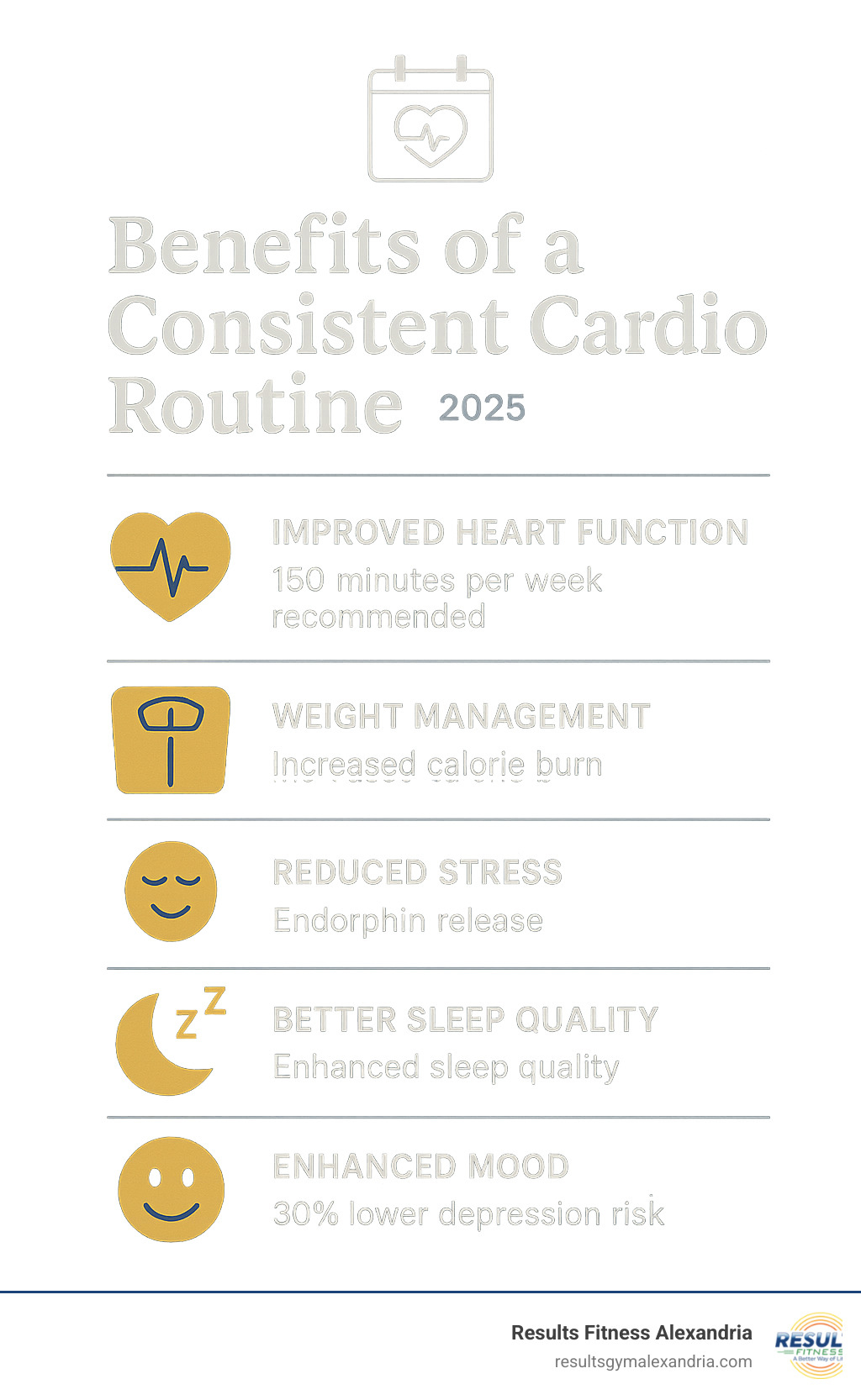
A cardiovascular fitness program is a structured routine designed to strengthen your heart and lungs, improving your body’s ability to deliver oxygen to your muscles. It’s a key tool for boosting energy, managing weight, and changing your overall health.
Essential Components of an Effective Cardiovascular Fitness Program:
- Frequency: 3-5 days per week
- Intensity: 60-85% of your maximum heart rate
- Time: 20-30 minutes per session
- Type: Activities like walking, cycling, or swimming
- Progression: Gradually increasing duration and intensity
The American Heart Association recommends 150 minutes of moderate-intensity or 75 minutes of vigorous-intensity aerobic activity weekly. You can start small and build up gradually.
Regular cardio reduces your risk of heart disease, diabetes, and stroke while boosting mood and sleep quality. As Jennifer Rapchak, Fitness Director at Results Fitness Alexandria with over 14 years of certified personal training experience, I’ve seen how the right program can open up energy and performance you never knew you had.
Basic Cardiovascular fitness program vocab:
What is Cardiovascular Fitness and Why Does It Matter?
Cardiovascular endurance, or aerobic fitness, is your body’s ability to deliver oxygen to your muscles during sustained physical activity. When this system is strong, you can exercise longer without feeling drained. It’s not just for athletes; it’s for having the energy for daily life, like chasing kids or carrying groceries upstairs.
When you commit to a cardiovascular fitness program, your heart undergoes a healthy process called cardiac hypertrophy, making it bigger and stronger.
- Eccentric hypertrophy occurs with endurance training, increasing your heart’s main pumping chamber size. This means your heart can pump more blood with each beat.
- Concentric hypertrophy happens with strength training, making the heart muscle walls thicker and more powerful.
The cardiovascular effects and benefits of exercise are well-documented, leading to Better Heart Health you can feel daily.
The Science-Backed Health Benefits

The benefits of a consistent cardiovascular fitness program are backed by science. Regular exercise tunes your cardiovascular system: blood pressure drops, cholesterol levels improve, and blood vessels become healthier, reducing blockage risk. These changes dramatically reduce your risk of heart disease and stroke.
Cardio also helps manage blood sugar levels, which is crucial for preventing and controlling type 2 diabetes. Your immune system gets a major boost, meaning you get sick less often. Research in Accelerometer measured physical activity and the incidence of cardiovascular disease shows that even small increases in daily activity have profound health benefits.
The Impact on Your Mind and Mood
The mental rewards of a cardiovascular fitness program are just as impressive. Sleep quality improves dramatically, and cardio is a powerful stress-buster, reducing stress hormones and releasing mood-boosting endorphins.
For those with low mood, research shows that just 15 minutes of vigorous activity daily can significantly reduce depression risk. The Assessment of bidirectional relationships between physical activity and depression confirms this link. Cardio also slows brain aging by helping maintain brain gray matter volume, which means better memory and sharper thinking. The connection between Cardiorespiratory fitness and gray matter volume proves that taking care of your heart also means taking care of your mind.
The Building Blocks of a Cardiovascular Fitness Program
Creating a cardiovascular fitness program is simple with the FITT Principle: Frequency, Intensity, Time, and Type. This is your blueprint for success.
- Frequency: Aim for 3 to 5 cardio sessions weekly, with no more than two consecutive rest days.
- Intensity: Find the sweet spot where you’re challenged but not exhausted. This means getting your heart rate into a target zone for your fitness level.
- Type: The best exercise is one you’ll do consistently. Choose rhythmic, continuous activities like dancing, swimming, cycling, or running.
- Time: Aim for 30-minute sessions, but even 10-15 minute bursts are beneficial, especially when starting.
For comprehensive guidance, see the Physical Activity Guidelines for Americans, 2nd edition. Our Cardio Training Endurance Guide 2025 also offers more tips.
Types of Cardiovascular Exercises
There are many options to keep your routine exciting.
- Low-impact cardio is gentle on your joints. Options include brisk walking, cycling, swimming, water aerobics, elliptical training, and rowing. These are effective without the harsh pounding. Learn more about How Aquatic Exercise Can Help You Lose Weight and Get in Shape.
- High-impact cardio is more intense and great for bone density. This includes running, jogging, jumping rope, and sports like tennis or basketball.
Mixing and matching prevents boredom and works different muscles. See our favorites in The Top 5 Cardio Exercises to Boost Your Endurance.
Understanding Exercise Intensity
Proper intensity is key for an effective workout. You can measure it by listening to your body.
- The talk test: During moderate-intensity exercise, you can talk but not sing. At vigorous intensity, you can only manage short sentences.
- Heart rate zones: Estimate your max heart rate (220 minus your age) and aim for 60-80% of that maximum for endurance training.
- Rate of Perceived Exertion (RPE): On a scale of 1-10, moderate is a 5-7, and vigorous is an 8-9.
Zone 2 cardio (60-70% max heart rate) feels easy but is vital for building endurance and improving recovery. High-Intensity Interval Training (HIIT) alternates intense bursts with recovery, making it very efficient. Limit HIIT to 1-2 times per week after building a solid cardio base. Learn more about HIIT.
| Intensity Level | Description | Talk Test | Heart Rate (% of Max) |
|---|---|---|---|
| Low-Moderate | Easy conversation possible; sustainable for long periods. Examples: leisurely walk, slow bike ride | Can talk easily, even sing | 60%-70% |
| Moderate | Breathing harder, light sweat, but can still talk with effort. Examples: brisk walking, light jogging | Can talk, but not sing | 70%-80% |
| Vigorous | Working hard, heavy breathing, difficult to talk. Examples: running, sprinting, HIIT | Only short sentences possible | 80%-90% |
How to Create Your Personalized Cardio Workout Plan

Creating a personalized cardiovascular fitness program means designing a routine that fits your life, goals, and schedule. The best plan is one you can stick with long-term.
Start by setting clear, achievable goals, like climbing stairs without getting winded or training for a 5K. If you’re a beginner, start slow with 15-20 minutes of manageable activity. Gradual progression is key; each week, try adding 5 minutes to your workout or slightly increasing your pace. Most importantly, listen to your body. Adjust your intensity as needed and take rest days when you feel sore or sluggish.
For help creating a well-rounded routine, see How to Create a Balanced Fitness Routine: Combining Cardio, Strength, and Flexibility.
The Importance of Warm-Ups and Cool-Downs
Warm-ups and cool-downs are non-negotiable for any effective cardiovascular fitness program.
- A 5-10 minute warm-up should include light aerobic activity (easy walking) and dynamic stretching (arm circles, leg swings). This increases blood flow, raises your core temperature, and prepares your joints, reducing injury risk.
- A 5-10 minute cool-down helps your heart rate recover safely. Transition to a slower pace (e.g., from running to walking). This is also the best time for static stretching (holding stretches for 20-30 seconds) to improve flexibility and aid recovery.
Designing Your Weekly Cardiovascular Fitness Program
Your weekly schedule should be strategic. The American Heart Association (AHA) recommends 150 minutes of moderate or 75 minutes of vigorous activity weekly, spread out for sustainability.
Combine different intensities and include muscle strengthening days. Variety keeps things interesting and develops all-around fitness. Rest days are crucial for muscle repair and energy replenishment. Plan at least one full rest day, and consider active recovery (gentle walking or stretching) on other days. Break up your weekly minutes into manageable chunks that fit your schedule. For more, visit the American Heart Association (AHA). Also, learn about Maximizing Results: Integrating Strength Training into Your Cardio Routine.
Measuring Progress in Your Cardiovascular Fitness Program
Tracking your workouts helps you celebrate progress and stay motivated. Log your duration, distance, and intensity. You’ll notice that activities that once felt hard become easier.
Your resting heart rate, measured first thing in the morning, is a great indicator of fitness. As your heart gets more efficient, this number typically drops. Periodic endurance tests, like timing a one-mile walk, provide concrete benchmarks. As your VO2 max (your body’s ability to use oxygen) improves, you’ll be able to sustain higher intensities for longer. Don’t be afraid of adjusting your plan to overcome plateaus. Switching up your routine or adding intensity can reignite progress.
Maximizing Benefits and Staying Consistent for the Long Haul
The magic of any cardiovascular fitness program isn’t found in perfect workouts; it’s found in the quiet consistency of showing up. It should become an automatic habit.
Finding activities you genuinely enjoy is the secret to long-term success. When exercise feels like play, consistency becomes effortless. To avoid boredom, add variety to your routine. Switch between different machines or take your workout outdoors. Our Cardio Training for Better Endurance guide has ideas to keep things fresh.
Setting realistic goals, like “I’ll do cardio three times this week,” builds momentum. Showing up matters more than perfection. Even a 15-minute workout is a win. Community support can also transform your journey. Check out the 10 Benefits of Group Fitness Classes to see how working out with others can help.
Cardio for Weight Management
For weight management, a cardiovascular fitness program is a powerful tool. Cardio acts like a furnace, burning calories during your workout. Regular cardio transforms your metabolism, and your body continues burning calories at an liftd rate for hours afterward.
The American College of Sports Medicine recommends 60 to 90 minutes of exercise several days weekly for significant weight loss, which can be broken into smaller sessions. Combining cardio with proper nutrition amplifies your results. Also, consider adding strength training, as muscle tissue burns calories around the clock. Learn more at Cardio vs. Strength Training for Weight Loss: Which is Better?. You can track progress with tools like those discussed in Understanding Body Mass Index (BMI): What It Means for Your Health.
Avoiding Overtraining and Injury
Overtraining happens when your body doesn’t get enough recovery time. Watch for warning signs like persistent fatigue, declining performance, irritability, and poor sleep.
Rest days are when your body gets stronger. Proper form is more important than speed or duration to prevent injury. Consulting a professional trainer is invaluable for learning good habits. Cross-training by mixing activities like running and swimming prevents overuse injuries. Follow the 10% rule: don’t increase workout volume or intensity by more than 10% per week. If you have chronic conditions, work with your healthcare provider and a trainer to create a safe and effective program.
Frequently Asked Questions about Cardiovascular Fitness Programs
Starting a cardiovascular fitness program can bring up a lot of questions. Here are answers to the most common concerns we hear from new members.
How much cardio do I really need each week?
The American Heart Association recommends that adults aim for at least 150 minutes of moderate-intensity or 75 minutes of vigorous-intensity aerobic activity each week. You can also do a combination of both. This can be spread out however it fits your schedule, such as 30 minutes five days a week. The key is consistency.
For kids, the recommendation is at least 60 minutes of moderate- to vigorous-intensity activity per day.
Can I build a cardiovascular fitness program at home?
Absolutely! Your body just cares that you’re moving, not where. Effective bodyweight exercises like jumping jacks, high knees, burpees, and mountain climbers can get your heart pumping without any equipment. Running stairs or using a jump rope are also great options.
Many online resources can guide you through home workouts. The key is to find activities that get your heart rate up and keep it liftd for a sustained period. Consistency is what matters most.
How long until I see results from my cardio program?
Most people feel the benefits of a cardiovascular fitness program sooner than they expect. Within just 2-4 weeks, you’ll likely notice more energy and find daily activities like climbing stairs easier.
More significant improvements in your aerobic capacity typically appear after 8 to 12 weeks of consistent training. This is when you’ll notice you can work out longer and recover faster. Your results will depend on your starting fitness level, genetics, diet, and consistency. The longer you commit, the greater your results will be.
Start Your Journey to Peak Performance Today
Don’t wait to start your journey to better health. Building a cardiovascular fitness program is an investment in your future self, paying dividends in energy, confidence, and well-being. Imagine climbing stairs without getting winded or feeling more vibrant every day. These are achievable goals.
The beauty of a cardiovascular fitness program is that it meets you where you are. The principles are simple: start where you are, be consistent, and listen to your body.
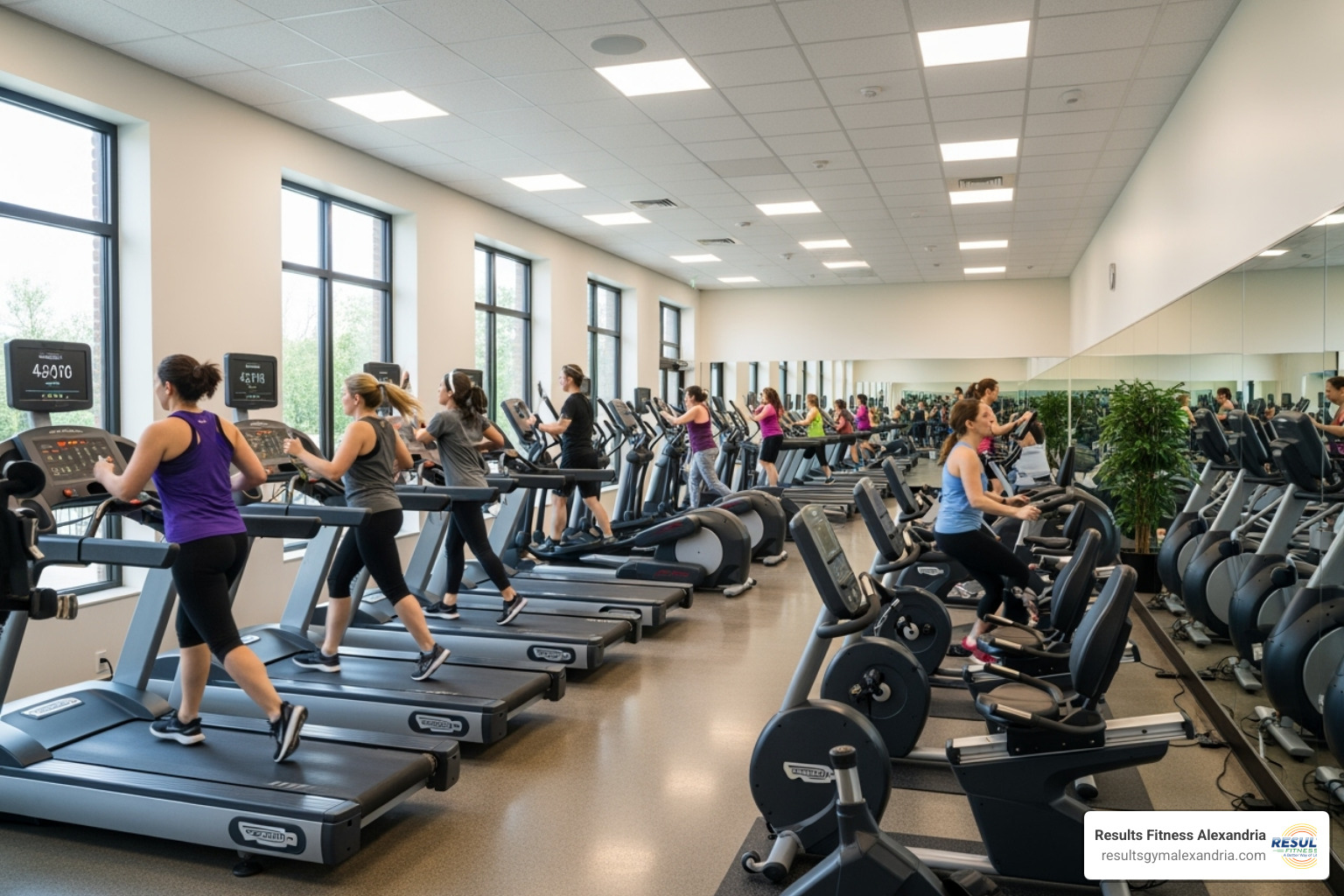
At Results Fitness Alexandria, we provide top-tier cardio equipment and experienced personal trainers to help you design a program that fits your goals. We’re here to help you succeed.
The science is clear: cardiovascular exercise transforms your body, strengthens your heart, sharpens your mind, and builds energy. It creates a foundation of health that supports all your goals. Ready to feel what peak performance is like? Explore our top-tier cardio equipment and amenities and use our free 1-day pass to experience the Results Fitness difference. The best program is the one you start today.