Best Trainers for Gym and Weight Training to Elevate Your Workouts
Why Choosing the Best Trainers for Gym Workouts Can Make or Break Your Progress
Finding the best trainers for gym use is one of the most important — and most overlooked — decisions you’ll make before stepping onto the floor.
Here’s a quick look at the top picks to get you started:
| Shoe | Best For | Drop | Weight |
|---|---|---|---|
| Nike Metcon 10 | CrossFit & Lifting | 4 mm | 11.8 oz |
| Adidas Dropset 4 | Heavy Lifting | 6 mm | 10.9 oz |
| UA TriBase Reign 6 | Strength & Versatility | 2 mm | 14.25 oz |
| Nike Free Metcon 7 | HIIT & Classes | Low | Lightweight |
| TYR CXT-3 | All-Around Training | 9 mm | 12.5 oz |
The wrong shoe doesn’t just feel uncomfortable — it can reduce your stability under a heavy barbell, increase your injury risk during lateral movements, and actually hold back your performance.
Most people grab whatever sneakers they already own. But running shoes, lifestyle sneakers, and gym trainers are built very differently. The right shoe depends on what you’re actually doing in the gym — lifting, cardio, HIIT, or a mix of all three.
I’m Jennifer Rapchak, Fitness Director at Results Fitness Gym and ACE-certified personal trainer with over 14 years of experience helping people find the right tools — including the best trainers for gym strength and conditioning work — to get real results. In this guide, I’ll walk you through exactly what to look for so you can shop with confidence.
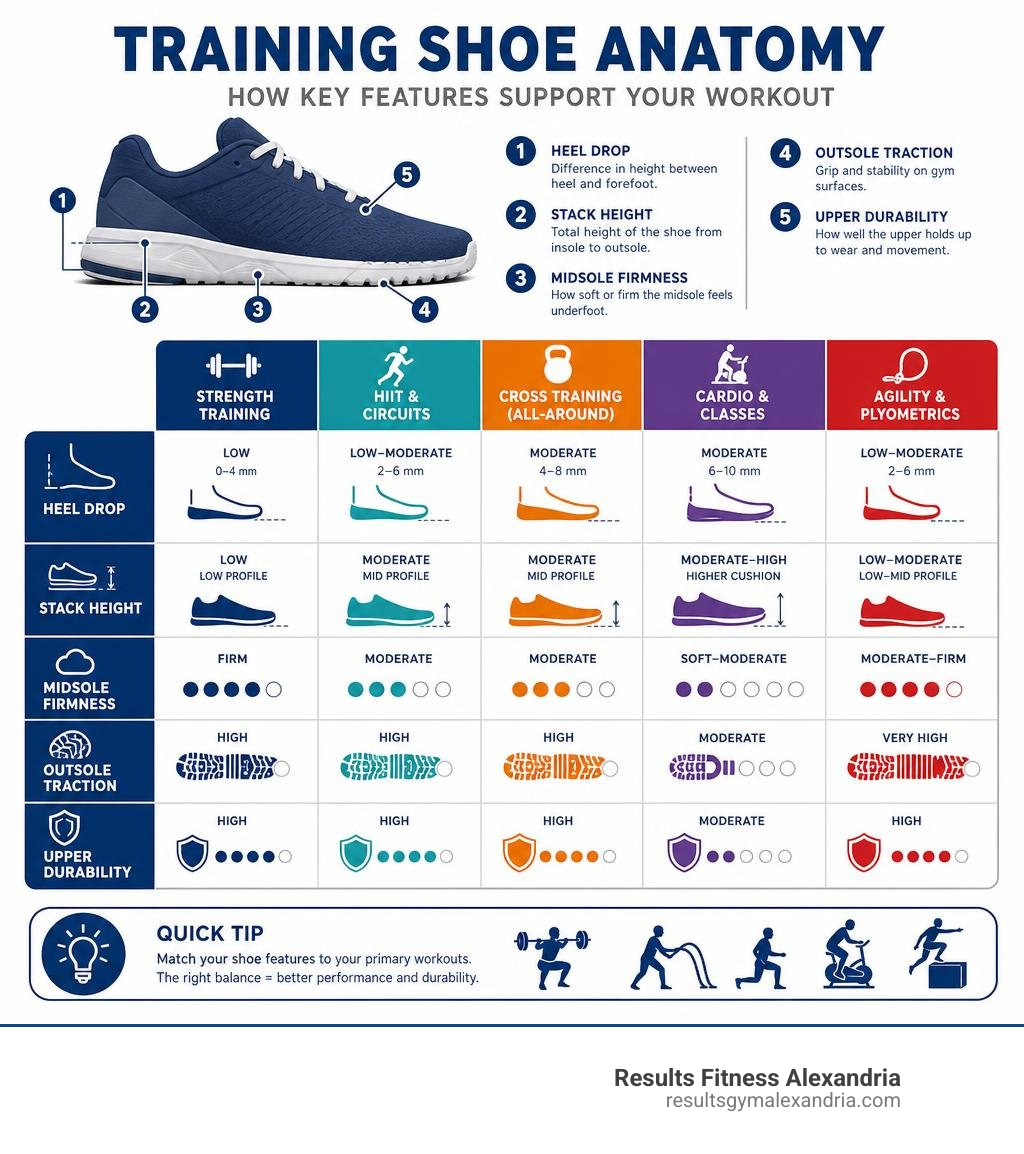
Basic best trainers for gym glossary:
Training Shoes vs. Running Shoes: Why Your Footwear Matters
It is a common sight in any gym: someone attempting a heavy barbell squat while balanced precariously on a pair of max-cushion running shoes. To the untrained eye, a sneaker is a sneaker. But from a biomechanical standpoint, wearing running shoes for weight training is like trying to lift weights while standing on a pair of half-deflated Swiss balls.
To understand why the best trainers for gym workouts are essential, we have to look at how different shoes are engineered.
Running shoes are built exclusively for linear, forward motion. They feature thick, pillowy midsoles designed to absorb the repetitive impact of your foot striking the pavement. This high stack height and soft cushioning are fantastic for saving your joints during a 10K run, but they are highly unstable when you try to move in any other direction. Under a heavy load, that soft foam compresses unevenly, causing your ankles to wobble and your knees to cave.
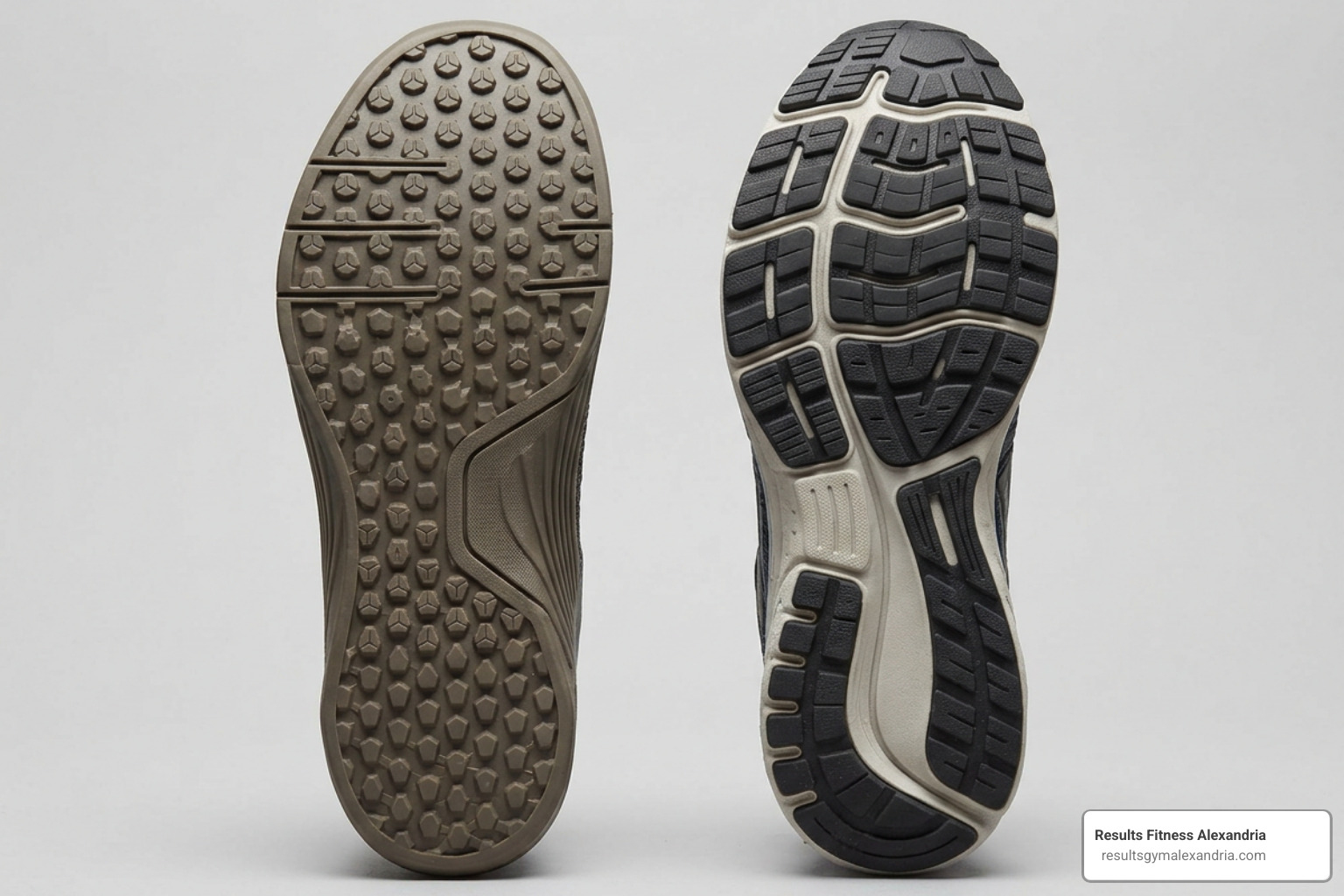
In contrast, dedicated training shoes are engineered for multi-directional support. Whether you are performing lateral lunges, jumping onto a wooden box, or pivoting during an agility drill, training shoes keep your feet securely locked down. They feature:
- A Wider Platform: A broader outsole provides a larger surface area, giving you a stable base of support.
- Lateral Stability: Reinforced sidewalls and stiffer upper materials prevent your foot from sliding over the edge of the sole during side-to-side movements.
- Firmer Midsoles: Instead of compressing under pressure, the firm compounds in gym trainers allow you to transfer force directly into the floor.
What about lifestyle sneakers like Converse Chuck Taylors or Vans Old Skools? While their flat, non-compressible rubber soles actually make them surprisingly decent budget options for pure, static powerlifting, they lack the lateral support, flexibility, and impact protection required for dynamic workouts. If your routine includes a mix of lifting, plyometrics, and functional movements, investing in dedicated cross-trainers is the smartest move you can make.
Having the right footwear is just one piece of the puzzle. If you want to maximize your time under the bar and ensure your form is flawless, pairing your new shoes with professional guidance yields incredible results. There are 10 Benefits to Expect from Working with a Personal Workout Trainer, ranging from accelerated fat loss to injury prevention and personalized programming.
Key Features of the Best Trainers for Gym Workouts
When searching for the best trainers for gym sessions, you will run into a lot of technical jargon. Let’s break down the five key physical features that determine how a shoe performs on the gym floor:
- Heel-to-Toe Drop: This is the difference in height between the heel and the forefoot. A lower drop (0 mm to 4 mm) keeps your foot flat and grounded, which is ideal for deadlifts and general stability. A slightly higher drop (6 mm to 10 mm) relieves pressure on your Achilles tendon and can make it easier to hit a deep squat if you have tight ankles.
- Stack Height: This refers to the total amount of material between your foot and the ground. For gym work, lower is generally better. A lower stack height keeps your center of gravity close to the floor, improving your balance and overall proprioception (your brain’s awareness of where your body is in space).
- Midsole Firmness: The midsole is the meat of the shoe. Heavy lifters need a highly dense, non-compressible midsole to prevent power loss. HIIT enthusiasts, however, need a dual-density midsole that offers firmness in the heel for lifting but flexibility and slight cushioning in the forefoot for jumping.
- Outsole Traction: Look for full-contact rubber outsoles with multi-directional tread patterns. You need a shoe that grips rubber gym mats, wooden platforms, and slick turf without slipping.
- Upper Durability: Gym workouts are tough on fabrics. Lateral side-shuffles, burpees, and rope climbs can shred weak mesh in weeks. Look for uppers reinforced with TPU overlays, high-abrasion mesh, or protective wraps along the midfoot.
Understanding these features helps you match your footwear to your specific training style. If you are still trying to figure out how to structure your workouts or what exercises are best for your body, reading about The Amazing Benefits of Working with a Personal Trainer can help clarify your fitness goals.
Finding the Best Trainers for Gym Lifting and Strength Training
If your primary goal is to move heavy iron, your shoe needs to act as a solid extension of the floor. When performing heavy compound lifts like squats, deadlifts, and Olympic movements, any compression in your footwear represents wasted energy and a potential point of instability.
The Nike Metcon 10 remains a gold standard for lifting-focused cross-trainers. Weighing in at 11.8 oz (for a men’s size 10) with a flat 4 mm heel-to-toe drop, it provides an incredibly stable, planted feel. The Metcon line is famous for its rigid plastic heel plate, which mimics the solid base of a dedicated weightlifting shoe while retaining enough forefoot flexibility for general gym work. It also features a rubber wrap-around outsole designed specifically to grip ropes during climbs without shredding the upper.
Another heavyweight champion in the strength category is the Adidas Dropset 4. Weighing 10.9 oz with a 6 mm drop, this shoe is specifically engineered to handle heavy loads — rated for lifts up to 500 lbs. It features a dual-density midsole that is exceptionally stiff in the heel to maximize power transfer during squats, while offering a touch of cushioning in the forefoot for comfort during accessory work.
For lifters who prefer a minimal drop and maximum ground contact, the UA Reign 6 Men’s Training Shoes | Under Armour is a stellar choice. Sporting a low 2 mm drop and weighing 13.66 oz, the Reign 6 utilizes Under Armour’s proprietary TriBase technology. This design maximizes ground contact with three strategic points of flexibility, allowing your foot to flex naturally while maintaining a rock-solid foundation for deadlifts and overhead presses.
Selecting the Best Trainers for Gym HIIT and Cardio Sessions
If your workouts look less like heavy barbell clubs and more like circuit training, plyometrics, and short treadmill intervals, your footwear needs are completely different. You need a shoe that is lightweight, flexible, and capable of absorbing repeated impacts.
For cardio and aerobic sessions, look for cross-trainers that weigh less than 300 grams (approx. 10.5 oz) per shoe and feature at least 80 SA of shock absorption in the heel to protect your joints during jump squats, box jumps, and burpees.
The Nike Free Metcon 7 is a masterclass in hybrid design. It combines the deep, flexible grooves of Nike’s “Free” running technology in the forefoot with the stable, wide heel of the Metcon line. This allows your foot to bend naturally during sprints, mountain climbers, and lunges, while still providing enough rearfoot stability for moderate dumbbell and kettlebell work.
Another exceptional hybrid option is the Men’s CXT-3 Trainers – Tia-Clair – TYR US. Designed in collaboration with the multi-time CrossFit Games champion, the CXT-3 features an 8% weight reduction compared to its predecessor, weighing 12.5 oz for a men’s size 9. With a 9 mm heel-to-toe drop and an upgraded SURGENRG foam midsole, it converts impact force into responsive energy return. This makes it incredibly comfortable for box jumps and short treadmill runs, while the external TPU heel counter ensures you still have the stability needed to transition directly to a barbell.
Sizing, Fit, and Practical Buying Tips for Gym Shoes
Finding the right model is only half the battle; getting the perfect fit is what keeps you injury-free. Gym shoes require different sizing considerations than casual sneakers or running shoes because of the intense multi-directional forces applied to them.
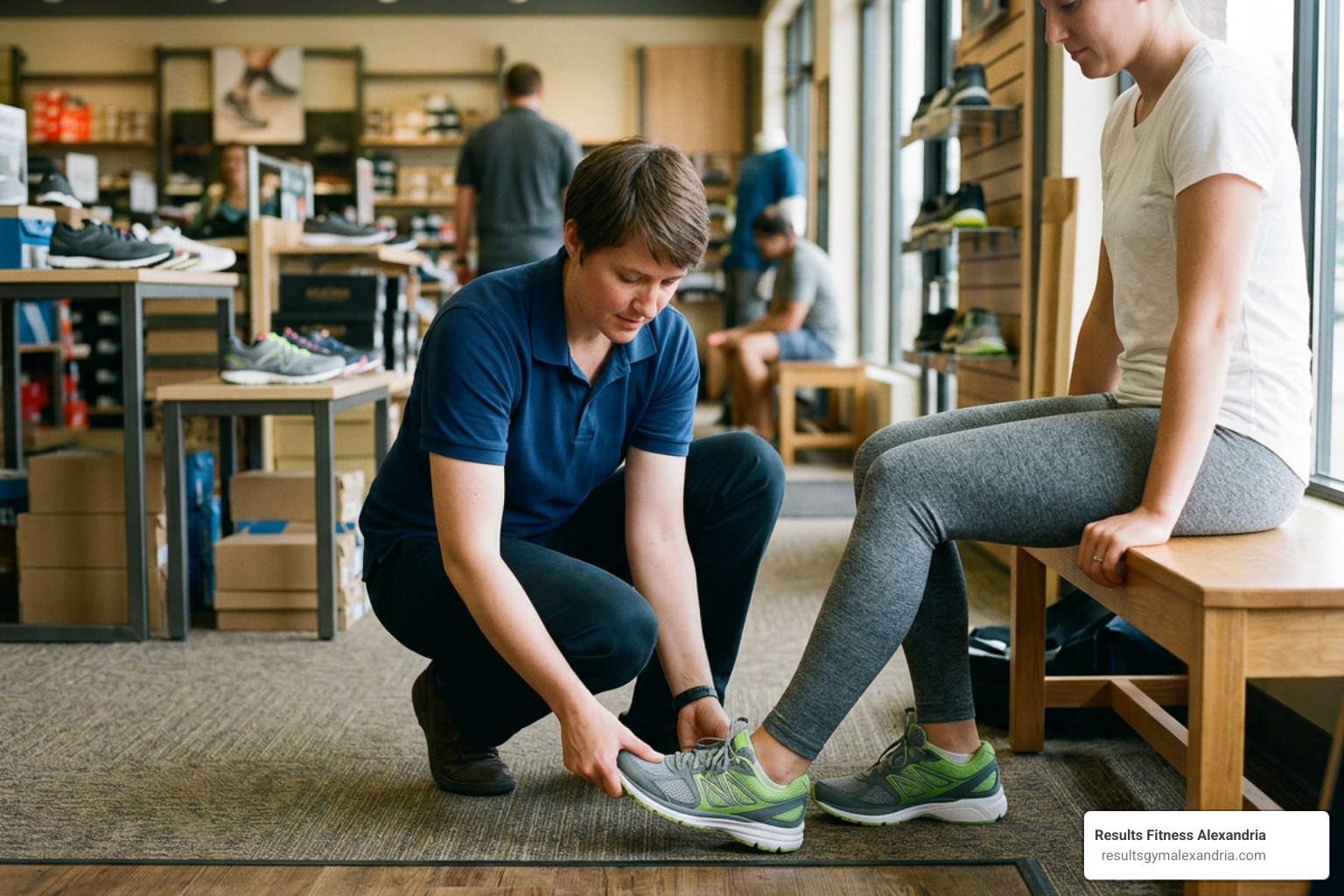
When trying on gym trainers, always aim for a “thumb’s width” of space (approximately 0.2 to 0.6 inches) between your longest toe and the end of the shoe. This extra space is crucial: when you land from a jump or stop suddenly during a lateral sprint, your foot slides forward. If your toes are already pressed against the front of the toe box, you will end up with bruised toenails and restricted movement.
Your foot anatomy should heavily dictate which brand you choose:
- Wide Feet: Look for shoes with an anatomical toe box that allows your toes to splay naturally. Brands like TYR and specialized functional fitness shoes are excellent for this.
- Flat Feet: Look for a shoe with a wider midfoot platform and moderate, firm arch support. Avoid overly narrow shoes that force your foot to spill over the sides of the sole.
- High Arches & Overpronation: If your feet tend to roll inward, prioritize shoes with rigid heel counters and lateral TPU wraps to keep your foot centered over the midsole.
If you are unsure of your foot type or how your gait affects your movement, consulting an expert is highly recommended. Knowing How to Choose a Personal Trainer Everything You Need to Know can help you find a professional who understands biomechanics and can guide you toward the right movement patterns and gear.
Budget vs. Premium Options
While premium models like the Adidas Dropset 4 or Nike Metcon 10 retail around $140 to $160, budget-conscious gym-goers can find incredible value in entry-level models. The average gym trainer costs around $116, but options like the Nike MC Trainer 3 are available for around $80. While budget options may lack some of the advanced tech (like high-end rope guards or carbon-infused heel plates), they provide more than enough stability and traction for the average gym-goer performing general strength and conditioning work.
Break-In and Rotation Tips
Most modern gym trainers require a brief break-in period of 2 to 3 workouts to allow the stiff uppers and dense midsoles to soften slightly. To maximize the lifespan of your shoes, consider a rotation strategy: keep a dedicated, flat pair of shoes for your heavy lifting days, and use a more flexible, cushioned hybrid shoe for your HIIT and cardio days.
Frequently Asked Questions about Gym Shoes
Can you run on a treadmill in cross-training shoes?
Yes, but with strict limitations. Most modern cross-training shoes are perfectly fine for short warmup or cooldown runs on a treadmill (typically up to 1.5 to 3 miles). However, because their midsoles are designed to be firm and stable for lifting, they lack the thick, pillow-like cushioning and forward-rolling geometry of dedicated running shoes. Attempting long-distance running in stiff cross-trainers can lead to shin splints, plantar fasciitis, and unnecessary joint stress.
How often should I replace my gym trainers?
As a general rule of thumb, gym shoes should be replaced every 8 to 12 months, or roughly every 300 to 500 hours of active training. Even if the upper fabric looks pristine, the internal foam of the midsole gradually loses its resilience and shock absorption over time. Key signs that it is time for a replacement include visible creasing or compressing of the midsole foam, a worn-down outer tread that slips on wood or rubber, or a feeling of ankle instability during movements that used to feel rock-solid.
Are flat shoes better for lifting weights?
For compound lifts like deadlifts and squats, flat shoes (0 mm to 4 mm drop) are generally superior. They bring your feet closer to the ground, increasing your stability and allowing for optimal power transfer directly from the floor. They also encourage a natural foot position, helping you engage your posterior chain (glutes and hamstrings) more effectively. However, Olympic lifters often prefer a shoe with a raised heel (such as a 9 mm drop) because the elevated heel artificially improves ankle mobility, allowing them to maintain an upright torso during deep squats and clean-and-jerk catches.
Conclusion
At the end of the day, the best trainers for gym workouts are the ones that match your specific training style, fit your unique foot shape, and give you the confidence to push your limits safely. Whether you are chasing a new personal record on the deadlift platform in a pair of stable Adidas Dropset 4s, or crushing a high-intensity circuit in lightweight Nike Free Metcons, the right footwear is the foundation of your success.
At Results Fitness in Alexandria, Virginia, we believe that having the right tools — and the right community — makes all the difference in your fitness journey. We pride ourselves on offering a welcoming environment for all fitness levels, featuring top-tier fitness classes, expert personal training, restorative yoga, and convenient childcare services so you can focus entirely on your workout.
Ready to take your training to the next level? We would love to welcome you to our community. Come visit us and take advantage of our free 1-day pass to try out our premium amenities, meet our coaching staff, and experience the Results Fitness difference firsthand.
Explore our professional coaching options today by visiting our Training/Personal Training page, and let us help you build a solid foundation for a stronger, healthier you!