
Advanced cardio training: Ultimate Guide 2025
Why Advanced Cardio Training Transforms Your Fitness
Advanced cardio training is the next level of cardiovascular exercise that goes beyond beginner and intermediate workouts. It involves higher intensities (typically 70-85% of maximum heart rate), varied training methods like HIIT and interval protocols, and longer or more challenging sessions designed to push your cardiovascular system to new adaptations. The goal is to improve performance markers like VO2 max, lactate threshold, and overall endurance while burning significant calories.
Quick Answer – What Makes Cardio “Advanced”:
- Intensity: Working at 70-85% of max heart rate (Zone 4-5)
- Frequency: 4-5 sessions per week
- Duration: 30-60+ minutes, or shorter high-intensity intervals
- Methods: HIIT, Tabata, tempo runs, long-distance training, Fartlek
- Goals: Improve VO2 max, increase lactate threshold, build mental resilience
For many people, starting an advanced cardio program can feel intimidating. You might struggle with finding the time, staying motivated, or knowing exactly how to push past your current fitness plateau without risking injury or burnout. The good news? With the right structure and support, you can lift your cardiovascular fitness to levels you never thought possible.
This guide covers everything you need to know about advanced cardio training. You’ll learn the physiological benefits like increased mitochondrial density and improved heart muscle elasticity. We’ll explore proven training methods from HIIT to long-distance work. You’ll find how to structure your program using principles like frequency, intensity, time, and type (FITT). And critically, we’ll address nutrition, recovery, and risk mitigation so you can train hard while staying healthy.
I’m Jennifer Rapchak, Fitness Director at Results Fitness Gym in Alexandria, Virginia, with over 14 years of experience as a certified personal trainer and expertise in high-intensity interval training (HIIT), core conditioning, and endurance programming. Throughout my career helping clients design and implement advanced cardio training programs, I’ve seen how structured, progressive cardiovascular work transforms not just fitness levels, but confidence and overall quality of life.
Advanced cardio training terms at a glance:
What is Advanced Cardio and Why Does It Matter?
When we talk about advanced cardio training, we’re referring to a level of exercise that goes beyond simply getting your heart rate up. It’s about strategically challenging your cardiovascular system to adapt, leading to significant improvements in performance, endurance, and overall health. The key difference from beginner or intermediate cardio lies in the intensity, duration, frequency, and variety of the workouts. Advanced routines are designed to be intense and varied, pushing your cardiovascular endurance to new levels and burning significant calories.
The Leap from Intermediate to Advanced
Making the leap from intermediate to advanced cardio training isn’t just about doing more; it’s about doing it smarter. We must first build a solid base, consistently engaging in moderate-intensity cardio for 30-45 minutes, three to four times a week. Signs of readiness include feeling comfortable with your current intermediate routine, experiencing less fatigue, and a genuine desire to push your physical limits. Listening to your body is paramount, as this transition should always involve gradual progression. Trying to jump too far ahead too quickly can lead to burnout or injury.
The importance of consistency cannot be overstated. Just like building any skill, cardiovascular fitness improves with regular, sustained effort. We must gradually increase the frequency, intensity, time, or type of activity to continually challenge our cardiovascular system. This principle of progressive overload is fundamental to continued improvement and is crucial for The Power of Progressive Overload: How to Keep Getting Stronger.
Key Physiological Benefits Explained
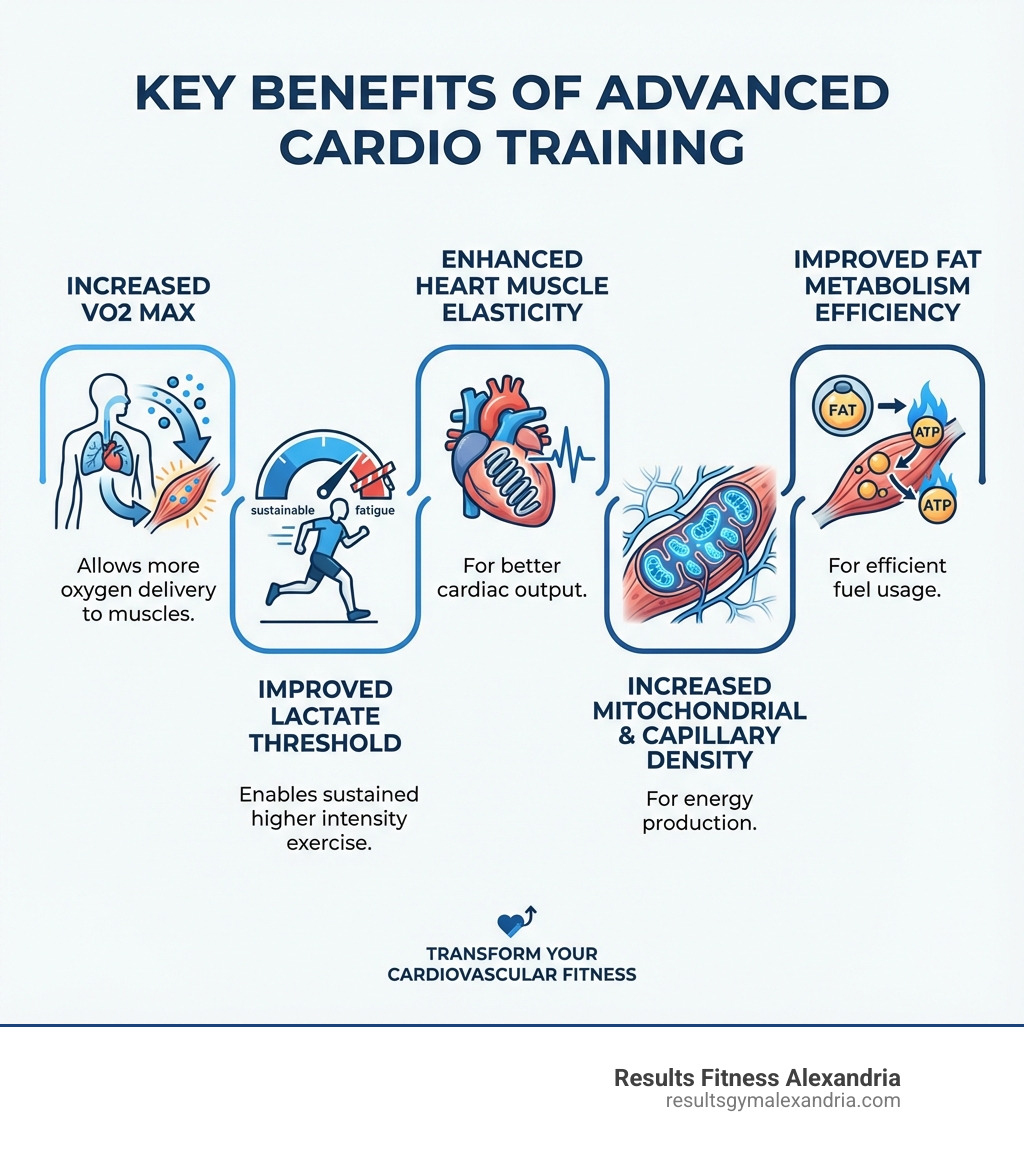
Advanced cardio training yields a host of profound physiological benefits that improve not just athletic performance but also long-term health:
- Increased VO2 Max: This refers to the maximum amount of oxygen your body can use during intense exercise. A higher VO2 max means your body is more efficient at delivering oxygen to working muscles, allowing you to sustain higher intensities for longer periods.
- Improved Lactate Threshold (LT): Your lactate threshold is the point at which lactate begins to accumulate in your bloodstream faster than your body can clear it, leading to fatigue. By training at or near this threshold, we can push it higher, enabling us to maintain a faster pace or higher power output for a longer time before hitting that wall.
- Improved Heart Muscle Elasticity: Research, including a two-year National Institutes of Health (NIH)-sponsored study, has shown that dedicated exercise training in middle age can improve the elasticity or ‘youthfulness’ of heart muscle. This can even reverse some consequences of a sedentary lifestyle and conditions like hypertension. You can read more about this scientific research on heart health.
- Increased Mitochondrial Density: Mitochondria are the “powerhouses” of our cells, responsible for producing energy. Advanced cardio training stimulates the growth of more mitochondria, particularly in muscle cells, making our bodies far more efficient at energy production.
- Greater Capillary Density: Capillaries are tiny blood vessels that deliver oxygen and nutrients to muscles and remove waste products. Increased capillary density means better blood flow to working muscles, further enhancing oxygen delivery and waste removal.
- Improved Fat Metabolism Efficiency: While Zone 2 training (60-70% of max heart rate) is well-known for stimulating fat metabolism, advanced cardio training further refines our body’s ability to use fat as a fuel source, conserving glycogen stores for higher intensity efforts. This contributes to overall Benefits of Endurance.
- Improved Cardiovascular System Capacity: Overall, our heart becomes stronger, pumping more blood with each beat (increased stroke volume), and our entire circulatory system becomes more robust and efficient. This leads to profound improvements in Better Heart Health.
Here’s a table illustrating the key differences between beginner, intermediate, and advanced cardio training:
| Feature | Beginner Cardio | Intermediate Cardio | Advanced Cardio |
|---|---|---|---|
| Intensity | 50-60% of Max HR (Zone 1-2) | 60-70% of Max HR (Zone 2-3) | 70-85% of Max HR (Zone 3-4, with Zone 5 bursts) |
| Duration | 10-30 minutes | 20-45 minutes | 30-60+ minutes (steady-state) or 15-30 minutes (HIIT) |
| Frequency | 2-3 days/week | 3-4 days/week | 3-5+ days/week |
| Typical Goals | Health, basic endurance, establishing habit | Increased stamina, calorie burn, general fitness | Peak performance, specific race prep, pushing limits, significant fat loss |
| Example | Brisk walking, light cycling | Jogging, elliptical at moderate resistance | HIIT, tempo runs, long-distance running/cycling, Fartlek |
Core Methods of Advanced Cardio Training
To truly excel in advanced cardio training, variety is key. Our bodies are incredibly adaptable, and sticking to the same routine for too long can lead to plateaus. By incorporating diverse methods, we not only prevent overuse injuries and boredom but also challenge our physiological systems in different ways, leading to more comprehensive adaptations. This approach helps us push our limits safely and effectively, especially when aiming for sport-specific training goals.
High-Intensity Interval Training (HIIT)
High-Intensity Interval Training, or HIIT, is a cornerstone of advanced cardio training due to its incredible efficiency and effectiveness. HIIT is defined by the American College of Sports Medicine (ACSM) as a style of training utilizing short, intense work periods performed between 80 and 95 percent of a person’s maximum heart rate, followed by brief recovery periods. It’s a framework, not a specific exercise, meaning we can apply HIIT principles to nearly any cardio modality, from running and cycling to rowing and bodyweight exercises. For more on this, check out Why You Should Give HIIT Exercises a Try and the ACSM HIIT definition.
The beauty of HIIT lies in its ability to maximize calorie burn in a short period. It also triggers a phenomenon called Excess Post-exercise Oxygen Consumption (EPOC), or the “afterburn effect,” meaning our metabolism stays liftd for hours after the workout, burning more calories even at rest.
Here’s a sample 20-minute HIIT workout you could try:
Warm-up (5 minutes):
- Light jogging or marching in place
- Dynamic stretches (arm circles, leg swings)
HIIT Circuit (12 minutes):
Perform each exercise for 40 seconds at maximum effort, followed by 20 seconds of rest. Complete two rounds.
- Treadmill Sprints: Sprint at near-max speed (or fastest comfortable pace)
- Bodyweight Squat Jumps: Explode upwards from a squat
- High Knees: Run in place, bringing knees high
- Mountain Climbers: Plank position, bring knees to chest rapidly
- Burpees: Full body explosive movement
- Jumping Jacks: Classic full-body cardio
Cool-down (3 minutes):
- Gentle jogging or walking
- Static stretches (quad stretch, hamstring stretch)
Specialized Interval Protocols: Tabata and Fartlek
Beyond general HIIT, specific interval protocols offer unique benefits for advanced cardio training:
-
Tabata Protocol: Developed by Japanese scientist Izumi Tabata, this protocol is a highly intense form of HIIT. It consists of 8 rounds of 20 seconds of all-out effort followed by 10 seconds of rest. A single Tabata round totals just four minutes but is incredibly effective at improving both aerobic fitness and anaerobic capacity. We can apply Tabata to exercises like rowing, cycling, or bodyweight movements such as push-ups and squats. Learn more about Revisiting the Tabata.
-
Fartlek Training: Meaning “speed play” in Swedish, Fartlek training is a less structured form of interval training. It combines periods of moderate training with short, fast bouts at higher intensities, often dictated by how you feel or the terrain. For example, a runner might sprint one city block, jog the next, and then walk uphill. This method is excellent for building mental resilience, improving lactate threshold, and establishing a sense of race pace without the rigid structure of traditional intervals. It’s a fantastic way to improve your Endurance Running Program.
Advanced Long-Distance and Tempo Training
While HIIT and intervals offer intensity, traditional long-distance and tempo training remain crucial for a well-rounded advanced cardio training program:
-
Long Slow Distance (LSD): LSD training involves continuous exercise at a moderate intensity (e.g., 60-70% of VO2 max or HR max) for extended periods, typically 45-60 minutes or longer. While it might sound basic, LSD is vital for building a strong aerobic base, enhancing cardiorespiratory capacity, improving fat metabolism, and developing mental toughness. It allows for high training volume without excessive musculoskeletal stress.
-
Pace/Tempo Runs: These runs are performed at an intensity near your lactate threshold, often for 20-30 minutes. The goal is to sustain a challenging but manageable pace that you could theoretically hold for an hour-long race. Pace/tempo training induces both aerobic and anaerobic adaptations, improving your body’s ability to clear lactate and maintain higher speeds for longer. This is a key component for achieving your Best Cardio Workout for Endurance.
Structuring Your Advanced Cardio Program
Designing an effective advanced cardio training program requires a thoughtful approach. We often use the FITT principle: Frequency, Intensity, Time, and Type. Beyond that, incorporating periodization helps us systematically vary our training over time to optimize performance and prevent overtraining. Understanding How to Create a Balanced Fitness Routine Combining Cardio, Strength, and Flexibility is also essential.
Recommended Frequency, Duration, and Intensity
For advanced individuals, we recommend performing cardiovascular exercise three to five days a week, for a minimum of 150 minutes a week. However, many advanced athletes will exceed this, often training four to five days each week.
- Frequency: Aim for 4-5 days per week. This allows for consistent stimulus and adaptation.
- Duration: Sessions can range from 20-30 minutes for high-intensity intervals (like HIIT or Tabata) to 45-60+ minutes for long-distance or tempo work. The total weekly volume is important.
-
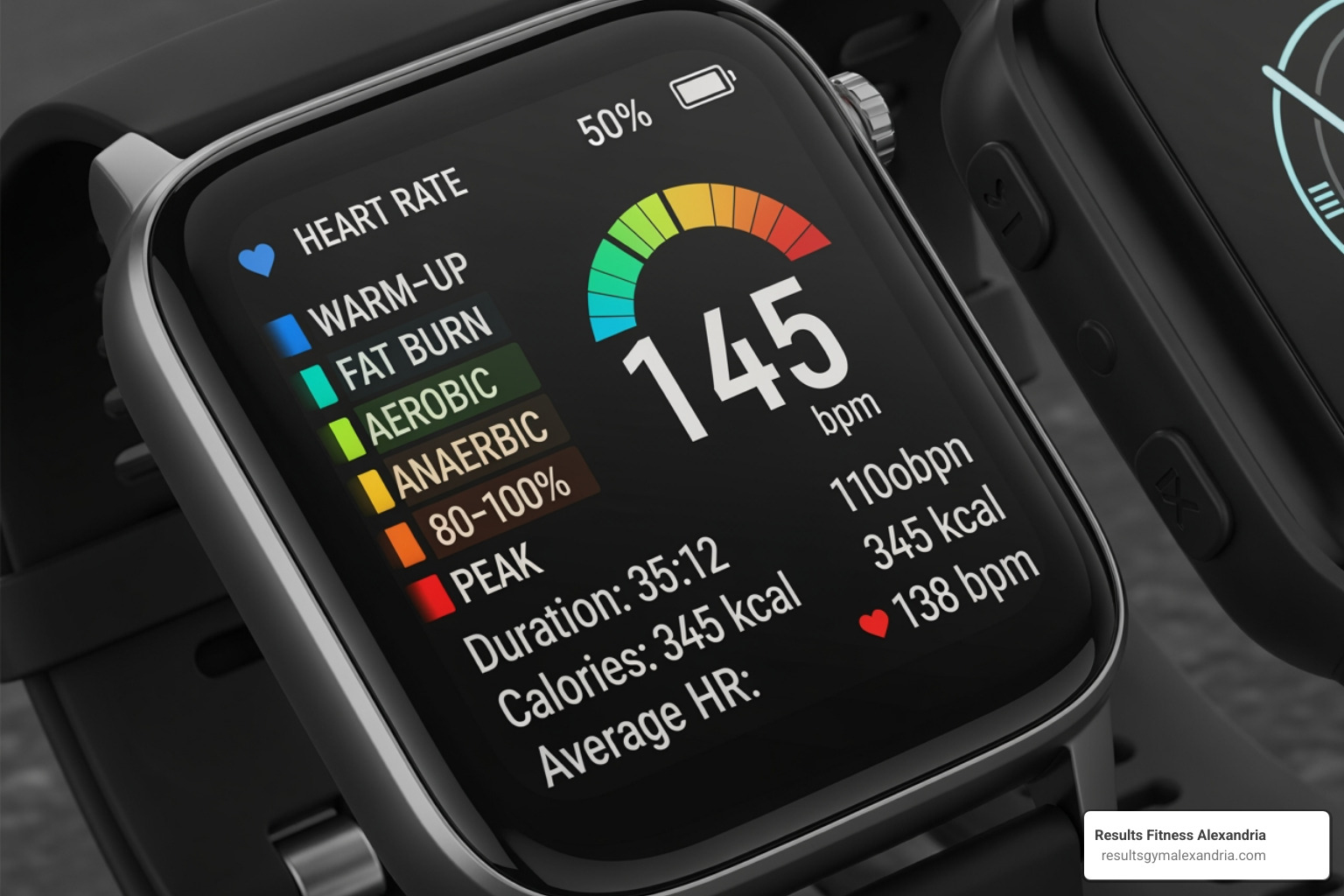
Intensity: This is where advanced cardio training truly differentiates itself. We aim for 70-85% of our maximum heart rate during cardio workouts. This often falls into Heart Rate Zones 4 and 5:
- Zone 4 (Hard): 80-90% of Max HR. This zone is about improving speed endurance and carbohydrate utilization. You’re working hard, breathing heavily, and can only speak in short sentences.
- Zone 5 (Maximum): 90-100% of Max HR. These are short bursts of maximal effort, enhancing anaerobic endurance, speed, and power. You’re gasping for air and can’t speak.
You can calculate your maximum heart rate using the simple formula (220 – your age) and then determine your target zones. While heart rate monitors are valuable tools, we also use the Rate of Perceived Exertion (RPE) scale (0-10, where 10 is maximal effort) as a subjective but effective way to gauge intensity, especially if medications affect heart rate. For a deeper dive into heart rate training, explore Heart Rate Zones | Polar Global.
Integrating with Strength Training for a Balanced Regimen
For optimal fitness, advanced cardio training should not exist in a vacuum. Integrating it with strength training provides numerous benefits, including improved overall performance, improved injury prevention, and better body composition. Resistance training is an efficacious strategy for increasing strength, power, and stamina for endurance athletes, and it can also help to prevent injuries.
The key is smart scheduling to prevent interference, as it can be tough to build serious strength and serious endurance concurrently if not planned correctly. We recommend spacing out high-intensity cardio and strength training sessions to allow for adequate muscle recovery. For example, you might perform strength training on Monday, Wednesday, and Friday, with advanced cardio training sessions on Tuesday, Thursday, and Saturday. Alternatively, some of our clients choose to perform their cardio and strength on the same day, but often separate them by several hours, or prioritize strength before their cardio.
By combining these modalities, we can maximize our results, build a resilient body, and ensure a well-rounded fitness regimen. For more insights, check out Maximizing Results: Integrating Strength Training into Your Cardio Routine and The Science of Building Muscle: Tips for Effective Strength Training.
Fueling, Recovery, and Risk Mitigation
Pushing our bodies with advanced cardio training demands a robust support system of proper nutrition and effective recovery strategies. Neglecting these aspects not only hinders progress but significantly increases the risk of injury and burnout. Safety must always be our first priority.
Nutrition and Recovery for Peak Performance
- Pre-Workout Fuel: Our bodies need readily available energy for intense cardio. Complex carbohydrates (like oats, whole-grain toast, or fruit) 1-2 hours before a workout provide sustained energy.
- Post-Workout Replenishment: After a demanding session, our muscles need to repair and glycogen stores need to be refilled. A combination of protein (for muscle repair) and carbohydrates (for glycogen replenishment) within 30-60 minutes post-workout is ideal.
- Hydration: Water is crucial for every bodily function, especially during and after intense exercise. We must ensure consistent hydration throughout the day, not just around workouts.
- Importance of Sleep: Often overlooked, sleep is arguably the most critical component of recovery. Aim for 7-9 hours of quality sleep per night to allow your body to repair, rebuild, and optimize hormone levels.
- Active Recovery: On rest days or between intense sessions, light activities like walking, gentle cycling, or yoga can promote blood flow, reduce muscle soreness, and aid recovery without adding undue stress.
- Mobility Work & Foam Rolling: Incorporating dynamic stretching before workouts and static stretching or foam rolling during cool-downs or on recovery days can improve flexibility, reduce muscle tightness, and help prevent injuries.
Risks of Advanced Cardio Training and How to Mitigate Them
While the benefits are immense, advanced cardio training comes with potential risks if not managed properly:
- Overtraining Syndrome (OTS): This occurs when we consistently push our bodies too hard without adequate recovery. Symptoms include persistent fatigue, decreased performance, increased susceptibility to illness, mood disturbances, and chronic soreness.
- Burnout: The psychological counterpart to overtraining, burnout manifests as a loss of motivation, enjoyment, and enthusiasm for training.
- Overuse Injuries: Repetitive stress from high-volume or high-intensity training can lead to conditions like stress fractures, tendinitis, or shin splints. We can mitigate the risk of overuse injuries by varying our exercise routines regularly, which works different muscles.
Mitigation Strategies:
- Proper Warm-ups: Always begin with 5-10 minutes of light cardio and dynamic stretching to prepare your body for the upcoming intensity.
- Structured Cool-downs: End each session with 5-10 minutes of light activity followed by static stretching to aid recovery and flexibility.
- Listen to Your Body: This is the golden rule. Pay attention to persistent pain, extreme fatigue, or unusual soreness. Don’t be afraid to take an extra rest day or modify a workout if needed.
- Progressive Overload (Smartly Applied): While we want to challenge ourselves, progression should be gradual. Avoid drastic increases in intensity, duration, or frequency week-to-week.
- Periodization: Periodically schedule lighter training weeks or active recovery phases into your program to allow for full recovery and adaptation.
- Professional Guidance: Working with certified personal trainers, especially those experienced in advanced cardio training, can provide invaluable support in designing a safe, effective, and sustainable program.
Frequently Asked Questions about Advanced Cardio Training
How do I know if I’m ready for advanced cardio?
You should be able to comfortably perform intermediate-level cardio for 30-45 minutes, 3-4 times a week, without excessive fatigue. A solid fitness base, injury-free status, and a desire to push your limits are key indicators. If you’re consistently hitting your intermediate goals and feeling ready for a new challenge, that’s a good sign. Consulting a fitness professional at Results Fitness Alexandria can provide a personalized assessment and help determine your readiness.
Is HIIT the best form of advanced cardio?
HIIT is highly effective and time-efficient for improving VO2 max and burning calories, making it a fantastic component of advanced cardio training. However, it’s not the only method, nor is it always “the best” for every goal or individual. The most effective approach combines various modalities, including HIIT, tempo runs, and longer endurance sessions, to develop a well-rounded cardiovascular system and prevent plateaus. A balanced program leverages the unique benefits of each training style for comprehensive fitness improvements.
How do I measure my progress in advanced cardio?
Measuring progress is crucial for staying motivated and adjusting your training plan. We recommend tracking key metrics like your resting heart rate (a lower resting HR often indicates improved cardiovascular fitness), workout times for set distances (e.g., your 5k run time or a specific cycling route), heart rate recovery after intervals (how quickly your heart rate drops post-effort), and your Rate of Perceived Exertion (RPE) for various efforts. Using a fitness tracker or a simple training log helps you see improvements over time and adjust your plan for continued growth.
Conclusion
Starting on an advanced cardio training journey is a powerful step toward open uping your full athletic potential and profoundly impacting your overall health. We’ve explored the physiological benefits, from increased VO2 max and improved lactate threshold to improved heart muscle elasticity. We’ve digd into effective methods like HIIT, Tabata, Fartlek, long-distance, and tempo training, each offering unique advantages to challenge your body in new ways.
Smart training over hard training is the mantra. Consistency and gradual progression, supported by diligent nutrition, recovery, and risk mitigation, are the pillars of sustainable success. Your journey to peak cardiovascular fitness is within reach.
At Results Fitness Alexandria, our expert trainers can help you design a safe and effective advanced cardio training program custom to your goals, ensuring you conquer plateaus and reach new heights. Our state-of-the-art facility and supportive community are here to guide you every step of the way. Explore our world-class cardio equipment and training options today and take the ultimate advanced cardio challenge!