Women’s workout program: Top Game-Changer
Why Every Woman Needs a Workout Program Built for Her
A women’s workout program is a structured fitness plan designed to help you build strength, improve health, and reach your specific goals. Whether you want to lose weight, gain muscle, or feel stronger in daily life, the right plan is essential. The best programs combine strength training, cardio, progressive overload, and recovery.
Historically, fitness was male-centric. Even today, most exercise science studies focus on men, meaning a lot of workout advice isn’t custom to female physiology. This matters because women face unique challenges, like losing 3-8% of their muscle mass per decade after age 30, a rate that accelerates after menopause. Without targeted strength training, this can lead to a slower metabolism, bone loss, and reduced functional strength.
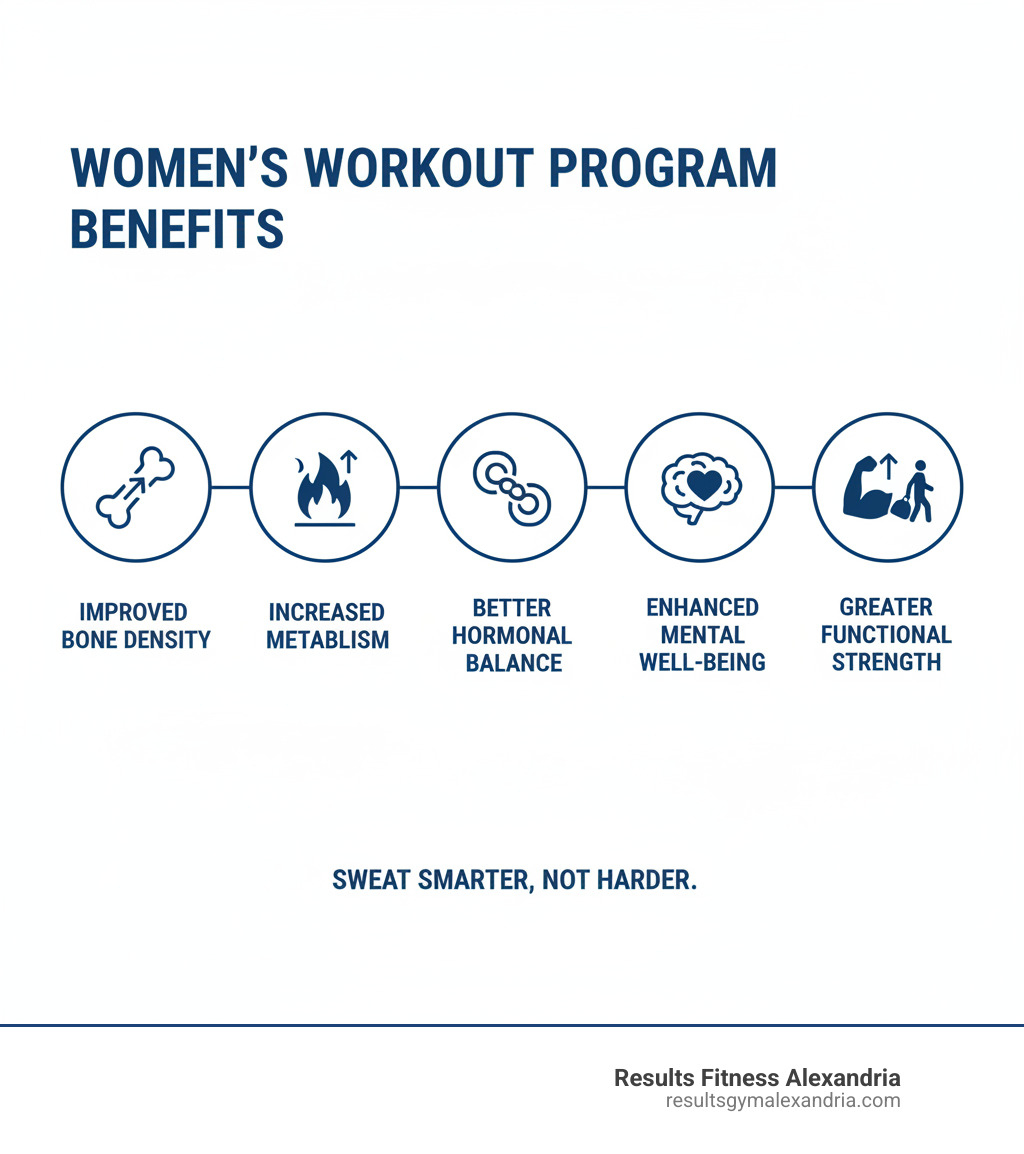
A structured workout program is the solution. It builds bone density, boosts metabolism, and develops the functional strength that makes life easier. The right plan transforms how you move, think, and feel.
I’m Jennifer Rapchak, Fitness Director at Results Fitness Alexandria. As a certified personal trainer with over 14 years of experience, I’ve helped hundreds of women find their strength through effective women’s workout programs, from beginners to advanced athletes.
Key women’s workout program vocabulary:
Why a Structured Workout Program is a Game-Changer
Imagine walking into the gym with a clear plan—knowing exactly what to do, how long it will take, and how it serves your goals. That’s the power of a structured women’s workout program. Random workouts are fine, but a consistent plan creates lasting habits and delivers powerful results.
-
Stronger Bones: As women age, bone density naturally declines, increasing osteoporosis risk. Strength training, the foundation of a good program, actively builds bone density, offering measurable protection for your future.
-
Boosted Metabolism: Muscle burns more calories than fat, even at rest. By building muscle, you turn your body into a more efficient engine, making weight management easier.
-
Hormonal Balance: Regular exercise, especially strength training, positively influences hormonal health, supporting your body through its natural transitions, from your reproductive years through menopause.
-
Improved Mood: Exercise is a powerful stress reliever. A consistent women’s workout program can reduce anxiety, improve sleep, and sharpen your thinking. The confidence gained from strength training extends into all areas of life.
-
Easier Daily Life: Functional strength makes everyday tasks—like carrying groceries, playing with kids, or rearranging furniture—feel effortless. A good program improves your real life, not just your gym life.
-
Defense Against Muscle Loss: After age 30, women lose about 3-8% of muscle mass per decade. This process, called sarcopenia, accelerates after menopause. Strength training is our best defense, preserving muscle and our ability to move freely as we age.
Dive deeper into our guide on strength training for women and explore the 10 benefits of strength training for women.
A structured women’s workout program is an investment in a future where you are not just surviving, but thriving—strong, healthy, and capable.
Decoding Workout Programs: Types and How to Choose
The best women’s workout program is one that matches your goals, fitness level, and real-life schedule. There’s no one-size-fits-all answer, but understanding the options is the first step.
Here’s a quick breakdown of common workout types:
| Workout Type | Primary Goal | Intensity | Typical Duration |
|---|---|---|---|
| Strength Training | Muscle gain, strength, toning, bone density | Moderate to High | 30-60 minutes |
| Cardio | Cardiovascular health, endurance, calorie burn | Low to Moderate | 30-60+ minutes |
| HIIT | Fat loss, cardiovascular fitness, efficiency | Very High | 10-30 minutes |
To choose, consider your goals (fat loss, strength, energy), current fitness level, time commitment, and equipment availability (gym vs. home). Be realistic—a program you can stick with is better than a “perfect” one you can’t.
Choosing a Program for Weight Loss
Effective weight loss requires a calorie deficit, but how you create it matters. The best approach combines strength training and cardio. Strength training builds muscle, which boosts your resting metabolism, while cardio burns calories and improves heart health. For time-crunched days, High-Intensity Interval Training (HIIT) is a great option, but don’t discount steady-state cardio like brisk walking. Our cardio endurance tips women guide offers strategies for both.
Selecting a Program for Muscle Gain and “Toning”
Many women want to “tone up,” which simply means building muscle while maintaining a low body fat percentage. Worried about getting “bulky”? Don’t be. Women have significantly less testosterone than men, making it very difficult to build large muscle mass by accident. Lifting weights creates a lean, strong, and defined look.
To build muscle, you need two things:
- Progressive Overload: Gradually increase the challenge by lifting heavier, doing more reps, or adding sets. Your body won’t change if the workout never does.
- Sufficient Protein: Aim for about 1 gram of protein per pound of body weight daily to help muscles repair and grow.
Beginners often start with full-body workouts 2-3 times per week before moving to splits. Our beginner weight training for women guide can help you start.
Finding a Program for Your Lifestyle
Consistency is key, so your program must fit your life.
- Time Constraints: A focused 30-minute workout three times a week delivers results. Full-body routines or HIIT are great for tight schedules.
- At-Home vs. Gym: You can build serious strength at home with minimal equipment. However, a gym provides access to more equipment, heavier weights, and a motivating community. At Results Fitness Alexandria, you get expert trainers and a supportive environment. Our womens gym complete guide details what our facility offers.
Your Starting Point: A Beginner-Friendly Women’s Workout Program
A beginner-friendly women’s workout program focuses on building a solid foundation. It’s not about lifting the heaviest weights, but about mastering the fundamentals safely and effectively.
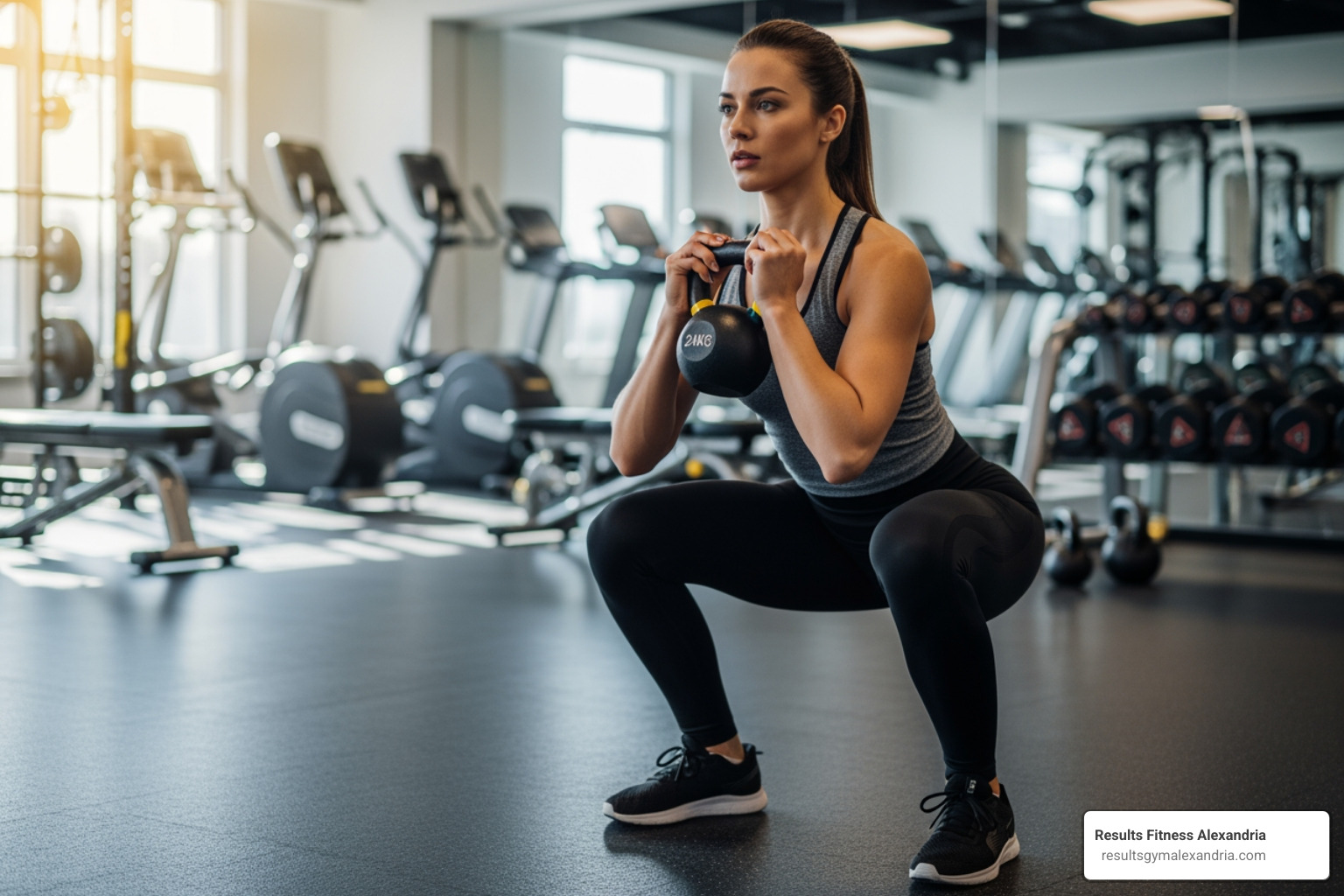
Focus on these principles:
- Proper Form: Lifting lighter weight with perfect technique is safer and more effective than lifting heavy with poor form. It prevents injury and ensures you’re targeting the right muscles. For guidance, see our womens beginner gym workout resource or work with a trainer.
- Compound Movements: Exercises like squats, deadlifts, presses, and rows work multiple muscle groups at once, making your workouts highly efficient.
- Manageable Weight: Start with your bodyweight or light dumbbells to learn the movements correctly. Build confidence and competence before adding intensity.
- Listen to Your Body: Normal muscle soreness is a sign of progress, but sharp pain is a signal to stop. Rest when needed and modify exercises as necessary.
Sample 3-Day Full-Body Beginner Routine
Train three non-consecutive days per week (e.g., Mon/Wed/Fri) to allow for recovery. Rest 60-90 seconds between sets.
- Day 1: Goblet Squats (3×10-12), Dumbbell Bench Press (3×10-12), Dumbbell Rows (3×10-12 per arm), Plank (3×30-60 sec hold), Dumbbell Hip Thrusts (3×12-15).
- Day 2: Romanian Deadlifts (3×10-12), Overhead Press (3×10-12), Lunges (3×10-12 per leg), Deadbugs (3×10-12 per side), Push-ups (3×8-12, on knees if needed).
- Day 3: Leg Press or Bodyweight Squats (3×12-15), Lat Pulldowns or Band Pull-Aparts (3×12-15), Glute Bridges (3×15-20), Russian Twists (3×15-20 per side), Seated or Floor Press (3×12-15).
Sample 4-Day Upper/Lower Split Routine
After a few months, you can progress to a split routine. Rest 90-120 seconds between sets.
- Upper Body Day: Incline Dumbbell Press (3×8-10), Lat Pulldowns (3×8-10), Overhead Press (3×8-10), One-Arm Dumbbell Rows (3×8-10 per arm), Bicep Curls (3×10-12), Triceps Extensions (3×10-12).
- Lower Body Day: Barbell Back Squats (3×6-8), Romanian Deadlifts (3×8-10), Bulgarian Split Squats (3×8-10 per leg), Hip Thrusts (3×8-10), Calf Raises (3×15-20).
For more ideas, see our best women leg workout guide and women’s back workout.
Key Workout Components
Every workout should include a 5-10 minute warm-up with light cardio and dynamic stretching, your main lifts (compound exercises), accessory work for smaller muscles, and a 5-10 minute cool-down with static stretching. For help putting it all together, check out our personal training for women tips.
The Pillars of Success: Nutrition, Recovery, and Progression
Your workout is just the stimulus; real change happens during the other 23 hours of the day. For your women’s workout program to succeed, you need to focus on nutrition, recovery, and progression.
- Nutrition: Exercise breaks down muscle; protein rebuilds it. Aim for 1 gram of protein per pound of body weight daily. Your calorie needs depend on your goals—a moderate deficit for fat loss or maintenance/slight surplus for muscle gain. Understanding body mass index (BMI) can help inform these choices.
- Recovery: Sleep is non-negotiable. Aim for 7-9 hours nightly for muscle repair and hormone regulation. Also, incorporate both active recovery (like light walking) and full rest days into your week.
Fueling Your Workouts
- Pre-Workout: Eat a meal rich in complex carbs and some protein 1-2 hours before training for sustained energy.
- Post-Workout: Within two hours after training, have a meal with protein and carbs to repair muscle and replenish energy stores.
- Hydration: Drink water consistently throughout the day. Even mild dehydration can hurt your performance.
- Supplements: Creatine is a well-researched supplement that can boost strength and muscle gain. See the research on creatine benefits for strength.
How to Progress and Avoid Plateaus
Your body adapts, so you must keep challenging it. This is the progressive overload principle.
- How to Progress: Gradually increase the demand by lifting heavier weight, doing more reps or sets, or shortening rest times.
- Track Your Workouts: Log your exercises, sets, reps, and weights to ensure you’re progressing. It’s also a great motivator to see how far you’ve come.
- Overcoming Plateaus: If progress stalls, change things up. Try new exercises, adjust your rep ranges, or take a “deload week” with lighter training to allow for full recovery.
- When to Change Routines: A program can be effective for 8-12 weeks. After that, consider switching exercises or your overall program structure to keep your body adapting.
Fitness for Life: Adapting Workouts for Every Stage
Your body is always evolving, and your women’s workout program should too. A smart program adapts to different life stages, from pregnancy and postpartum to menopause and beyond, ensuring you stay healthy and injury-free.
-
Pregnancy: With proper modifications, exercise offers incredible benefits for you and your baby, including more energy, better sleep, and a smoother recovery. The key is to listen to your body, avoid certain positions (like lying flat on your back after 20 weeks), and reduce impact as your pregnancy progresses.
-
Postpartum: Recovery requires patience. The initial focus should be on gently rebuilding core and pelvic floor strength before returning to full-body training. A gradual approach prevents complications and addresses common issues like diastasis recti (abdominal separation).
-
Menopause and Beyond: As estrogen declines, muscle mass and bone density are at risk. Strength training becomes more critical than ever to counteract muscle loss (sarcopenia), maintain bone health, and preserve functional strength for daily life. It’s never too late to get stronger.
We offer specialized support for these transitions, including mommy and me fitness classes near me.
Prenatal and Postpartum Exercise
Personalized guidance is crucial during this time. Exercise during pregnancy can help manage weight gain, reduce gestational diabetes risk, and prepare your body for labor.
Trimester Modifications:
- First Trimester: You can often continue your routine, but listen to your body and reduce intensity to manage fatigue.
- Second Trimester: Avoid exercises on your back after 20 weeks and modify core work to avoid crunching movements.
- Third Trimester: Shift focus to mobility and stability. Reduce heavy lifting and high-impact activities.
Core and Pelvic Floor Health: Proper engagement of these muscles is vital for preventing issues like incontinence and healing diastasis recti. Specific postpartum exercises can safely restore core strength.
Our mommy and me exercise classes in Alexandria provide effective workouts and a supportive community for new mothers.
Conclusion
Starting a women’s workout program is about reclaiming your strength, energy, and confidence. We’ve covered why structured plans are essential, how to choose one for your goals, and the importance of adapting your fitness through every life stage.
Strength training is your best tool for building bone density, boosting metabolism, and developing the functional strength that makes life easier. The most important principle is that consistency beats perfection. You don’t need a flawless plan; you just need to show up, challenge yourself, and fuel your body properly.
Your fitness is a journey of building resilience and self-trust. At Results Fitness Alexandria, our expert trainers understand the science behind effective women’s workout programs and the real-life challenges women face. We’re here to provide guidance, support, and a community to help you succeed.
Ready to build your stronger, more confident future? We’d love to help.
Start your fitness journey with a free pass to our women’s gym!