
Cardio endurance training for beginners: 10 Easy Boosts
Introduction: Your First Step to Better Endurance
Cardio endurance training for beginners is the practice of gradually building your body’s ability to sustain physical activity by strengthening your heart and lungs through regular aerobic exercise. Here’s how to get started:
Quick Start Guide:
- Begin with 10-15 minutes of low-impact activity like walking or marching in place
- Aim for 3-5 sessions per week at a comfortable pace where you can still talk
- Gradually increase duration by adding 2-5 minutes each week
- Mix in variety with different exercises like cycling, swimming, or dancing
- Listen to your body and rest when needed
If you’ve been thinking about starting a workout routine but don’t know where to begin, you’re not alone. Many people struggle with motivation or simply feel overwhelmed by all the conflicting fitness advice out there. The good news? Building cardiovascular endurance doesn’t require hours at the gym or extreme workouts that leave you exhausted.
Cardiovascular endurance is your body’s ability to deliver oxygen to your muscles during sustained physical activity. When you improve this capacity, everyday tasks become easier. Walking up stairs, playing with your kids, or carrying groceries won’t leave you winded.
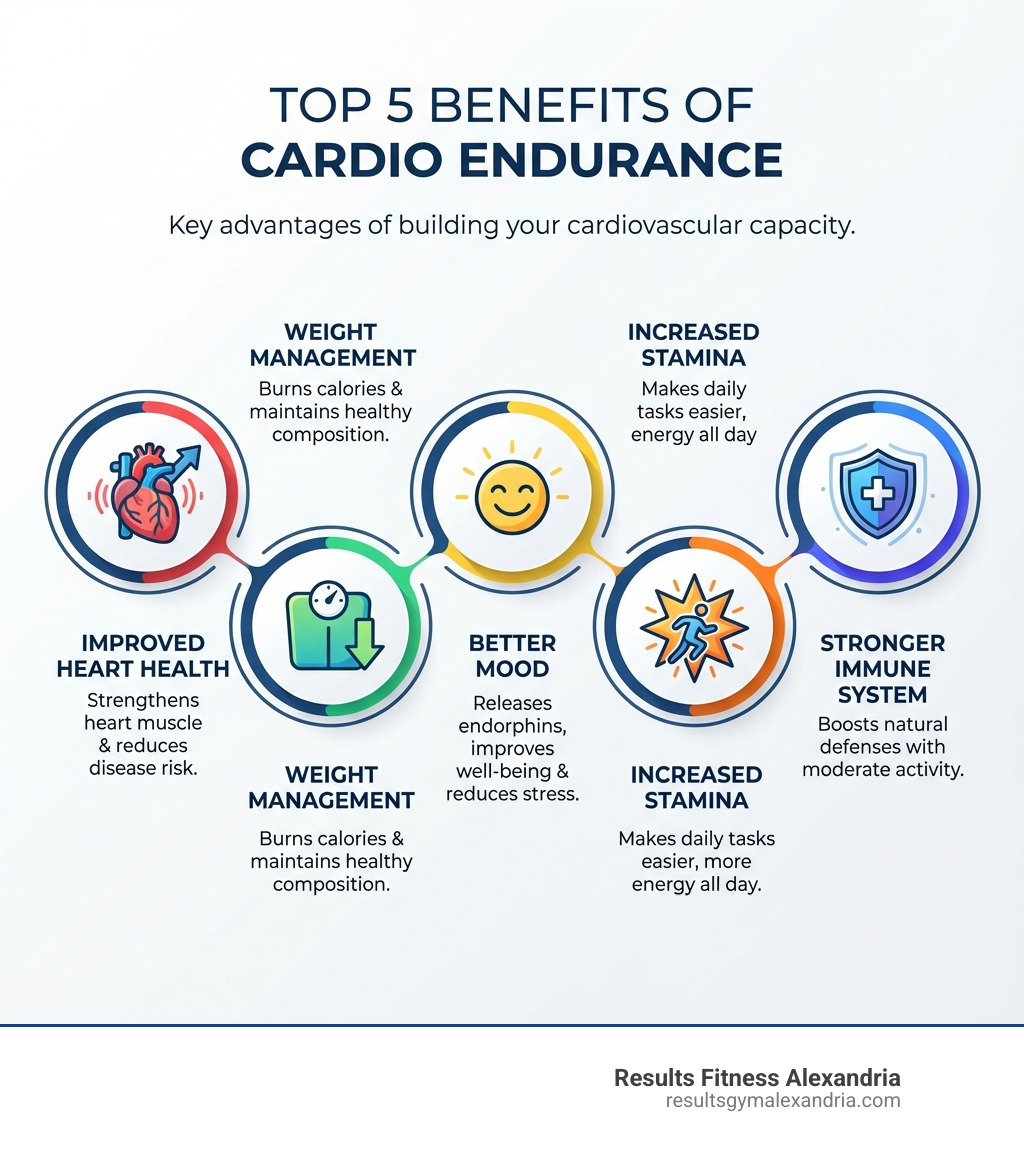
The benefits go far beyond just feeling less tired:
- Heart health: Regular cardio exercise strengthens your heart muscle and reduces your risk of heart disease
- Weight management: Cardio helps you burn calories and maintain a healthy body composition
- Better mood: Exercise releases endorphins that improve mental well-being and reduce stress
- Increased energy: Paradoxically, regular cardio makes you feel more energetic throughout your day
- Stronger immune system: Moderate aerobic activity can boost your body’s natural defenses
According to the American Heart Association, adults should aim for at least 150 minutes of moderate-intensity aerobic activity per week. That might sound like a lot, but it breaks down to just 30 minutes, five days a week. And for beginners, even shorter sessions provide real health benefits.
I’m Jennifer Rapchak, Fitness Director at Results Fitness Alexandria, and I’ve spent over 14 years helping people like you start their fitness journeys through personalized cardio endurance training for beginners. Whether you’re completely new to exercise or returning after a long break, I’ve seen how starting slowly and building consistency transforms lives.
Basic cardio endurance training for beginners vocab:
Understanding the Basics of Cardio Endurance Training for Beginners
Before we jump into specific exercises, let’s lay the groundwork. Understanding the “why” and “how” of cardio endurance training for beginners will empower you to make informed choices and set yourself up for success.
What Are the Official Guidelines?
So, how much cardiovascular exercise should adults be doing each week? The general consensus from leading health organizations gives us clear targets. The Physical Activity Guidelines for Americans, 2nd edition and the American Heart Association recommend that adults participate in at least 150 to 300 minutes of moderate-intensity aerobic exercise per week. Alternatively, you can aim for 75 to 150 minutes of vigorous-intensity aerobic activity.
For beginners, 150 minutes might seem like a marathon, but remember, we’re starting small! These minutes can be broken down into manageable chunks throughout your week. We’re talking about activities that get your heart pumping and make you breathe a little harder, but still allow you to hold a conversation.
Want to learn more about structuring your workouts for optimal heart health? Check out our guide on how to build a Cardiovascular Fitness Program.
How to Measure Your Workout Intensity
Knowing how hard you’re working is crucial for effective and safe cardio endurance training for beginners. We want to challenge ourselves without overdoing it. Here are a few ways to gauge your intensity:
- Rate of Perceived Exertion (RPE) Scale: This is a subjective scale from 0 (no exertion) to 10 (maximal effort). For moderate intensity, aim for an RPE of 3-4. For vigorous intensity, you’d be in the 5-7 range. It’s a fantastic tool because it’s personal to you and how you feel on any given day.
- The Talk Test: This is perhaps the simplest method for beginners.
- Moderate intensity: You should be able to carry on a conversation comfortably, but you wouldn’t be able to sing. You’ll be breathing harder than usual, but not gasping for air.
- Vigorous intensity: You’ll only be able to speak a few words at a time before needing to take a breath. You’ll be breathing heavily and your heart rate will be significantly liftd.
- Target Heart Rate Zones: While more advanced, understanding your target heart rate can also be helpful. Your maximum heart rate is roughly 220 minus your age. For moderate intensity, aim for 65-75% of your maximum heart rate. For vigorous, it’s 76-96%. We recommend consulting with a fitness professional to help you accurately determine and monitor your heart rate zones.
Here’s a quick comparison to help you visualize:
| Intensity Level | RPE (0-10) | Talk Test | General Feeling |
|---|---|---|---|
| Moderate | 3-4 | Can converse, but not sing | Breathing harder, light sweat, comfortable challenge |
| Vigorous | 5-7 | Can only speak a few words at a time | Breathing heavily, sweating profusely, significant challenge |
The Importance of Warm-Ups and Cool-Downs
Think of your body like a car engine. You wouldn’t just start it up and immediately hit the highway at top speed, would you? Similarly, a proper warm-up and cool-down are non-negotiable parts of any effective exercise routine, especially when you’re starting cardio endurance training for beginners.
- Warm-Up: A warm-up prepares your body for the workout ahead. It gradually increases your heart rate, blood flow to your muscles, and body temperature. This helps improve flexibility and reduces the risk of injury. A dynamic warm-up, involving movements that mimic your workout (like arm circles or marching in place), is ideal. We recommend a 5-10 minute warm-up before any cardio session.
- Cool-Down: Just as your body needs to ease into exercise, it needs to ease out of it. A cool-down helps bring your heart rate and breathing back to normal gradually, preventing dizziness and aiding in muscle recovery. It’s also the perfect time for static stretching (holding stretches for 15-30 seconds) to improve flexibility and reduce muscle soreness. We recommend a 5-10 minute cool-down after your cardio.
As the experts at Mayo Clinic point out, stretching helps improve flexibility, which is a key component of overall physical health and injury prevention.
10 Beginner-Friendly Cardio Exercises to Start Today
You don’t need a fancy gym membership or expensive equipment to start building your cardio endurance. Many effective exercises can be done right in the comfort of your home, using just your body weight. This accessibility is what makes cardio endurance training for beginners so achievable!

For a deeper dive into home-based cardio, check out our guide on Exercise for Cardiovascular Endurance at Home.
Low-Impact Cardio Exercises
These exercises are gentle on your joints, making them perfect for beginners or anyone looking for a less intense option.
- Marching in Place: Simple, effective, and can be done anywhere. Lift your heart rate without any equipment. Keep your core engaged and lift your knees high to boost the intensity. A person weighing around 150 pounds might burn approximately 40 to 65 calories in a 15-minute session of marching in place.
- Step-Touches (Lateral Shuffles): This lateral movement improves coordination and agility while working your inner and outer thighs. Simply step one foot out to the side, touch it down, and bring it back to meet the other foot. Increase the speed as you get more comfortable.
- Arm Circles: While primarily a warm-up, performing continuous arm circles for an extended period can contribute to your cardio, especially if you’re engaging your core and moving with energy. It’s great for warming up the upper body and shoulders.
- Butt Kicks: A fantastic way to warm up your hamstrings and glutes while getting your heart rate up. Alternate kicking your heels towards your glutes, keeping your arms bent at a 90-degree angle, mimicking a running motion. This exercise helps increase flexibility and mobility in the legs.
- Standing Oblique Crunches: This exercise engages your core while adding a light cardio element. Stand tall, then lift one knee towards your elbow, crunching your side. Alternate sides. It’s a great way to activate your side-ab muscles.
These low-impact options are a great starting point for Low Impact Cardio workouts.
Higher-Impact Cardio Exercises
Once you’ve built a foundational level of fitness, you can gradually introduce higher-impact movements to challenge your cardiovascular system further.

- Jumping Jacks: A classic for a reason! Jumping jacks are a full-body exercise that quickly lifts your heart rate. Start with a basic jump, then as you progress, you can incorporate power jacks or squat jumps for added intensity.
- High Knees: Run in place, bringing your knees up towards your chest as high as possible. This exercise is excellent for cardiovascular fitness, coordination, and engaging your core. High knees can burn 7-8 calories per minute, depending on your intensity and body weight.
- Jogging in Place: Another simple yet effective exercise. Mimic a light jog without moving forward. Pump your arms and lift your knees to increase the intensity. It’s a suitable beginner warm-up activity and can be a standalone cardio exercise.
- Bodyweight Squats: While often considered a strength exercise, performing squats continuously can significantly lift your heart rate and challenge your cardiovascular system. Focus on proper form: feet shoulder-width apart, chest up, lowering your hips as if sitting in a chair.
- Stair Climbing: If you have stairs at home, use them! Walking or jogging up and down stairs is an excellent way to build leg strength and cardiovascular endurance. Start with a moderate pace and gradually increase speed or duration.
Creating Your Beginner Cardio Workout Plan
Now that you know what to do, let’s talk about how to put it all together into a sustainable plan for cardio endurance training for beginners. The goal is consistency and gradual progression.
How to Start Your Cardio Endurance Training for Beginners
The most important advice we can give you is to start slowly. Don’t try to do too much too soon. For beginners, we recommend starting with 10-15 minute sessions, 3-5 days per week. This allows your body to adapt without getting overwhelmed or risking injury.
- Listen to your body: This is paramount. If you feel sharp pain, dizziness, or extreme fatigue, stop. It’s okay to take a break or modify an exercise. Your body will tell you what it needs.
- Consistency over intensity: At this stage, showing up regularly is more important than pushing yourself to your absolute limit. Build the habit first, and the intensity will follow.
- Choose activities you enjoy: If you dread your workouts, you won’t stick with them. Experiment with different exercises until you find what feels good and keeps you engaged.
For more detailed guidance on building your initial fitness routine, check out our article on Creating an Effective Workout Routine for Beginners.
How to Gradually Progress
Once you’re comfortable with your initial routine, it’s time to think about progression. The key is to gradually increase the challenge to continue building endurance.
- The 10% Rule: A good rule of thumb is not to increase your workout duration or intensity by more than 10% per week. This measured approach allows your muscles and joints to adapt, significantly reducing the risk of injury. For example, if you’re currently doing 15-minute workouts, next week you can increase to 16.5 minutes.
- Increasing duration: This is often the first and safest way to progress for beginners. Add 2-5 minutes to your sessions each week until you reach your target duration (e.g., 30 minutes).
- Increasing intensity: Once you’re consistently hitting your target duration, you can start to increase intensity. This could mean moving faster, lifting your knees higher, or incorporating more challenging variations of exercises (like adding a jump to your squats).
- Adding variety: Keep your body guessing and prevent boredom by mixing up your exercises. If you’ve been marching in place, try jogging in place, or switch between jumping jacks and high knees.
Here’s a sample 4-week progression plan for cardio endurance training for beginners, assuming you start with 15-minute sessions:
| Week | Frequency | Duration (per session) | Total Weekly Cardio | Intensity (RPE) |
|---|---|---|---|---|
| 1 | 3x/week | 15 minutes | 45 minutes | 3-4 (Moderate) |
| 2 | 3x/week | 20 minutes | 60 minutes | 3-4 (Moderate) |
| 3 | 4x/week | 20 minutes | 80 minutes | 3-4 (Moderate) |
| 4 | 4x/week | 25 minutes | 100 minutes | 3-4 (Moderate) |
This is just an example! Adjust it based on how you feel.
Safety and Injury Prevention
Your well-being is our top priority. As you start on your cardio endurance training for beginners journey, keeping safety in mind will ensure a long and healthy fitness path.
- Proper form: Always prioritize correct technique over speed or repetitions. Watching instructional videos or working with a personal trainer can help you learn proper form. Doing an exercise incorrectly can lead to injury.
- Appropriate footwear: Wear supportive shoes that fit well and provide adequate cushioning for the type of exercise you’re doing, especially for higher-impact activities.
- Hydration: Drink plenty of water before, during, and after your workouts. Dehydration can lead to fatigue, muscle cramps, and dizziness.
- Rest days: Your muscles need time to recover and rebuild. Incorporate rest days into your weekly routine. Overtraining can lead to burnout and increase injury risk.
- Recognizing overexertion: Pay attention to signs like extreme shortness of breath, chest pain, nausea, severe muscle soreness, or dizziness. If you experience these, stop immediately.
If you have existing health conditions or haven’t been active for a while, it’s always wise to consult with a healthcare professional before starting any new exercise program. They can provide personalized guidance based on your specific needs. For a holistic approach to fitness, learn more about How to Create a Balanced Fitness Routine Combining Cardio, Strength, and Flexibility.
Staying Motivated and Consistent
Consistency is the secret sauce for any successful fitness journey, especially when it comes to cardio endurance training for beginners. We know life gets busy, but with a few strategies, you can stay on track and make exercise a natural part of your routine.
- Setting realistic goals: Instead of aiming for a marathon on day one, set small, achievable goals like “walk for 15 minutes three times this week.” Celebrating these small wins will keep you motivated.
- Tracking progress: Whether it’s a fitness app, a journal, or simply noting how much easier an exercise feels, tracking your progress can be incredibly motivating. Seeing how far you’ve come is a powerful incentive to keep going.
- Finding a workout partner: An accountability partner can make a huge difference. Knowing someone is waiting for you can be just the push you need on days you’d rather stay on the couch. Learn more about Why You Need an Accountability Partner to Work Out With.
- Overcoming plateaus: Eventually, your body will adapt, and progress might slow down. This is normal! When this happens, it’s time to change up your routine, increase intensity, or try a new activity to challenge your body in fresh ways.
How to build cardio endurance for beginners with a busy schedule
Life in Alexandria, Virginia, can be , but that doesn’t mean your fitness has to take a backseat. Here’s how to fit cardio endurance training for beginners into a packed schedule:
- Workout scheduling: Block out specific times in your calendar for your workouts, just like any other important appointment. Treat it as non-negotiable.
- Short workouts: Even 10-15 minute bursts of cardio throughout the day can add up and be incredibly effective. A brisk walk during your lunch break or a quick session of jumping jacks before dinner can make a difference.
- High-Intensity Interval Training (HIIT): While typically more advanced, beginner-friendly HIIT involves short periods of intense exercise followed by brief recovery. It’s time-efficient but should be approached cautiously by beginners. For example, 30 seconds of high knees followed by 30 seconds of marching in place, repeated a few times. Want to know more? Check out Why You Should Give HIIT Exercises a Try.
- Combining exercise with daily activities: Integrate movement into your daily life. Take the stairs instead of the elevator, walk or bike to nearby errands, or even turn housework into a workout by adding lunges while vacuuming!
Frequently Asked Questions about Cardio Endurance
We hear a lot of common questions from beginners about cardio. Let’s tackle some of them!
What type of cardio is most effective for building endurance?
There isn’t one single “most effective” type of cardio, as it often comes down to individual preference and goals. However, we can categorize them:
- Steady-State Cardio (LISS – Low-Intensity Steady State): This involves maintaining a consistent, moderate pace for an extended period (e.g., a brisk walk, a steady jog, cycling). It’s excellent for building a strong aerobic base and is very beginner-friendly. Most studies show that cardiovascular training requires a minimum of 30 minutes, 3 times a week, to guarantee increased aerobic capacity in about 8 to 12 weeks.
- High-Intensity Interval Training (HIIT): As mentioned, this involves short bursts of intense exercise followed by brief recovery periods. HIIT can significantly improve cardiovascular endurance in a shorter amount of time, with studies showing improvements from 38% to 79% for those who engage in it. However, it’s more demanding and should be introduced gradually for beginners.
- Combination approach: Many find success by combining both. For instance, doing LISS for most of your workouts and adding one or two HIIT sessions as you progress.
The best type of cardio is the one you enjoy and can stick with consistently.
How long does it take for a beginner to build cardiovascular endurance?
Good news! You can start seeing and feeling improvements relatively quickly. While individual factors like starting fitness level, age, and consistency play a role, most beginners can expect to see a noticeable increase in their aerobic capacity within 8 to 12 weeks of consistent cardio endurance training for beginners.
The key is consistency. Your body needs time to adapt to the new demands you’re placing on it. Don’t get discouraged if you don’t feel like an Olympic athlete overnight. Every workout builds upon the last, and those small, consistent efforts lead to significant long-term gains.
Should I combine cardio with strength training?
Absolutely! A well-rounded fitness program for beginners should definitely include both. While this guide focuses on cardio endurance training for beginners, strength training offers complementary benefits that support your cardio efforts and overall health.
- Benefits of both: Cardio strengthens your heart and lungs, while strength training builds muscle, improves bone density, and boosts your metabolism. Combining them leads to better overall fitness, improved body composition, and improved performance in both types of activities.
- Improved metabolism: Muscle tissue burns more calories at rest than fat tissue, so building muscle through strength training can help with weight management, even on your rest days.
- Injury prevention: Stronger muscles and joints are more resilient, helping to prevent common injuries that can sideline your cardio progress.
The Physical Activity Guidelines for Americans recommend including at least 2 strength-training sessions as part of your weekly exercise program. For beginners, a sample schedule might look like this:
- Mondays & Fridays: Cardio endurance training
- Tuesdays: Upper body strength training
- Thursdays: Lower body strength training
- Saturdays: Core exercises
- Wednesdays & Sundays: Rest days or active recovery (light stretching, gentle walk)
To understand the synergy between these two vital components of fitness, read our comparison: Cardio vs. Strength Training for Weight Loss: Which is Better?.
Start Your Endurance Journey Today
Starting on a cardio endurance training for beginners journey is one of the best investments you can make in your health and well-being. Remember these key takeaways:
- Start small and build gradually: Consistency is your most powerful tool.
- Listen to your body: It’s your best guide.
- Mix it up: Keep things interesting to stay motivated.
- Accept the benefits: From a stronger heart to a better mood, the rewards are immense.
You don’t have to steer this journey alone. The expert personal trainers at Results Fitness in Alexandria, Virginia, are here to help you create a personalized plan that fits your fitness level, goals, and lifestyle. We can guide you through proper form, help you set realistic expectations, and keep you motivated every step of the way.
Ready to take the first step towards a healthier, more energetic you? Explore our cutting-edge cardio equipment and amenities designed to support every fitness level. Visit our Cardio Amenities page to learn more and see how we can help you achieve your endurance goals.