Sweat in Style: Top Beginner Gym Programs and Back Workouts for Women
Why Finding the Right Beginner Gym Program for Women Makes All the Difference
A solid beginner gym program female lifters can actually stick with doesn’t need to be complicated — it just needs to match where you are right now.
Quick answer: Here’s what the best beginner gym programs for women include:
| Component | What to Do |
|---|---|
| Frequency | 3 days per week (Mon/Wed/Fri) |
| Session length | 30–60 minutes |
| Workout style | Full-body compound movements |
| Sets and reps | 2–3 sets of 8–12 reps |
| Key exercises | Squat, hinge, push, pull, carry |
| Cardio | 2–3 sessions, 20–30 min, low-impact |
| Rest days | At least 1 full rest day between sessions |
| Progression | Add reps or weight every 1–2 weeks |
Walking into a gym for the first time can feel like landing on another planet. You’re not alone in that feeling — research shows that 17% of women report feeling intimidated when starting at the gym, compared to just 5% of men. The good news? That feeling fades fast when you have a clear plan in hand.
This guide covers the best beginner gym programs for women in 2026 — from 3-day full-body strength plans to back-and-glutes routines and personal training options — so you can find the right fit and start building real, lasting strength.
I’m Jennifer Rapchak, Fitness Director at Results Fitness Alexandria, and with over 14 years of experience as an ACE-certified personal trainer, I’ve helped hundreds of women navigate exactly this stage of their fitness journey with a beginner gym program female clients can actually enjoy and sustain. Let’s break down your best options so you can walk into the gym — and own it.
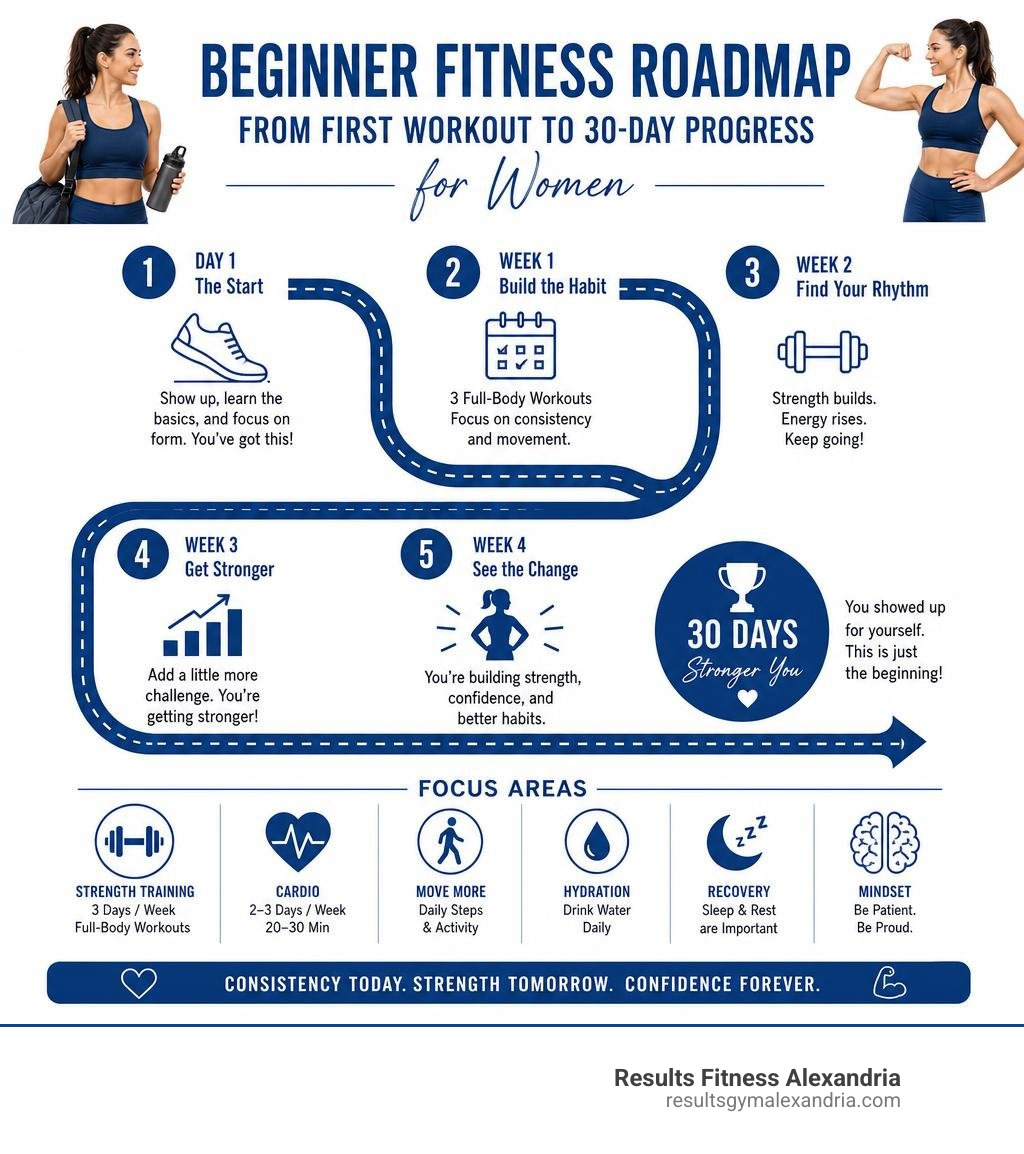
Beginner gym program female terms to learn:
How to Choose a Beginner Gym Program Female Lifters Can Stick With
To find a program you’ll stick with for the long haul, you need to look past flashy trends and focus on what actually builds consistent habits. The most successful routines balance strength training, aerobic cardio, and mobility, while leaving plenty of room for recovery. We want to build your confidence alongside your physical strength, which is why a structured Womens Beginner Gym Workout is so valuable.
Instead of trying to work out six days a week until you burn out, we recommend starting with a structured 3-day full-body plan. This approach is highly effective because it allows you to hit every muscle group frequently while giving your body the 48 hours of rest it needs to rebuild. That 17% “gymtimidation” rate is a mental hurdle, not a physical one. When you walk into a supportive coaching environment with a clear game plan, the weight room stops looking like a scary, exclusive club and starts looking like your new favorite playground.
Beginner Gym Program Female Criteria: Safety, Frequency, and Coaching
When we evaluate any starter routine, three elements are non-negotiable: safety, frequency, and access to coaching. For a beginner, we recommend a frequency of 3 days per week on non-consecutive days (such as Monday, Wednesday, and Friday). Each session should last between 30 to 60 minutes, which is the sweet spot for maintaining focus and energy without overtaxing your nervous system.
A great routine focuses on full-body workouts rather than complex body-part splits. This ensures that if you miss a day, you haven’t skipped an entire muscle group for the week. Additionally, look for programs that emphasize:
- Form checks and tracking: Keeping a log of your weights and reps removes the guesswork.
- Realistic goals: Setting milestones based on strength rather than just scale weight.
- Recovery windows: Ensuring you have structured rest days to allow neuromuscular adaptation.
If you are unsure where to begin, getting some professional guidance can save you weeks of frustration. You can read more about setting up your schedule in our guide on Creating An Effective Workout Routine For Beginners.
What Women Should Do Differently Than Men
There is a common misconception that women should train completely differently from men, or conversely, that sex differences don’t matter at all. The truth lies in the middle. While the fundamental movement patterns (squatting, hinging, pushing, pulling) remain the same, female physiology presents unique advantages and considerations.
First, let’s address the hormonal differences. Women have 10 to 20 times lower testosterone levels than men, which means building massive, bulky muscle mass is physiologically highly improbable without years of specialized, high-volume training and a massive caloric surplus. Instead, strength training helps women build lean, dense muscle that boosts basal metabolism and creates a toned, athletic shape.
Second, women face a significantly higher lifetime risk of osteoporosis than men. Weightlifting directly stimulates bone density, acting as a powerful insurance policy for your skeletal health as you age. Furthermore, women typically recover faster between sets and can handle slightly higher training frequency relative to their maximum strength. Understanding these differences allows us to train with our physiology rather than against it.
First-Gym Success Tips for Female Beginners
Before you take your first step onto the gym floor, a little preparation goes a long way. Here is our checklist of success tips to help you feel prepared and focused:
- Take it slow: Prioritize perfect form before you even think about adding heavy loads.
- Pack your gym essentials: Bring a water bottle, a small sweat towel, supportive training shoes, and hair ties.
- Establish a warm-up habit: Never skip the 5–10 minutes of dynamic stretching that prepares your joints for work.
- Master your breathing: A good rule of thumb is to exhale during the exertion phase (the hardest part of the lift) and inhale as you lower the weight.
- Crank up the music: Upbeat music is proven to improve workout endurance and make the session feel more fun.
- Set SMART goals: Focus on process goals, like “I will complete 3 workouts this week,” rather than vague outcome goals.
If you ever feel lost, don’t hesitate to ask a trainer on the floor for a quick form check. Everyone was a beginner once, and ensuring your safety is always our top priority.
Best Starter Program Roundup: 5 Beginner-Friendly Gym Options for Women
To help you find the best match for your lifestyle, we’ve rounded up five highly effective starter programs. Whether you want to lift heavy, save time, or work one-on-one with an expert, there is an option here for you.
| Program Name | Best For | Time Needed | Equipment Used | Weekly Frequency | Difficulty | Coaching Support |
|---|---|---|---|---|---|---|
| 3-Day Full-Body Strength | Overall strength & bone density | 45–60 mins | Barbells, dumbbells, cables | 3 days | Beginner | Medium |
| 30-Minute Circuit | Busy schedules & efficiency | 30 mins | Dumbbells, machines | 3–4 days | Beginner | Low to Medium |
| Back-and-Glutes Strength | Posture, shape, & desk-job relief | 45 mins | Dumbbells, cable pull, bands | 2–3 days | Beginner | Medium |
| Cardio + Strength Starter | Heart health & conditioning | 45–50 mins | Elliptical, dumbbells, bodyweight | 3 days | Very Easy | Low |
| Beginner Personal Training | Maximum safety & accountability | 60 mins | Full gym suite | 2–3 days | Customized | High |
Best Overall: 3-Day Full-Body Strength Program
Our top recommendation for most women starting out is a classic 3-day full-body strength program, typically scheduled on Monday, Wednesday, and Friday. This structure targets all major muscle groups in a single session, utilizing fundamental compound lifts like squats, hinges, pushes, pulls, and carries.
By performing 2 to 3 sets of 8 to 12 reps per exercise, you hit the optimal threshold for both muscle adaptation and motor skill learning. Because you have a full rest day between each workout, your body has ample time to recover, reducing muscle soreness and preventing mental burnout. For a deeper dive into how to structure these lifts safely, check out our guide on Beginner Weight Training For Women.
Best for Busy Schedules: 30-Minute Gym Circuit
If finding an hour to train feels impossible, the 30-minute gym circuit is your best friend. This program groups exercises into quick, non-competing supersets (for example, pairing an upper-body pull with a lower-body press) to keep your heart rate elevated while maximizing your time.
Using a mix of dumbbells and select machine exercises, you can move efficiently through the gym without waiting for complex setups. Each session includes a quick 3-minute warm-up and a 2-minute cooldown, ensuring you get a safe, effective workout that fits perfectly into a lunch break. If this sounds like the right pace for you, read more about our 30 Minute Gym Workout Female strategy.
Best for Shape and Posture: Back-and-Glutes Strength Program

Many of us spend our days hunched over desks and steering wheels, which can lead to weakened upper backs and underactive glutes. This specialized program focuses heavily on the posterior chain — the muscles running along the back of your body — to help improve posture, alleviate lower back discomfort, and build lower-body strength.
Key movements in this routine include:
- Dumbbell rows and lat pulldowns: To strengthen the upper back and shoulders.
- Face pulls: Excellent for shoulder health and reversing “desk posture.”
- Romanian deadlifts and hip thrusts: The absolute best movements for developing strong, active glutes.
Building a strong posterior chain not only improves how you move in daily life, but it also builds tremendous confidence in the weight room.
Best for Fat Loss and Fitness: Cardio + Strength Starter Plan
If your primary goals are improving cardiovascular endurance and supporting sustainable fat loss, pairing low-impact cardio with basic strength training is an excellent approach. This program starts with 20 to 25 minutes of Zone 2 cardio on machines like the elliptical, rowing machine, or stationary bike. Using an elliptical can burn between 300 to 600 calories per hour while remaining incredibly gentle on your joints.
After your cardio warm-up, you will transition to 20 minutes of simple resistance training. This “strength first, cardio second” setup ensures you have maximum energy to lift with great form while still getting the cardiovascular benefits of aerobic conditioning.
Best for Extra Support: Beginner Personal Training Program
For those who want to eliminate all guesswork, investing in a professional coach is the gold standard. A trainer-led program starts with an individual movement assessment to identify any tight joints or muscle imbalances.
Your coach will teach you how to set up machines, guide your form with simple cues, and adjust your weights safely week by week. This hands-on support is the fastest way to build gym confidence and establish lifelong habits. If you want to fast-track your progress, we recommend you Start Strong With A Beginner Personal Training Program.
Back Workouts and Foundational Lifts Women Beginners Should Master
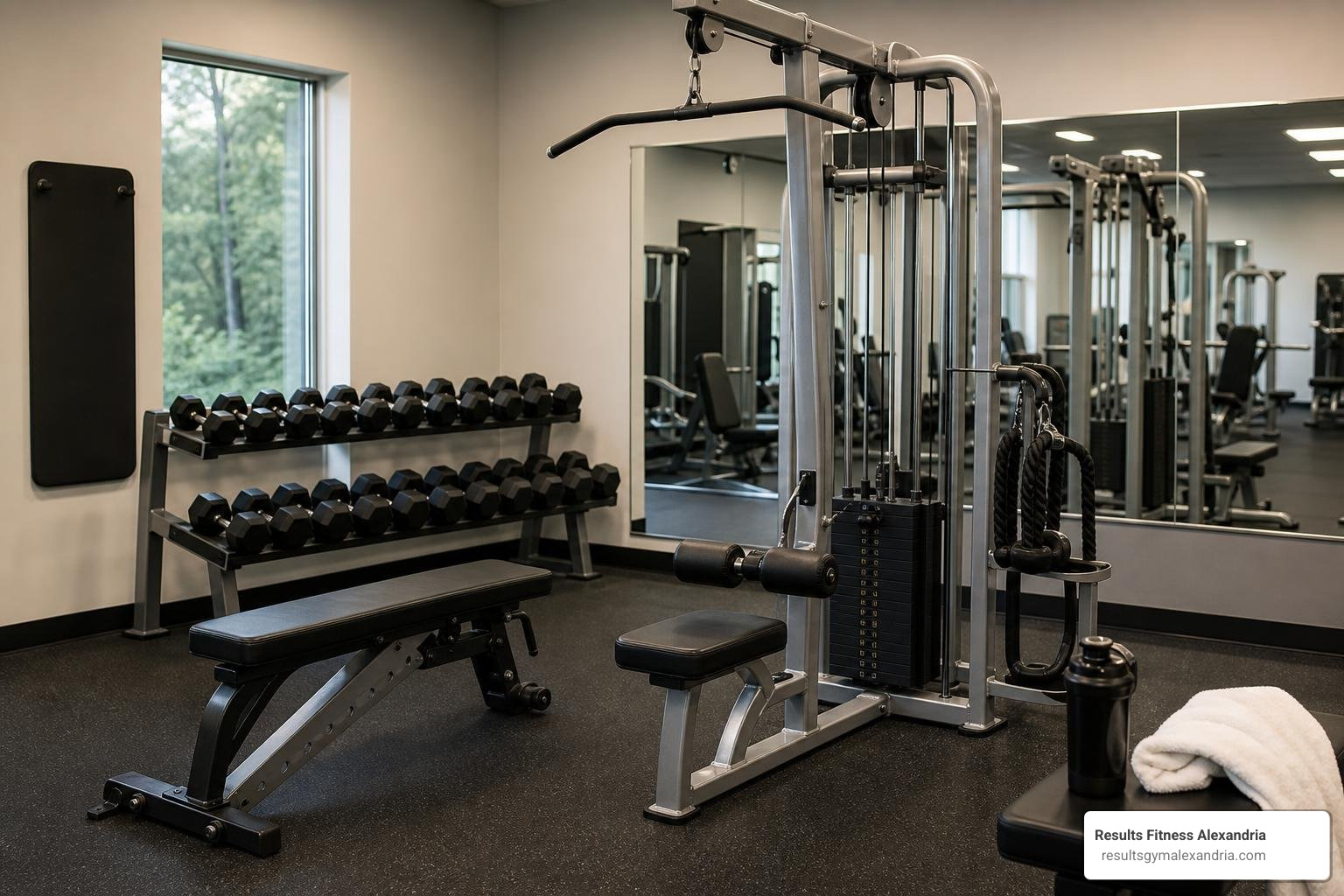
Mastering foundational movement patterns is the key to unlocking long-term fitness. Instead of thinking about individual muscles, focus on mastering movements: squatting, hinging, pushing, pulling, and carrying.
Beginner Gym Program Female Back Workout: Pull, Row, Hinge
A strong back is the foundation of great posture and injury prevention. For your pulling and hinging movements, we suggest focusing on these five exercises:
- Lat Pulldown: Sit tall and pull the bar down to your collarbone, focusing on driving your elbows toward your back pockets.
- Seated Cable Row: Keep a slight bend in your knees, sit upright, and row the handle toward your lower ribs while squeezing your shoulder blades together.
- One-Arm Dumbbell Row: Support your weight on a bench with one hand and knee, and pull the dumbbell up to your hip in a controlled arc.
- Face Pull: Using a cable rope at upper-chest height, pull the rope toward your nose while flaring your elbows out to target the rear shoulders.
- Romanian Deadlift (RDL): Hold dumbbells in front of your thighs, push your hips straight back as if trying to touch a wall behind you, and keep a neutral spine throughout.
Aim for 2 to 3 sets of 8 to 12 reps, resting 60 to 120 seconds between sets to allow your muscles to recover.
Squat, Push, Carry, and Core Patterns
To balance out your back workouts, you must master the remaining movement patterns:
- The Squat: Start with box squats (sitting back onto a bench and standing up) before moving on to goblet squats holding a dumbbell at your chest.
- The Push: Use the dumbbell bench press or incline push-ups to build chest, shoulder, and tricep strength safely.
- The Carry: The farmer’s carry (walking while holding heavy dumbbells at your sides) is incredible for grip strength, shoulder stability, and core coordination.
- The Core: Keep it simple with planks and dead bugs. Beginners should start with no more than 2 to 3 weekly sessions of deep core exercises to allow adequate recovery.
For a simple step-by-step breakdown on how to put these movements together, read our guide on How To Do Beginner Gym Workout In 5 Simple Steps.
Choosing Weights, Sets, Reps, and Rest Periods
How do you know which weight to pick up? We use the RPE (Rate of Perceived Exertion) scale. On a scale of 1 to 10, beginners should aim for an RPE of 7 or 8. This means that by the time you reach your last rep (say, rep 10), you feel like you could have done only 2 or 3 more reps with perfect form before your muscles gave out.
If you finish 12 reps and feel like you could have done 10 more, the weight is too light. If your form breaks down on rep 5, the weight is too heavy.
- For compound lifts (squats, rows, deadlifts): Rest 2 to 3 minutes between sets to let your nervous system recover.
- For isolation lifts (bicep curls, lateral raises): Rest 60 to 90 seconds.
To learn more about selecting the right resistance, check out our guide on the Best Beginner Weight Lifting Women prefer.
Recovery, Cardio, Nutrition, and 30-Day Progression Plan
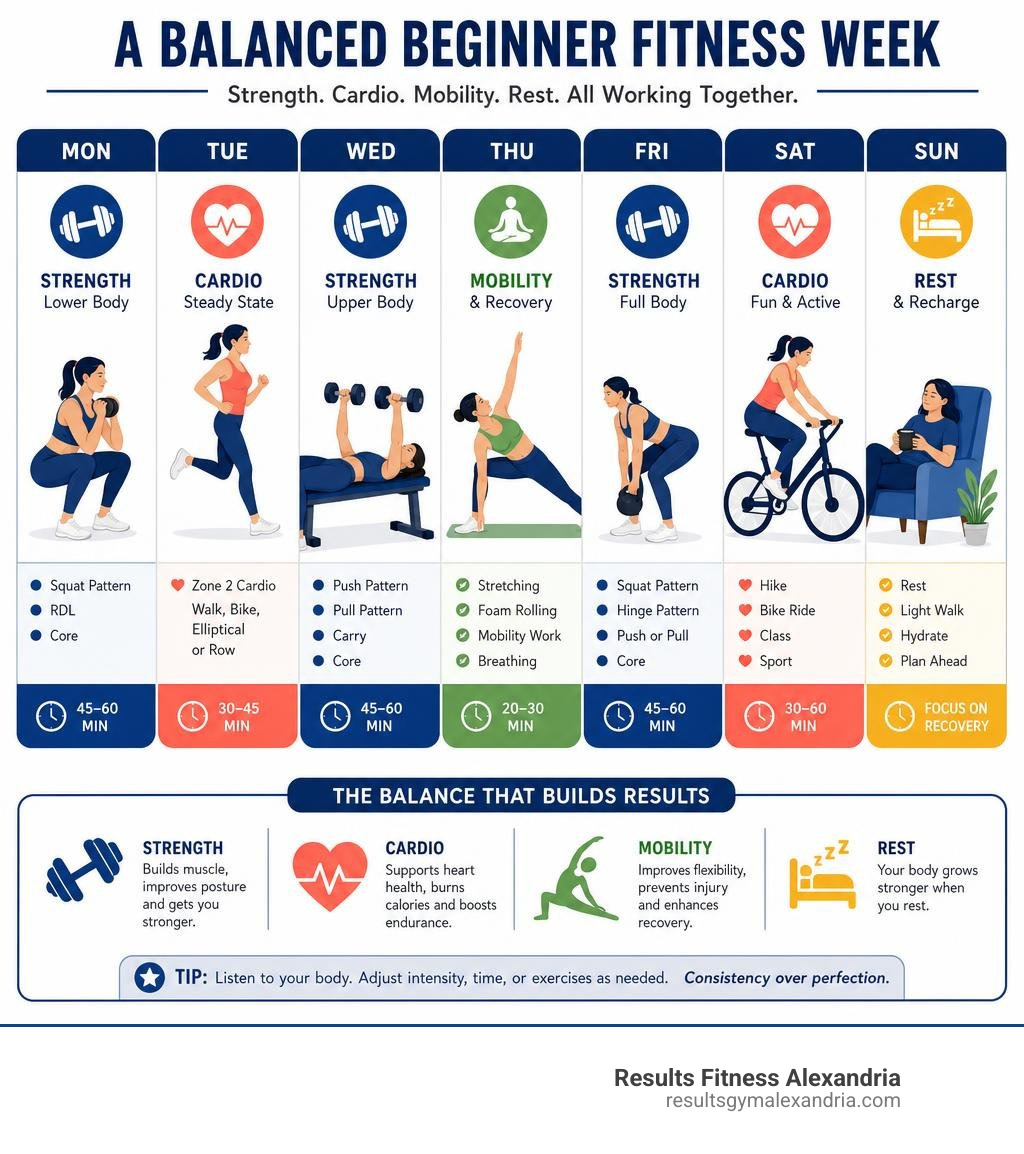
Lifting weights is only half the equation. The physical changes you want to see – like building lean muscle and burning body fat – actually occur when you are resting, sleeping, and fueling your body.
Warm-Ups, Cool-Downs, and Mobility
Always start your session with a 5 to 10-minute dynamic warm-up. This isn’t just about raising your body temperature; it preps your nervous system and lubricates your joints. Focus on dynamic movements like leg swings, arm circles, and hip openers rather than holding static stretches. Save the static stretching for your cool-down, which helps transition your body back into a relaxed, recovery state.
Cardio Options and Weekly Frequency for Beginners
Cardio should support your strength training, not compete with it. For beginners, we recommend 2 to 3 low-impact cardio sessions per week, lasting 20 to 30 minutes each. This aligns well with the CDC’s adult physical activity guidelines, which recommend combining regular aerobic activity with muscle-strengthening work. Excellent low-impact options include:
- The Elliptical: Great for a smooth, full-body burn.
- Incline Walking: Excellent for glute activation without the joint stress of running.
- Stationary Cycling: Perfect for building aerobic endurance safely.
Keep the intensity moderate (Zone 2, where you can still carry on a conversation) to build your aerobic base without causing excessive muscle soreness.
Post-Workout Fuel for Muscle Building
Within 1 to 2 hours after your workout, aim to eat a meal or snack containing both protein and carbohydrates. Protein provides the amino acids needed to repair and build lean muscle, while carbohydrates replenish the energy stores used during your session.
Simple post-workout options include:
- Greek yogurt with a handful of berries and a drizzle of honey.
- A protein shake blended with a banana and a tablespoon of peanut butter.
- A palm-sized portion of chicken breast with sweet potato.
Pair this nutrition with 7 to 9 hours of quality sleep each night, as growth hormone secretion peaks during deep sleep.
What to Do After Your First 30 Days
Once you complete your first 30 days, celebrate! You’ve officially built the habit. To keep progressing, you don’t need to completely change your routine. Instead, apply the principle of progressive overload:
- Try adding 5 pounds to your lower-body lifts or 2.5 pounds to your upper-body lifts.
- Try performing 12 reps instead of 10 with the same weight.
- Focus on improving your range of motion or slowing down the lowering phase of the lift.
If you are ready to transition to a more structured 6-week or 8-week progression, we recommend checking back in with a coach to keep your form sharp. Learn more about taking that next step with our Start Strong With A Beginner Personal Training Program resources.
Frequently Asked Questions About Beginner Gym Programs for Women
Will lifting weights make women bulky?
No. Because women have significantly lower testosterone levels than men, building bulky muscle is incredibly difficult and requires years of highly specific training and a large caloric surplus. Instead, lifting weights builds dense, lean muscle that creates a toned, defined look, boosts your resting metabolic rate, and strengthens your bones. You will likely feel stronger within 2 to 4 weeks, with visible changes in body composition appearing after 8 to 12 weeks of consistency.
How often should a beginner female work out?
We recommend a 3-day full-body strength schedule on non-consecutive days (e.g., Monday, Wednesday, Friday), paired with 2 days of low-impact cardio or active recovery. This frequency is highly effective for building consistency while ensuring your muscles have the 48 hours of recovery they need to adapt and grow stronger.
What common beginner mistakes should women avoid?
The most common mistakes beginners make include:
- Skipping the warm-up and cool-down.
- Lifting weights that are too heavy before mastering proper form.
- Not resting enough between sets.
- Taking a “cardio-only” approach to fitness.
- Not tracking workouts, which makes progressive overload difficult.
To learn how to avoid these pitfalls and build confidence from day one, read our guide on How To Become A Beginner Workout Expert Starting From Scratch.
Conclusion: Start Strong With the Right Women’s Beginner Gym Program
Finding the right beginner gym program female lifters can stick with is all about building confidence, mastering foundational movements, and prioritizing consistency over intensity. You don’t need to spend hours in the gym to see incredible results — you just need a smart, structured plan and a supportive environment.
At Results Fitness Alexandria, we are dedicated to helping women of all fitness levels build strength, improve their health, and feel amazing in their own skin. We invite you to experience our supportive community, expert coaching, and top-tier amenities firsthand.
Claim a free 1-day pass for the women’s gym and let us help you start your strength journey with confidence today!