Stop Guessing and Start Sweating with These Intro Classes
The Beginner’s Shortcut to Finding the Right Fitness Class
Exercise classes for beginners are the fastest way to start a fitness routine without the guesswork. Here are the best options to get started:
| Class Type | Best For | Impact Level |
|---|---|---|
| Yoga / Pilates | Flexibility, core strength | Low |
| Zumba / Dance | Cardio, coordination, fun | Low-Medium |
| Strength Training | Muscle building, metabolism | Medium |
| Boot Camp Basics | Full-body conditioning | Medium-High |
| Aqua / Cycling | Joint-safe cardio | Low |
Starting a fitness routine feels overwhelming for most people. You don’t know which class to pick. You worry about keeping up. You’re not sure you belong there.
That feeling even has a name: gym-timidation. And it’s completely normal.
The good news? The right beginner class removes all of that. A good instructor, a supportive group, and a structured format take the guesswork out entirely. Research backs this up too — group workouts have been shown to improve mental, physical, and emotional health more than exercising alone.
I’m Jennifer Rapchak, Fitness Director at Results Fitness Gym and a certified personal trainer with over 14 years of experience designing and leading exercise classes for beginners across strength, HIIT, and group fitness formats. In this guide, I’ll walk you through exactly which classes to try first and how to set yourself up for success from day one.
Easy exercise classes for beginners glossary:
- boot camp workout for beginners
- basic zumba dance workout for beginners
- zumba abs workout for beginners
Why Group Fitness is the Perfect Starting Point
If you have ever stood in the middle of a weight room feeling like you need a “decoder ring” just to understand the equipment, you are not alone. For many of us in Alexandria, the gym can feel like a maze. This is exactly why group fitness is the ultimate “easy button” for your health.
The Power of Peer Support and Social Motivation
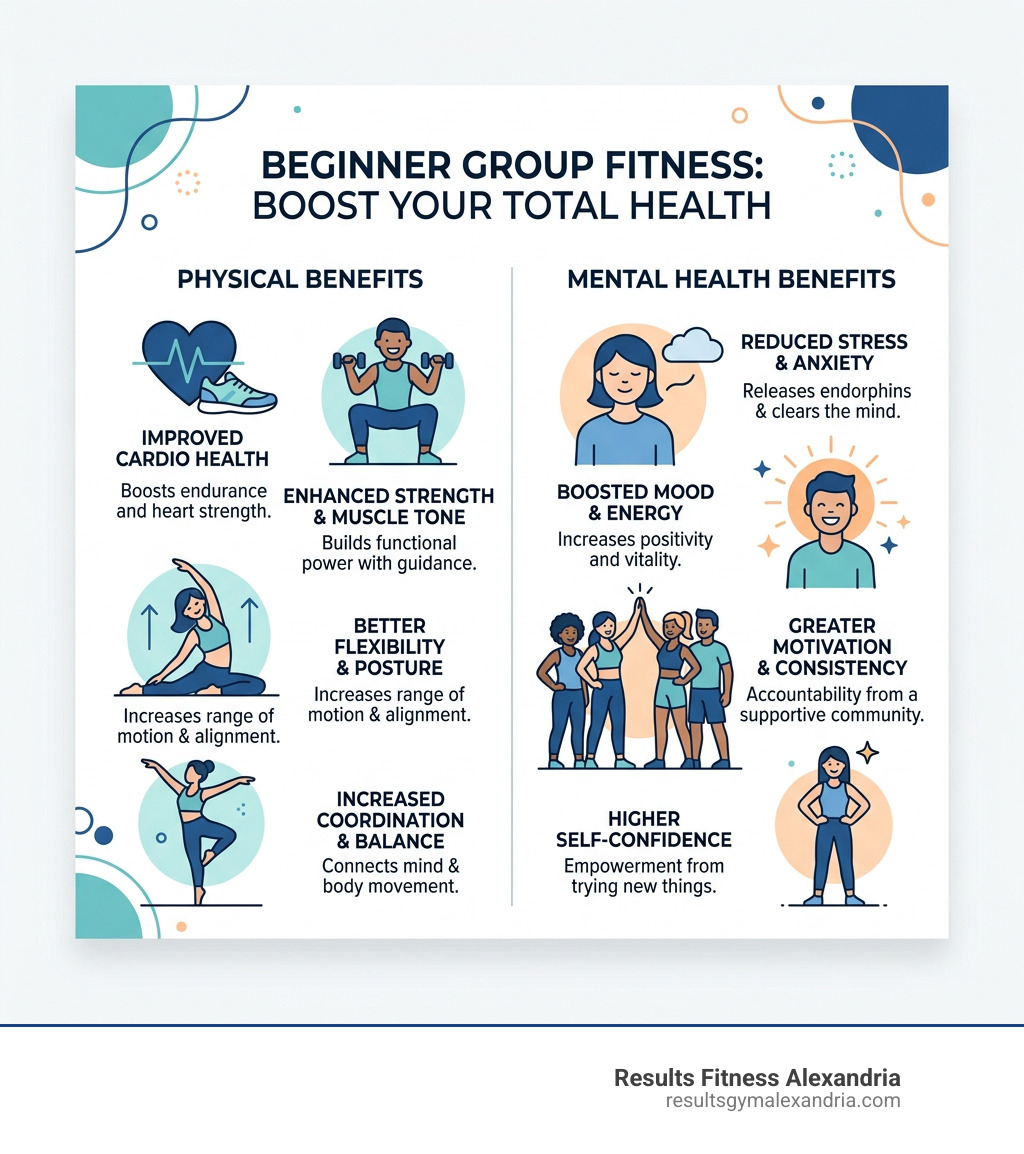
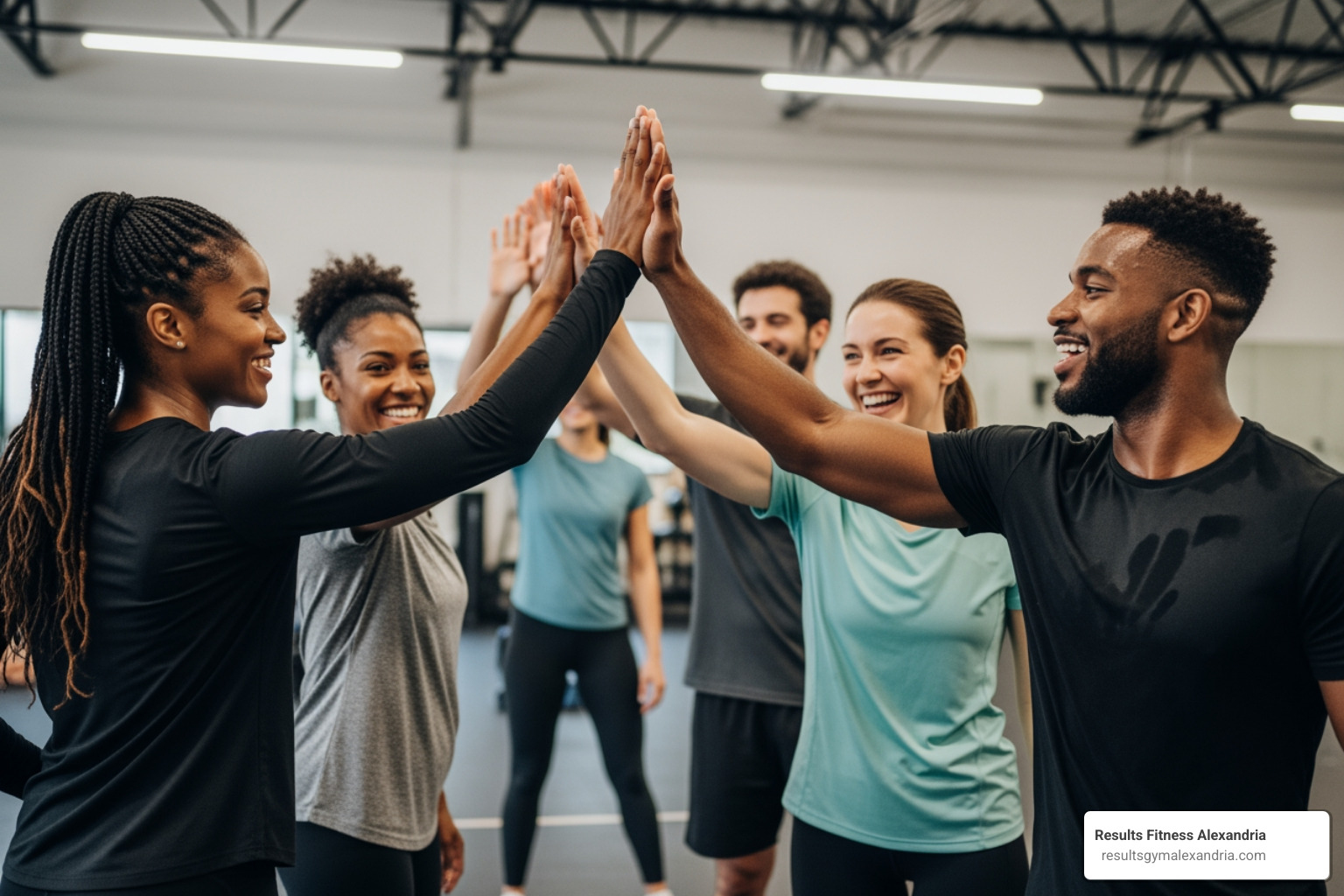
When we work out alone, it is easy to hit the snooze button or cut a set short. But in a group setting, a unique “social glue” takes over. Research published in The Journal of the American Osteopathic Association shows that group workouts improve our mental, physical, and emotional health far more than individual exercise. Specifically, the study found that exercising with a peer group reduces stress levels by 26% and significantly improves quality of life.
We are simply more likely to try new things and persevere through a difficult session when we have a support squad cheering us on. It satisfies that innate human craving for community.
Mental Resilience and Stress Reduction
The benefits aren’t just physical. According to the American Psychological Association, regular physical activity is one of the most powerful tools we have for improving mood. In fact:
- 92% of participants report feeling less anxious after attending a group class.
- 95% feel more energized.
- 90% report feeling more resilient in their daily lives.
Group classes turn exercise into a fun social activity rather than a chore. Whether it is the music, the instructor’s energy, or the shared laughter when someone misses a dance step, the environment is designed to boost your “happy hormones” (endorphins) and clear your mind.
The Best Exercise Classes for Beginners
Choosing the right class depends on your personal goals. Are you looking to build a “springboard” for a new routine, or do you want to dive straight into strength building?
For those just starting, we recommend focusing on three pillars: cardio endurance, functional strength, and flexibility. Building cardio endurance for beginners is often the first step to feeling more capable in everyday life, whether that is carrying groceries or keeping up with the kids.
Yoga and Pilates for Foundational Strength
If you’re a little “extra lazy” some days or just want a low-impact start, Yoga and Pilates are fantastic entry points. These classes focus on the intersection of mental wellness and physical health.
- Yoga: Often called a “foundational practice,” yoga uses props like blocks, straps, and even walls to make poses accessible for every body type. It’s not about being flexible; it’s about becoming flexible. Beginners benefit from slow, sustained movements and expert yoga guidance that emphasizes breath work and proper alignment.
- Pilates: This is a core-strength powerhouse. Pilates uses bodyweight and intentional movements to build a “strong center.” It is often less intimidating than lifting heavy weights but provides a deep, full-body workout that protects your joints.
Cardio Dance and Zumba: Exercise Classes for Beginners
Want a workout that feels like an “epic dance party”? Cardio dance classes like Zumba are famous for “disguising” the effort. You’ll be so busy following the rhythm and laughing that you won’t even notice the breathlessness.
A single Zumba session can help you burn up to 500 calories. Beyond the burn, these classes improve coordination and rhythm. If you’re worried about having “two left feet,” don’t be—everyone is too busy having fun to judge. You can even target specific areas with a Zumba abs workout for beginners to build core strength while you move.
Strength Training and Boot Camp Basics
Strength training is the second most popular form of exercise for a reason: it works. For beginners, the goal is to build a “strong muscle base” and boost your metabolism.
- Weight Training: Don’t let the barbells scare you. Beginner weight training for women and men focuses on “AMRAP” (As Many Reps As Possible) structures or circuit-based movements where you set the pace.
- Boot Camp: If you want a total-body challenge, a 30-minute boot camp for beginners combines short bursts of intensity with recovery. The beauty of these classes is scalability—an experienced coach can modify every single move to match your current fitness level.
How to Prepare for Your First Session
The hardest part of any fitness journey is walking through the door. Once you’re inside, we’ve got you covered. Here is how to prepare so you feel like a pro from minute one.
- What to Wear and Bring: Wear comfortable, breathable clothing and supportive athletic shoes. Bring a water bottle and a small towel—you will sweat!
- Arrive Early: Aim to get to the studio 10–15 minutes early. This gives you time to find your spot, meet the instructor, and let them know you’re a beginner.
- The Instructor Introduction: Tell the coach about any past injuries or limitations. They are experts at providing modifications on the fly to keep you safe.
- Listen to Your Body: If a move feels painful (not just challenging, but painful), stop. Take a break, grab some water, and rejoin when you’re ready. There is no “shame” in resting.
How Often Should You Attend Exercise Classes for Beginners?
When you’re starting out, more isn’t always better. Consistency beats intensity every single time.
For most beginners, we recommend starting with 2–3 classes per week. This schedule allows for essential rest days, which are crucial for muscle repair and preventing burnout. Creating an effective workout routine for beginners means balancing your “work” days with recovery activities like stretching or light walking.
Focus on “non-scale victories” to stay motivated. Are you sleeping better? Do you have more energy in the afternoon? Can you hold a plank five seconds longer than last week? These are the real markers of progress.
Frequently Asked Questions about Beginner Fitness
What if a class feels too difficult?
It is perfectly normal to feel a bit out of breath or uncoordinated in your first few sessions. Every expert was once a beginner. If you feel overwhelmed, simply march in place or take a “child’s pose” (in yoga). Use the modifications offered by the instructor—they are there to ensure the workout fits you, not the other way around.
Do I need to be fit before starting a class?
Absolutely not! That is a common misconception. You don’t “get fit” to go to the gym; you go to the gym to get fit. Our classes are designed with “all levels” in mind, meaning the movements are foundational and can be scaled up or down.
Are low-impact classes effective for weight loss?
Yes. “Low-impact” does not mean “low-energy.” Classes like Aqua fitness, cycling, or Power Pilates keep your heart rate up and muscles engaged without the jarring impact on your joints. This makes them sustainable for the long term, and sustainability is the secret to weight loss.
Conclusion
At Results Fitness Alexandria, we believe that fitness should be the best part of your day, not a chore you dread. Located right here in Alexandria, Virginia, we pride ourselves on being more than just a gym—we are a community.
Whether you are looking for exercise classes for beginners, elite personal training, or a peaceful yoga session, we have a spot for you. We even offer childcare so you can focus entirely on your wellness journey without distraction.
Stop guessing and start sweating with us. We invite you to experience the difference that expert guidance and a supportive community can make.
Start your fitness journey with our group classes today and take advantage of our free 1-day pass to try our amenities and find the class that makes you fall in love with movement again!