
How to Get Jacked Without a Gym Membership
You Don’t Need a Gym to Build Serious Muscle
A muscle gain workout plan at home is more effective than most people think. Here’s a quick answer if you’re short on time:
How to build muscle at home — the essentials:
- Train 3–5 days per week using compound bodyweight or dumbbell movements
- Apply progressive overload — add reps, slow your tempo, or use harder variations each week
- Eat enough protein — aim for 0.7–1g per pound of bodyweight daily
- Sleep 7+ hours — muscle grows during recovery, not during the workout
- Follow a structured plan — random workouts don’t build muscle; a progressive program does
Most people assume building muscle requires a gym membership, heavy barbells, and rows of machines. But the research tells a different story. Bodyweight exercises can activate and fatigue muscles just as effectively as machines or free weights — as long as you apply the right principles.
The real barrier isn’t equipment. It’s having a clear, progressive plan and the consistency to follow it.
Whether you have a full set of dumbbells, a single resistance band, or nothing but floor space and a backpack, you can build real, visible muscle at home. This guide will show you exactly how.
I’m Jennifer Rapchak, Fitness Director at Results Fitness Alexandria, and with over 14 years of experience designing strength training programs, I’ve helped countless people discover that a muscle gain workout plan at home can deliver results that rival anything you’d get in a commercial gym. Let’s break down exactly how to make it work for you.
Muscle gain workout plan at home terms to learn:
The Science of Building Muscle at Home
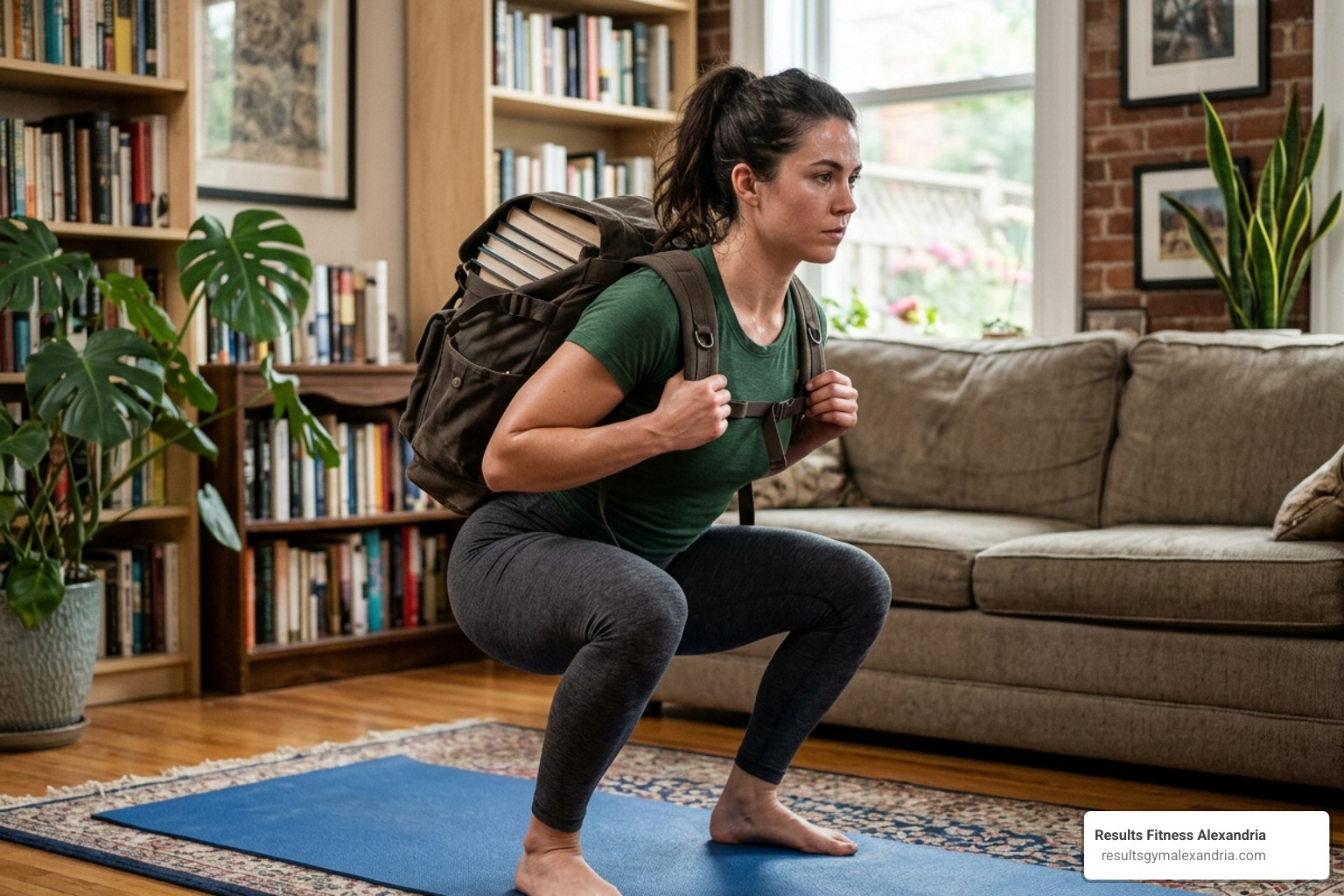
Building muscle, or hypertrophy, isn’t magic—it’s a biological adaptation to stress. Your body doesn’t know if you are holding a $500 chrome dumbbell or a backpack stuffed with heavy textbooks. It only understands tension. To see real results, we must master The Science Of Building Muscle Tips For Effective Strength Training.
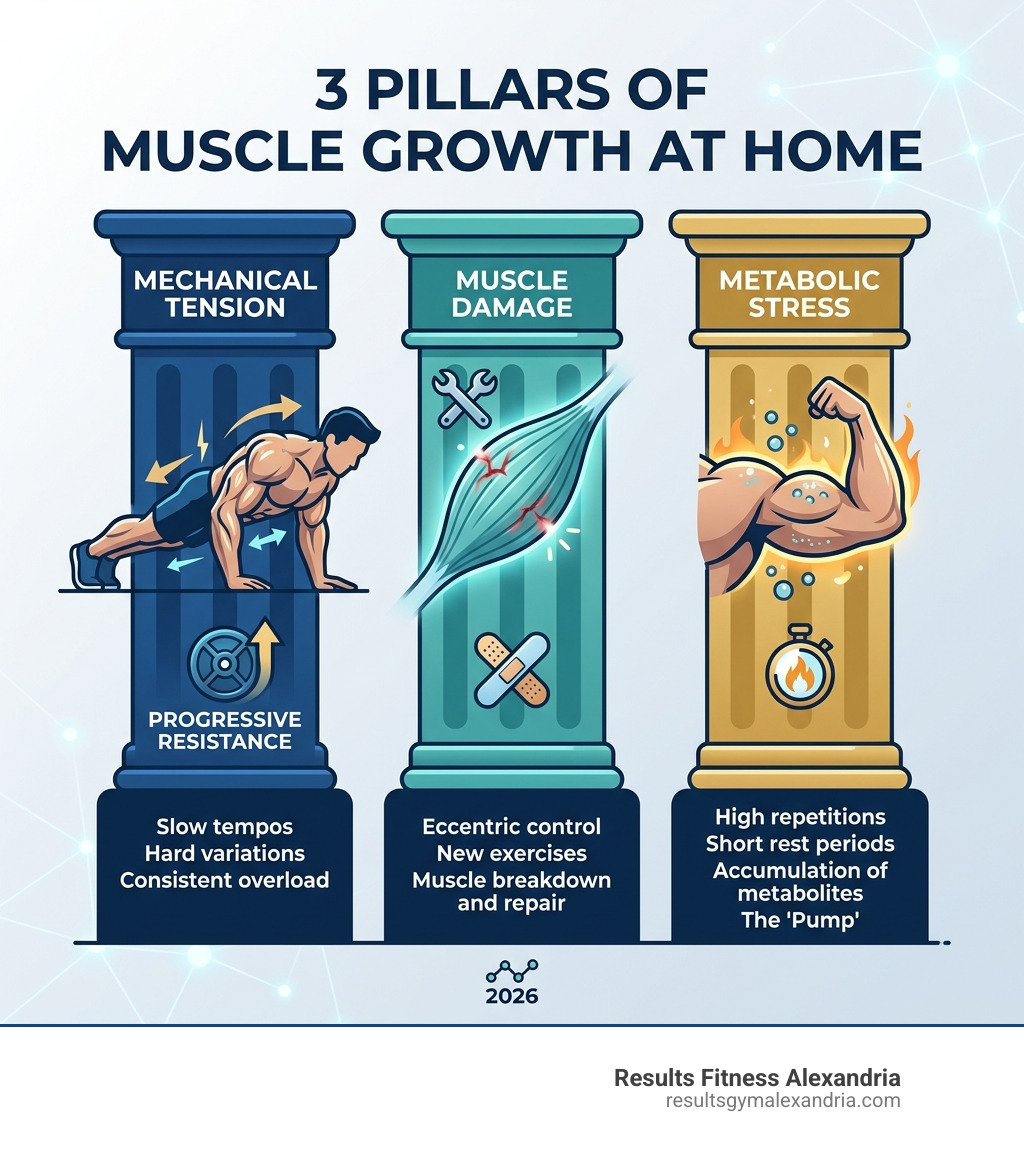
The three primary drivers of muscle growth are mechanical tension, metabolic stress, and muscle damage. In a gym, we often achieve these by simply adding more plates to a bar. At home, we have to be a bit more creative. Scientific research on bodyweight hypertrophy shows that as long as you are pushing your sets close to failure, your body will recruit the same muscle fibers as it would during a heavy bench press.
The secret sauce is The Power Of Progressive Overload How To Keep Getting Stronger. This means you must find ways to make your workouts harder over time. If you do 10 push-ups every day for a year, you’ll get good at those 10 push-ups, but you won’t keep growing. You need to do 11, then 12, or find a harder version of the push-up to keep the adaptation process alive.
Mastering Tempo and Tension
One of the most underutilized tools in a muscle gain workout plan at home is tempo. Most people rush through their reps, using momentum rather than muscle. To build real size, we need to maximize “Time Under Tension.”
When you Master Your Body Weights Workout At Home, focus on these three phases of a rep:
- The Eccentric (Lowering) Phase: This is where the most muscle damage occurs. Instead of dropping down during a squat, count to three on the way down.
- The Isometric Pause: Holding the bottom of a push-up or a lunge for one or two seconds eliminates momentum and forces your muscles to stabilize the weight.
- The Explosive Concentric (Lifting) Phase: Push back up as fast as possible (while maintaining form) to recruit the maximum number of fast-twitch muscle fibers.
Rep Ranges and Proximity to Failure
There is a common myth that you must lift heavy weights for 8–12 reps to build muscle. Modern science, including the Ultimate 4-Week Muscle-Building Workout Plan for More Growth, has debunked this. You can build muscle in almost any rep range—from 5 all the way up to 30—provided you are training close to “technical failure.”
Technical failure is the point where you cannot perform another rep with perfect form. To maximize growth, you should aim for a “Reps in Reserve” (RIR) of 1 or 2. This means you stop a set when you feel like you could only do one or two more “clean” reps if someone had a stopwatch on you. This ensures high motor unit recruitment, which is fancy talk for “getting all your muscle fibers to join the party.”
Essential Equipment and Household Substitutes
You don’t need a five-figure home gym to see results. While having gear helps, we can build Good Strength Training Workouts using items you likely already own.
Improvised Weights for Home Training
If you don’t have dumbbells, look around your house. You’d be surprised how much “gym equipment” is sitting in your pantry or garage.
- The Weighted Backpack: This is the king of home gear. Fill it with books, water bottles, or bags of rice. Wear it for squats, lunges, and push-ups.
- Water Jugs: A gallon of water weighs about 8.3 pounds. Use them for lateral raises, bicep curls, or overhead presses.
- Sturdy Chairs: Use two chairs for tricep dips or use a single chair as a bench for Bulgarian split squats.
- The Broomstick Row: Balance a broomstick or mop handle between two sturdy chairs or tables to perform inverted rows—the perfect bodyweight alternative to a cable row.
- Towel Curls: You can even use a towel on a smooth floor to perform sliding hamstring curls or “lat pulldowns” by sliding your body across the floor.
According to the Build Muscle at Home: 4-Week Bodyweight Workout Plan, using these items effectively removes the “no equipment” excuse and allows for consistent progression.
The Role of Minimalist Gear
If you are willing to spend a small amount of money, a few key pieces of gear can drastically expand your muscle gain workout plan at home.
- Adjustable Dumbbells: These are the most space-efficient way to have a “full rack” at home.
- Resistance Bands: Bands provide “variable resistance,” meaning the exercise gets harder as the band stretches. They are great for simulating cable machines.
- Doorway Pull-up Bar: Pulling movements are the hardest to replicate with bodyweight alone. A pull-up bar is a game-changer for back development.
As noted in the 5 Day At Home Muscle Building Workout, even a single pair of dumbbells can be enough if you utilize unilateral (one-sided) training to double the relative weight your muscles feel.
The Ultimate Muscle Gain Workout Plan at Home
Random acts of exercise lead to random results. To get “jacked,” you need a structured approach. Most successful home trainees use one of three splits:
- Full-Body (3 days/week): Great for beginners or those with limited time. You hit every muscle group every session.
- Upper/Lower (4 days/week): Alternating between upper body and lower body days.
- Push-Pull-Legs (6 days/week): An advanced split where you focus on pushing muscles (chest/shoulders/tris), pulling muscles (back/bis), and legs on separate days.
For most people starting a 30 Day Muscle Building Workout Plan at Home, a 3 or 4-day split is the sweet spot for balancing work and recovery.
Structuring Your Muscle Gain Workout Plan at Home
Every workout should start with compound movements—exercises that use multiple joints and muscle groups. These provide the Benefits Of Strength Training For All Ages by burning more calories and stimulating more hormone release.
A sample “Push” day might look like this:
- Weighted Push-ups: 3 sets of 10-15 reps (Mechanical tension)
- Pike Push-ups (for shoulders): 3 sets of 8-12 reps
- Chair Dips: 3 sets to failure (Metabolic stress)
- Diamond Push-ups: 2 sets as a “finisher”
This structure is effective for everyone, and we provide a Strength Training For Women Complete Guide to show that these principles are universal, regardless of gender.
Tracking Your Muscle Gain Workout Plan at Home
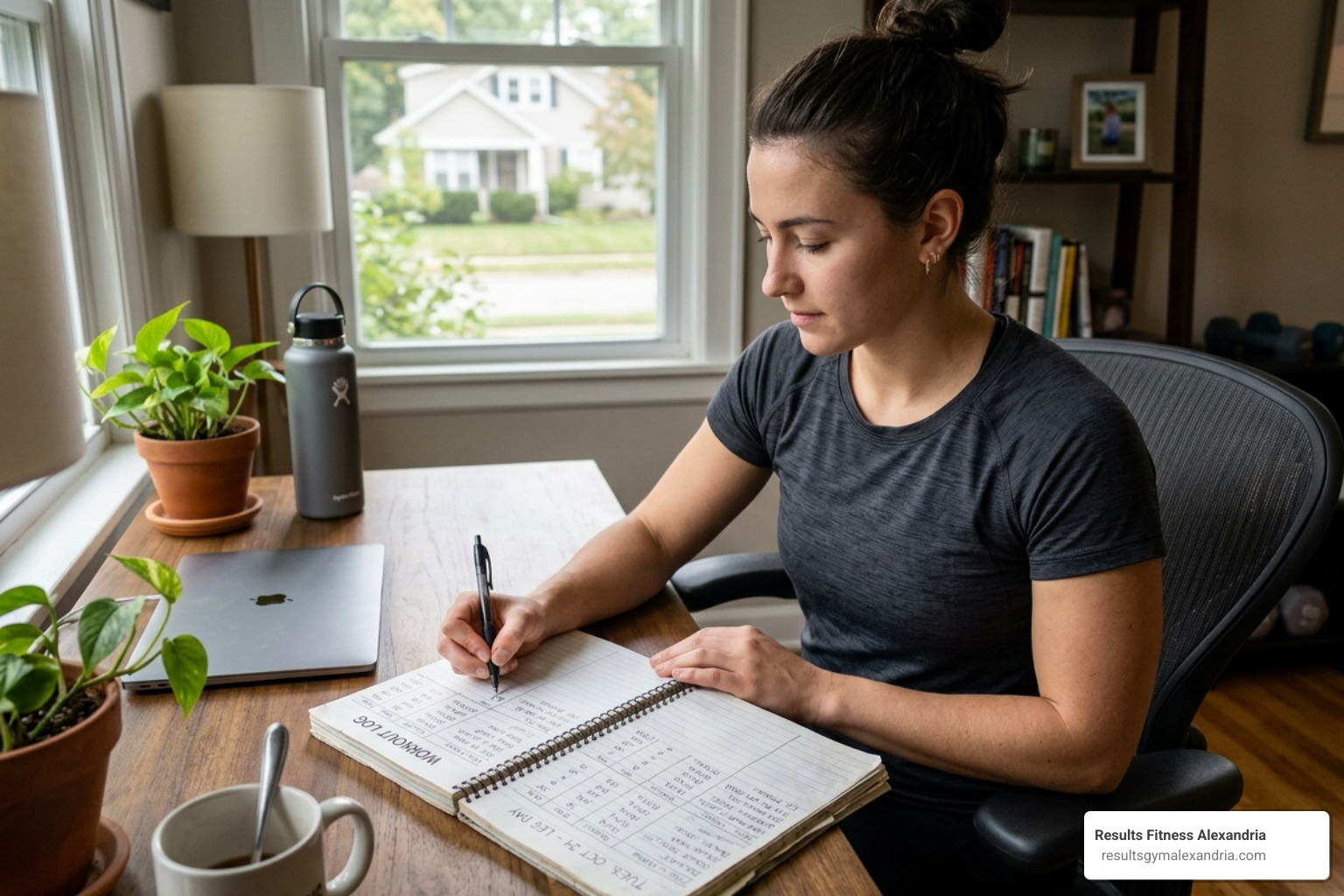
If you don’t track it, it didn’t happen. Use a notebook or an app to record your reps, sets, and the “weight” used (even if it’s just “Backpack + 4 books”).
According to the Build Muscle at Home: 12-Week Overload Plan for Men, you should also track body measurements. The scale can be a liar—muscle is denser than fat. If your waist stays the same but your arms and chest grow by half an inch, you are successfully gaining muscle.
Nutrition and Recovery for Maximum Hypertrophy
You can have the perfect muscle gain workout plan at home, but if you aren’t eating to grow, your body won’t have the building blocks it needs. Think of your workout as the “order” for new muscle, and your food as the “bricks and mortar.”
Fueling the Growth Process
To gain muscle, you generally need to be in a caloric surplus (eating more than you burn). A modest surplus of 200–500 calories above maintenance is usually enough to gain lean tissue without excessive fat gain.
- Protein: This is the most critical macro. Aim for 0.7 to 1 gram of protein per pound of body weight. Good sources include chicken, Greek yogurt, eggs, lentils, and lean beef.
- Carbohydrates: These fuel your intense workouts. Don’t be afraid of rice, potatoes, and oats.
- Fats: Essential for hormone production, including testosterone. Use healthy sources like avocados, nuts, and olive oil.
For those just starting, check out our tips for the Best Beginner Weight Lifting Women and How To Master Your First Weight Lifting Session Without The Stress for more on nutritional basics.
The Importance of Rest and Sleep
Muscle doesn’t grow while you’re working out; it grows while you sleep. During deep sleep, your body releases growth hormone and repairs the micro-tears created during your session.
We often discuss the 10 Benefits Of Strength Training For Women, and improved sleep quality is always at the top of the list. Aim for 7–9 hours of quality sleep. If you are still incredibly sore from a previous workout, it’s okay to take an extra rest day or do “active recovery” like a long walk or light yoga.
Frequently Asked Questions about Home Muscle Building
Can I build serious muscle without any weights?
Yes! The key is using leverage to make exercises harder. If standard push-ups are too easy, move to diamond push-ups. If those are easy, try archer push-ups or decline push-ups (feet on a chair).
| Exercise | Bodyweight Progression (Easier to Harder) |
|---|---|
| Pushing | Wall Push-up > Knee Push-up > Standard > Diamond > Decline > Archer |
| Squatting | Assisted Squat > Air Squat > Goblet Squat (with jug) > Bulgarian Split Squat |
| Pulling | Towel Row > Door Frame Row > Inverted Row > Pull-up |
| Core | Plank > Knee Tucks > Dead Bug > Hollow Body Hold |
How many days per week should I train at home?
For most people, 3 to 5 days per week is ideal. Total beginners should start with 3 days of full-body training to allow for maximum recovery. As you get stronger, you can move to a 4 or 5-day split to increase the total volume (sets/reps) for each muscle group.
How long does it take to see results from a home plan?
If you are consistent with your muscle gain workout plan at home and your nutrition, you will likely see “newbie gains” within the first 4 weeks—this is mostly your nervous system getting better at using your muscles. Visible muscle growth usually takes 8 to 12 weeks of consistent effort.
Conclusion
Building a powerful, muscular physique doesn’t require a commute to a gym or a monthly membership fee. By mastering the principles of progressive overload, focusing on time under tension, and fueling your body with the right nutrients, you can achieve incredible results right in your living room.
However, we know that staying motivated at home can be tough. Sometimes you need the energy of a community and the guidance of an expert to break through a plateau. At Results Fitness Alexandria, we specialize in taking the guesswork out of your training. Whether you want to transition from home workouts to a professional environment or just need a specialized program to follow, we are here to help.
Ready to take your strength to the next level? Start your journey with a professional strength training program at Results Fitness Alexandria. We offer a free 1-day pass so you can explore our amenities and see how our community can support your goals. Come visit us in Alexandria, Virginia, and let’s get to work!