How to Build Muscle with Good Strength Training Workouts
Why Good Strength Training Workouts Are the Foundation of Lasting Fitness
Good strength training workouts are one of the most effective things you can do for your health — whether you’re a complete beginner or getting back into a routine after a long break.
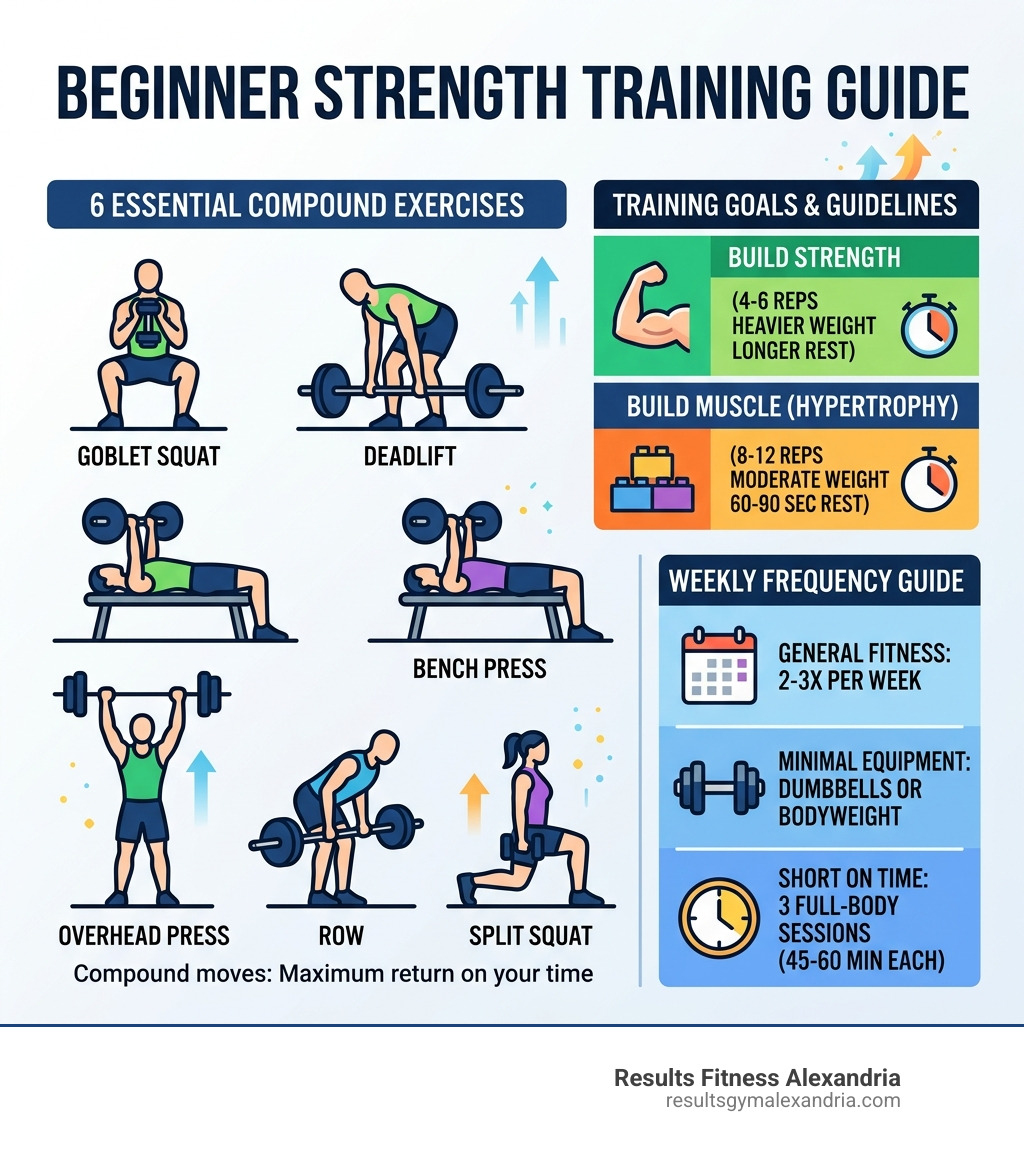
Here’s a quick snapshot of what works:
| Goal | Best Approach |
|---|---|
| Build strength | 4-6 reps, heavier weight, longer rest |
| Build muscle (hypertrophy) | 8-12 reps, moderate weight, 60-90 sec rest |
| General fitness | Full-body routine, 2-3x per week |
| Minimal equipment | Dumbbells or bodyweight compound moves |
| Short on time | 3 full-body sessions per week, 45-60 min each |
The six most effective beginner strength exercises are:
- Goblet squat
- Deadlift
- Bench press
- Overhead press
- Row
- Split squat
These compound movements train multiple muscle groups at once, giving you the most return on your time investment.
Strength training isn’t just for competitive athletes or gym regulars. Research shows that people in the strongest third of the population during midlife are two and a half times more likely to reach their 100th birthday. That’s a compelling reason to start — no matter where you are right now.
The good news? You don’t need a full gym or hours of free time. Even training twice a week with basic equipment can produce real, measurable results — especially in the first few months.
This guide is designed for people who want to start strength training but aren’t sure where to begin. We’ll walk you through the best routines, exercises, and principles — in plain language, no experience required.
I’m Jennifer Rapchak, Fitness Director at Results Fitness Alexandria, and with over 14 years of experience as an ACE-certified personal trainer, I’ve helped hundreds of people discover what good strength training workouts can do for their bodies and their confidence. In the sections ahead, I’ll break down everything you need to build a routine that actually works for your life.
Relevant articles related to good strength training workouts:
The Science and Benefits of Strength Training for Longevity
When we talk about good strength training workouts, we aren’t just talking about looking good in a mirror (though that’s a nice perk). We are talking about biological insurance. As we move through April 2026, the medical community is more aligned than ever: muscle is the organ of longevity.
Research indicates that muscle mass and physical strength are among the top predictors of how long you will live and, more importantly, how well you will live. If you find yourself in the strongest third of the population as you hit midlife, your odds of celebrating your 100th birthday skyrocket by 250%. This isn’t just about adding years to your life; it’s about adding life to your years.
Strength training offers a massive array of Benefits Of Strength Training For All Ages. For younger adults, it builds a metabolic engine that burns more calories at rest. For older adults, it is the primary defense against sarcopenia (age-related muscle loss) and osteoporosis. By placing controlled stress on your bones, lifting weights increases bone mineral density, significantly reducing the risk of fractures later in life.
For the ladies in our Alexandria community, there are specific 10 Benefits Of Strength Training For Women that go beyond the scale. Strength training balances hormones, improves sleep quality, and boosts confidence in ways that cardio alone simply cannot. It also helps prevent common injuries by strengthening the connective tissues around your joints. Think of your muscles as a protective suit of armor for your skeleton.
Finally, let’s not overlook mental well-being. Lifting something heavy and putting it back down has a profound effect on self-esteem and anxiety. There is a unique psychological “win” that comes from realizing you are stronger this week than you were last week.
Core Principles: Progressive Overload and Rep Ranges
If you want to see results, you can’t just do the same thing forever. Your body is incredibly smart; it only changes when it has a reason to. That “reason” is called progressive overload.
In our guide on The Power Of Progressive Overload How To Keep Getting Stronger, we explain that you must gradually increase the stress placed upon your body during exercise. This doesn’t always mean adding more weight to the bar. You can achieve progressive overload by:
- Increasing the weight.
- Performing more repetitions with the same weight.
- Improving your form.
- Reducing rest time between sets.
To understand The Science Of Building Muscle Tips For Effective Strength Training, you need to understand mechanical tension. This occurs when a muscle is stretched while under a heavy load. To maximize this, we often recommend “training close to failure.” This means you should finish your set feeling like you could perhaps do only one or two more reps with perfect form.
Rep Schemes: Strength vs. Hypertrophy
While there is a lot of overlap, we generally categorize rep ranges based on your primary goal:
| Goal | Rep Range | Sets | Rest Period |
|---|---|---|---|
| Max Strength | 1 – 5 | 3 – 5 | 3 – 5 Minutes |
| Hypertrophy (Muscle Growth) | 8 – 12 | 3 – 4 | 60 – 90 Seconds |
| Endurance/Tone | 15+ | 2 – 3 | 30 – 45 Seconds |
A common strategy we use at Results Fitness is “Double Progression.” You pick a rep range, such as 8 to 12. You start with a weight you can do for 8 reps. Over the next few weeks, you work until you can do 12 reps with that same weight. Once you hit 12, you increase the weight and drop back down to 8 reps. It’s a simple, foolproof way to ensure you are always moving forward.
Good Strength Training Workouts for Beginners
Walking into a gym for the first time can feel like walking into a cockpit of a 747—lots of buttons, levers, and people who look like they know exactly what they’re doing. But good strength training workouts for beginners should be the opposite of complicated.
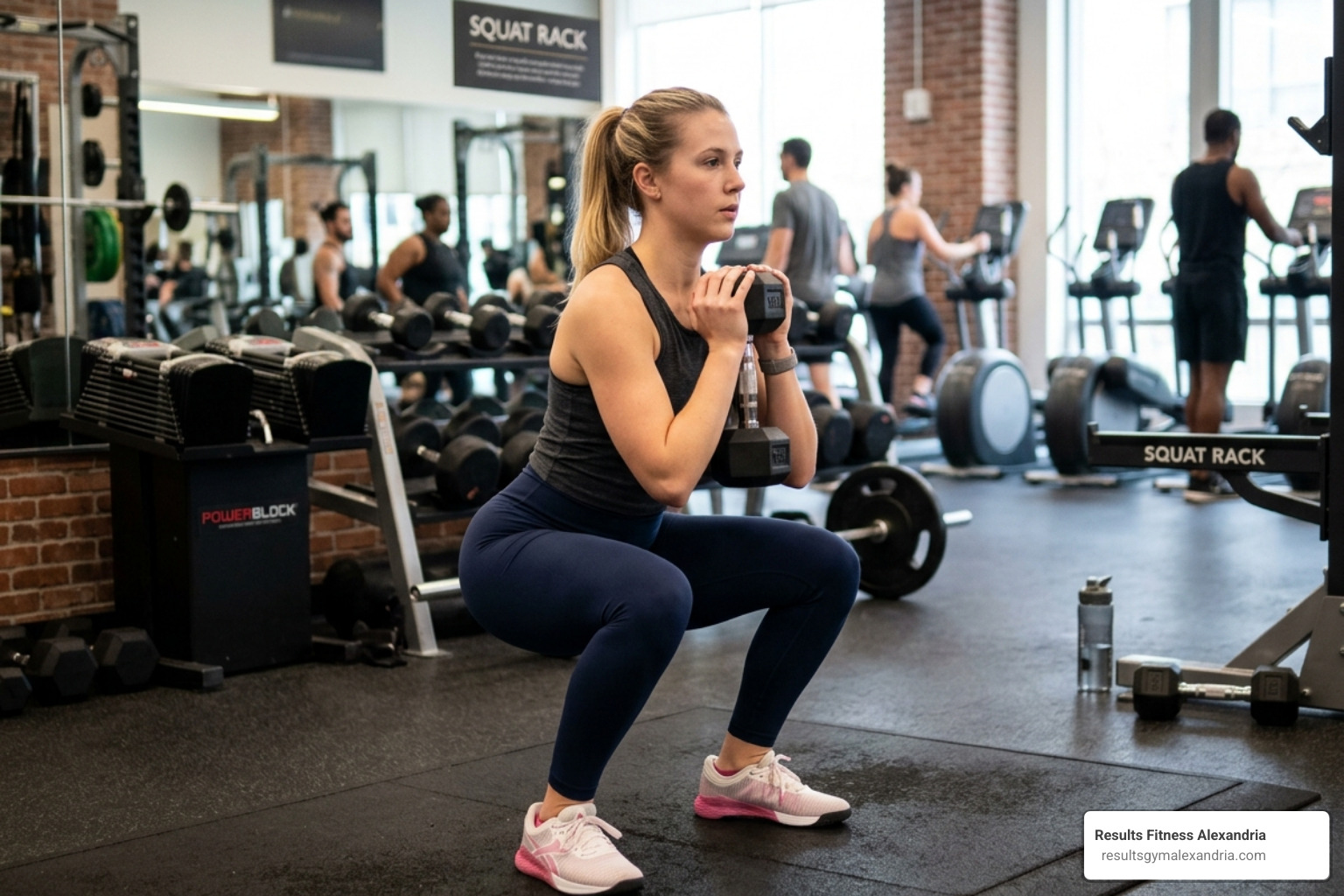
We always recommend starting with a full-body routine. Why? Because it allows you to practice the movements more frequently. If you only train legs once a week, you have 52 chances a year to get better. If you train them three times a week in a full-body split, you have 156 chances.
For women just starting out, check out our guide on Best Beginner Weight Lifting Women. We focus on “functional patterns”—movements that mimic real life. Whether you’re picking up a grocery bag (deadlift) or sitting down in a chair (squat), these exercises make daily life easier. For a structured start, the 1-Day Strength Plan: Workout 1 (Full-Body) | SELF is an excellent resource to see how these moves are sequenced.
Understanding What Is Functional Strength Training A Simple Guide helps you realize that we aren’t just building “show muscles.” We are building a body that moves efficiently and without pain.
Essential Compound Movements for Good Strength Training Workouts
If you only have time for a few exercises, these “Big Six” should be your priority. They provide 90% of the results because they use multiple joints and muscle groups at once.
- Goblet Squat: Hold a dumbbell or kettlebell at your chest. This counterweight actually helps you keep your back straight and sit deeper. It’s the “magic fix” for most squat form issues.
- Deadlift: The king of all exercises. Whether using dumbbells or a barbell, it strengthens your entire posterior chain (back, glutes, hamstrings).
- Bench Press / Chest Press: The primary “push” movement for your chest, shoulders, and triceps.
- Overhead Press: Great for shoulder health and core stability.
- Row: Essential for posture. We spend all day hunched over computers; rows pull our shoulders back where they belong.
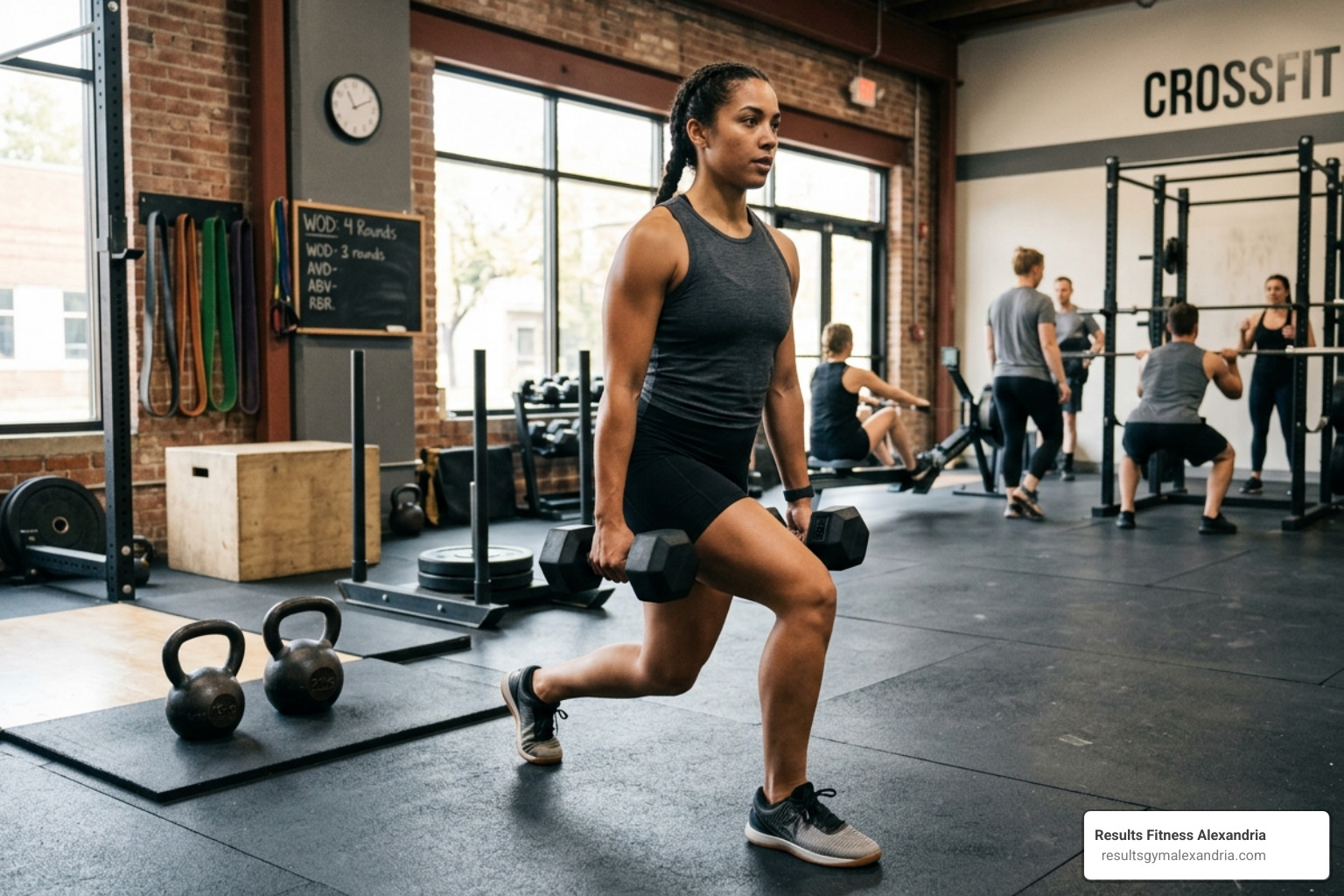
- Split Squat: A single-leg move that fixes imbalances. We all have one leg stronger than the other; this forces the “lazy” leg to do its fair share.
For those looking for a definitive weekly schedule, The PERFECT Full Body Workout Routine (3x/Week: 6 Exercises + 1 Bonus) provides a science-backed template that we often reference for its efficiency.
Minimal Equipment and Home-Based Good Strength Training Workouts
You don’t need a 10,000-square-foot facility to get a good strength training workout. If you are at home in Alexandria and can’t make it to the gym, dumbbells are your best friend.
A Best Full-Body Dumbbell Workout (3-Day Plan) | Legion can be just as effective as a barbell routine for building muscle, especially for beginners and intermediates. Dumbbells allow for a greater range of motion and are generally safer for your joints.
If you have zero equipment, don’t panic. You can use:
- Bodyweight: Push-ups, lunges, and planks are foundational.
- Household Items: Gallon jugs of water or backpacks filled with books.
- Chairs: Use a sturdy chair for “sit-to-stands” or tricep dips.
Our resource on Beginner Weight Training For Women highlights how to transition from bodyweight to weights safely. Your muscles don’t know the difference between a $500 barbell and a heavy bag of mulch—they only know tension.
Programming for Success: Frequency and Recovery
How often should you train? The “sweet spot” for most people is three full-body workouts per week. This provides enough stimulation to trigger growth but allows 48 hours of recovery between sessions.
In our Strength Training Programs Complete Guide, we break down the differences:
- Beginners: 2-3 days per week (Full Body).
- Intermediates: 3-4 days per week (Upper/Lower Split).
- Advanced: 4-6 days per week (Push/Pull/Legs).
However, the workout is only half the battle. You don’t get stronger at the gym; you get stronger resting after the gym.
The Pillars of Recovery
- Protein Intake: Aim for 1.6 to 2.2 grams of protein per kilogram of body weight. This provides the “bricks” to rebuild the muscle fibers you broke down during your workout.
- Sleep: This is when your body releases growth hormones. Aim for 7-9 hours. If you’re underslept, even the best workout will fail to produce results.
- Hydration: Muscles are about 75% water. Even slight dehydration can drop your strength levels significantly.
- Active Recovery: On your off days, don’t just sit on the couch. Maximizing Results Integrating Strength Training Into Your Cardio Routine suggests that light movement, like walking or “Zone 2” cardio, actually speeds up recovery by pumping blood (and nutrients) to your sore muscles.
Specialized Training: Athletes, Runners, and Over 40s
Good strength training workouts look different depending on your hobbies and your age.
For Runners
Many runners fear that lifting weights will make them “bulky” and slow. This is a myth. Strength training adds lean muscle that improves running economy—meaning you use less oxygen to run at the same speed. Focus on single-leg stability and core work to prevent the “runner’s knee” and shin splints that plague so many athletes.
For Intermediates
Once you’ve been lifting for 6-12 months, you might hit a plateau. This is when you need a more structured approach like Growing Strong: The Ultimate 8 Week Workout for Intermediates. At this stage, we start introducing more volume and specialized exercises to target weak points.
For the Over 40 Crowd
After age 40, our metabolism naturally slows and muscle mass begins to decline. It’s a “use it or lose it” situation. However, fitness over 40 is a whole new ball game. We need to prioritize joint health and recovery more than we did in our 20s.
Strength training is actually the best tool for fat loss in this age group. Beyond Cardio Beginner Weight Lifting For Womens Fat Loss explains that muscle is metabolically expensive—it takes energy just to maintain it, which helps keep the weight off more effectively than hours on a treadmill.
Frequently Asked Questions about Good Strength Training Workouts
How long does it take to see results from good strength training workouts?
You’ll actually feel results before you see them. In the first 2-4 weeks, your “neurological adaptations” kick in. Your brain gets better at talking to your muscles, so you’ll feel significantly stronger even if you don’t look different yet. Actual muscle growth (hypertrophy) usually takes 6-8 weeks of consistent training to become visible.
Are bodyweight exercises as effective as gym machines?
They can be! The “best” tool is the one that allows you to reach that point of near-failure safely. Gym machines are great for isolating muscles without needing much balance, while bodyweight and functional moves build “real-world” stability. Check out The Benefits Of Functional Fitness Why Its More Than Just A Workout for more on why we love a mix of both.
How often should I change my strength training routine?
Stop “confusing” your muscles. They aren’t confused; they’re just annoyed that you won’t let them get good at one thing. We recommend sticking to a program for at least 8-12 weeks. This gives you enough time to master the movements and apply progressive overload. If you change your routine every week, you can’t track if you’re actually getting stronger.
Is “No Pain, No Gain” true?
Not necessarily. While you should feel challenged, sharp pain is a red flag. Muscle soreness (DOMS) is normal, especially when starting, but you don’t need to be crippled by soreness to have had a “good” workout. In fact, if you’re so sore you can’t train for a week, you’ve actually hindered your progress.
Conclusion
Building a stronger version of yourself doesn’t require a miracle—it just requires a plan and a bit of consistency. Whether you are using a chair in your living room or the specialized equipment at our facility, the principles of good strength training workouts remain the same: move well, challenge yourself, and give your body the fuel and rest it needs to rebuild.
At Results Fitness Alexandria, we pride ourselves on being more than just a place with weights. We are a community of coaches and members dedicated to helping each other reach those longevity goals. Whether you’re interested in personal training, our diverse fitness classes, or even need childcare while you work on your health, we have you covered.
Ready to see what you’re capable of? We invite all fitness levels in the Alexandria, Virginia area to come in and experience our community firsthand. We offer a free 1-day pass so you can explore our Amenities/Strength Training and see if we’re the right fit for your journey.
Stop wondering “what if” and start building the strength you’ll need for the next 50 years. We’ll see you on the gym floor!