Your Fitness Blueprint: Integrating Cardio, Strength, Flexibility, and Balance
Why Cardio, Strength, Flexibility, and Balance Matter for Your Health
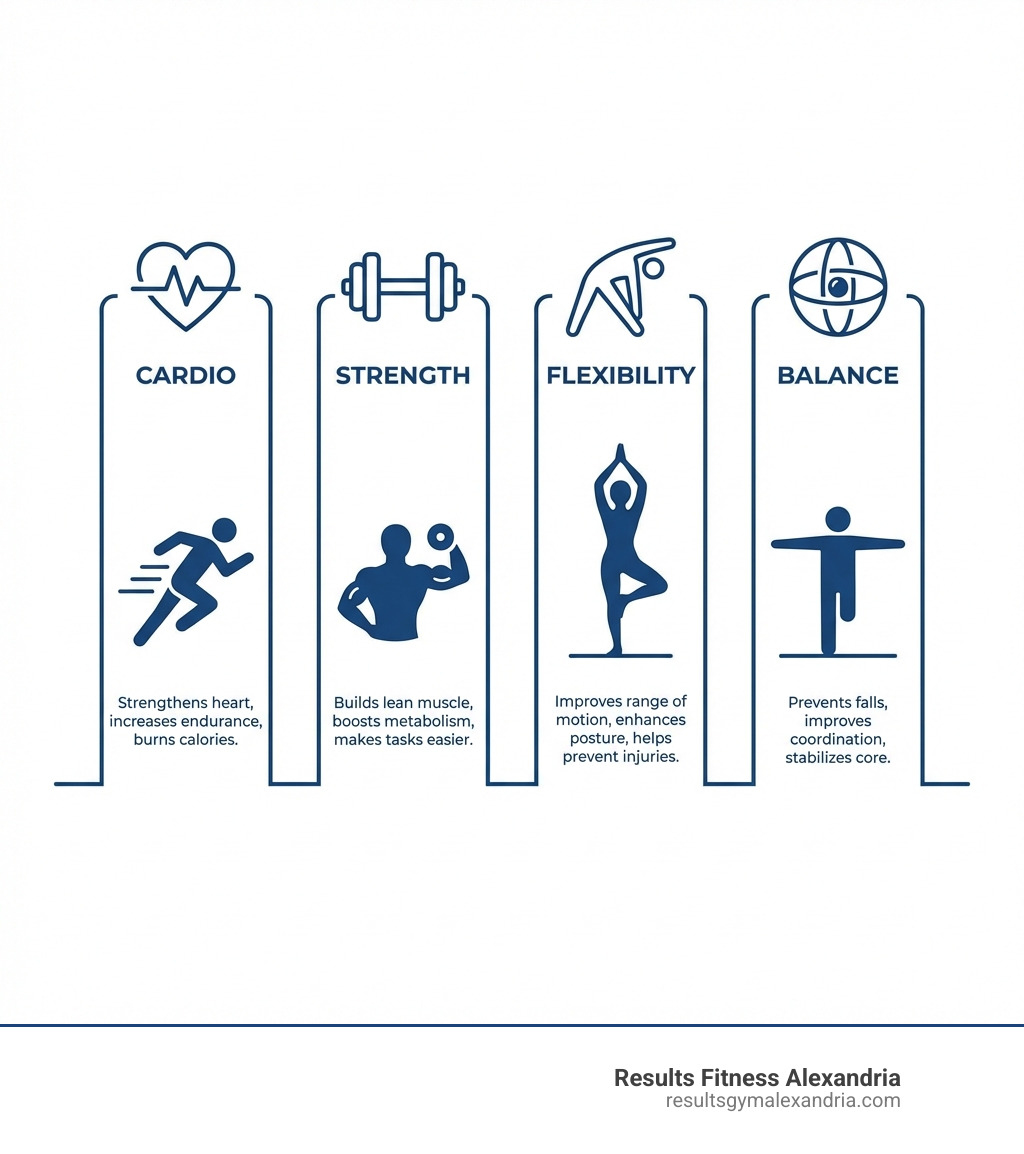
Cardio strength flexibility balance are the four essential pillars of a complete fitness program. Here’s what each one does for you:
- Cardio (Aerobic Fitness): Strengthens your heart and lungs, increases endurance, burns calories, and improves mood
- Strength Training: Builds lean muscle, boosts metabolism, increases bone density, and makes daily tasks easier
- Flexibility: Improves range of motion, reduces muscle soreness, improves posture, and helps prevent injuries
- Balance: Prevents falls, improves coordination, stabilizes your core, and becomes increasingly important as you age
Most people tend to focus on just one type of exercise—maybe you love running, or you stick to the weight room, or you only do yoga. But research shows that relying on a single type of exercise limits your overall health benefits. Your body needs all four components working together to function at its best.
Think of it like a four-legged table. Remove one leg, and the whole thing becomes unstable. The same is true for your fitness. Cardio without strength training can lead to muscle loss. Strength training without flexibility work can leave you stiff and injury-prone. And neglecting balance exercises means you’re missing out on crucial stability that protects you from falls and supports every movement you make.
The good news? Building a balanced routine is simpler than you think. You don’t need hours at the gym every day or complicated equipment. You just need a basic understanding of how much of each component your body needs and how to fit them into your week.
I’m Jennifer Rapchak, Fitness Director at Results Fitness Alexandria with over 14 years of experience helping people build sustainable fitness routines. Throughout my career, I’ve seen how integrating cardio, strength, flexibility, and balance transforms not just how people look, but how they feel and function in their daily lives.
Quick cardio strength flexibility balance definitions:
The “Why”: Synergistic Benefits of a Balanced Routine
At Results Fitness Alexandria, we believe that understanding why each component of fitness is important is the first step toward embracing a truly holistic approach to your health. These four pillars – cardio, strength, flexibility, and balance – aren’t just individual exercises; they’re interconnected systems that support and improve one another. Imagine a symphony where each instrument plays a vital role; remove one, and the harmony is lost. Our bodies work much the same way.
When we integrate cardio strength flexibility balance into our fitness plan, we open up synergistic benefits that go far beyond what any single type of exercise can offer. For instance, improved flexibility improves our range of motion during strength training, allowing for deeper squats or more effective presses, which in turn builds more functional strength. This increased strength and muscular efficiency can then reduce cardiac strain during exertion, meaning our heart works smarter, not necessarily harder, during cardiovascular activities. This creates a powerful feedback loop, improving our overall physical well-being and daily function. The science behind a well-rounded routine, as highlighted by resources like the Mayo Clinic, emphasizes that combining these elements is key to optimizing our body’s capabilities. For a deeper dive into how functional fitness benefits our everyday lives, check out The Benefits of Functional Fitness: Why It’s More Than Just a Workout.
The Power of Cardio (Aerobic Fitness)
Cardiovascular (or aerobic) exercise is often the first thing people think of when they hear “fitness,” and for good reason! It’s any activity that gets our heart rate up and keeps it liftd for an extended period, making our heart beat faster and our cells use oxygen for fuel. This vital work strengthens our heart and lungs, boosting their function, strength, and efficiency.
The primary benefits of cardiovascular exercise are extensive:
- Heart Health: Regular cardio makes our heart a more efficient pump, reducing the risk of heart disease, lowering blood pressure, and improving cholesterol levels. This physiological impact of aerobic exercise is crucial for long-term health.
- Lung Capacity: Our lungs become more adept at taking in oxygen and expelling carbon dioxide, improving overall respiratory function.
- Increased Endurance: We’ll find ourselves able to sustain physical activity for longer periods, whether it’s running a 5K or keeping up with our kids. This is why cardio is so integral for Cardio Exercise for Stamina.
- Calorie Burn: Cardio is an excellent way to burn calories, supporting weight management and fat loss efforts.
- Mood Improvement: Beyond the physical, cardio releases endorphins, those wonderful “feel-good” hormones that can reduce stress, alleviate anxiety, and boost our overall mood.
The Foundation of Strength Training
While cardio gets our hearts pumping, strength training builds the very framework of our physical ability. This type of anaerobic exercise uses resistance to challenge our muscles, leading to microscopic tears that heal stronger and denser. It’s not just about building bulk; it’s about creating a body capable of performing daily activities with ease and efficiency.
The profound benefits of strength training include:
- Building Lean Muscle: More muscle mass means a stronger, more capable body. This is essential for everyday tasks, from carrying groceries to climbing stairs. This is the essence of What is Functional Strength Training? A Simple Guide.
- Boosting Metabolism: Muscle tissue burns more calories at rest than fat tissue. By increasing our muscle mass, we effectively raise our resting metabolic rate, meaning we burn more calories even when we’re not actively exercising.
- Increasing Bone Density: Strength training puts stress on our bones, which signals them to become stronger and denser. This is crucial for preventing osteoporosis, especially as we age.
- Injury Prevention: Stronger muscles provide better support for our joints, reducing the risk of strains, sprains, and other injuries.
- Making Daily Tasks Easier: Think about how much easier tasks like lifting heavy boxes, getting up from a chair, or playing with pets become when our muscles are strong and resilient.
Aerobic and resistance training complement each other beautifully. While cardio improves heart efficiency, strength training reduces the peripheral vascular resistance our heart has to work against, improving overall circulation. This synergistic relationship leads to improved cardiac workload tolerance and sustained cardiovascular health.
The Unsung Hero: Flexibility
Flexibility training is often overlooked, perceived as less exciting than the sweat-inducing intensity of cardio or the muscle-building gains of strength training. Yet, it is a crucial component of a balanced fitness routine, acting as the unsung hero that keeps our bodies moving smoothly and pain-free. Flexibility is the ability of our joints to move through their full range of motion.
The crucial benefits of incorporating flexibility into our routine are:
- Improved Range of Motion: This allows our joints to move freely, making everyday movements and other exercises more effective and less restrictive.
- Reduced Muscle Soreness: Regular stretching can help alleviate post-workout stiffness and discomfort, contributing to faster recovery.
- Better Posture: By lengthening tight muscles and strengthening opposing ones, flexibility training can correct postural imbalances, helping us stand taller and reduce back pain.
- Stress Relief: Many flexibility exercises, like yoga, encourage deep breathing and mindfulness, offering profound benefits for mental well-being and stress reduction. It’s a wonderful way to connect with our bodies and find a moment of calm.
- Injury Reduction: Tight muscles are more prone to injury. By improving flexibility, we can decrease the likelihood of muscle pulls, strains, and other common exercise-related injuries.
To learn more about how specific practices can help, explore How Yoga Can Help Improve Your Flexibility.
The Stabilizer: Balance Training
Balance training is another vital, yet frequently neglected, aspect of fitness, especially as we age. It involves maintaining our body’s stability, whether we’re standing still or moving. Good balance relies on a complex interplay between our inner ear, eyes, muscles, and joints.
The critical role balance training plays in our physical ability and injury prevention includes:
- Fall Prevention: This is perhaps its most crucial benefit, particularly for older adults. As we age, our balance can naturally decline, making us more susceptible to falls and associated fractures. Regular balance exercises significantly reduce this risk.
- Improved Coordination: Balance training improves the communication between our brain and muscles, leading to smoother, more coordinated movements in all aspects of life.
- Proprioception: This is our body’s ability to sense its position in space. Balance exercises sharpen this sense, allowing us to react more quickly and effectively to uneven surfaces or unexpected movements.
- Core Stability: Many balance exercises engage our core muscles, which are essential for supporting our spine and connecting our upper and lower body movements. A strong core is fundamental for good balance.
- Importance for Aging: Maintaining good balance allows us to continue participating in activities we love, preserving our independence and quality of life for longer. The benefits of strength training for all ages, including improved balance, are discussed in more detail here: Benefits of Strength Training for All Ages.
Crafting Your Weekly Blueprint: How to Combine Cardio, Strength, Flexibility, and Balance
Now that we understand the profound importance of each pillar, how do we weave cardio strength flexibility balance into a practical, sustainable fitness plan? It’s simpler than you might think. The key is consistency over intensity, especially when starting out, and always listening to your body. Our goal at Results Fitness Alexandria is to help you create a routine that feels good, is effective, and fits seamlessly into your life.
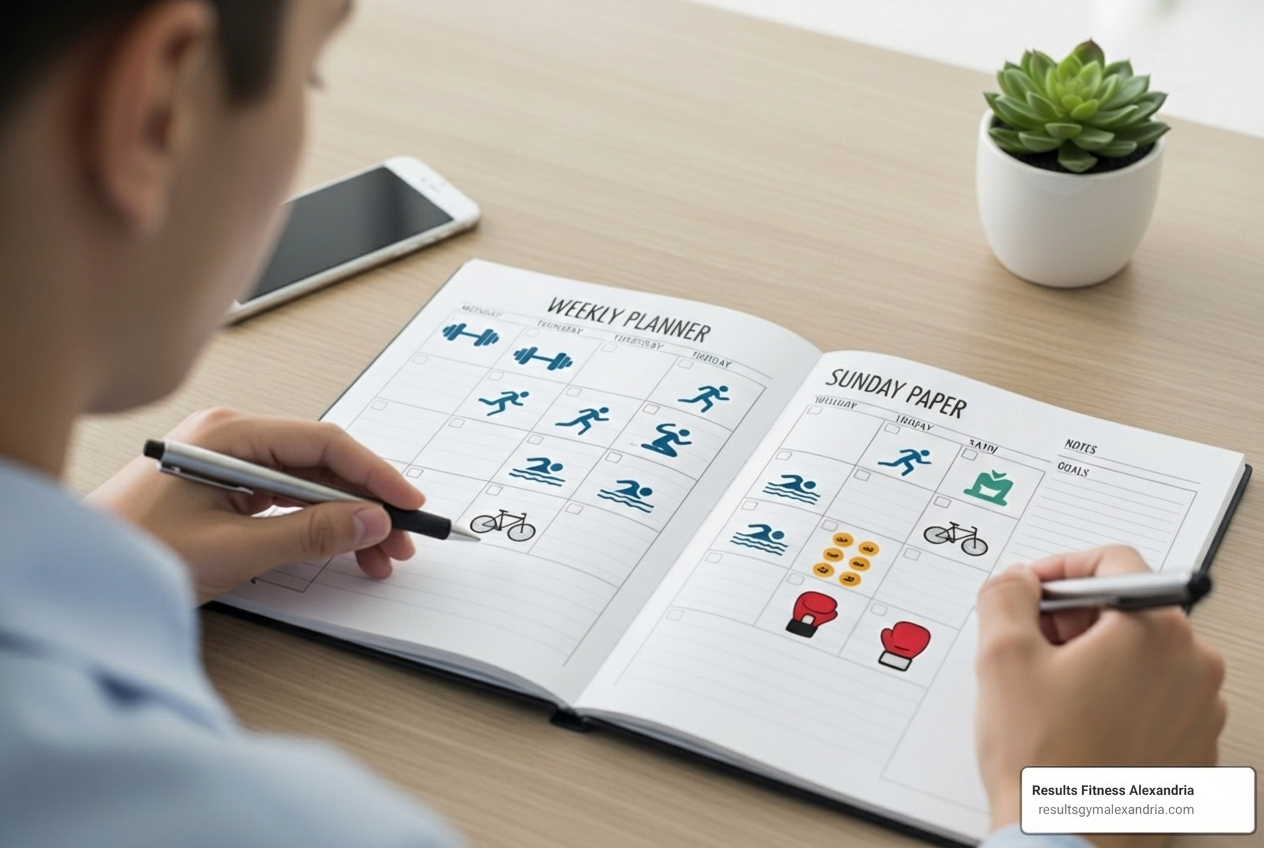
Creating a sustainable plan means finding activities you enjoy and gradually building up your capacity. Any amount of physical activity is better than none. For more guidance on integrating these components, refer to How to Create a Balanced Fitness Routine: Combining Cardio, Strength, and Flexibility.
Recommended Frequencies and Durations
The Department of Health and Human Services, along with organizations like the American College of Sports Medicine (ACSM) and the CDC, provide clear guidelines for adults to achieve optimal health benefits from physical activity. These recommendations serve as an excellent starting point for building our balanced routine:
- Cardio (Aerobic Activity): Aim for at least 150 minutes of moderate-intensity aerobic activity or 75 minutes of vigorous-intensity aerobic activity per week, or a combination of both. This should be spread throughout the week. For weight loss, some recommendations suggest aiming for at least 300 minutes of moderate activity per week. Activities like brisk walking, cycling, swimming, or jogging are excellent choices.
- Strength Training: Engage in strength training for all major muscle groups at least two days per week. This means working our shoulders, chest, back, arms, core, calves, thighs, and glutes. We should ensure adequate rest (48-72 hours) for each muscle group between sessions to allow for recovery and growth.
- Flexibility: Engage in a stretching routine at least two to three times per week, though daily stretching is even better. Hold each stretch for at least 30 seconds.
- Balance: Aim for about three sessions of balance exercises a week.
For comprehensive guidelines, the CDC physical activity recommendations for adults are an invaluable resource.
A Sample Week of Cardio, Strength, Flexibility, and Balance
Here’s a sample schedule to illustrate how you might integrate all four components throughout your week. This is a template; adjust it to fit your lifestyle, preferences, and energy levels.
| Day | Focus | Example Activities | Duration |
|---|---|---|---|
| Monday | Full Body Strength + Flexibility | Full-body resistance training (e.g., squats, push-ups, rows, lunges) followed by 10-15 min static stretching. | 45-60 min Strength, 10-15 min Flexibility |
| Tuesday | Moderate Cardio + Balance | Brisk walk, light jog, or cycling. Follow with 5-10 min balance exercises (e.g., single-leg stands). | 30-45 min Cardio, 5-10 min Balance |
| Wednesday | Upper Body Strength + Flexibility | Resistance training focused on chest, back, shoulders, arms, followed by 10-15 min static stretching. | 45-60 min Strength, 10-15 min Flexibility |
| Thursday | Moderate Cardio + Balance | Swimming laps or elliptical. Follow with 5-10 min balance exercises (e.g., heel-to-toe walk). | 30-45 min Cardio, 5-10 min Balance |
| Friday | Lower Body Strength + Flexibility | Resistance training focused on glutes, quads, hamstrings, calves, followed by 10-15 min static stretching. | 45-60 min Strength, 10-15 min Flexibility |
| Saturday | Active Recovery / Long Cardio | Yoga class, long walk, or light hike. Incorporate balance exercises throughout the activity. | 45-60 min |
| Sunday | Rest / Light Flexibility | Complete rest or gentle stretching/foam rolling. | Variable |
Example Exercises for Your Routine
To help you get started, here are some practical examples for each component of cardio strength flexibility balance:
-
Cardio Examples:
- Brisk Walking: A fantastic low-impact option that can be done almost anywhere.
- Cycling: Whether outdoors or on a stationary bike, it’s great for endurance.
- Swimming: A full-body workout that’s easy on the joints.
- Jogging/Running: A classic for building cardiovascular endurance.
- High-Intensity Interval Training (HIIT): Short bursts of intense activity followed by brief recovery periods. This can be done with exercises like burpees, jumping jacks, or high knees.
-
Strength Examples:
- Squats: Bodyweight or with weights, targeting glutes and quads.
- Push-ups: Bodyweight exercise for chest, shoulders, triceps.
- Rows: Using dumbbells, resistance bands, or a machine to work the back and biceps.
- Lunges: Bodyweight or with weights, for legs and glutes.
- Planks: Excellent for core strength.
-
Flexibility Examples:
- Cat/Cow: A gentle spine mobility exercise.
- Kneeling Hip Flexor Stretch: Targets often-tight hip flexors.
- Hamstring Stretch: Seated or standing, reaching for your toes.
- Shoulder and Chest Stretches: Essential for desk workers.
- Yoga: A holistic practice combining flexibility, strength, and balance.
-
Balance Examples:
- Standing on One Foot: Start holding onto support, then progress to free standing.
- The Heel-to-Toe Walk: Walking heel directly in front of toe, like on a tightrope.
- Tai Chi: A “moving meditation” that involves slow, precise movements, greatly improving balance.
- Single-Leg Deadlifts (without weight initially): Combines balance with strength.
- Using a Wobble Board: For a more advanced challenge.
Personalizing Your Plan and Avoiding Common Pitfalls
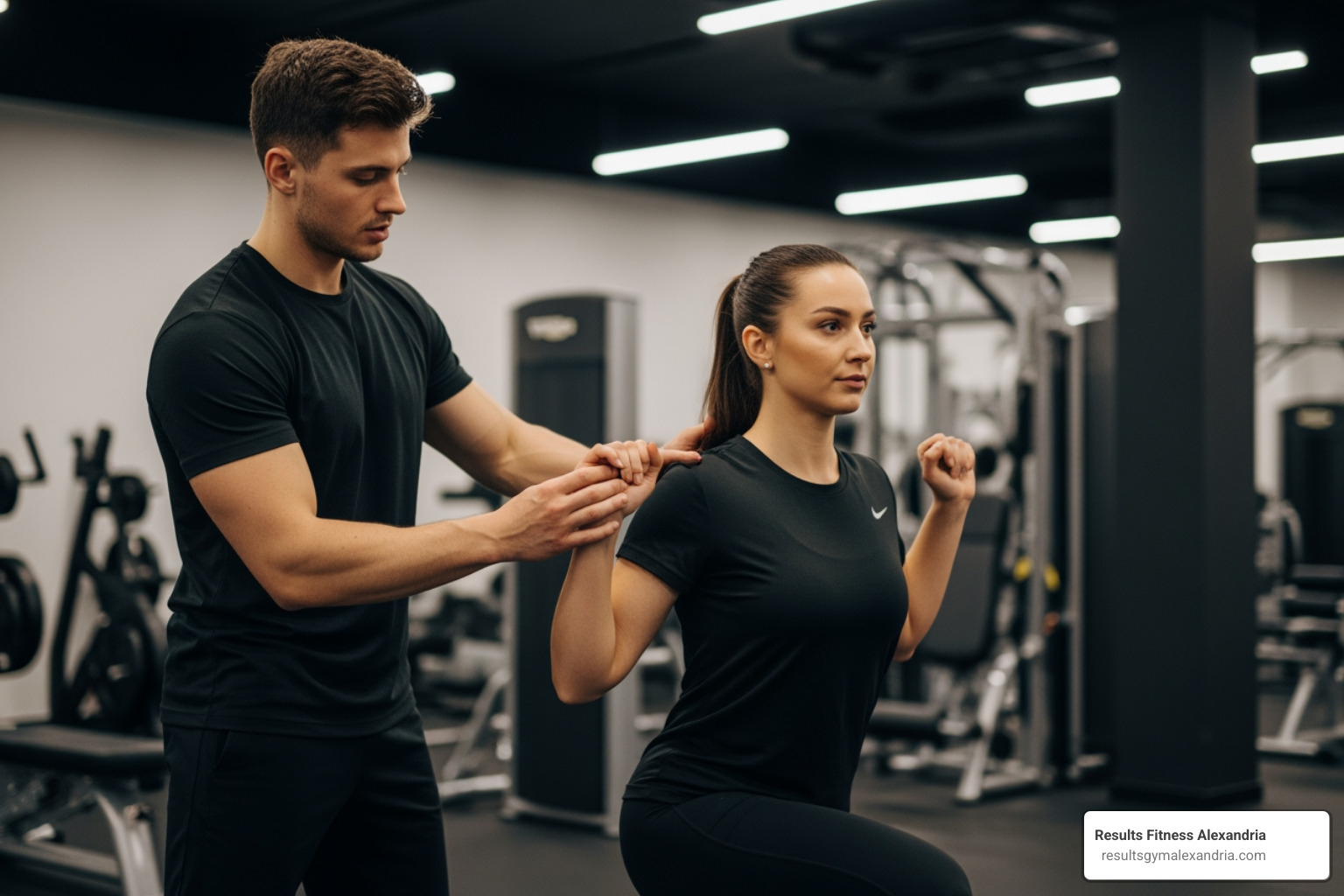
While the general guidelines for cardio strength flexibility balance are universal, your specific fitness blueprint should be as unique as you are. Personalizing your plan based on individual needs, goals, and current fitness levels is crucial for long-term success and enjoyment. This means starting slowly, especially if you’re new to exercise or returning after a break, and progressively overloading your body as it adapts. Our certified personal trainers at Results Fitness Alexandria excel at helping clients tailor their routines. For beginners, resources like our Cardio Endurance Training: Beginner’s Guide can be invaluable.
Tailoring for Your Fitness Level
Whether you’re just beginning your fitness journey or you’re a seasoned athlete, your plan needs to evolve with you.
- Beginner Modifications: If you’re new, don’t try to copy advanced routines you see online exactly. Start with bodyweight exercises for strength training, like squats without weights or knee push-ups. For cardio, begin with brisk walking and gradually increase duration or intensity. Use lighter resistance bands for strength moves. For balance, hold onto a wall or chair during single-leg stands. The goal is to build a solid foundation and ensure proper form before adding complexity or intensity.
- Advanced Techniques: Once you’ve mastered the basics, you can apply principles of progressive overload. This means gradually increasing the weight, resistance, reps, sets, or duration of your exercises. For cardio, this might mean incorporating High-Intensity Interval Training (HIIT) or extending your runs. For strength, it’s about lifting heavier or trying more complex movements. For flexibility, exploring deeper stretches or advanced yoga poses can be beneficial. Women, in particular, can greatly benefit from a structured strength program, as detailed in our Strength Training for Women: Complete Guide.
Common Mistakes to Avoid
Even with the best intentions, it’s easy to fall into common fitness traps. Being aware of these can help us stay on track and prevent setbacks:
- Skipping Warm-ups or Cooldowns: Warm-ups prepare our body for activity, activating muscles and increasing blood flow. Cooldowns help bring our heart rate, body temperature, and blood pressure back to normal. Skipping these can increase injury risk and hinder recovery.
- Neglecting One of the Four Pillars: As we’ve discussed, focusing solely on cardio or strength, or overlooking flexibility and balance, creates an imbalance that can lead to plateaus, injuries, and a less functional body.
- Overtraining: More isn’t always better. Pushing ourselves too hard without adequate rest can lead to fatigue, decreased performance, increased injury risk, and even weakened immunity. Listen to your body – if you’re feeling constantly drained or sore, it might be a sign to scale back or take a rest day.
- Poor Form: Rushing through movements, lifting heavier than we’re ready for, locking our knees, or rounding our back during exercises are common mistakes that can lead to injury. Always prioritize proper form over heavy weights or speed. Watching ourselves in a mirror can be very helpful!
- Not Listening to Your Body: Our body sends us signals. Ignoring pain, fatigue, or discomfort is a recipe for injury and burnout. Adjust your plan as needed, and don’t be afraid to take a rest day or modify a workout.
Fueling Your Fitness: Nutrition and Recovery
Our fitness journey doesn’t end when we step off the gym floor. What we do outside of our workouts, particularly concerning nutrition and recovery, plays an equally crucial role in maximizing our results and sustaining our energy for cardio strength flexibility balance.
- Hydration: Water is essential for every bodily function, including regulating body temperature, lubricating joints, and transporting nutrients. Staying well-hydrated before, during, and after exercise is non-negotiable.
- Macronutrients: A well-balanced diet rich in carbohydrates, proteins, and healthy fats provides the energy our body needs to perform and recover.
- Carbohydrates are our primary fuel source for energy during workouts.
- Proteins are vital for muscle repair and growth. After a strength-based session, consuming a mix of protein and carbs helps our muscles recover and reduces soreness.
- Healthy fats support hormone production and overall health.
- Importance of Protein for Muscle Repair: For strength-based sessions, a pre-workout snack like a banana with nuts or toast with peanut butter can provide quick energy. Post-workout, aim for a combination of protein and carbohydrates, such as eggs with whole grains, yogurt with fruit, or paneer with vegetables, to kickstart muscle recovery.
- Rest Days: Our muscles don’t grow during workouts; they grow during rest. Scheduling dedicated rest days allows our bodies to repair, rebuild, and adapt.
- Active Recovery: On rest days, light physical activity like a gentle walk, yoga, or stretching can promote blood flow, reduce muscle soreness, and aid in recovery without adding stress. For more comprehensive recovery strategies, check out 10 Post Workout Recovery Tips to Maximize Results.
Frequently Asked Questions about a Balanced Fitness Routine
How often should I incorporate each type of exercise?
A general guideline for most healthy adults is to aim for:
- Cardio: 3-5 sessions per week, totaling 150 minutes of moderate-intensity or 75 minutes of vigorous-intensity activity.
- Strength Training: 2-3 sessions per week, targeting all major muscle groups, with 48-72 hours of rest between working the same muscle groups.
- Flexibility: Daily short sessions (5-10 minutes) or at least 2-3 times per week for longer sessions (10-15 minutes), ideally when muscles are warm.
- Balance: Around 3 sessions per week, which can often be integrated into your flexibility or strength workouts.
However, these are starting points. Your personal goals, current fitness level, and schedule should always guide adjustments.
Can I combine cardio and strength training in the same workout?
Absolutely, and it’s highly recommended! This approach, often called concurrent training, offers synergistic benefits for overall fitness. You can combine them in several ways:
- Alternating Days: Dedicate separate days to cardio and strength.
- Mixed Sessions: Perform both in one workout. For example, you could do 15-20 minutes of cardio as a warm-up, followed by strength training, and then finish with a shorter cardio burst. The sequencing can depend on your primary goal: if endurance is key, do cardio first; if strength gains are paramount, do strength first.
- High-Intensity Interval Training (HIIT): Many HIIT workouts effectively blend cardio and strength by rapidly transitioning between exercises like burpees, jump squats, and mountain climbers, keeping your heart rate liftd while challenging your muscles.
Combining these modalities can improve both cardiovascular endurance and muscular strength, leading to a more efficient and resilient body. To learn more about optimizing this approach, read Maximizing Results: Integrating Strength Training into Your Cardio Routine.
What if I have a health condition or am new to exercise?
If you have a health condition (such as heart disease, diabetes, or joint issues) or are entirely new to exercise, it is crucial to proceed with caution and professional guidance.
- Consult a Healthcare Provider: Always start by discussing your fitness plans with your doctor. They can provide clearance and specific recommendations or limitations based on your health status.
- Start Slowly: Begin with low-intensity activities and gradually increase duration, intensity, or resistance. This allows your body to adapt safely and minimizes the risk of injury. For example, start with short brisk walks instead of running, or bodyweight exercises instead of heavy lifting.
- Seek Professional Guidance: Consider working with a certified personal trainer, especially at Results Fitness Alexandria. Our trainers can assess your current fitness level, understand any health concerns, and design a safe, effective, and personalized fitness plan that integrates cardio strength flexibility balance specifically for you. They can also teach you proper form to prevent injuries.
Achieve Your Ultimate Balance
We’ve explored the profound importance of integrating cardio strength flexibility balance into a cohesive fitness plan. Each of these four pillars contributes uniquely to our physical and mental well-being, and together, they create a powerful synergy that improves every aspect of our lives. From a stronger heart and more resilient muscles to improved mobility and unwavering stability, a balanced routine is our blueprint for long-term health and vitality.
Embracing this holistic approach means moving with greater ease, preventing injuries, and enjoying a higher quality of life, now and for years to come. It’s about feeling strong, capable, and confident in our bodies, ready to tackle whatever life throws our way.
At Results Fitness Alexandria, our certified personal trainers can help you design a personalized fitness blueprint that perfectly integrates cardio, strength, flexibility, and balance. We offer expert guidance to ensure your routine is safe, effective, and custom to your unique needs and goals. Explore our group fitness classes to find a fun and motivating way to build your balanced routine!