Yoga for Newbies: What to Expect in Your First Session
What to Expect From Your First Beginner Yoga Session
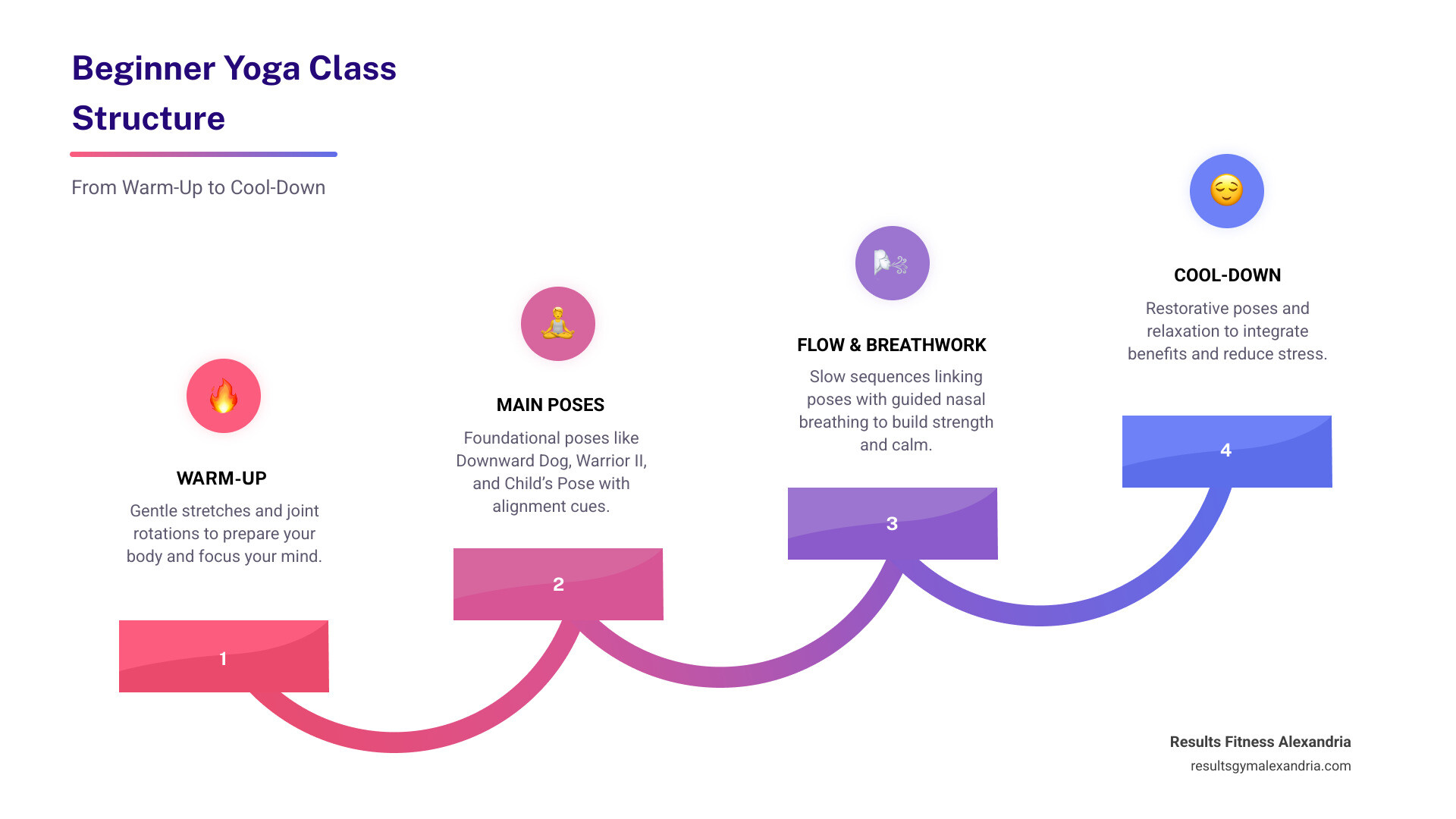
Beginner yoga sessions are the perfect starting point if you want to build flexibility, reduce stress, and move your body in a low-impact way. Here’s a quick overview of what your first session will look like:
- Duration: Typically 10 to 30 minutes for beginners
- Poses: Simple foundational moves like Child’s Pose, Downward Dog, and Warrior II
- Pace: Slow and deliberate, with clear alignment cues
- Breathwork: Guided nasal breathing throughout
- Equipment: Just a yoga mat — blocks or straps are optional but helpful
- Fitness level required: None — all bodies and experience levels welcome
You don’t need to be flexible. You don’t need any prior experience. The hardest part, as many yogis say, is simply showing up.
Yoga is more than stretching. It builds real strength, calms your nervous system, and helps you reconnect with your body — all in one session. Whether you have 10 minutes in the morning or 30 minutes to spare, there’s a beginner session that fits your life.
I’m Jennifer Rapchak, Fitness Director at Results Fitness Alexandria, and with over 14 years of experience as an ACE-certified personal trainer, I’ve seen how beginner yoga sessions can transform the way people move and feel. Let’s walk you through everything you need to know to get started with confidence.
Beginner yoga sessions vocab to learn:
The Core Benefits of Beginner yoga sessions
Starting a yoga practice isn’t just about touching your toes; it’s about what you learn on the way down. For many of our members in Alexandria, beginner yoga sessions serve as a vital counterbalance to high-intensity training or the stresses of a busy career.
Improved Flexibility and Mobility
One of the most immediate draws to yoga is the desire to move more freely. You can learn more about how yoga can help improve your flexibility, but the short version is that yoga uses active and passive stretching to safely lengthen muscles and improve joint range of motion. Unlike static stretching, yoga integrates the whole body, ensuring that your “functional” flexibility improves—meaning you’ll find it easier to pick up your kids, reach for a high shelf, or squat during your workout.
Building Functional Strength
While it looks peaceful, yoga is a powerful strength-builder. Holding a pose like Plank or Warrior II requires significant isometric strength. Beginners often find that their core, shoulders, and legs feel “worked” in a way that differs from traditional weightlifting. Because you are supporting your own body weight, you develop lean muscle and better stability.
Nervous System Regulation and Stress Relief
In our world, many of us live in a state of “tired but wired.” This often indicates a flattened cortisol curve or a nervous system stuck in “fight or flight” mode. Beginner yoga sessions focus on nasal breathing and slow movements, which signal to the brain that it is safe to relax. This regulates the nervous system and provides a strategic micro-break that can actually boost your productivity for the rest of the day.
Body Awareness and Mind-Body Connection
Yoga teaches you to listen to your body’s “edges.” Through 15-Minute Yoga for Beginners, you start to notice where you hold tension—perhaps in your jaw, neck, or hips. This heightened body awareness translates into better form in the gym and fewer injuries in daily life.
Essential Equipment and Preparation

One of the best things about starting beginner yoga sessions is that the barrier to entry is incredibly low. You don’t need a designer wardrobe or expensive gadgets to see results.
- The Yoga Mat: This is your primary tool. A good mat provides cushioning for your joints and “grip” so your hands don’t slide in Downward Dog. While you can practice on carpet or a towel in a pinch, a dedicated mat is a worthwhile investment for stability.
- Yoga Blocks: These are a beginner’s best friend. If you can’t reach the floor in a forward fold, blocks “bring the floor to you.” They allow you to maintain proper spinal alignment rather than rounding your back to reach the ground.
- Cotton Straps: Straps (or even a sturdy bathrobe belt) help you reach your feet in seated stretches without straining your back. They act as an extension of your arms.
- Comfortable Attire: Wear clothes that allow for a full range of motion. You don’t need tight leggings; joggers and a t-shirt work perfectly fine as long as they aren’t so baggy that they get in your way during upside-down poses.
- Hydration: While a gentle beginner flow won’t leave you drenched like a pilates circuit class, staying hydrated is essential for muscle health.
- An Open Mindset: This is perhaps the most important “prop.” It’s common to feel a little silly or “uncoordinated” during your first few sessions. Every expert was once a beginner. If you’re curious about different styles, check out our ultimate guide to yoga classes to see which vibe fits you best.
Mastering the Movement: Poses and Sequences
When you first step onto the mat, you’ll likely encounter a few different styles. Most beginner yoga sessions fall into the Hatha category. Hatha is excellent for newcomers because it moves at a slower pace, focusing on one pose at a time with plenty of alignment cues.
As you progress, you might try Vinyasa, which links movement to breath in a “flow.” A staple of many practices is the Sun Salutation (Surya Namaskar), a foundational sequence that warms up the entire body and serves as the bedrock of most modern yoga.
Hatha vs. Yin: Which is right for you?
| Feature | Hatha Yoga | Yin Yoga |
|---|---|---|
| Pace | Moderate; holds poses for 5-8 breaths | Very slow; holds poses for 2-5 minutes |
| Focus | Muscle engagement and alignment | Connective tissue and joint health |
| Energy | Energizing and strengthening | Calming and meditative |
| Best For | Building a foundation and strength | Deep flexibility and stress relief |
Essential Poses for Beginner yoga sessions
If you want to start at home before joining us at the gym, focus on these foundational poses. You can even try a 10-Minute Hatha Yoga Sequence for Beginners to get a feel for the transitions.
- Tadasana (Mountain Pose): The blueprint for all standing poses. It teaches you how to stand with integrity and engage your core.
- Downward-Facing Dog: A full-body stretch that strengthens the arms and lengthens the spine. Beginners should keep their knees bent to maintain a long back.
- Warrior II: A powerful pose that builds leg strength and focus. Keep your front knee tracked over your ankle and your arms reaching wide.
- Child’s Pose: Your “reset” button. Whenever a session feels too intense, you can always return to Child’s Pose to catch your breath.
- Plank: Essential for core stability. Beginners can always drop their knees to the mat to build strength gradually.
- Cobra Pose: A gentle backbend that opens the chest and counters the “slouch” we get from sitting at desks.
Setting a Schedule for Beginner yoga sessions
Consistency beats intensity every time. You don’t need a 90-minute class to see progress. In fact, research and community feedback suggest that even 5-10 minute routines can be transformative if done daily.
- Morning Routines: Practicing first thing in the morning ensures you don’t run out of energy later in the day. It sets a positive tone for your nervous system.
- Duration: Aim for 10-30 minutes. If you’re short on time, a few rounds of Sun Salutations are better than nothing.
- Variety: You might enjoy aerobic-yoga-classes for a bit more sweat, or a 30-Minute Practice for a deeper dive into the foundations.
Safety, Modifications, and Breathwork
Safety is our top priority at Results Fitness Alexandria. One of the biggest mistakes beginners make is trying to force their body into a shape it isn’t ready for.
The Power of the Breath
In yoga, we primarily use nasal breathing. Breathing through the nose helps filter the air and, more importantly, keeps the nervous system calm. If you find yourself gasping for air through your mouth, it’s usually a sign that you’re pushing too hard. Your breath is your internal “effort meter.”
“Playing the Edge”
In styles like Yin Yoga, we talk about “playing the edge.” This means moving into a pose until you feel a significant stretch, but stopping well before you feel pain. Yoga should be challenging but never painful. If you feel sharp, stabbing, or electric sensations, back off immediately.
Modifications for Success
- Wrist Stretches: Many beginners find that their wrists get sore in Downward Dog or Plank. Incorporating simple wrist circles and stretches can help. You can also “tent” your fingers or use blocks to change the angle of pressure.
- Spinal Alignment: It is always better to bend your knees and keep a straight spine than to have straight legs and a rounded, straining back.
- Props: Use blocks under your hands or a blanket under your knees if you have sensitivity. Using props isn’t “cheating”—it’s practicing with intelligence.
Whether you are joining us for group yoga or practicing at home, these modifications ensure your practice is sustainable and injury-free.
Frequently Asked Questions about Beginner Yoga
Do I need to be flexible to start yoga?
Absolutely not! Saying you’re too inflexible for yoga is like saying you’re too dirty to take a bath. Flexibility is a result of yoga, not a prerequisite. Most beginner yoga sessions are specifically designed for people who feel stiff.
How often should a beginner practice?
For the best results, aim for 2 to 3 times per week. However, even a daily 10-minute session can yield incredible benefits for your mental health and mobility. The key is to find a frequency that you can actually stick to without feeling overwhelmed.
What is the difference between yoga and Pilates?
While both focus on the mind-body connection and core strength, they have different origins and goals. Yoga is an ancient practice that includes a heavy emphasis on flexibility, balance, and spiritual/mental well-being. Pilates, developed in the early 20th century, is more focused on core “powerhouse” strength, spinal alignment, and controlled muscle contractions. Many of our members find that they complement each other perfectly. You can find more info about Pilates services to see how it might fit into your routine.
Conclusion
Starting your journey with beginner yoga sessions is one of the best gifts you can give your body. Whether you’re looking to recover from intense personal training, reduce your daily stress, or simply move without pain, yoga offers a path forward that is accessible to everyone.
At Results Fitness Alexandria, we pride ourselves on being more than just a gym. We are a community dedicated to helping you reach your goals, whether that’s hitting a new PR in the weight room or finally touching your toes in a yoga class. Our instructors are here to provide personalized coaching and modifications to ensure you feel confident from your very first “Om.”
Ready to see what a difference a supportive environment can make? Come visit us in Alexandria and experience our amenities firsthand. Start your journey with a free pass and join our community today. We can’t wait to see you on the mat!