Ultimate Guide to Gym Back Exercises
Why Gym Back Exercises Belong at the Center of Your Workout Plan
Gym back exercises are some of the most powerful moves you can do to build a stronger, healthier body — and they’re often the most overlooked.
Here are the best gym back exercises to get you started:
- Deadlift — builds the entire posterior chain
- Pull-ups — targets the lats for width and upper body strength
- Lat Pulldown — great for beginners building toward pull-ups
- Barbell Bent-Over Row — develops mid-back thickness
- Seated Cable Row — keeps constant tension through the full rep
- Single-Arm Dumbbell Row — fixes muscle imbalances between sides
- T-Bar Row — heavy loading for back density
- Face Pulls — protects shoulders and trains rear delts
- Back Extensions — strengthens the lower back and erector spinae
- Straight-Arm Pulldown — isolates the lats with a strong mind-muscle connection
Your back isn’t one muscle — it’s a complex system that supports nearly every movement you make. A strong back improves your posture, protects your spine, and makes everyday tasks easier. Yet most people spend more time on their chest and arms than they ever do on their back.
That’s a missed opportunity — and this guide will help you fix it.
I’m Jennifer Rapchak, Fitness Director at Results Fitness Alexandria, and with over 14 years of experience as an ACE-certified personal trainer, I’ve helped countless people transform their strength and posture through targeted gym back exercises. In the sections below, I’ll walk you through everything you need — from anatomy to exercise selection to programming — so you can train smarter and see real results.
Understanding Your Back Anatomy
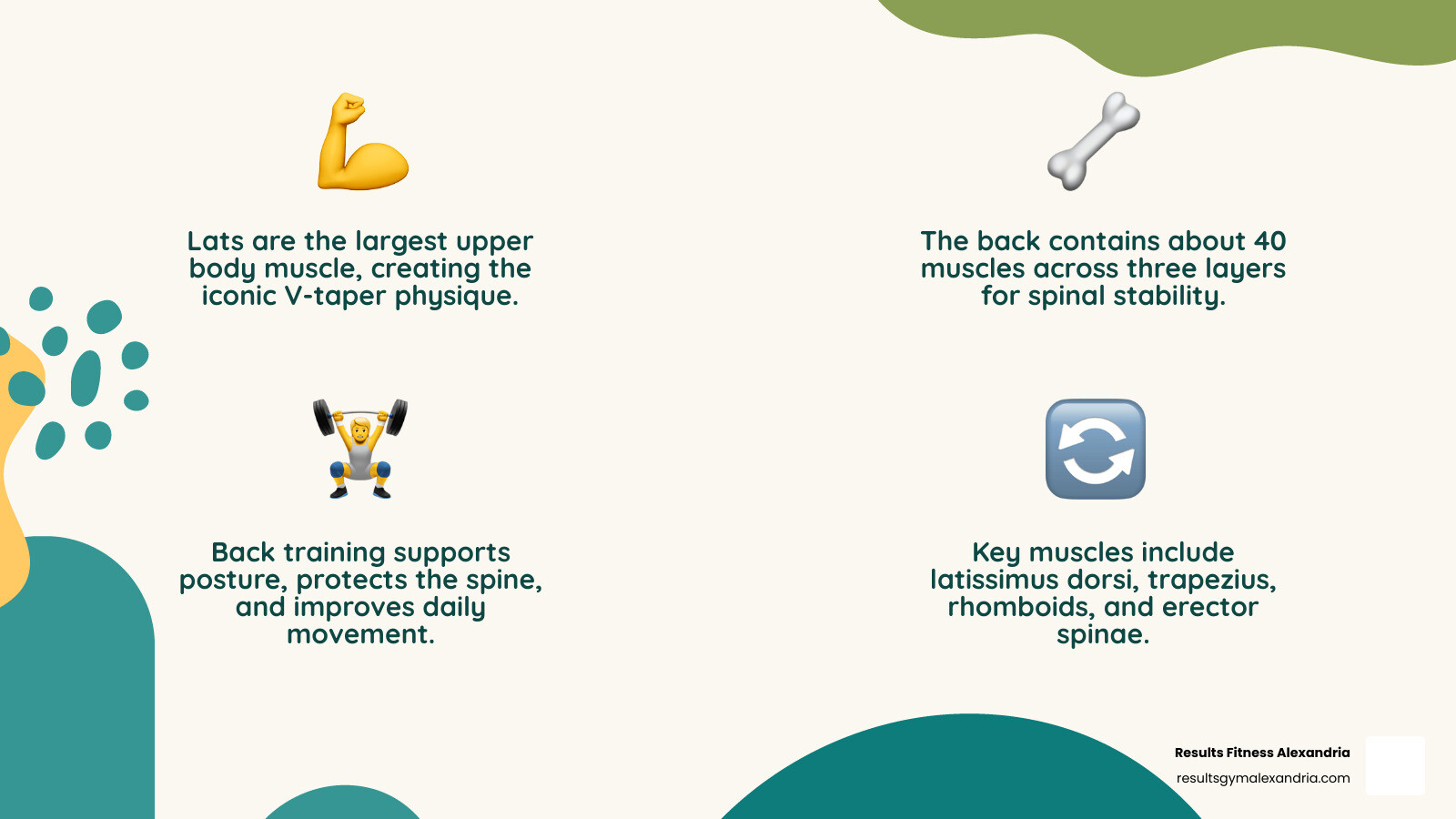
To master gym back exercises, we first need to understand what’s happening “under the hood.” The back is the largest muscle group in your upper body, consisting of about 40 different muscles. These are generally categorized into superficial, intermediate, and intrinsic layers. When we talk about training for strength and aesthetics, we focus on four primary areas:
- Latissimus Dorsi (Lats): These are the large, fan-shaped muscles that run down the sides of your back. They are responsible for the coveted “V-taper” look. Their primary job is to pull your arms down and back.
- Trapezius (Traps): This diamond-shaped muscle extends from the base of your skull down to the middle of your back and out to your shoulders. It’s divided into upper, middle, and lower sections, helping you shrug, retract your shoulder blades, and support your neck.
- Rhomboids: Tucked underneath the traps, these muscles connect your shoulder blades to your spine. They are the “posture muscles” that pull your shoulders back to prevent that “desk-slouch” look.
- Erector Spinae: This set of muscles runs vertically along your spine. They are crucial for spinal stability and allow you to bend backward and side-to-side safely.
- Teres Major and Posterior Chain: Often called the “little lat,” the teres major assists in arm movement, while the entire posterior chain (including the glutes and hamstrings) works in tandem with your back to provide total-body power.
Understanding these muscles is part of The Science Of Building Muscle Tips For Effective Strength Training. When you know which muscle you are targeting, you can focus on the “mind-muscle connection,” ensuring the right tissues are doing the work rather than just swinging the weight.
Top 10 Gym Back Exercises for Muscle and Strength
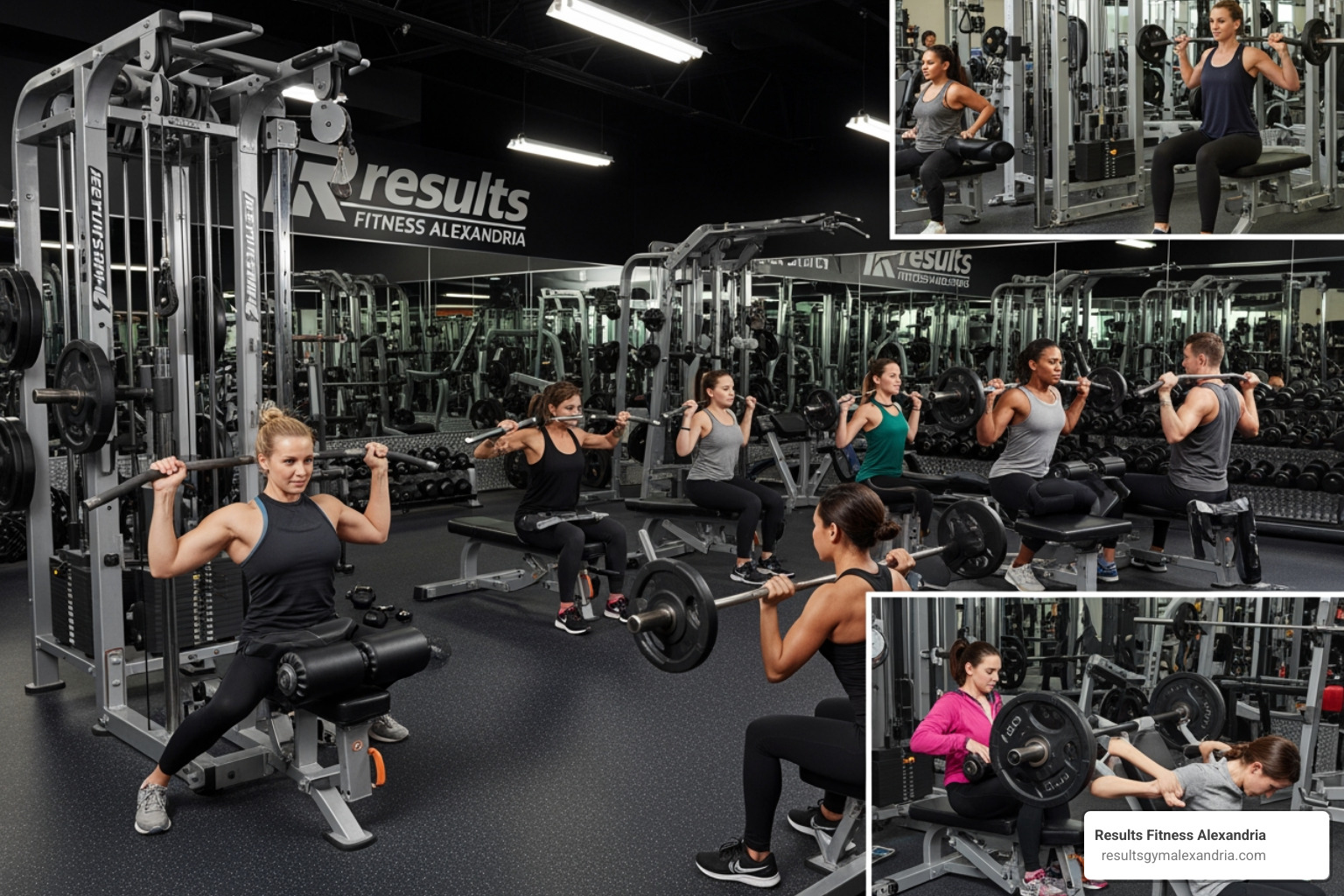
When building a routine, you want a mix of vertical pulling (moving weight top-to-bottom) and horizontal pulling (moving weight front-to-back). Here are the heavy hitters:
- Barbell Deadlift: The king of all exercises. It hits everything from your traps down to your calves. Because it allows for the heaviest loading, it’s unparalleled for building raw power.
- Pull-ups: A true test of relative strength. By pulling your own body weight, you engage the lats, traps, and rhomboids intensely.
- Lat Pulldowns: If you can’t do a pull-up yet, this is your best friend. It mimics the movement while allowing you to adjust the weight.
- Seated Cable Row: This provides constant tension. Unlike free weights, the cable keeps the resistance steady throughout the entire range of motion.
- T-Bar Row: This allows for heavy loading while providing a fixed path of motion, making it excellent for building mid-back thickness.
- Single-arm Dumbbell Row: Perfect for addressing muscle imbalances. Most of us have one side stronger than the other; training unilaterally ensures the “lazy” side catches up.
- Face Pulls: Often underrated, these are vital for shoulder health and training the rear deltoids and upper traps.
- Back Extensions: These specifically target the erector spinae, helping to bulletproof your lower back against injury.
- Barbell Bent-Over Row: A classic mass builder that requires significant core stability to hold the hinged position.
- Straight-Arm Pulldown: An isolation move that takes the biceps out of the equation, forcing the lats to do 100% of the work.
For a deeper dive into the mechanics, you can check out The 6 Best Back Exercises for Building Strength and Size. We also have specific guidance available in our Womens Back Workout guide, which highlights how these moves can create a balanced, confident silhouette.
Compound Gym Back Exercises for Maximum Load
Compound exercises involve multiple joints and muscle groups working together. These should be the “meat and potatoes” of your workout. The primary stimulus here is mechanical tension—essentially, lifting heavy stuff.
To see progress, we utilize progressive overload. This doesn’t just mean adding weight; it can mean doing more reps with the same weight or improving your form. For example, a Pendlay Row is a variation of the barbell row where the bar starts on the floor for every rep. This builds explosive power and ensures you aren’t using momentum to “cheat” the weight up.
| Movement Type | Primary Benefit | Example Exercises |
|---|---|---|
| Horizontal Pull | Mid-back thickness & density | Barbell Row, Seated Cable Row, T-Bar Row |
| Vertical Pull | Back width (V-taper) | Pull-ups, Lat Pulldowns, Chin-ups |
| Posterior Chain | Overall strength & stability | Deadlifts, Good Mornings, Rack Pulls |
Grip variations also play a role. An overhand grip (pronated) usually targets the upper back and lats more, while an underhand grip (supinated) brings the biceps into the movement more heavily.
Isolation and Accessory Gym Back Exercises
Once the heavy lifting is done, accessory movements help “fill in the gaps.” This is where we focus on the mind-muscle connection. It’s easy to let your biceps take over during a row, but during an isolation move like a straight-arm pulldown, you can really feel the lats flare.
Scapular retraction—the act of squeezing your shoulder blades together—is a key component of accessory work. This helps fix muscle imbalances and strengthens the smaller muscles like the rear delts and teres major. If you want to know more about the “why” behind these movements, read our article on How To Build Muscle With Good Strength Training Workouts.
How to Structure an Effective Back Workout
Building a back that is both wide and thick requires a strategic approach. We don’t just walk into the gym and pull on things randomly!
- Frequency: Research suggests that major muscle groups should be trained twice a week to maximize muscle growth. This allows for a higher weekly volume while giving the muscles time to recover.
- Volume: For hypertrophy (muscle growth), a dose-response relationship exists. Aiming for 10 or more sets per muscle group per week has been shown to lead to the greatest gains.
- Rep Ranges: The 8–12 rep range is the “sweet spot” for hypertrophy. It provides enough load to create mechanical tension while generating enough fatigue to stimulate protein synthesis.
- Rest Periods: For heavy compound lifts like deadlifts, rest 2–3 minutes. For isolation moves, 60–90 seconds is usually sufficient.
A sample structure might look like this:
- Heavy Compound: Deadlift (3 sets of 5 reps)
- Vertical Pull: Pull-ups or Lat Pulldowns (3 sets of 8-10 reps)
- Horizontal Pull: Seated Cable Row (3 sets of 10-12 reps)
- Accessory/Isolation: Face Pulls (3 sets of 15 reps)
For more detailed programming, especially for those just starting, Back Workouts – Best Exercises for Muscle and Strength provides excellent templates. Women can also find tailored advice in our Strength Training For Women Complete Guide.
Avoiding Common Mistakes in Back Training
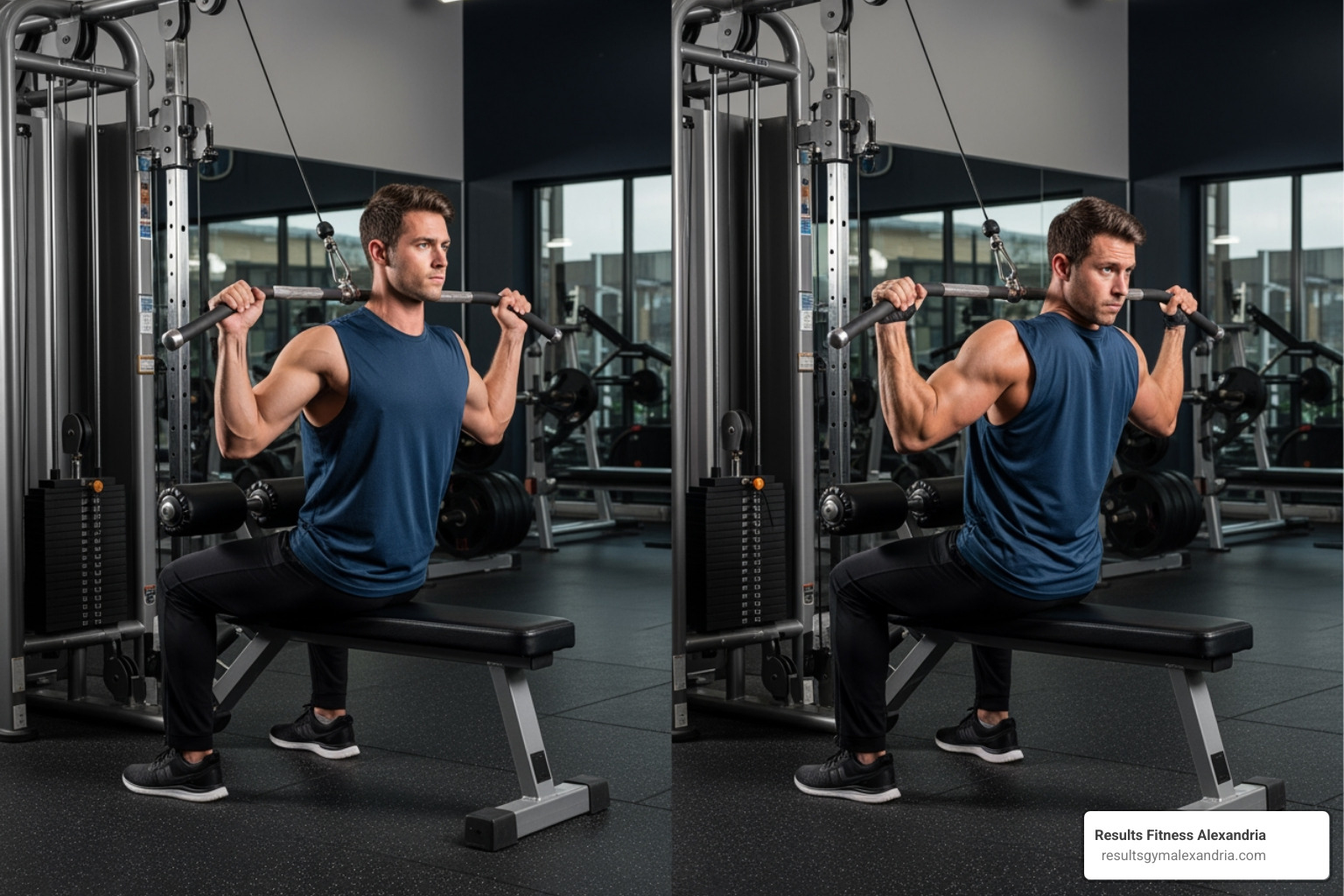
The back is a difficult area to train because you can’t see the muscles working in the mirror. This often leads to “ego lifting,” where form goes out the window in favor of heavier plates.
- Using Momentum: If you find yourself rocking your torso back and forth during a row, the weight is too heavy. You’re using your lower back and momentum rather than your lats and rhomboids.
- Bicep Dominance: Many people “pull with their hands.” Instead, imagine your hands are just hooks. Think about “driving your elbows back.” This mental cue helps shift the load from the biceps to the back.
- Losing a Neutral Spine: Especially during deadlifts and rows, a rounded back is a recipe for a disc injury. Always engage your core and keep your spine straight.
- Limited Range of Motion: You want to feel a full stretch at the bottom and a hard squeeze at the top. Half-reps result in half-gains.
Proper form is the foundation of the Benefits Of Strength Training For All Ages. Whether you are 25 or 65, moving correctly ensures you stay in the gym and out of the physical therapist’s office.
Nutrition and Recovery for Back Growth
You don’t grow in the gym; you grow while you sleep. Training creates microscopic tears in the muscle fibers, and your body needs the right “bricks” to rebuild them stronger.
- Protein is Key: To support muscle growth, aim for 1.4 to 2.0 grams of protein per kilogram of body weight daily. This provides the amino acids necessary for protein synthesis.
- Caloric Surplus: While you can build muscle at “maintenance” calories, a slight surplus provides the extra energy your body needs to build new tissue.
- Sleep: Athletes often require 7–9 hours of sleep. About 80–90% of your physical recovery happens during deep sleep cycles.
- Active Recovery: On rest days, light walking or yoga can help manage Delayed Onset Muscle Soreness (DOMS) by increasing blood flow to the muscles without adding further stress.
Don’t forget hydration! Muscles are roughly 75% water. Even slight dehydration can lead to a significant drop in strength and focus during your gym back exercises.
Frequently Asked Questions about Gym Back Exercises
How often should I perform gym back exercises for optimal growth?
For most people, training the back twice a week is optimal. This follows the science that suggests major muscle groups respond best to being stimulated every 48 to 72 hours. If you are a beginner, starting with once a week is fine, but as you progress, increasing frequency will help you hit that “10+ sets per week” threshold for maximum hypertrophy.
Can I train back and biceps together in the same session?
Absolutely. This is a classic “Pull Day” pairing. Since the biceps assist in almost every back exercise, they will already be warmed up and partially fatigued by the time you finish your rows and pulldowns. This is an efficient way to structure a workout, though you should always perform your heavy back movements first when your energy is highest.
What are the best gym back exercises for improving posture?
Focus on exercises that emphasize scapular retraction and lower trap strength. Seated cable rows (focusing on the squeeze), Face Pulls, and “I-Y-T” raises are fantastic for pulling the shoulders back and opening up the chest. Strengthening the erector spinae through back extensions also helps you maintain an upright position throughout the day.
Conclusion
Building a strong back is a marathon, not a sprint. It requires consistency, a focus on proper form, and a commitment to recovery. Whether your goal is to look better in a t-shirt, improve your posture for your desk job, or build functional strength for daily life, gym back exercises are the foundation you need.
At Results Fitness Alexandria, we pride ourselves on being a supportive community where everyone—from beginners to seasoned lifters—can find the guidance they need to succeed. Our expert trainers are here to ensure your form is spot-on and your programming is effective.
Ready to see what a stronger back can do for you? Start your journey with a free 1-day pass and come experience our Alexandria facility for yourself. We can’t wait to help you reach your goals!