The Best Restorative Yoga and Flow Classes for Stress Relief
Unwind and Recharge with Restorative Yoga Classes
Restorative yoga classes offer a gentle, prop-supported practice designed for deep relaxation and stress reduction. They focus on slowing down and opening your body through passive stretches.
Here’s what makes them unique:
- Passive stretching: No muscle effort required.
- Long holds: Poses are held for 5 to 20 minutes.
- Prop-supported: Bolsters, blankets, and blocks provide full support.
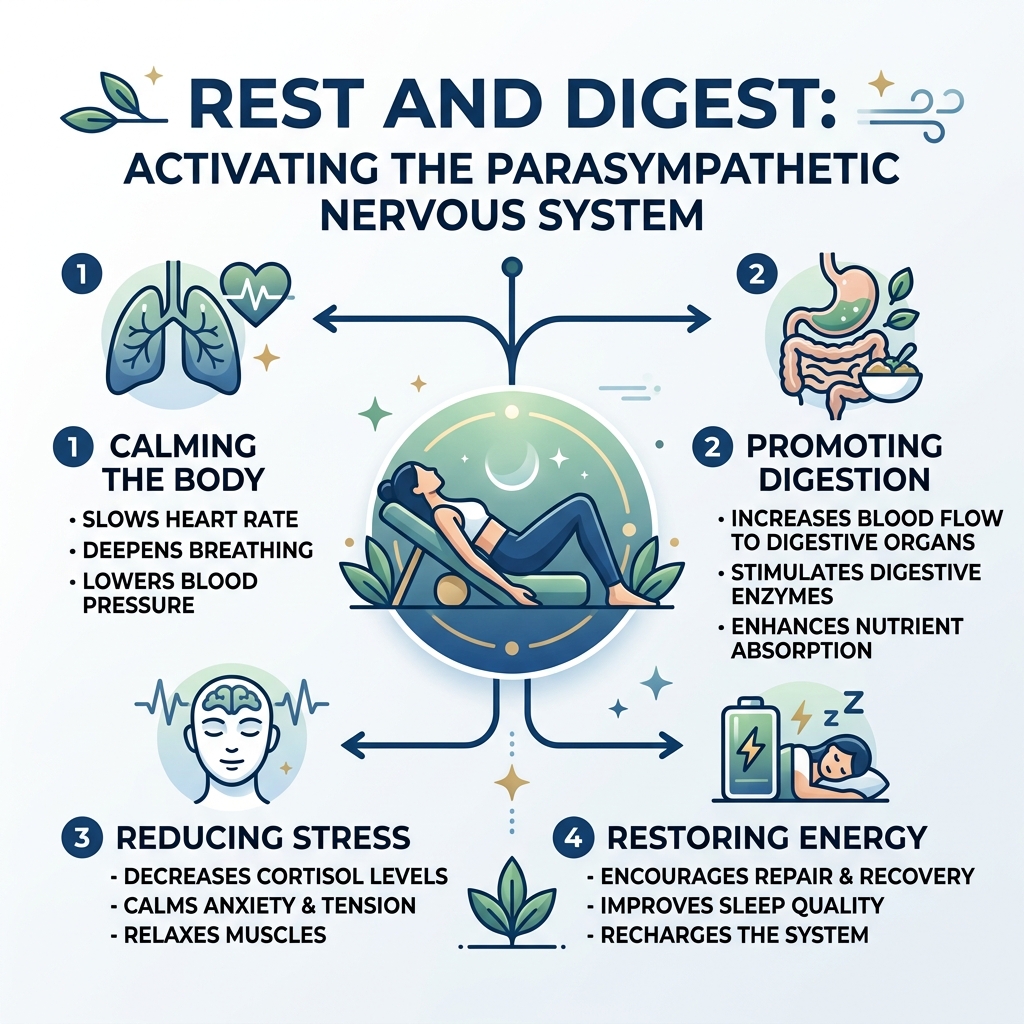
- Calms the nervous system: Activates your “rest and digest” response.
- Few poses: Classes often feature only 4-6 poses for maximum benefit.
In our world, finding moments of genuine stillness and recovery is more important than ever. Whether you’re feeling the effects of a stressful day, recovering from a workout, or simply need to reset, restorative yoga provides a powerful antidote to modern life’s demands. It’s a proven path to physical and mental well-being, helping you release tension and cultivate a sense of calm.
I’m Jennifer Rapchak, Fitness Director at Results Fitness Alexandria. With over 14 years in fitness, I’ve seen the vital role that practices like Restorative yoga classes play in comprehensive well-being and recovery.
Easy Restorative yoga classes glossary:
Understanding the Science of Restorative Yoga Classes
To truly appreciate why Restorative yoga classes feel so transformative, we have to look under the hood at our biology. Most of us spend our days in a state of “high alert.” Between work deadlines, Alexandria traffic, and intense gym sessions, our sympathetic nervous system—the “fight or flight” response—is often working overtime. Restorative yoga is the scientific “off switch” for this state.
The primary goal of this practice is to activate the parasympathetic nervous system, which governs our “rest and digest” functions. When we enter this state, our heart rate slows, blood pressure drops, and the body begins to conserve energy. Research has shown that this shift has measurable effects on our health. For instance, the Effect of restorative yoga vs. stretching on cortisol study found that restorative yoga is significantly more effective at improving cortisol dynamics than simple passive stretching. Cortisol is our primary stress hormone; by balancing it, we allow the body to return to a state of homeostasis, or internal balance.
This practice also stimulates the vagus nerve, the longest nerve of the autonomic nervous system, which helps regulate our mood and immune response. Furthermore, Exploring the therapeutic effects of yoga highlights how these practices improve overall quality of life by reducing hyperarousal in the brain. Interestingly, recent studies using brain imaging suggest that regular practice can actually lead to positive brain plasticity, altering the structure of the hippocampus and prefrontal cortex—areas responsible for memory and emotional regulation.
How Restorative Yoga Classes Differ from Vinyasa and Hatha
If you’ve ever taken a Vinyasa or Hatha class, you know they can be quite a workout. In those styles, the focus is often on “yang” energy—strength, heat, and muscular engagement. You move through sun salutations, hold challenging balance poses, and likely work up a sweat.
Restorative yoga classes are the “yin” to that “yang.” Here is how they differ:
- Muscular Effort: In Vinyasa, you use your muscles to hold your body up. In Restorative, you use props to hold your body up so your muscles can completely let go.
- Pace: While a flow class might move through 30 poses in an hour, a restorative session might only involve 4 to 6.
- Heart Rate: Active styles aim to elevate the heart rate for cardiovascular benefits; restorative yoga aims to lower it to induce deep relaxation.
- Temperature: Because you aren’t moving to generate heat, the body temperature can drop, which is why we often encourage blankets and even socks during the session.
What to Expect in Your First Restorative Yoga Classes
Walking into your first restorative session can feel a bit unusual if you’re used to high-intensity training. The atmosphere is typically quiet, with dim lighting and perhaps soft, soothing music. It feels less like a gym class and more like a “luscious spa treatment,” as some practitioners describe it.
When you arrive, you’ll gather a “nest” of props—usually a bolster (a long, firm pillow), several blankets, and foam blocks. The instructor will guide you into a pose, helping you arrange your props so that every limb is supported. Once you are settled, you stay there. Holds typically last between 5 and 20 minutes.
The challenge isn’t physical; it’s mental. In the stillness, your mind might start to race. The practice is to acknowledge those thoughts and gently return your focus to your breath. It’s not uncommon for students to drift off into a light sleep—and that’s perfectly okay! It’s a sign that your nervous system has finally felt safe enough to let down its guard.

Physical and Mental Benefits for Total Well-Being
The benefits of Restorative yoga classes extend far beyond just “feeling relaxed.” Because this practice targets the root of stress, the positive ripple effects touch almost every aspect of your health.
Better Sleep and Melatonin Production If you struggle with insomnia or poor sleep quality, this practice is a game-changer. A national survey by the National Institutes of Health found that 55 percent of people who do yoga report improved sleep. Specifically, The effect of yoga on sleep quality and insomnia found that yoga increases melatonin levels and reduces the “hyperarousal” that keeps you tossing and turning at night.
Enhanced Flexibility and Healing While it’s not an “active” stretch, holding supported poses for long durations allows the deep connective tissues and fascia to gently release. This is a safe way to improve your flexibility without the risk of overstretching or injury. It’s particularly beneficial for those with chronic pain or musculoskeletal conditions.
Cognitive Clarity and Recovery Restorative yoga has shown incredible promise in clinical settings. For instance, Yoga for the management of cancer treatment-related toxicities notes that it can help manage the side effects of intensive medical treatments. One study even showed that cancer patients taking three restorative classes a week significantly improved their cognitive clarity, helping to clear the mental fog often referred to as “chemo brain.”
Essential Props and Poses for Deep Relaxation
In Restorative yoga classes, props are not “crutches”—they are the essential tools that make the practice possible. They allow the body to feel 100% supported, which signals to the brain that it is safe to relax.
- Bolsters: These provide a firm foundation for the torso or legs.
- Blocks: Used to bring the floor closer to you or to support the weight of a bolster.
- Blankets: These can be rolled for neck support, folded for padding, or draped over the body for warmth and a sense of security.
Key Restorative Poses to Try
| Pose Name | Primary Prop Use | Main Benefit |
|---|---|---|
| Supported Child’s Pose | Bolster under the chest/belly | Calms the mind; releases lower back |
| Legs-Up-The-Wall | Blanket under hips; wall for legs | Improves circulation; soothes tired legs |
| Supported Bridge | Block or bolster under the sacrum | Gently opens the chest and hip flexors |
| Supported Fish | Bolster or blocks along the spine | Counteracts “desk posture” and opens the heart |
Supported Fish Pose is a personal favorite for our Alexandria members who spend all day at a desk. By placing a bolster or blocks under your upper back, you gently reverse the rounded-shoulder posture that comes from typing or looking at a phone.
Integrating Restorative Yoga into Your Fitness Routine
At Results Fitness Alexandria, we believe that recovery is just as important as the workout itself. You don’t get stronger during your lift; you get stronger during the recovery period when your muscle fibers repair themselves.
Integrating Restorative yoga classes into your routine can actually improve your performance in other areas. Here’s how:
- Workout Recovery: After a heavy leg day or a high-intensity interval session, a restorative class helps flush out metabolic waste and reduces muscle soreness.
- Injury Prevention: By addressing chronic tension and improving fascia health, you reduce the likelihood of strains and pulls.
- Mental Reset: If you are using personal training to reach big goals, the mental fatigue can be real. Restorative yoga provides the “mental white space” needed to stay motivated.
- Cross-Training: It perfectly complements aerobic yoga classes or Pilates for core strength by providing a low-impact day that still contributes to your overall health.
For a deeper dive into how to balance these different styles, check out our From Ashtanga to Restorative guide.
Frequently Asked Questions about Restorative Yoga
Who is restorative yoga best suited for?
Honestly? Everyone. Because the poses are entirely supported and ground-based, it is accessible to all ages and fitness levels. It is particularly beneficial for those experiencing high stress, burnout, chronic pain, or those recovering from injury or illness (including prenatal students).
Do I need to be flexible to attend restorative yoga classes?
Not at all! In fact, being “inflexible” makes you a great candidate. Since we use props to bring the floor to you, you never have to worry about “reaching” for your toes. The goal is comfort, not a deep stretch.
How often should I practice restorative yoga for stress relief?
Even one class a week can significantly improve your relaxation and self-esteem levels. However, many people find that incorporating short, 5-10 minute poses (like Legs-Up-The-Wall) into their daily evening routine helps them transition from a hectic workday to a restful night’s sleep.
Conclusion
Life in Alexandria can be demanding, but your body wasn’t designed to be “on” 24/7. Restorative yoga classes provide the essential counter-balance to our busy lives and intense workout routines. By giving yourself permission to be still, you aren’t just “doing nothing”—you are actively participating in your body’s most vital healing processes.
At Results Fitness Alexandria, we are committed to helping you find that perfect balance between pushing your limits and honoring your need for rest. Whether you want to complement your personal training or simply find a sanctuary from stress, we invite you to experience the “medicine of rest” for yourself.
Ready to hit the reset button? Grab a free 1-day pass and come try one of our group fitness classes. We can’t wait to see you on the mat!