Stop Wandering the Gym and Start Losing Weight with This Plan
Why So Many Beginners Struggle to Lose Weight at the Gym
Starting a beginner workout at gym for weight loss is one of the most impactful decisions you can make for your health — but most people walk through the gym doors without a plan and walk back out frustrated.
Here is a quick answer to get you started:
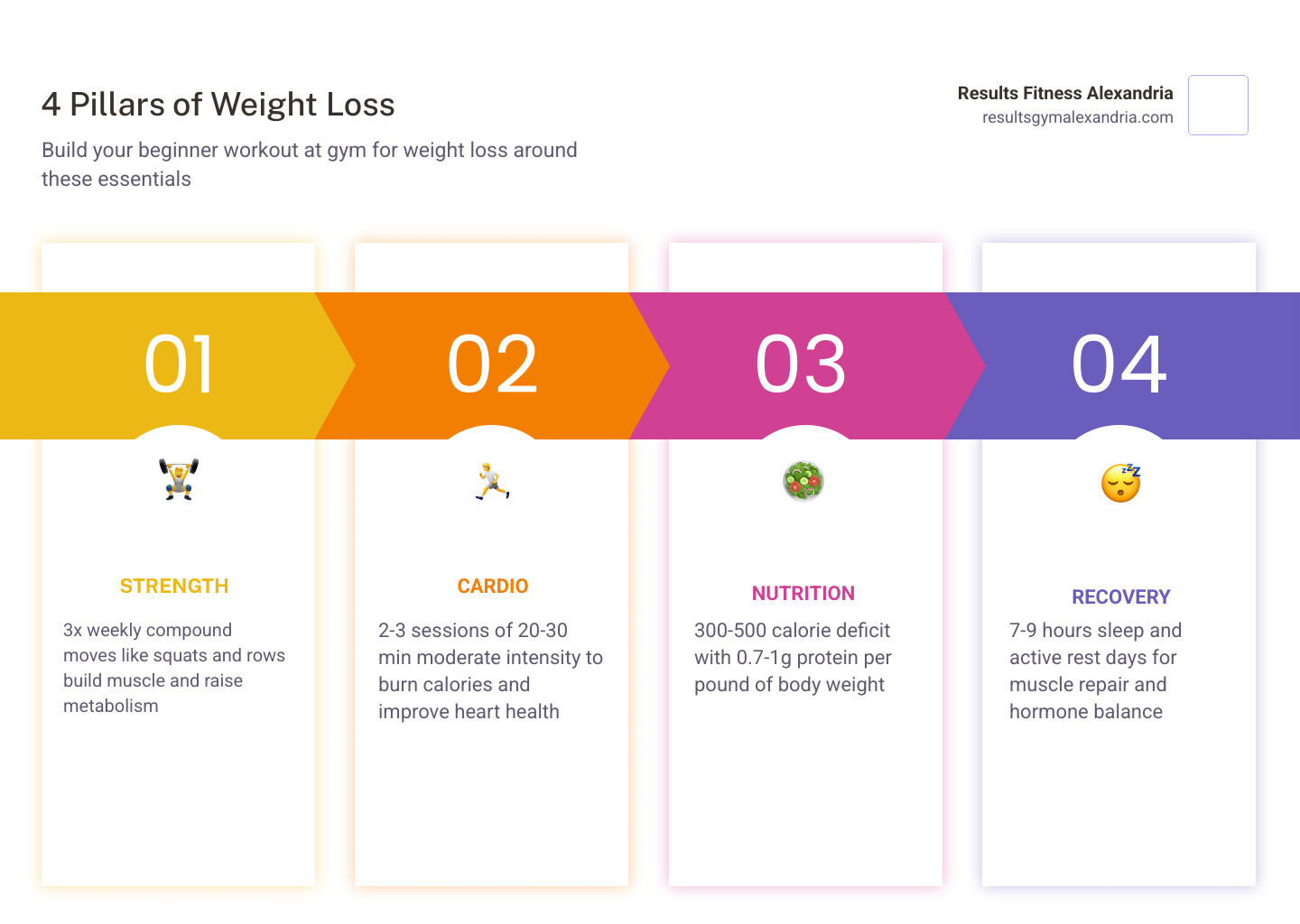
The most effective beginner gym plan for weight loss combines:
- Strength training – 3 days per week using compound movements like squats, deadlifts, rows, and push-ups
- Cardio – 2-3 sessions of 20-30 minutes at low-to-moderate intensity
- Nutrition – A 300-500 calorie daily deficit with high protein intake (0.7-1g per pound of body weight)
- Recovery – 7-9 hours of sleep and active rest days to let your body repair and grow stronger
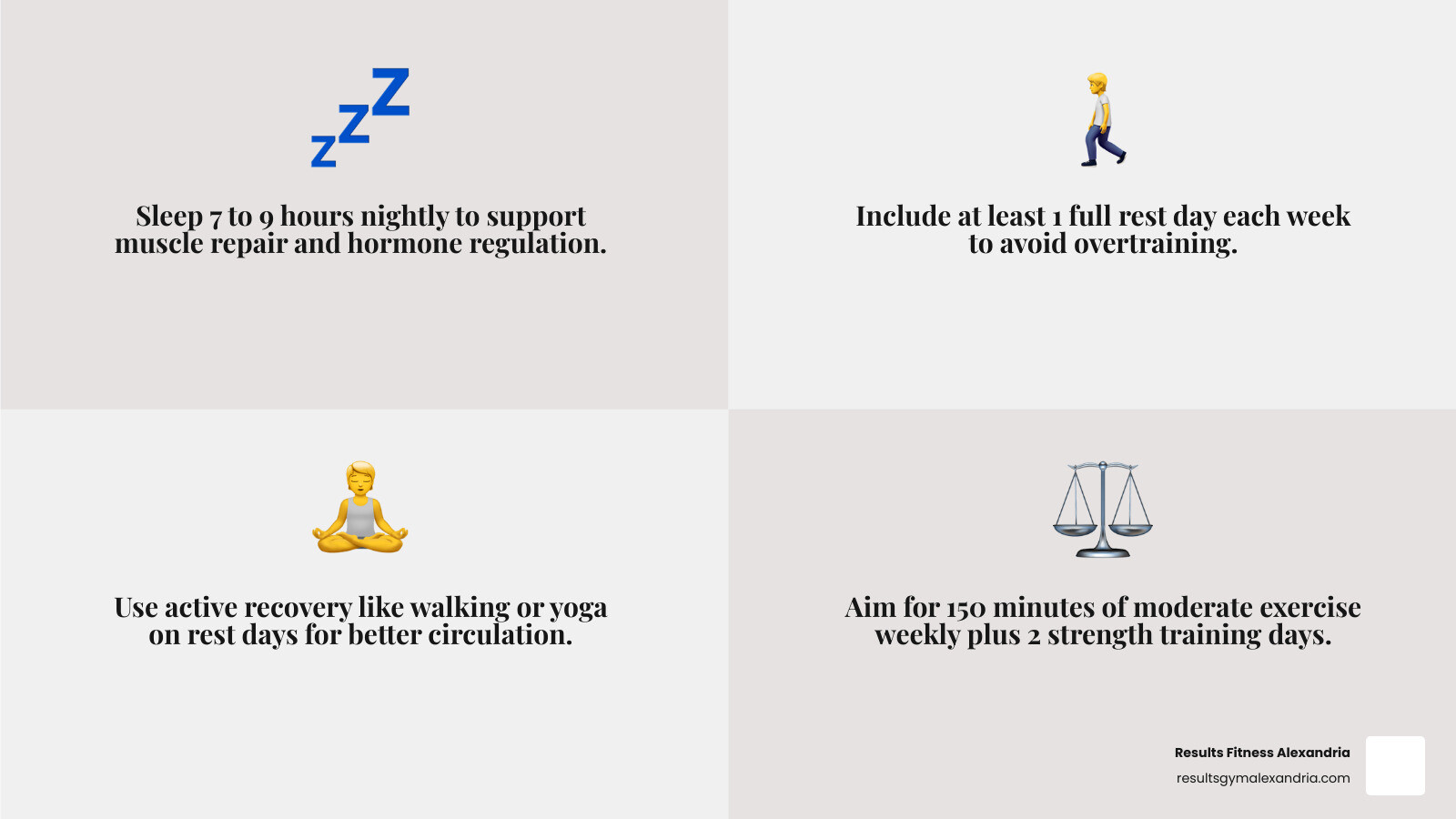
Adults need at least 150 minutes of moderate exercise and 2 days of strength training per week to see real weight loss results.
The problem is not a lack of effort. It is a lack of direction. Many beginners head straight for the treadmill, burn a few hundred calories, and wonder why nothing changes after weeks of trying. The truth is that cardio alone is rarely enough. Strength training is the missing piece — it builds muscle, boosts your metabolism, and helps your body burn more calories even at rest.
This guide gives you the exact plan to stop wandering and start seeing results.
I’m Jennifer Rapchak, Fitness Director at Results Fitness Gym in Alexandria, Virginia, with over 14 years of experience as an ACE-certified personal trainer helping people of all fitness levels build their first beginner workout at gym for weight loss. I have seen what works — and what wastes your time — so everything in this guide is built around what actually gets results.
Know your beginner workout at gym for weight loss terms:
Weight Loss vs. Fat Loss: Why the Distinction Matters
If you are new to the gym, this distinction matters a lot.
Weight loss means your total body weight goes down. That can include:
- body fat
- water
- muscle
- glycogen
Fat loss means you are specifically reducing body fat while keeping as much muscle as possible.
That is why two people can both lose 10 pounds and end up with very different results. One may look leaner, stronger, and firmer. The other may just feel smaller, tired, and weaker.
| Goal | What changes | Why it matters |
|---|---|---|
| Weight loss | Scale weight drops from any source | Fast changes can be misleading |
| Fat loss | Body fat drops while muscle is preserved | Better shape, strength, and long-term metabolism |
For beginners, we want fat loss, not just random scale loss.
Your body burns calories through your Basal Metabolic Rate, or BMR, plus daily movement, exercise, and digestion. Your Total Daily Energy Expenditure, or TDEE, is the bigger picture of how many calories you burn in a day. When you eat below that number consistently, you lose weight. When you pair that calorie deficit with strength training and enough protein, more of that loss comes from fat instead of muscle.
A practical starting point is a 300 to 500 calorie deficit below maintenance. Many plans also use the classic 500-calorie rule, which can lead to about one pound of fat loss per week when applied consistently. For a deeper look at how structured fat-loss training works, see this beginner fat loss plan and our guide on cardio vs strength training for weight loss.
The Role of Metabolism and Muscle
Muscle is active tissue. In simple terms, it costs your body more energy to maintain muscle than fat. That does not mean lifting magically melts fat overnight, but it does mean strength training supports a better metabolism over time.
It also helps in three big ways:
- It preserves lean mass while dieting.
- It increases your training capacity and strength.
- It can raise post-workout calorie burn a bit through the afterburn effect.
This is why we do not tell beginners to live on cardio machines alone. A smart weight loss plan includes resistance training from day one. If you want more help getting comfortable with that, our beginner weight training for women guide is a good next read.
The Ultimate Beginner Workout at Gym for Weight Loss
A good beginner plan should be simple, repeatable, and hard enough to work without feeling like punishment disguised as exercise.
We recommend three full-body strength workouts per week. Full-body training helps beginners practice the same key movement patterns often enough to improve quickly:
- squat
- hinge
- push
- pull
- brace
- carry
These are the patterns that matter most for strength, calorie burn, and daily life. They also help you avoid the classic beginner mistake of doing eight random machine exercises and calling it a strategy.
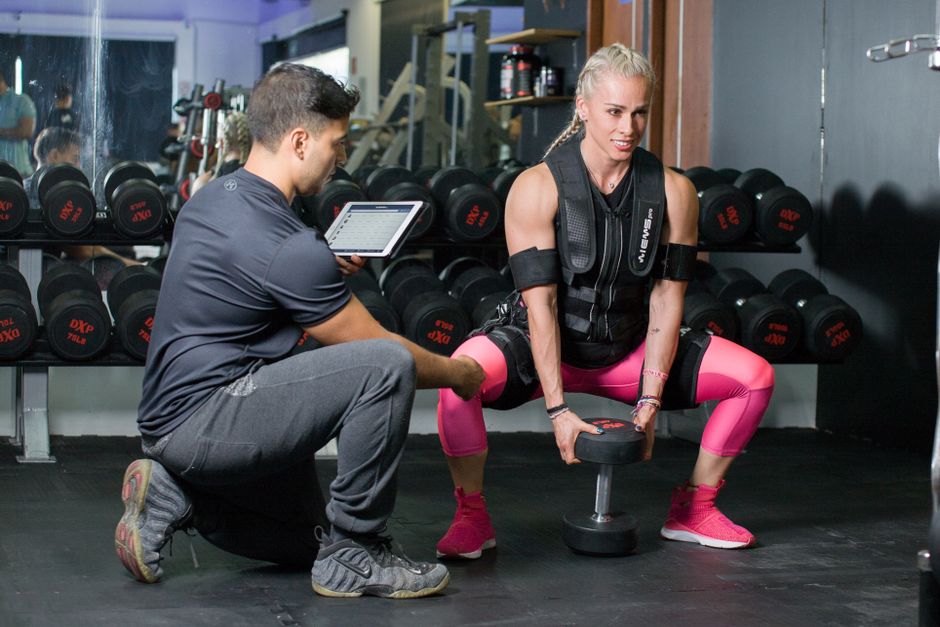
A few rules make this plan work:
- Prioritize form before weight
- Start with 2 to 3 sets of 8 to 12 reps on most movements
- Leave 1 to 3 reps in reserve instead of training to failure
- Add reps first, then add small amounts of weight
- Rest 60 to 90 seconds between most sets
If you are completely new, our 5 simple steps to start a beginner gym workout can make your first week feel much less awkward.
Fundamental Exercises for Your Beginner Workout at Gym for Weight Loss
These are the lifts and movement patterns we want most beginners to learn first.
1. Goblet squat
Great for learning squat mechanics, core tension, and leg strength.
2. Push-ups
A strong bodyweight push that teaches core control and upper-body strength. Start on an incline if floor push-ups are too tough.
3. Dumbbell row
Builds upper-back strength, posture, and pulling power.
4. Glute bridge
Excellent for learning hip extension and waking up the glutes before deadlifts or squats.
5. Deadlift or Romanian deadlift
Teaches the hinge pattern and builds the posterior chain. Start light and focus on posture and control.
These basics cover most of what a beginner needs. Notice what is not here: circus tricks, wild supersets, and exercises that require the balance of a flamingo on roller skates.
If you want help feeling confident before your first lifting day, read how to master your first weight lifting session without the stress.
Sample 3-Day Beginner Workout at Gym for Weight Loss
Here is a simple week you can repeat for 6 to 8 weeks.
Day 1
- Goblet squat: 3 sets of 8 to 10
- Dumbbell bench press or incline push-up: 3 sets of 8 to 10
- Dumbbell row: 3 sets of 10 to 12
- Glute bridge: 2 sets of 12 to 15
- Plank: 2 rounds of 20 to 30 seconds
- Optional cardio: 10 to 15 minutes easy bike or treadmill walk
Day 2
- Romanian deadlift: 3 sets of 8 to 10
- Seated machine chest press: 3 sets of 8 to 10
- Lat pulldown: 3 sets of 10 to 12
- Reverse lunge or split squat: 2 sets of 8 each side
- Dead bug: 2 sets of 8 to 10 each side
- Optional cardio: 10 to 15 minutes on the elliptical
Day 3
- Leg press or goblet squat: 3 sets of 10 to 12
- Dumbbell shoulder press: 3 sets of 8 to 10
- Cable row: 3 sets of 10 to 12
- Glute bridge or hip thrust: 2 sets of 12 to 15
- Farmer carry: 2 to 3 rounds of 20 to 30 seconds
- Optional cardio: 10 minutes easy incline walk
Warm up with 5 to 8 minutes of easy cardio plus a few dynamic moves:
- bodyweight squats
- arm circles
- hip hinges
- walking lunges
- shoulder rolls
Research on beginner programming consistently supports three days per week as a sweet spot for progress and recovery. For a more in-depth progression model, see Beginner Gym Workout: The Complete 12-Week Programme.
Structuring Your Weekly Schedule for Maximum Results
The best plan is the one you can repeat next week.
A realistic beginner schedule looks like this:
- Monday: Strength workout
- Tuesday: 20 to 30 minutes moderate cardio
- Wednesday: Strength workout
- Thursday: Active recovery or walking
- Friday: Strength workout
- Saturday: 20 to 30 minutes moderate cardio
- Sunday: Full rest

This setup helps you reach the guideline of at least 150 minutes of moderate activity and at least 2 days of strength training per week. In practice, three strength days works even better for many beginners because it supports muscle retention and faster skill development.
If you need help building a routine that fits your real life, start with creating an effective workout routine for beginners.
Balancing Strength and Cardio
Cardio still matters. We are not anti-cardio. We are just anti-cardio-only.
Strength training helps protect muscle during a calorie deficit. Cardio helps increase calorie expenditure, improve heart health, and build endurance. Together, they work better than either one alone.
For beginners, these are the easiest cardio options:
- treadmill walking
- incline walking
- stationary bike
- rowing machine
- elliptical
The elliptical is especially beginner-friendly because it is low impact and can burn roughly 300 to 600 calories per hour depending on intensity.
A simple cardio target:
- 2 to 3 sessions per week
- 20 to 30 minutes each
- low to moderate intensity
- pace where you can still talk in short sentences
HIIT can work, but it is not required. For most beginners, steady-state cardio is easier to recover from and easier to stick with. If you do combine weights and cardio in one session, do weights first so you have the energy to lift with good form.
For more guidance, check out how to master your cardio gym workout plan for weight loss.
The Importance of Recovery and Sleep
This is where a lot of people sabotage themselves.
You do not get fitter only during workouts. You get fitter when your body recovers from them.
Recovery basics:
- Sleep 7 to 9 hours per night
- Keep at least 1 full rest day each week
- Use active recovery like walking, yoga, or gentle mobility
- Avoid turning every day into a max-effort day
Sleep matters because it supports muscle repair, appetite regulation, energy, and training performance. Deep sleep is also tied to important recovery processes and hormone regulation. If your sleep is a mess, your workouts usually start looking like they were planned by a raccoon.
Active rest is helpful too. Light movement on off days can improve circulation without adding much recovery stress. That is why many beginner plans recommend walking or easy cardio between strength days. For another example of a phased beginner approach, see 8-Week Complete Beginner’s Workout Plan.
Nutrition: The Engine of Your Weight Loss Plan
You cannot out-train a consistent calorie surplus. That is the polite fitness version.
If your goal is weight loss, nutrition is the engine. Training helps preserve muscle, improve body composition, and increase daily energy expenditure, but your calorie intake still matters most.
Here is the beginner nutrition framework we use most often:
- Eat in a 300 to 500 calorie deficit
- Keep protein high at about 0.7 to 1 gram per pound of body weight
- Build meals around lean protein, fruit, vegetables, whole grains, and high-fiber carbs
- Watch liquid calories, sauces, and snack portions
- Stay hydrated
A lot of beginners are surprised by how much progress improves once they stop guessing and start tracking food for just one or two weeks. You do not have to track forever, but tracking temporarily can teach you a lot.
Be careful with hidden sugars too. They show up in places people do not expect:
- flavored coffee drinks
- yogurt
- granola bars
- salad dressings
- sauces
- smoothies
Our fat loss gym workout for females guide pairs well with this section if you want a more goal-specific read.
Fueling for Performance and Fat Loss
You do not need a bodybuilder meal plan. You need a few basics.
Before workouts
Eat a meal 1 to 2 hours before training if possible. Good options include:
- Greek yogurt and fruit
- eggs and toast
- chicken, rice, and vegetables
- oatmeal with protein
Aim for protein plus some carbs. This helps with energy and performance.
After workouts
Try to eat protein within a couple of hours after training. Around 25 to 40 grams is a solid target for many adults. Total daily protein matters more than perfect timing, but a post-workout meal can help recovery.
Hydration
A simple rule: drink water regularly through the day, not just during workouts. Many people do well aiming for at least 2 to 3 liters daily, more on hard training days.
Whole foods first
Base most meals on foods that are filling and minimally processed:
- lean meats
- fish
- eggs
- dairy
- beans
- potatoes
- rice
- oats
- vegetables
- fruit
Barbell and body recomposition plans also consistently emphasize protein, carbs for training, and adequate hydration, which you can see in this 4-week beginner recomposition plan.
Tracking Progress Beyond the Scale
The scale is data. It is not the whole story.
Your weight can fluctuate day to day because of:
- sodium
- hydration
- hormones
- digestion
- muscle soreness
- glycogen changes
That is why we encourage beginners to track multiple forms of progress.
Use these:
- waist and hip measurements every 2 weeks
- progress photos every 2 to 4 weeks
- how clothes fit
- workout log with sets, reps, and weights
- daily step count
- energy levels
- sleep quality
- recovery
- confidence in the gym
This matters because body recomposition can happen even when scale change is slow. You might gain a little muscle while losing fat, especially in the first few months of training. That can make the mirror and your jeans more honest than the scale.
For more beginner-friendly training ideas, see our women’s beginner gym workout.
Frequently Asked Questions about Beginner Gym Workouts
How long until I see results from a beginner gym workout?
Usually, you feel results before you see them.
A realistic timeline looks like this:
- 2 to 4 weeks: better coordination, improved energy, less soreness, more confidence
- 4 to 6 weeks: noticeable strength gains and early body changes
- 8 to 12 weeks: more visible muscle tone and fat loss if nutrition is consistent
Early changes are often neurological. Your body gets better at recruiting muscle and performing movements efficiently before major visual changes show up. So if week two feels easier, that is real progress.
The big key is consistency. Three good months of steady training beats two heroic weeks every time. You may also like best beginner weight lifting women.
Will lifting weights make me look bulky?
For most beginners, no.
What most people call “toning” is really building some muscle while reducing body fat. Strength training helps you look firmer and more athletic, not automatically bulky. Significant muscle gain takes time, consistent training, and usually a calorie surplus, not a fat-loss diet.
This is especially important for women, who often avoid weights because of this myth. In reality, lifting is one of the best tools for body recomposition. If that concern sounds familiar, read working out for beginners female.
Should I do cardio before or after weights?
Usually, after weights.
If fat loss is your goal and you are doing both in one session, lift first so you can use your best energy for strength work and technique. Doing cardio first can tire you out, reduce lifting quality, and make your form worse on important movements.
Exceptions:
- If you are doing a very easy 5-minute warm-up, cardio first is fine
- If your main goal that day is endurance, cardio can come first
- If you split sessions into morning and evening, order matters less
For most beginners, the simple answer is:
- 5 to 8 minute warm-up first
- strength training next
- cardio last
Conclusion
A successful beginner workout at gym for weight loss is not about crushing yourself every day. It is about building a plan you can actually follow:
- 3 strength workouts per week
- 2 to 3 cardio sessions
- a moderate calorie deficit
- high protein intake
- enough sleep and recovery
- progress tracking beyond the scale
That is how beginners stop wandering and start changing their bodies.
If you are in Alexandria, Virginia and want help putting this into action, Results Fitness Alexandria can help you build a plan that fits your current level, schedule, and goals. We offer personal training, fitness classes, and a supportive environment for all fitness levels.
Best of all, you can try us with a free 1-day pass.
Ready to get started? Start your journey at Results Fitness Alexandria.