Power Yoga is the Ultimate Full Body Workout
Why Power Yoga Workouts Deliver a Total-Body Challenge
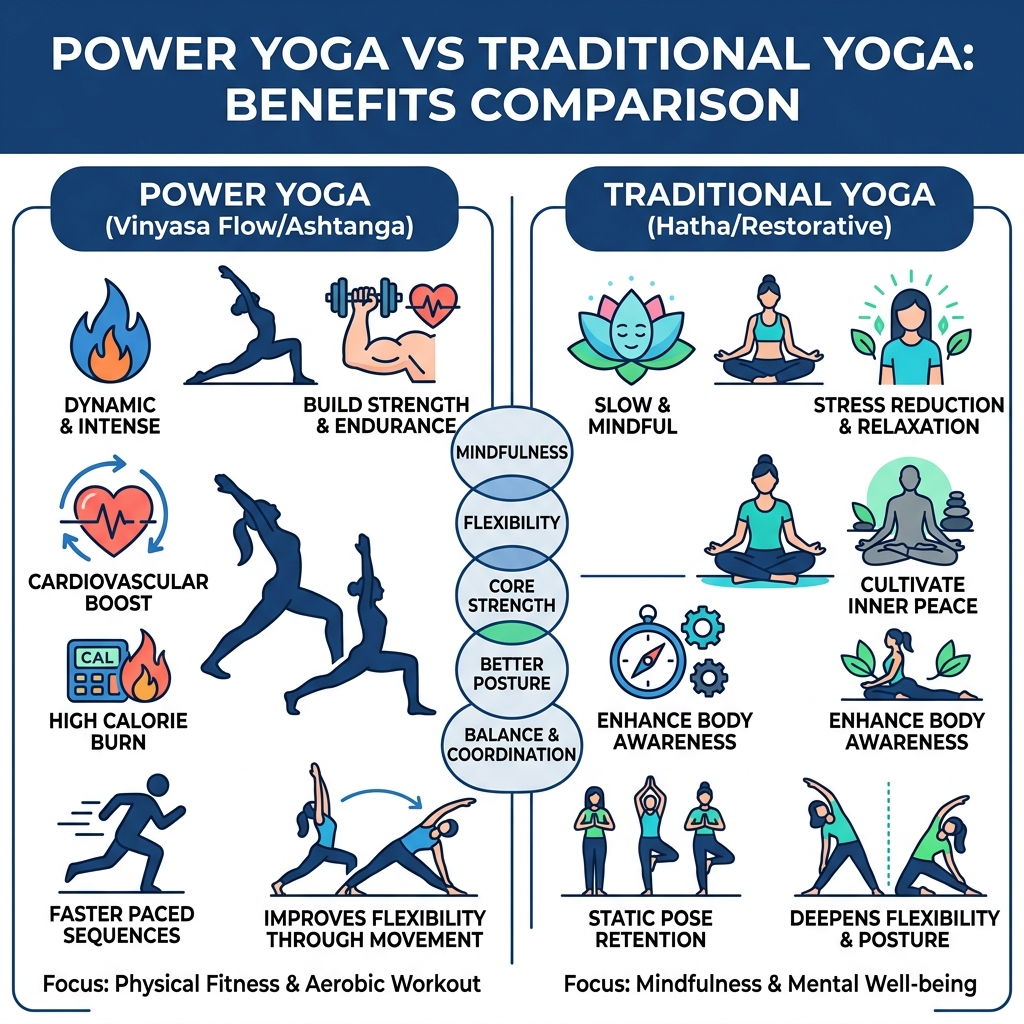
Power yoga workouts combine the mindfulness of traditional yoga with the intensity of strength training and cardio — giving you a full-body burn in a single session.
Here’s what you get from a power yoga workout:
- Strength – builds lean muscle through bodyweight resistance and dynamic poses
- Cardio – elevates heart rate with , continuous movement
- Flexibility – improves range of motion through flowing transitions
- Core stability – targets abs, back, and obliques throughout every sequence
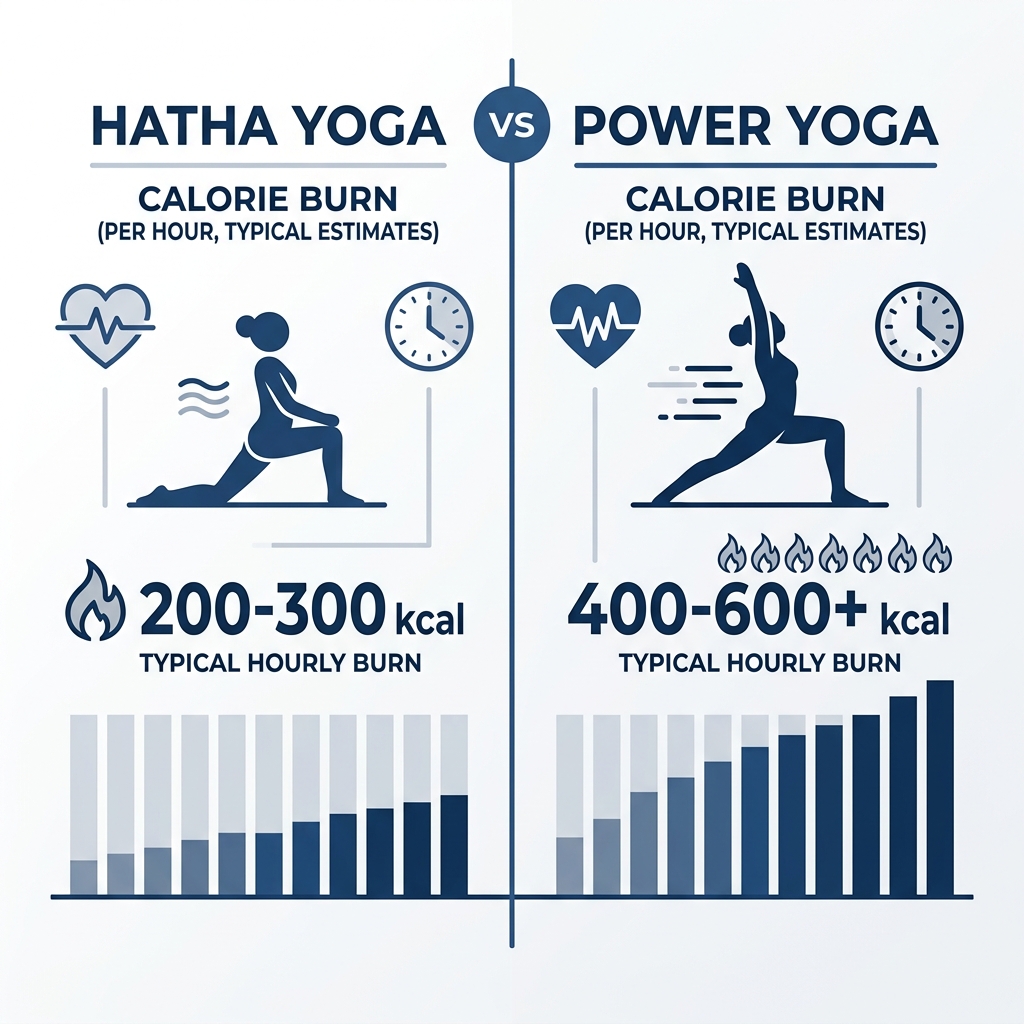
- Calorie burn – torches more calories than traditional yoga due to higher intensity
- Mental focus – reduces stress and builds endurance through breath-controlled movement
Unlike slow, restorative yoga, power yoga keeps you moving. There are no long pauses between poses. You flow from one movement to the next, building heat, strength, and stamina all at once.
It’s one of the most time-efficient workouts you can do — a 20-minute session can improve your posture, elevate your heart rate, and challenge muscles that conventional gym exercises often miss.
Whether you have 10 minutes in the morning or a full hour, power yoga meets you where you are. And you don’t need much to get started — just a mat and a willingness to show up.
I’m Jennifer Rapchak, Fitness Director at Results Fitness Alexandria, and with over 14 years of experience designing strength and HIIT-based programs, I’ve seen how power yoga workouts can transform the way people train. Read on for everything you need to build strength, boost cardio, and get the most out of every session.
Power yoga workouts helpful reading:
What is Power Yoga?
To understand power yoga, we have to look back at its roots. While traditional yoga has been around for thousands of years, power yoga is a relatively modern evolution. It primarily stems from Ashtanga Yoga, a rigorous and structured style of yoga that follows a specific set of sequences. Ashtanga Yoga history and philosophy teaches us that the practice is built on “eight limbs,” focusing on a continuous flow of movement that connects the body and mind.
In the mid-1990s, instructors like Bryan Kest and Beryl Bender Birch wanted to make this intense practice more accessible to the Western fitness world. They stripped away some of the rigid structure of Ashtanga—where you must master one pose before moving to the next—and replaced it with a more flexible, athletic approach. This is why you might hear it referred to as “gym yoga.” It’s designed for people who want to sweat, build muscle, and see tangible fitness results.
So, how does it differ from other styles? If you’ve ever taken a Hatha class, you know it’s often about holding poses and focusing on deep breathing. Vinyasa is closer to power yoga because it involves “flow,” but power yoga turns the volume up. It incorporates more functional fitness moves, like planks, push-ups, and even squats, into the traditional flow. More info about different types of yoga can help you see where power yoga fits in the broader spectrum of practice.
Characteristics of Power Yoga Workouts:
- Fast-Paced Transitions: You move with your breath, but the pace is brisk to keep the heart rate elevated.
- Strength-Based Poses: Expect to spend a lot of time in poses that challenge your upper body, legs, and core.
- Emphasis on Fitness: While mindfulness is a part of it, the primary goal is often physical conditioning.
- Creative Sequencing: Unlike Ashtanga, where the sequence is fixed, power yoga instructors have the freedom to mix things up, meaning no two classes are exactly the same.
- Heat Building: Because of the continuous movement, you’ll build significant internal heat, which helps with flexibility and detoxification.
The Science-Backed Benefits of Power Yoga Workouts
We often get asked if yoga can “really” be a workout. The answer is a resounding yes—especially when it’s power yoga. Because it fuses bodyweight strength training and HIIT-style cardio intervals with traditional poses, it offers a unique metabolic demand.
One of the biggest draws is the calorie burn. A typical power yoga session, which can last anywhere from 60 to 90 minutes in a studio setting, can torch significantly more calories than a restorative or Hatha class. Even a short, intense 20-minute flow can act as a metabolism booster, keeping your body in a “fat-burning” state long after you’ve rolled up your mat.
Beyond just burning calories, power yoga workouts are incredible for building lean muscle mass. By holding your own body weight in challenging positions, you engage small stabilizer muscles that are often neglected in traditional weightlifting. This leads to better overall functional strength.
How yoga improves flexibility is another key benefit. But in power yoga, we aren’t just stretching; we are building “active flexibility.” This means you have the strength to support your joints through their full range of motion. This is vital for injury prevention, especially for those of us who also participate in high-impact sports or heavy lifting.
From a cardiovascular perspective, the continuous flow of power yoga provides a sustained aerobic challenge. More info about aerobic yoga benefits highlights how this “flow” improves blood and oxygen circulation, which can lower the risk of heart disease and improve overall stamina.
Mental endurance is the “secret sauce” of power yoga. When you’re holding a difficult pose like Chair or Plank and your muscles are shaking, you’re training your brain to stay calm under pressure. This translates to better stress management in your daily life.
Essential Poses for Your Routine
If you’re ready to start, there are a few foundational poses that form the backbone of most power yoga workouts. Mastering these will allow you to flow through any sequence with confidence and safety.
- Sun Salutations (Surya Namaskar): These are the ultimate warm-up. They combine forward folds, planks, and backends to wake up every major muscle group.
- Chaturanga Dandasana (Four-Limbed Staff Pose): Think of this as a “yoga push-up.” It’s the primary way we build upper body and core strength. The key is to keep your elbows hugged in close to your ribs and your core tight as you lower down.
- Warrior II (Virabhadrasana II): This pose builds incredible leg strength and hip mobility. You’ll feel the burn in your quads while simultaneously opening your chest and shoulders.
- Plank Variations: We don’t just hold static planks. In power yoga, we might lift a leg, tap a toe, or transition into a Side Plank to fire up the obliques.
More info about mind-body fitness emphasizes that these poses aren’t just physical; they require deep concentration. A major component of this is Ujjayi breath, often called “ocean breath.” By breathing deeply through the nose with a slight constriction in the throat, you create internal heat and a focal point for your mind, which helps you power through the more difficult parts of the workout.
Building Functional Strength with Power Yoga Workouts
Functional strength is about preparing your body for the movements you do in everyday life—lifting, reaching, and balancing. Power yoga workouts are a masterclass in functional movement.
Take the High Plank to Push-up transition. This isn’t just about chest strength; it requires your entire core, legs, and shoulders to work as one unit. For those focusing on their midsection, a 12-Minute Power Yoga for Core Strength routine can be incredibly effective. Poses like Boat Pose (Navasana) and Side Plank specifically target the transverse abdominis and obliques, which are essential for protecting your lower back.
Using bodyweight as resistance is a safe and effective way to build muscle without the joint strain sometimes associated with heavy external weights. More info about yoga for strength shows that regular practice can lead to significant gains in muscle tone and endurance, making it a perfect supplement to a traditional gym routine.
Maximizing Calorie Burn in Power Yoga Workouts
If your goal is weight loss or high-intensity conditioning, you can “power up” your yoga by focusing on dynamic transitions. Instead of stepping back into a plank, you might “jump back” into Chaturanga. This adds a plyometric element that spikes the heart rate.
High-Intensity Yoga Transitions to Try:
- Crescent Lunge to Airplane: This challenges your balance and fires up the glutes and hamstrings.
- Warrior III: A standing balance that requires total-body engagement, from your standing foot all the way to your fingertips.
- Crow Pose to Plank: An advanced transition that builds explosive upper body power.
- Horse Pose with Heel Lifts: A deep squat variation that targets the inner thighs and calves while keeping the heart rate high.
These transitions turn your yoga mat into a HIIT zone. The “active recovery” happens during the brief moments you spend in Downward-Facing Dog, where you catch your breath before the next big push.
How to Structure Your Session
A well-structured power yoga session should feel like a bell curve: you start slow to warm up, reach a high-intensity “peak,” and then gradually cool down.
- Warm-up (5-10 minutes): Start with gentle movements like Cat-Cow to mobilize the spine. Move into a few rounds of Sun Salutation A to get the blood flowing.
- The Main Flow (15-30 minutes): This is where the “power” happens. Link your Warrior poses, lunges, and planks together. Focus on moving one breath per movement.
- The Peak Pose (5 minutes): Choose one challenging pose to work toward, like a balance or a deep core move.
- Cool-down (5-10 minutes): Slow things down with seated stretches or a Child’s Pose. This is where you reap the benefits of low-impact exercise options that help lower your heart rate and stretch out tight muscles.
- Savasana and Intention Setting: Never skip the final rest. Spend at least 2 minutes in stillness. Revisit the “one-word intention” you set at the start—whether it was “strength,” “patience,” or “energy.”
Understanding from-ashtanga-to-restorative-the-ultimate-guide-to-yoga-classes can give you a better idea of how to balance these high-intensity sessions with other types of movement throughout your week.
Frequently Asked Questions about Power Yoga
Is power yoga suitable for beginners?
Absolutely! While it is more intense than traditional yoga, it is highly adaptable. We recommend beginners start with modifications. For example, you can always drop your knees during a plank or a push-up. The key is to focus on proper form rather than speed. Working under professional supervision at a gym like Results Fitness Alexandria ensures you learn the fundamentals safely before progressing to more advanced flows.
What equipment is needed for power yoga?
The beauty of power yoga workouts is their simplicity. At a minimum, you just need a high-quality yoga mat. If you have a larger frame or want more room to move, an extra-large mat (around 8′ x 4′) can be a game-changer.
While most power yoga is done with just bodyweight, some “Yoga Sculpt” formats incorporate light dumbbells (5-10 pounds) for added resistance during squats and lunges. Always keep a water bottle nearby—you’re going to sweat!
How often should I practice power yoga?
For most people, incorporating power yoga 1-2 times per week is a perfect way to supplement a strength training or HIIT routine. It helps prevent overtraining by providing a different type of stimulus to the muscles and joints. If you are using it as your primary form of exercise, 3-4 times a week is sustainable, provided you allow for adequate recovery days. Consistency is more important than duration; even a 15-minute daily flow can yield better results than one 90-minute session once a month.
Conclusion
Power yoga is more than just a workout; it’s a way to build a resilient body and a focused mind. By combining the best elements of fitness—strength, cardio, and flexibility—into one seamless practice, it truly is the ultimate full-body challenge.
At Results Fitness Alexandria, we believe fitness should be accessible and empowering for everyone. Whether you’re looking for high-energy group classes, personalized training, or a supportive community to help you reach your goals, we’re here for you. We even offer childcare so you can focus entirely on your practice.
Ready to see what power yoga workouts can do for you? We invite you to come in and experience our amenities firsthand. We offer a free 1-day pass for all fitness levels, so there’s no reason to wait. Start your fitness journey today and discover the power within you. We can’t wait to see you on the mat!