How Meditation and Yoga Can Lower Your Stress Levels
Why Stress Reducing Yoga Belongs in Your Wellness Routine
Stress reducing yoga is one of the most effective, science-backed ways to calm your nervous system, ease physical tension, and improve your overall mental well-being.
Here are the most effective yoga practices for stress relief:
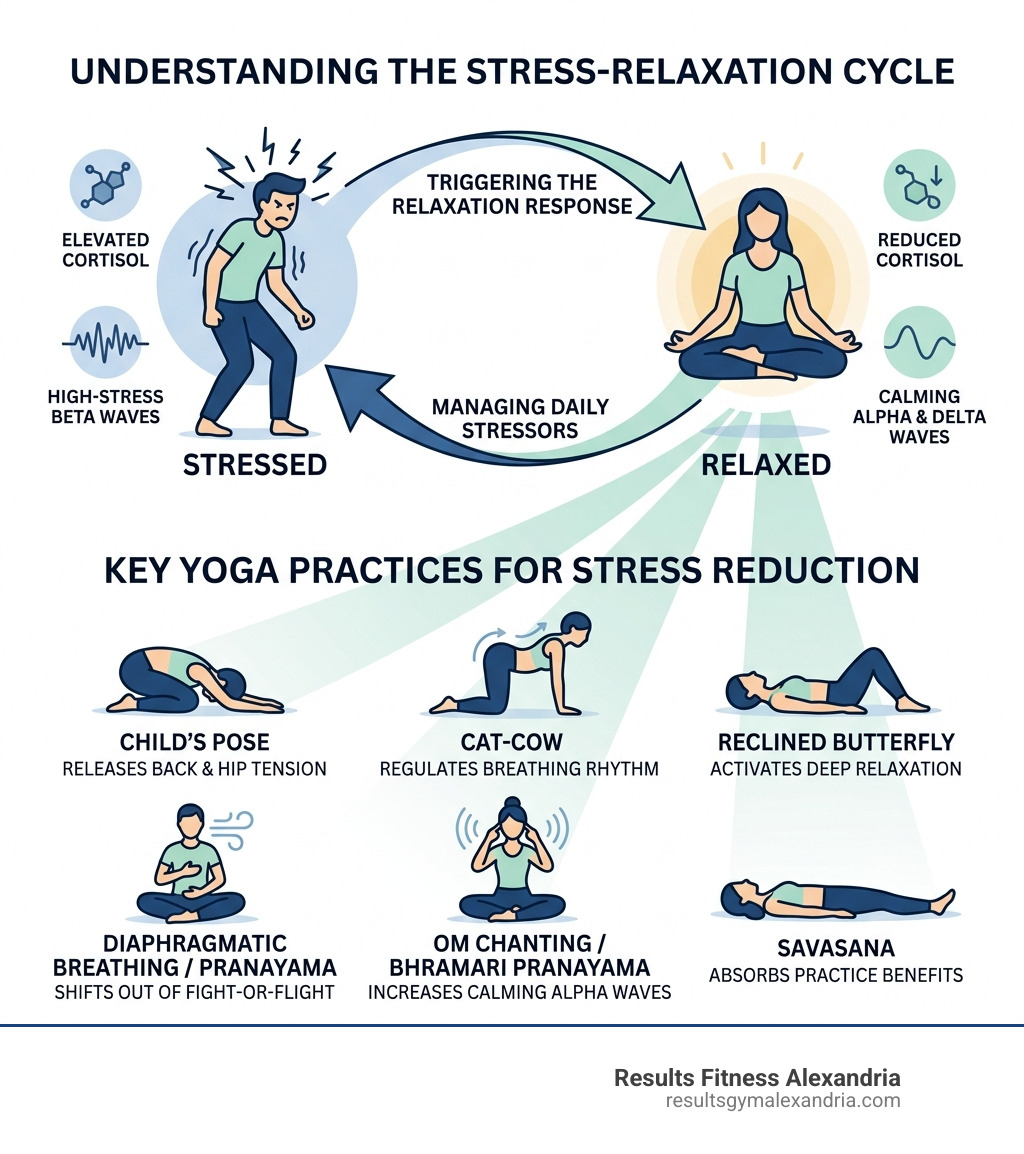
- Child’s Pose – releases tension in the back, hips, and shoulders
- Cat-Cow – loosens the spine and regulates breathing rhythm
- Reclined Butterfly – opens the hips and activates deep relaxation
- Diaphragmatic breathing / Pranayama – slows the breath and shifts the body out of fight-or-flight mode
- OM chanting / Bhramari Pranayama – shown to increase calming alpha brainwave activity
- Savasana – allows the nervous system to fully absorb the benefits of practice
Research backs this up. Studies show that yoga can reduce beta wave activity (linked to mental stress) by 1.67%, while increasing relaxing alpha waves by 15.40% and calming delta waves by 19.31%. Even a 10 to 20-minute session can produce measurable changes in your body and brain.
Whether you are completely new to yoga or just getting back on the mat, this guide will walk you through exactly how yoga reduces stress and how to build a simple routine that fits your life.
I’m Jennifer Rapchak, Fitness Director at Results Fitness Alexandria, and with over 14 years of experience in personal training and group fitness programming, I’ve seen how incorporating stress reducing yoga into a structured fitness routine transforms both physical and mental well-being. My goal here is to make this accessible and practical for every fitness level, so you can start feeling the benefits right away.
Handy Stress reducing yoga terms:
The Science of Stress Reducing Yoga: Measuring the Mind-Body Connection
When we talk about “feeling relaxed” after a yoga class, it isn’t just a placebo effect. There is a profound, measurable shift happening inside your brain and body. Scientists use various biosignals—like EEG (brainwaves), ECG (heart activity), and GSR (skin conductance)—to track exactly how stress reducing yoga alters our physiological state.
At its core, stress is a state of high arousal. Your brain is firing fast, your heart is racing, and your muscles are primed for action. Yoga acts as the “brake pedal” for this system. Research published in Frontiers in Human Neuroscience suggests that yoga doesn’t just stretch your hamstrings; it actually re-wires your brain’s response to pressure.
Measurable Reductions in Brain Activity
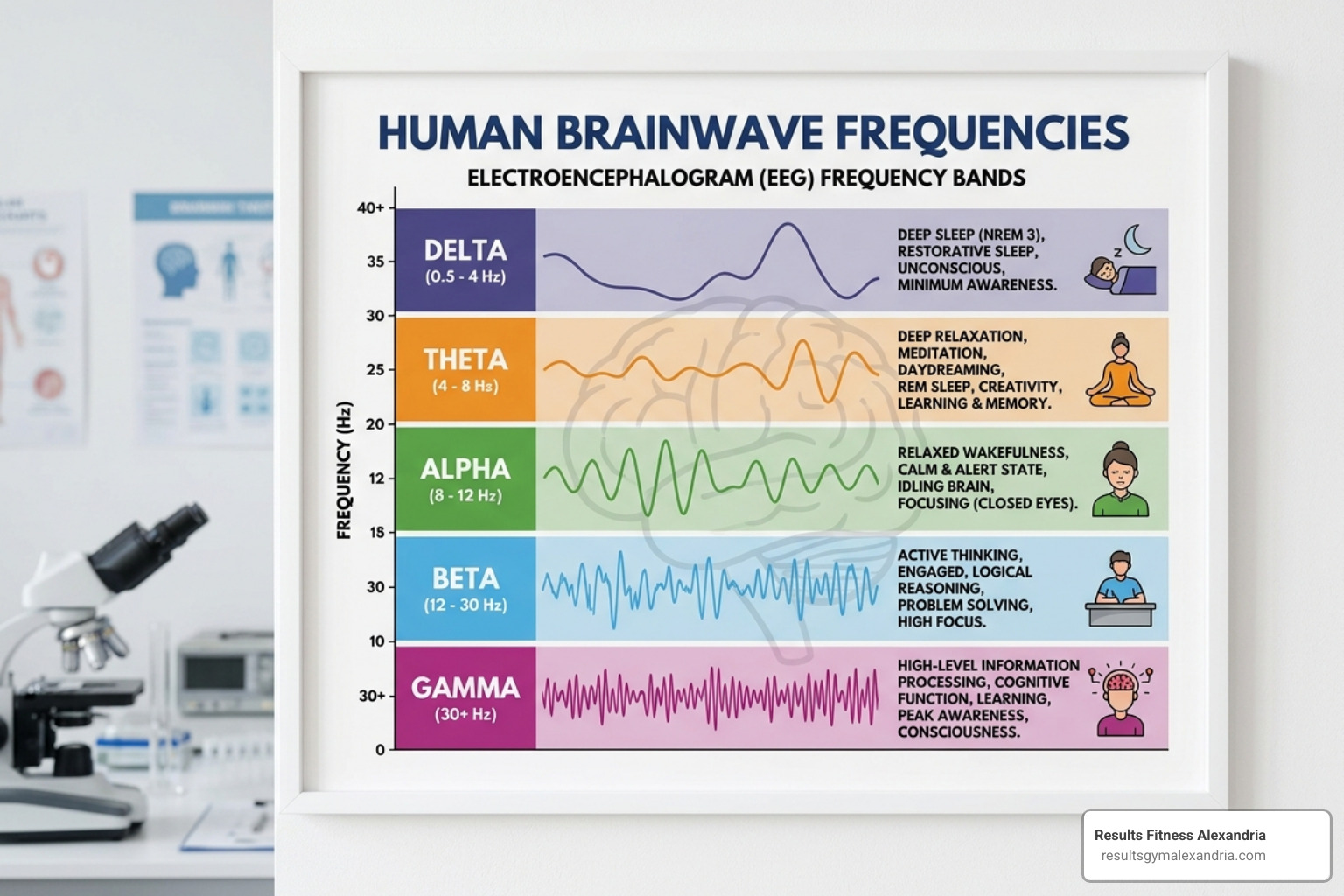
To understand how yoga works, we have to look at brainwaves. Our brains operate at different frequencies depending on what we are doing:
- Beta Waves (13–30 Hz): Associated with active thinking, focus, and—when too high—stress and anxiety.
- Alpha Waves (8–13 Hz): The “flow state” or relaxation frequency.
- Theta Waves (4–8 Hz): Deep relaxation and meditation.
- Delta Waves (0.1–4 Hz): Deep sleep and restorative healing.
Following a period of engaging in yoga, a study revealed a reduction of 1.67% in beta wave activity. While that might sound small, it was accompanied by notable increases of 19.31% in delta wave activity and 15.40% in alpha wave activity. Essentially, yoga helps your brain shift from “high-alert” mode into “rest-and-restore” mode. Additionally, gamma coherence—which is linked to emotional stability and higher consciousness—increased by 18.68%.
| Brainwave State | Before Yoga | After Yoga | Effect on Mind |
|---|---|---|---|
| Beta | High (Anxious) | -1.67% | Reduced “mental chatter” |
| Alpha | Low | +15.40% | Increased calm and focus |
| Delta | Low | +19.31% | Better restorative capacity |
| Theta | Low | +5.04% | Deeper meditative state |
Biosignals and Stress Classification
Beyond the brain, other biosignals tell the story of yoga’s success. For instance, Heart Rate Variability (HRV) is a key indicator of how well your nervous system handles stress. A study using 13 nonlinear HRV features achieved a 90% accuracy rate in classifying whether a person was stressed or un-stressed.
Galvanic Skin Response (GSR), which measures the electrical conductance of the skin (basically, how much you are sweating due to stress), has shown a 97.4% correlation with real-time stress levels. When we practice stress reducing yoga, these markers stabilize. Even Electromyography (EMG), which measures muscle tension, has shown a 97.8% accuracy in distinguishing between a stressed state and the relaxation achieved through yoga.
Physiological Mechanisms: Cortisol, HRV, and the Vagus Nerve
Why does moving our bodies into specific shapes change our chemistry? It all comes down to the parasympathetic nervous system. This is the part of your nervous system that tells your body it is safe to relax, digest food, and heal.
Heart Rate Variability and Emotional Regulation
One of the most powerful “hacks” for the nervous system is the vagus nerve. This long nerve runs from the brainstem down to the abdomen and acts as the primary channel for the parasympathetic system. When you practice slow, rhythmic breathing in a yoga class, you stimulate the vagus nerve.
This stimulation leads to an increase in HRV. High HRV is a good thing—it means your heart is responsive to your breath and your environment, allowing you to bounce back from stressful events more quickly. This is especially important during high-pressure times, such as stress reduction through exercise during the holiday season.
Hormonal Balance and Muscle Tension
Chronic stress keeps our bodies flooded with cortisol, often called the “stress hormone.” While cortisol is helpful for getting us out of bed in the morning, having too much of it for too long can wreck your sleep, digestion, and immune system.
Yoga has been shown to decrease the levels of cortisol in the body. As cortisol drops, your brain begins to restore “feel-good” hormones like dopamine and serotonin. This hormonal shift is why you might walk into the gym feeling “fried” and walk out feeling like a new person. Furthermore, by focusing on physical poses, you can ease pain and release the physical “armor” of muscle tension that we often carry in our necks and shoulders.
Top Poses and Techniques for Immediate Relief
You don’t need to be able to touch your toes or balance on your head to reap the benefits of stress reducing yoga. In fact, some of the most effective poses for stress relief are the simplest ones.
Grounding Poses for a Stress Reducing Yoga Routine
If you’re feeling overwhelmed, try these 4 yoga poses for stress relief that we often incorporate into our sessions here in Alexandria:
- Child’s Pose (Balasana): This is the ultimate “reset” button. By folding forward and resting your forehead on the mat, you signal to your brain that you are protected and safe. It’s also a great way to improve your flexibility in the hips and lower back.
- Cat-Cow (Chakravakasana): Moving between these two poses helps synchronize your breath with movement, which is a foundational skill for different types of yoga.
- Happy Baby (Ananda Balasana): This pose releases the lower back and opens the hips, areas where many of us store emotional tension.
- Forward Fold (Uttanasana): Letting your head hang below your heart can have a naturally soothing effect on the nervous system.
- Reclined Butterfly (Supta Baddha Konasana): A wonderful way to open the chest and hips without any effort, allowing gravity to do the work.
Breathwork and Advanced Stress Reducing Yoga Practices
Breathwork, or Pranayama, is perhaps the most portable stress-relief tool you own. You can do it at your desk, in traffic, or during a workout.
- Bhramari Pranayama (Humming Bee Breath): By making a gentle humming sound on the exhale, you create a vibration that has been shown to boost alpha and theta brainwave power, leading to immediate feelings of happiness and calm.
- Sudarshan Kriya: A specific rhythmic breathing technique that has been studied for its ability to improve stress tolerance and increase alpha band power.
- Box Breathing: Inhale for 4 counts, hold for 4, exhale for 4, and hold for 4. This is a favorite of elite athletes and even Navy SEALs for staying calm under pressure.
- OM Chanting: Chanting “OM” for just 20 minutes has been scientifically shown to significantly increase alpha power in the brain.
Designing Your Routine: 10 to 30-Minute Stress Relief Flows
The best yoga routine is the one you actually do. At Results Fitness, we believe in fitting wellness into your lifestyle, not the other way around.
Beginner-Friendly Integration
If you’re a beginner, don’t feel like you need a 90-minute session to make it count.
- 10-Minute Quick Flow: Focus on neck releases, Cat-Cow, and a quick Child’s Pose. This is perfect for an afternoon energy dip or a “micro-break” during work.
- 20-Minute Gentle Routine: This allows time for a few standing poses like Low Lunge or Downward Dog, ending with a long Savasana.
- 30-Minute Yin Yoga: This is a slower, floor-based practice where you hold poses for 3–5 minutes. It targets the connective tissues and is incredibly effective for deep anxiety relief.
When starting out, don’t be afraid to use props! Pillows, couch cushions, or a stack of books can act as yoga blocks to make poses more accessible. Whether you prefer aerobic-yoga classes or a more restorative guide to yoga classes, the key is consistency.
Personalizing Your Practice
Every body is different. What feels like a “deep stretch” for one person might feel like “pain” for another. It is vital to listen to your body’s signals. If you have specific physical limitations or injuries, seeking professional guidance from a trainer or instructor is the best way to ensure you are practicing safely. For those looking for something truly unique, you might even explore aerial yoga private sessions to find relief from gravity’s pressure on the spine.
Frequently Asked Questions about Stress Reducing Yoga
How quickly can yoga reduce my stress levels?
You can often feel a shift in your nervous system in as little as 30 seconds of intentional breathing. However, measurable changes in brainwaves and cortisol levels typically occur after a 10 to 20-minute session. If you practice consistently for a few weeks, you’ll likely notice a “compounding effect” where your baseline stress level stays lower throughout the day.
Do I need special equipment to start yoga for stress?
Not at all! While a yoga mat provides grip and cushioning, many stress-reducing poses can be done on a carpet or even in bed. You can use household items like pillows or rolled-up towels as bolsters to support your body in restorative poses.
Can yoga be combined with other fitness workouts?
Absolutely. In fact, we recommend it! Yoga is the perfect “active recovery” to pair with strength training or high-intensity workouts. It helps flush out metabolic waste, reduces muscle soreness, and ensures that your nervous system doesn’t stay in a “high-stress” state after a tough gym session.
Conclusion
At Results Fitness Alexandria, we know that fitness is about more than just how much you can bench press or how fast you can run. It’s about how you feel when you wake up in the morning and how you handle the challenges life throws your way.
Incorporating stress reducing yoga into your life is a powerful act of self-care that pays dividends in every other area of your health. By understanding the science behind the practice—from the increase in alpha waves to the reduction in cortisol—you can approach your mat with the confidence that you are truly changing your biology for the better.
Ready to find your calm? We invite you to join our group fitness and yoga community here in Alexandria. Whether you want to integrate yoga into a personal training plan or just need a quiet space to breathe, we are here to support your journey.
Come see us at Results Fitness Alexandria and grab a free 1-day pass to try our amenities and classes. Let’s work together to make stress a thing of the past!