Group Workout Exercises That Will Make Your Class Actually Enjoy Burpees
Why the Best Group Workout Exercises Don’t Need a Full Equipment Room
The best group workout exercises don’t require a gym packed with gear — they require a smart plan and a great instructor.
Here’s a quick look at the most effective group workout formats you can use right now:
| Format | Equipment Needed | Best For |
|---|---|---|
| Unilateral dumbbell circuit | One dumbbell per person | Core strength, functional movement |
| Partner HIIT | One medicine ball per pair | Accountability, cardio |
| Body-weight descending ladder | None | All levels, progression tracking |
| 7-7-7 kettlebell template | One kettlebell per person | Full-body strength and conditioning |
| Weight plate circuit | One plate per person | Hypertrophy, metabolic conditioning |
Being a great group fitness instructor means being a master of improvisation. Whether you’re facing an unexpectedly large class, a shortage of dumbbells, or a wide mix of fitness levels, the right workout structure can turn those challenges into opportunities — and even make people genuinely look forward to burpees.
Peer energy is real. When people train together, they push harder, stay longer, and come back more often. That’s not just feel-good advice — it’s the foundation of effective group fitness programming.
I’m Jennifer Rapchak, Fitness Director at Results Fitness Alexandria, and with over 14 years of experience designing and leading group workout exercises as an ACE-certified trainer and Les Mills instructor, I’ve seen how the right format can transform a class from routine to remarkable. Let’s get into the formats that actually work.
The Power of Minimal Equipment in Group Workout Exercises
In a busy group fitness studio, equipment is often the first bottleneck. We have all experienced that moment of panic when thirty people walk through the door for a lunchtime class, and we only have fifteen matching pairs of dumbbells.
However, relying on minimal equipment isn’t just a backup plan for crowded days; it is a highly deliberate programming strategy. Designing workouts around fewer pieces of gear maximizes your studio’s space efficiency. It allows participants to move freely in multiple planes of motion without tripping over stray iron. It also guarantees seamless class flow. Instead of spending precious minutes transitions between heavy racks, bar plates, and bands, your members can focus entirely on keeping their heart rates up.
Furthermore, stripping away heavy machinery forces participants to master their own biomechanics. When you simplify the tools, you amplify the movement quality. This approach makes classes accessible to all fitness levels while keeping the energy electric. To truly understand how this fits into a broader fitness philosophy, check out the 10 Benefits of Group Fitness Classes to see how community and smart design go hand-in-hand.
Maximizing Core Activation with Single-Dumbbell Training
One of the easiest ways to solve an equipment shortage while upgrading your workout is to transition your class to single-dumbbell training. Many people assume they need a matched pair of weights to build strength, but unilateral (one-sided) loading is actually superior for core engagement and functional movement patterns.
When you hold a single dumbbell on one side of your body, you create an uneven distribution of resistance. Your body naturally wants to lean toward the weighted side. To prevent this, your deep core stabilizers—specifically your obliques, quadratus lumborum, and transverse abdominis—must fire rapidly to keep your spine neutral. This is called anti-lateral flexion, and it is one of the most functional ways to train your midsection.
Many of our daily movements are asymmetrical. Whether we are carrying a heavy bag of groceries, picking up a child, or putting a suitcase in an overhead bin, we rarely load our bodies evenly. By programmed single-dumbbell group workout exercises, we train our members for the physical demands of real life.
To put this into action, we love using a Unilateral Dumbbell Circuit. Have your class perform 12 reps on each side of the following movements, cycling through the entire circuit 4 times:
- Suitcase Squats: Hold the dumbbell in one hand like a suitcase. Maintain an erect, tall posture and avoid leaning to the side as you squat.
- Single-Arm Chest Flies: Lying on a mat, perform a fly with only one arm to challenge your rotational core stability.
- One-Arm Deadlifts: Keep your hips square and your spine neutral, avoiding any rotation as you hinge.
- Unilateral Quadruped Rows: From a bird-dog or tabletop position, row the dumbbell to your ribs while keeping your hips perfectly level.
For an extra challenge, you can structure these movements into a Single-Dumbbell Pyramid. Have your class perform Rear Deficit Lunges, Eccentric-Load Squats, and V-Sit Chops. Start at 6 reps, progress up to 8 and 10, rest for 1 minute, and then reverse the sequence back down to 6. If you want to dive deeper into how this style of training builds a rock-solid midsection, read about Exploring the Benefits of Core-Focused Group Workouts.
Structuring Body-Weight Group Workout Exercises for High Intensity
You don’t need any external resistance to leave your class dripping in sweat. Body-weight movements are the ultimate tool for group fitness because they eliminate setup times and are infinitely scalable. However, to keep high-intensity body-weight training from feeling like a repetitive chore, you need a creative structure.
One of our favorite formats is the Body-Weight Descending Ladder. In this setup, you choose three to four compound movements—such as Lateral Leaps, Prone Jack/Pushups, and Squat Jumps. Participants start by performing 12 reps of each exercise. In the next round, they complete 10 reps, then 8, reducing by 2 reps each set until they reach a final, explosive round of 2 reps. This descending structure provides immediate, highly satisfying progression benchmarks. Members can visualize the finish line, which fuels their commitment to finish strong.
Another brilliant format is the No-Repeat Wave. This structure is designed to sustain mental engagement and prevent the psychological fatigue that comes with doing the same circuits over and over. You can group your exercises into seven distinct “waves” of five different movements. Each exercise is performed continuously for 30 seconds with absolutely zero repeated movements.
To see how a fully structured, equipment-free routine flows in real-time, you can explore this Sweaty Full Body HIIT No-Repeat Workout for ideas on how to group your cardiovascular, lower-body, and core intervals.
Dynamic Partner and Team-Based Challenges
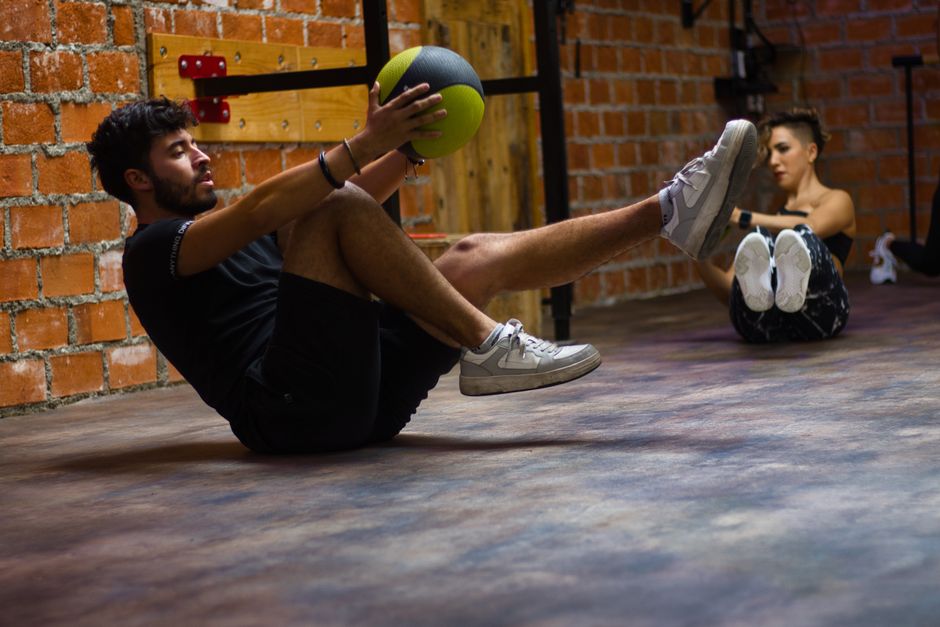
There is a unique magic that happens when you pair people up in a group fitness environment. Partner training instantly shifts the atmosphere of a room from self-focused concentration to shared, high-energy accountability. When participants are paired up, they naturally work harder, push past self-imposed limits, and support each other through tough intervals. It builds a genuine social atmosphere that keeps members coming back week after week. If you want to explore how these dynamics function in smaller settings, take a look at how you can Discover the Benefits of Small Group Fitness Training.
Partner-Play HIIT Formats
High-Intensity Interval Training (HIIT) requires brief, maximal efforts followed by dedicated recovery. Partner training is perfectly suited for this because it naturally accommodates a 1:1 work-to-rest ratio. While Partner A is working at maximum intensity, Partner B is resting, cheering them on, or acting as a peer coach to monitor form.
For a simple and effective Partner-Play HIIT setup, pair your participants up and hand each pair a single 8- to 12-pound medicine ball. Run 1-minute intervals where the partners alternate work and rest, cycling through the entire list 3 times:
- Burpee to Medicine Ball Pass: Partner A performs a burpee, picks up the ball, and passes it to Partner B, who then starts their burpee.
- Medicine Ball Slams: Partner A performs explosive overhead slams for 30 seconds while Partner B holds an active recovery plank, then they swap.
- Squat Chops: Partner A performs a rotational squat chop, handing the ball off to Partner B at the top of the movement.
Gamified Group Workout Exercises for Maximum Engagement
Gamification is the secret weapon of member retention. When you turn conditioning into a game or a collaborative challenge, participants forget about the burning in their lungs and focus on the goal.
Two of the most popular functional fitness structures we use to gamify classes are AMRAP (As Many Rounds As Possible) and EMOM (Every Minute on the Minute).
- In an AMRAP format, you set a timer for 10 to 15 minutes and challenge pairs or small teams to complete as many rounds of a specific exercise list as possible, sharing the workload. One partner can work while the other holds a static hold (like a wall sit or a plank).
- In an EMOM format, a specific task must be completed at the start of every minute. Whatever time is left in that minute is the participant’s rest period. This creates a playful race against the clock.
To make these games visual, always use a large whiteboard at the front of the class to track team rounds or times. This keeps the goal clear, fosters friendly competition, and makes the entire conditioning session feel like a collaborative team effort.
High-Density Templates: Kettlebells and Weight Plates

When your goal is to maximize caloric expenditure and build metabolic conditioning in a short amount of time, you need high-density training templates. Training density simply means doing more physical work in less time. By utilizing a single kettlebell or a single weight plate, you can deliver a brutal, highly effective full-body workout that torches fat, builds lean muscle, and dramatically improves VO2 max. To understand how to integrate these high-density tools into your overall fitness routine, refer to The Ultimate Guide to Group Fitness Classes.
The 7-7-7 Kettlebell Workout Template
The 7-7-7 Kettlebell Workout is a legendary high-density template that has quietly become a favorite in functional fitness circles. The premise is beautifully simple:
- 7 Exercises
- 7 Repetitions each
- 7 Total rounds
This adds up to exactly 343 reps. When performed with minimal rest between movements and a 15- to 60-second recovery break between rounds, the entire workout can be wrapped up in a highly efficient 20 to 30 minutes. Research shows that during intense, high-density kettlebell intervals, trained individuals can burn up to 20 calories per minute, with heart rates climbing to near-maximum levels.
To run this template successfully in a group class, select a weight where participants can complete 7 reps with 1 to 2 reps left in the tank. The order of the movements is highly strategic, placing heavy, complex compound movements first when energy and focus are at their highest:
- Kettlebell Swing (Hinge)
- Goblet Squat (Squat)
- Kettlebell Thruster (Squat + Push)
- One-Arm Kettlebell Row (Pull)
- Kettlebell Reverse Lunge (Unilateral Lower)
- Kettlebell Overhead Press (Push)
- Kettlebell Russian Twists (Core Finisher)
For a complete breakdown of how to scale this workout, prevent lower-back strain, and choose the right starting weights, check out the comprehensive 7-7-7 Kettlebell Workout Guide.
Full-Body Weight Plate Circuits
Another incredible tool for high-density group training is the standard Olympic weight plate. You don’t need a barbell to get the benefits of plate training; a single plate can be gripped in various ways to create a highly demanding metabolic circuit.
By utilizing a high-intensity resistance circuit with a weight plate, you can ditch traditional, steady-state cardio entirely while still driving massive improvements in cardiovascular endurance and VO2 max. To stimulate muscle hypertrophy, encourage your advanced participants to choose a plate weight that allows them to work close to failure within the 8 to 12 rep range for each movement.
We love using this 6-exercise full-body weight plate circuit to keep classes dynamic:
- Plate Squat Swings (10 reps): Swing the plate between your legs and press it overhead, engaging your glutes, shoulders, and core.
- Lateral Lunges with Front Plate Raise (10 reps total, 5 per side): Step laterally while raising the plate to shoulder height to fire up your adductors, glutes, and deltoids.
- Overhead Plate V-Sit Flutter Kicks (to failure): Hold the plate overhead while performing core-strengthening flutter kicks.
- Jump Switch Lunges (to failure): Hold the plate tight to your chest as you explosively switch lunges.
- V-Sit Twists (to failure): Rotate the plate from hip to hip to target your obliques.
- RDL to Squat Clean Press (to failure): A fantastic total-body burner that combines a Romanian deadlift, a clean, and an overhead press.
Complete 3 full sets of this circuit, adjusting the plate weight to match individual fitness levels. For more inspiration on how to format these movements, check out Senada Greca’s Full-Body Weight Plate Workout.
Safety, Modifications, and Multi-Level Adaptations
As group fitness instructors, our primary job is to keep our members safe. Because group classes attract a wide variety of experience levels, ages, and physical limitations, we must design our workouts with scalability in mind. Every exercise we program should have an obvious path to make it easier (regression) or harder (progression). To learn more about navigating different class styles safely, read How to Benefit from Different Types of Group Fitness Classes.
Scaling for Mixed-Ability Groups
Scaling isn’t just about changing the weight on a bar. In a minimal-equipment class, we can easily adapt the difficulty of an exercise by manipulating two key variables: range of motion (ROM) and tempo.
If a participant is dealing with joint discomfort or is new to fitness, we can reduce their range of motion. For example, a full squat jump can be regressed to a shallow body-weight squat with a calf raise. Conversely, if an advanced lifter is using a lighter weight than usual due to equipment availability, we can increase their muscle activation by slowing down the movement. Adding a 3-second eccentric (lowering) phase or holding a pause at the bottom of a movement increases time under tension, providing a massive challenge without needing heavier iron.
Essential Safety Cues for Instructors
When leading group workout exercises, clear, actionable verbal cues are essential for preventing injury. Avoid vague phrases like “tighten your core” and use specific, anatomical cues instead.
- During Unilateral Squats and Lunges: Remind participants to keep their chest proud and avoid leaning to the side. Cue them to “keep your belt buckle facing straight forward.”
- During Kettlebell Hinges and Swings: Ensure they maintain a neutral spine. Tell them to “imagine closing a car door with your hips” to encourage a true hip hinge rather than a squat.
- During Planks and Pushups: Keep a straight line from heels to head. Cue them to “push the floor away and pull your belly button toward your spine.”
Frequently Asked Questions about Group Workout Exercises
How can instructors handle a shortage of equipment in large classes?
Instructors can easily manage large crowds by using single-dumbbell unilateral circuits, pairing participants up to share equipment in a 1:1 work-to-rest partner format, or switching to high-intensity, no-equipment body-weight structures like descending ladders or no-repeat waves.
What are the benefits of training with a single dumbbell instead of a pair?
Using a single dumbbell forces unilateral loading. This asymmetrical resistance requires your core stabilizers to work significantly harder to maintain proper spinal alignment, while mimicking functional, real-life movement patterns.
How do partner exercises enhance a high-intensity workout?
Partner exercises naturally build a 1:1 work-to-rest ratio, allowing one person to recover or coach while the other works. They also increase social accountability, boost motivation, and make challenging conditioning intervals feel interactive and fun.
Conclusion
At Results Fitness Alexandria, we believe that the best workout is the one you actually look forward to attending. Group fitness is more than just burning calories; it is about building a supportive, high-energy community that keeps you accountable and motivated to reach your goals.
Whether you are looking to master the single-dumbbell squat, conquer a partner HIIT challenge, or sweat through a high-density kettlebell circuit, our expert instructors in Alexandria, Virginia, are here to guide you every step of the way.
Ready to experience the power of community fitness for yourself? We invite you to claim a free 1-day pass to try our premium amenities and explore our diverse Group Exercise Programs. Come see why our members actually enjoy their burpees—Join Our Group Fitness Classes today!