Build Cardiovascular Endurance: Stronger Heart 2025
Why Building Cardiovascular Endurance Transforms Your Health and Daily Life
Build cardiovascular endurance to transform your health, boost your stamina, and make everyday activities feel easier. Here’s what you need to know:
Key Steps to Build Cardiovascular Endurance:
- Start with aerobic exercise – Walk, jog, or cycle for 30 minutes, 3-5 days per week.
- Follow the 150-minute rule – Aim for 150 minutes of moderate-intensity exercise weekly.
- Progress gradually – Increase workout time or intensity by 10-20% each week.
- Add interval training – Include HIIT sessions 1-2 times per week for faster results.
- Stay consistent – Expect noticeable improvements in 8-12 weeks.
Cardiovascular endurance is your heart and lungs’ ability to supply oxygen to your muscles. Improving it means you’ll have more energy for daily life, from playing with your kids to carrying groceries. Beyond feeling less winded, you’ll reduce your risk for chronic diseases, improve your mood, and manage your weight more effectively.
When you exercise, your body builds more mitochondria in your muscle cells. These are the powerhouses that generate energy, making your body more efficient at using oxygen. This allows you to exercise longer and recover faster.
Building cardiovascular endurance is achievable for everyone, regardless of fitness level. Starting with just 10-15 minutes of activity is enough to trigger positive changes in your heart and lungs.
As Jennifer Rapchak, Fitness Director at Results Fitness Alexandria, I’ve helped countless members build endurance. In this guide, I’ll share evidence-based strategies to help you boost your stamina and strengthen your heart.
Understanding Cardiovascular Endurance and Its Benefits
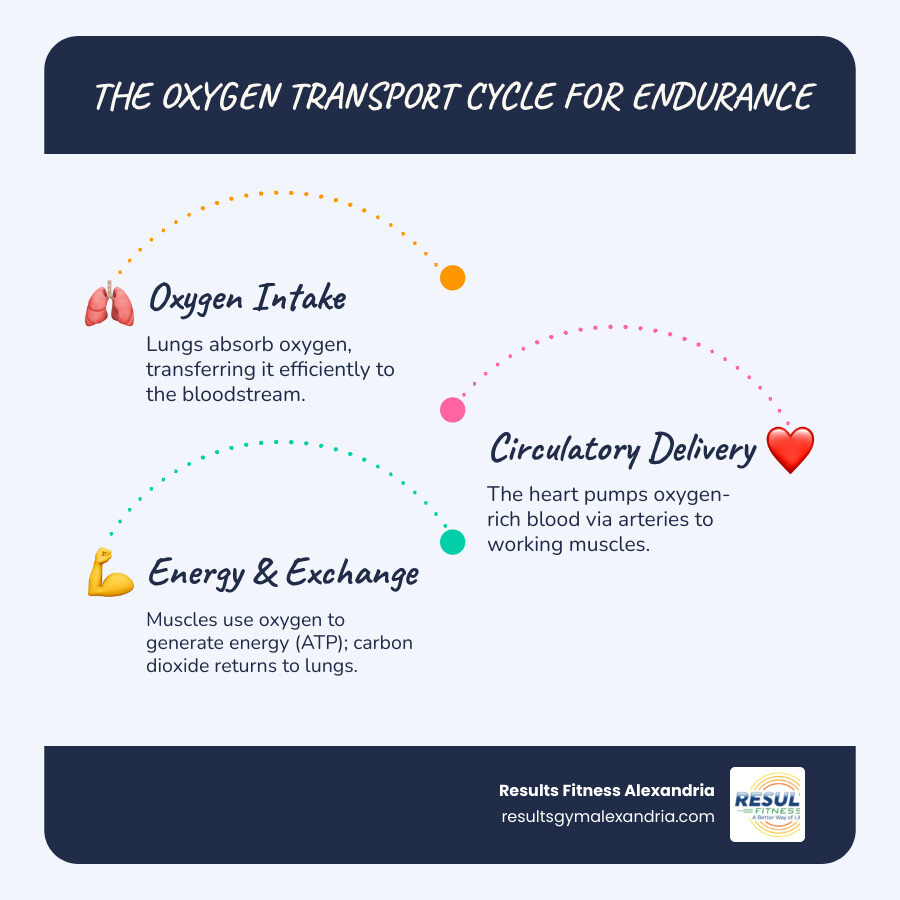
Your cardiovascular system is your body’s delivery network, transporting oxygen to every cell. When you build cardiovascular endurance, you make this system more efficient. This efficiency is often measured by VO2 Max—the maximum amount of oxygen your body can use during intense exercise. A higher VO2 Max translates to better overall health, from disease prevention to more daily energy and mental clarity. For a deeper dive, check out our page on the Benefits of Endurance.
What is Cardiovascular Endurance?
Cardiovascular endurance, also called aerobic fitness, is your heart and lungs’ ability to supply muscles with oxygen during sustained physical activity. As research from the National Center for Biotechnology Information defines it, this is “the ability of your heart and lungs to fuel your body with oxygen.” Good endurance allows you to maintain moderate-intensity exercise for longer periods without feeling wiped out. Activities like running, cycling, and swimming are ideal for building this fitness.
Key Benefits of a Strong Heart and Lungs
The advantages of a strong cardiovascular system are life-changing. Here are the key benefits:
-
Reduced Risk of Chronic Diseases: Regular cardio is a powerful defense against heart disease, high blood pressure, and type 2 diabetes. The American Heart Association recommends at least 150 minutes of aerobic exercise per week. Medical resources on Cardiovascular Disease prevention offer more detail.
-
Easier Weight Management: Cardio burns significant calories. Combined with resistance training, it helps build lean muscle, which boosts your resting metabolic rate.
-
Improved Mood and Mental Well-being: Exercise is a natural mood booster that reduces stress and anxiety while promoting better sleep.
-
More Energy for Daily Life: By making your cardiovascular system more efficient, everyday tasks become less exhausting.
-
Better Sleep: Regular cardio promotes deeper, more restorative sleep, which is vital for recovery.
-
Stronger Bones: Weight-bearing aerobic exercises like walking and jogging help build and maintain bone density, reducing your risk of osteoporosis.
For more insights, explore our guide on Better Heart Health.
Stamina vs. Endurance: What’s the Difference?
While ‘stamina’ and ‘endurance’ are often used interchangeably, they have subtle differences. Stamina refers to your mental and physical energy for an activity—how long you can sustain effort before fatigue sets in. Endurance is more specific to your body’s physical capability to sustain exercise over time. Think of stamina as your feeling of energy, while endurance is your body’s measured physical capacity. When you build cardiovascular endurance, both improve together.
Introduction
Why Building Cardiovascular Endurance Transforms Your Health and Daily Life
Build cardiovascular endurance to transform your health, boost stamina, and make daily activities easier. Here’s what you need to know:
Key Steps to Build Cardiovascular Endurance:
- Start with aerobic exercise – Walking, jogging, or cycling for 30 minutes, 3-5 days per week
- Follow the 150-minute rule – Aim for 150 minutes of moderate-intensity exercise weekly
- Progress gradually – Increase workout time or intensity by 10-20% each week
- Add interval training – Include HIIT sessions 1-2 times per week for faster results
- Stay consistent – Expect noticeable improvements in 8-12 weeks with regular training
Cardiovascular endurance is your heart and lungs’ ability to supply oxygen to your muscles. Improving this means you’ll have more energy for daily life and feel less breathless. The benefits are significant, including a reduced risk of chronic diseases like heart disease and type 2 diabetes, better mood, and more effective weight management.
When you exercise at a moderate intensity, your body builds more mitochondria in your muscle cells. These are the powerhouses that generate energy, making your body more efficient at using oxygen so you can exercise longer.
Building cardiovascular endurance is achievable at any age or fitness level. You don’t need to run marathons; starting with just 10-15 minutes of activity is enough to trigger positive adaptations.
As Jennifer Rapchak, Fitness Director at Results Fitness Alexandria, I’ve helped countless members build endurance through structured workouts. In this guide, I’ll share evidence-based strategies to help you boost your stamina, strengthen your heart, and feel more energetic.
Understanding Cardiovascular Endurance and Its Benefits
Your cardiovascular system delivers oxygen and nutrients throughout your body. When you build cardiovascular endurance, you optimize this system for better performance. This efficiency is often measured by VO2 Max—your body’s maximum oxygen use during intense exercise. A higher VO2 Max means a more robust system, leading to long-term health, disease prevention, and more daily energy. For more insights, check out our page on the Benefits of Endurance.
What is Cardiovascular Endurance?
Cardiovascular endurance, or aerobic fitness, is how well your heart and lungs supply muscles with oxygen during continuous physical activity. As research from the National Center for Biotechnology Information explains, it’s the “ability of your heart and lungs to fuel your body with oxygen.” Good endurance lets you sustain moderate-intensity exercise for extended periods before feeling exhausted. This is why activities like running, cycling, and swimming are so effective.
Key Benefits of a Strong Heart and Lungs
When you build cardiovascular endurance, you invest in your present and future well-being.
- Reduced risk of chronic diseases: Regular cardio is a top defense against heart disease, high blood pressure, and type 2 diabetes. The American Heart Association recommends 150 minutes of aerobic exercise weekly. Learn more about Cardiovascular Disease prevention.
- Weight management: Cardio burns calories, and when combined with strength training, it builds muscle to increase your resting metabolic rate.
- Improved mood and mental well-being: Exercise is a natural mood booster that reduces stress and anxiety. A 2016 study found that yoga and meditation improved feelings of peace, focus, and endurance.
- Increased energy levels: By improving your cardiovascular efficiency, daily tasks become easier and you feel less winded.
- Stronger bones: Weight-bearing exercises like walking or jogging help maintain bone density, reducing osteoporosis risk.
Learn more about how to achieve Better Heart Health with us at Results Fitness Alexandria.
Stamina vs. Endurance: What’s the Difference?
While related, stamina and endurance differ. Stamina is the mental and physical energy to perform an activity without feeling fatigued. Endurance is the body’s physical capability to sustain exercise for extended periods. Both improve as you build cardiovascular endurance.
| Feature | Stamina | Endurance |
|---|---|---|
| Definition | The mental and physical energy we have to perform an activity without feeling fatigued | Our body’s physical capability to sustain exercise for extended periods |
| Focus | How energetic and mentally engaged we feel during activity | How long our cardiovascular and muscular systems can physically perform |
| Example | Feeling mentally sharp and physically energized during a 30-minute run | Being physically able to complete a 30-minute run without stopping |
Understanding Cardiovascular Endurance and Its Benefits
When you build cardiovascular endurance, you train your cardiovascular system to become more efficient. Your heart pumps more blood, your lungs extract more oxygen, and your muscles receive what they need with less effort. This efficiency is often measured by VO2 Max, the maximum amount of oxygen your body can use during intense exercise. A higher VO2 Max means a more capable system, improving your long-term health, disease prevention, and mental well-being. For a deeper dive, check our guide on the Benefits of Endurance.
What is Cardiovascular Endurance?
Cardiovascular endurance, or aerobic fitness, is your body’s ability to supply muscles with oxygen during sustained activity. When you exercise, your muscles need more oxygen, and your heart and lungs work harder to deliver it. Research from the National Center for Biotechnology Information confirms that endurance is about your heart and lungs’ ability to fuel your body. Good endurance allows you to maintain moderate-intensity exercise for longer periods. This is why activities that challenge your oxygen supply to muscles, like running or cycling, are so effective.
Key Benefits of a Strong Heart and Lungs
A strong cardiovascular system improves your quality of life in countless ways.
- Reduced Risk of Chronic Diseases: Regular aerobic exercise is powerful medicine against heart disease, high blood pressure, and type 2 diabetes. The American Heart Association recommends 150 minutes of moderate-intensity exercise weekly. Experts underscore how protective this is in resources on Cardiovascular Disease prevention.
- Easier Weight Management: Aerobic activities burn calories, and when combined with strength training, they build lean muscle that increases your resting metabolic rate.
- Improved Mood and Mental Health: Consistent aerobic activity can reduce tension and anxiety. A 2016 study on yoga and meditation found these practices improved feelings of peace, focus, and endurance.
- Increased Energy Levels: A more efficient cardiovascular system makes everyday activities require less effort.
- Better Sleep and Stronger Bones: Regular exercise improves sleep quality, while weight-bearing activities like walking help reduce the risk of osteoporosis.
Learn more about achieving Better Heart Health through our programs.
Stamina vs. Endurance: What’s the Difference?
Stamina is your ability to sustain mental and physical energy during an activity. Endurance is your body’s physical capability to sustain exercise over time. Think of stamina as feeling energetic, while endurance is about your body’s physical capacity to keep going. When you build cardiovascular endurance, you improve both.
| Feature | Stamina | Endurance |
|---|---|---|
| Definition | Mental and physical energy for an activity; how long you can feel good doing something | Your body’s physical capability to sustain exercise; how long you can physically keep going |
| Focus | Feeling energetic, maintaining mental focus and drive | Physical capacity, oxygen delivery, muscular capability |
| Example | Staying mentally engaged and energized during a long hike | Your legs and cardiovascular system being able to continue hiking for hours |
Understanding Cardiovascular Endurance and Its Benefits
When we talk about how to build cardiovascular endurance, we’re talking about optimizing our body’s amazing system of heart, lungs, and blood vessels. This efficiency is often measured by VO2 Max, which indicates the maximum amount of oxygen our body can use during intense exercise. A higher VO2 Max means a more robust cardiovascular system, ready for everything from daily tasks to challenging workouts. The benefits are vast, from long-term health to improved daily energy. For more details, explore our page on the Benefits of Endurance.
What is Cardiovascular Endurance?
Cardiovascular endurance, or aerobic fitness, is how well our heart and lungs supply our muscles with oxygen during continuous physical activity. As research from the National Center for Biotechnology Information explains, it’s “the ability of your heart and lungs to fuel your body with oxygen.” With good endurance, we can maintain moderate-intensity exercise for longer before feeling tired. This is why activities like running, cycling, and swimming are excellent for building this fitness—they constantly challenge our respiratory and circulatory systems.
Key Benefits of a Strong Heart and Lungs
When we build cardiovascular endurance, we invest in our overall vitality.
- Reduced risk of chronic diseases: Regular cardio is one of our best defenses against heart disease, high blood pressure, obesity, and type 2 diabetes. The American Heart Association recommends 150 minutes of aerobic exercise weekly for this protection. For more, explore resources on Cardiovascular Disease prevention.
- Weight management: Cardio burns calories, and when combined with resistance training, it builds muscle to increase our resting metabolic rate.
- Improved mood and mental well-being: Exercise is a powerful mood booster that alleviates stress and anxiety. A 2016 study on yoga and meditation found these practices improved feelings of peace, focus, and endurance.
- Increased energy levels: A more efficient cardiovascular system makes daily tasks feel easier and less winded.
- Better sleep and stronger bones: Regular exercise leads to more restorative sleep, while weight-bearing activities like walking help maintain bone density.
Investing in our heart health is one of the best decisions for a vibrant life. Learn more about achieving Better Heart Health with us.
Stamina vs. Endurance: What’s the Difference?
While often used interchangeably, stamina and endurance have subtle differences. Think of it this way: stamina is about how long we can feel good doing something, while endurance is about how long our body can physically keep doing it. Both are crucial and improve when you build cardiovascular endurance.
| Feature | Stamina | Endurance |
|---|---|---|
| Definition | The mental and physical ability to sustain an activity for a long period, often associated with feeling “peppy or energetic” while performing the activity | The body’s physical capability to sustain exercise over time, specifically related to how efficiently our cardiovascular and muscular systems can work |
| Focus | How we feel during the activity—our energy and enthusiasm | How our body performs—our physical capacity to continue |
| Example | Feeling energized and motivated during a 30-minute run | Being physically capable of completing that 30-minute run without stopping |
Understanding Cardiovascular Endurance and Its Benefits
Your cardiovascular system—your heart, lungs, and blood vessels—delivers vital oxygen throughout your body. When you build cardiovascular endurance, you make this system work smarter and more efficiently. This efficiency is often measured by VO2 Max, the maximum amount of oxygen your body can use during intense exercise. A higher VO2 Max means a more powerful system, leading to better long-term health, more daily energy, and improved mental well-being. Learn more about the Benefits of Endurance!
What is Cardiovascular Endurance?
Cardiovascular endurance, or aerobic fitness, is your body’s ability to keep going. It’s how well your heart and lungs deliver oxygen to your muscles during continuous activity. As Cardiovascular endurance is explained by research, it’s the ability “to fuel your body with oxygen.” This allows you to exercise longer without feeling wiped out. Activities like running, cycling, or swimming are fantastic for building this fitness because they constantly challenge your oxygen delivery system.
Key Benefits of a Strong Heart and Lungs
When you build cardiovascular endurance, you open up incredible benefits for your health and life.
- Reduced risk of chronic diseases: You’ll significantly lower your risk of heart disease, high blood pressure, and type 2 diabetes. The American Heart Association recommends at least 150 minutes of aerobic exercise weekly. For more, explore medical resources on Cardiovascular Disease prevention.
- Easier weight management: Cardio is a calorie-burning powerhouse. Paired with resistance training, it builds lean muscle, which boosts your metabolism even at rest.
- Improved mood and mental well-being: Exercise is a natural mood-booster that reduces stress and anxiety. A 2016 study found that yoga and meditation improved feelings of peace and focus.
- Increased energy levels: A more efficient cardiovascular system means daily tasks require less effort, leaving you feeling more energetic.
- Better sleep and stronger bones: Regular physical activity promotes deeper sleep and helps build stronger bones, reducing the risk of osteoporosis.
Investing in your heart health is one of the best decisions for a vibrant life. Explore how to achieve Better Heart Health with us at Results Fitness Alexandria!
Stamina vs. Endurance: What’s the Difference?
While “stamina” and “endurance” are related, they have distinct meanings. Stamina is your mental and physical energy to maintain focus during an activity. Endurance is your body’s physical ability to keep going. Someone with great stamina feels energetic, while someone with great endurance can physically perform for a long time. When you work on your cardiovascular endurance, you improve both your physical capability and your ability to feel energetic.
| Feature | Stamina | Endurance |
|---|---|---|
| Primary Focus | Mental and physical energy to maintain focus and drive during an activity. | The body’s physical capability to sustain prolonged exercise or effort. |
| Key Feeling | Feeling energetic, avoiding mental and overall fatigue. | Physical capability to resist muscle fatigue and continue performance. |
| How They Relate | Contributes to overall sustained effort, especially the psychological will to continue. | Contributes to physical performance over extended periods. Both are essential for long-duration activities. |