The Boss’s Guide to Onsite Fitness Classes
Why Your Business Needs Corporate Fitness Classes Right Now
Corporate fitness classes are structured, employer-supported workout sessions offered to employees — either onsite, virtually, or both — as part of a broader workplace wellness strategy.
Here’s what you need to know at a glance:
| What They Are | What They Do | What They Cost |
|---|---|---|
| Group or individual workouts for employees | Reduce stress, boost morale, cut healthcare costs | ~$3–$7.50 per employee/month |
| Onsite, virtual, or hybrid format | Improve productivity and retention | Some providers offer subsidized memberships |
| Yoga, HIIT, Pilates, strength training, and more | Build team culture and healthy habits | Scales with company size and program type |
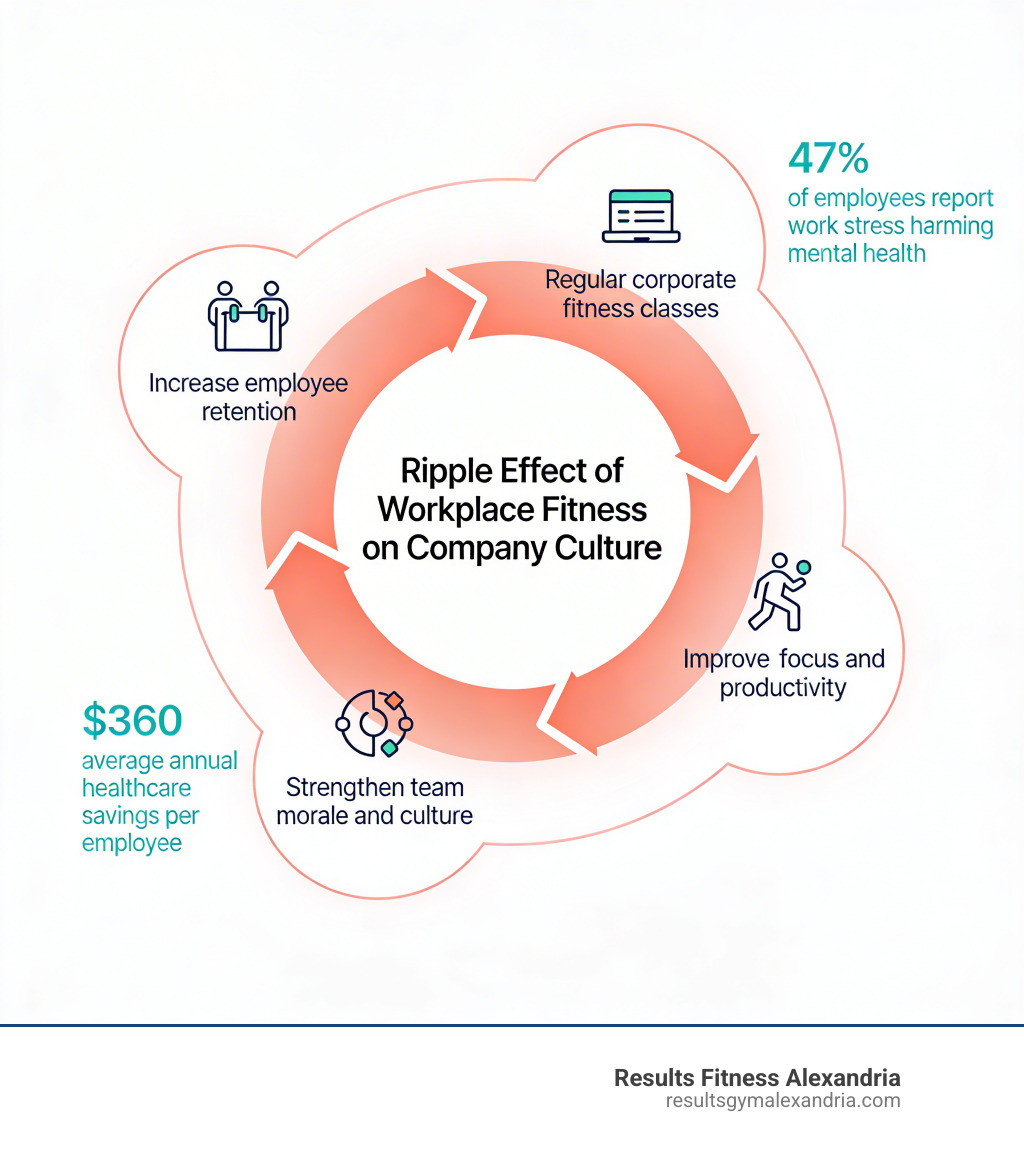
Work is stressful. Nearly half of all employees — 47% — say work stress is actively hurting their mental wellbeing. And the physical toll is just as real. Most office workers sit for hours, move very little, and rarely carve out time to exercise.
That’s a problem for employees. But it’s also a problem for you, the employer.
Chronic illness and unhealthy habits cost the healthcare system $2.9 trillion every year. And when half of all workers say they’d leave their job for better benefits, a well-designed wellness program isn’t just a nice perk — it’s a retention strategy.
The good news? A consistent, well-run fitness program can make a measurable difference. Research shows that employee wellness programs reduce healthcare costs by an average of $360 per employee per year. And the impact on mood, focus, and team connection can be just as significant.
This guide walks you through everything: the benefits, the class types, how to launch a program, and how to keep employees actually showing up.
I’m Jennifer Rapchak, Fitness Director at Results Fitness Alexandria and a certified personal trainer with over 14 years of experience designing and leading group fitness programs — including corporate fitness classes for teams of all sizes and fitness levels. In the sections ahead, I’ll share what actually works based on real-world experience.
Glossary for corporate fitness classes:
Why Corporate Fitness Classes are a Strategic Business Investment

Investing in corporate fitness classes isn’t just about “feeling good”—it’s a calculated move to protect your most valuable asset: your people. When we bring fitness into the workplace, we aren’t just burning calories; we are dismantling the barriers that lead to burnout.
According to the American Psychological Association, the psychological impact of movement is profound. 53% of adults report feeling better about themselves after exercising, while 35% see a mood improvement and 30% feel significantly less stressed. In a high-pressure office environment, these aren’t just “soft” benefits; they are the foundation of a focused, resilient workforce.
There are at least 10 benefits of group fitness classes that translate directly to the bottom line, ranging from improved accountability to higher energy levels. When your team exercises together, they stop being a collection of individuals in cubicles and start becoming a cohesive unit.
Reducing Healthcare Costs and Absenteeism
Chronic illnesses and sedentary behaviors are expensive. They cost healthcare providers and employers trillions annually. However, the American College of Sports Medicine notes that well-implemented wellness programs can decrease healthcare costs by an average of $360 per employee per year.
By offering corporate fitness classes, you are investing in preventive health. Active employees have stronger immune systems, lower blood pressure, and better cardiovascular health, which translates to fewer sick days and lower insurance premiums over time.
Boosting Morale and Employee Retention
In today’s job market, benefits matter as much as salary. A 2024 Maven report found that half of all workers are willing to walk away from their current roles for better benefits. By integrating group exercise programs into your company culture, you show employees that you value their life outside of their output.
This builds a sense of loyalty and “work-life wellness.” When an entry-level staffer and a senior executive are both sweating through the same circuit, it levels the playing field and fosters a unique brand of camaraderie that you simply can’t get in a boardroom.
| Metric | Employer ROI | Employee Outcome |
|---|---|---|
| Stress | Lower turnover & fewer errors | 30% reduction in stress levels |
| Health | $360 savings per employee/year | Reduced risk of chronic illness |
| Engagement | Higher productivity & focus | Improved memory & clear thinking |
| Culture | Stronger team bonding | Increased job satisfaction |
Popular Types of Corporate Fitness Classes for Every Team
Not every team wants a high-intensity workout at 8:00 AM, and not every office has the space for a full gym. The beauty of modern corporate fitness classes is their flexibility. Whether you have a small local team in Alexandria or a sprawling hybrid workforce, there is a format that fits.
Choosing the right style is essential. You can refer to this health guide to different group fitness classes to see how various formats impact the body and mind differently.
Onsite Yoga and Mobility Corporate Fitness Classes
For teams that spend eight hours a day hunched over laptops, yoga and mobility are game-changers. These sessions focus on “deskercise”—movements designed to reverse the “office slouch” by opening the chest and strengthening the posterior chain.
Beyond the physical, yoga is a powerful tool for mental wellbeing. Research published in Molecular Diversity Preservation International (MDPI) suggests that exercising even one day per week can positively impact mental health. Yoga provides a “nervous system reset,” allowing employees to return to their desks with a clear head and better posture.
High-Intensity Interval Training (HIIT) Corporate Fitness Classes
If your team is competitive and short on time, HIIT is the answer. These classes involve short bursts of intense activity followed by brief rest periods. They are incredibly time-efficient, often requiring only 30 minutes to deliver a full cardiovascular and metabolic boost.
We find that HIIT is excellent for team challenges. Nothing builds a bond quite like finishing a tough set of mountain climbers together. To see how these fit into a workday, check out a typical group fitness class schedule to see how sessions can be blocked out during lunch hours or immediately post-shift.
How to Implement a Successful Workplace Exercise Program
Launching a program requires more than just hiring a trainer and hoping people show up. To ensure longevity and high participation, you need a structured approach.
First, you must set SMART goals. According to research on goal achievement, fewer than one-quarter of goals actually include a plan for measurement. Don’t just say “we want to get fit.” Instead, aim for “50% employee participation in bi-weekly classes over the next six months.”
For a deeper dive into the logistics, our ultimate guide to group fitness classes covers everything from class etiquette to what to wear, which can be a helpful resource to distribute to your staff during the launch.
Selecting the Right Instructors and Equipment
The success of your program hinges on the quality of your group fitness instructors. You need professionals who are not only certified but also skilled at modifying exercises for different fitness levels.
Safety is paramount. Ensure your provider handles liability waivers and follows strict safety protocols. If space is an issue, many effective corporate fitness classes require nothing more than a yoga mat and a cleared-out conference room.
Supporting Hybrid and Remote Employees
In the modern workplace, “onsite” isn’t the only option. To keep remote workers engaged, offer live-streaming versions of your onsite classes.
We also recommend encouraging “active breaks.” Tools like a Pomodoro timer can remind employees to take five minutes every hour to stretch or walk. For smaller, tight-knit remote departments, small group fitness training via video call can provide the personalized attention and social connection they might be missing while working from home.
Maximizing Engagement and Overcoming Participation Barriers
The biggest hurdle for any corporate program is “the mid-point slump”—where initial excitement fades and attendance drops. To combat this, you need to make fitness fun and rewarding.
Gamification is a powerful motivator. Use leaderboards for step challenges or “fitness bingo” where employees earn points for trying new classes. Incentives don’t have to be expensive; even small prizes, extra PTO hours, or “wellness swag” can drive engagement.
Exercise also has a direct impact on the work itself. Harvard Medical School notes that exercise can improve memory and help you think more clearly. Remind your team that by taking 45 minutes for a small group training session, they aren’t “losing” work time—they are becoming more efficient so they can get their work done sooner.
Measuring Success and Program ROI
To justify the program to stakeholders, you must track the data. Key metrics include:
- Participation Rates: Who is showing up and how often?
- Absenteeism: Has there been a drop in sick days since the program started?
- Employee Surveys: Do employees feel more energized and satisfied?
- Retention: Are employees staying with the company longer?
Understanding the logistics, such as how much group fitness instructors make, can also help you budget effectively for the long term.
Frequently Asked Questions about Corporate Fitness
How much do corporate fitness programs typically cost?
Most programs cost between $3 and $7.50 per employee per month ($36–$90 per year). This typically includes access to a mobile app, class instruction, and health challenges. Some companies choose to subsidize local gym memberships, while others invest in a fully managed onsite program.
What are the best ideas for small office exercise programs?
If you don’t have a gym, start small:
- Walking Meetings: Take the conversation outside.
- Desk Stretch Series: Send a weekly email with three stretches for neck and back pain.
- Resistance Band Kits: Provide bands that employees can keep in their desk drawers.
- Lunch-and-Learns: Host workshops on nutrition or stress management.
How can we encourage unmotivated employees to participate?
The key is to lower the barrier to entry. Offer low-impact options like “Stretching for Beginners” so no one feels intimidated. Ensure your leadership team—CEOs and Managers—attends the classes. When employees see the boss in a yoga pose, it gives them “permission” to prioritize their own health.
Conclusion
Building a healthier workplace doesn’t happen by accident. It requires a commitment to provide the tools, time, and culture that make wellness possible. Whether it’s through high-energy HIIT or a restorative yoga session, corporate fitness classes bridge the gap between a stressful workday and a thriving life.
At Results Fitness Alexandria, we specialize in creating an environment where everyone—from the fitness novice to the seasoned athlete—feels welcome. We offer a wide range of group classes, expert personal training, and even childcare to make sure there are no excuses left standing in the way of your goals.
Ready to see how we can transform your team’s energy? We invite you and your employees to experience our community firsthand. Grab a free 1-day pass to try our amenities and see why the right atmosphere makes all the difference.