
Circuit Training Classes: Master Your Workout 2025
Why Circuit Training Classes Are Perfect for Busy Fitness Seekers
Circuit training classes offer a time-efficient way to get a complete workout by moving through different exercise stations with minimal rest between activities. Here’s what makes them so effective:
What Circuit Training Classes Include:
- Multiple exercise stations (typically 6-10 different exercises)
- Timed intervals (usually 30-90 seconds per station)
- Minimal rest periods (0-15 seconds between exercises)
- Full-body workouts combining strength and cardio
- All fitness levels welcome with exercise modifications available
Key Benefits:
- Complete workout in 30-60 minutes
- Burns calories during AND after exercise
- Builds both strength and endurance
- Social, motivating group environment
- No need to plan your own routine
Research shows that circuit training keeps your heart rate liftd throughout the session, leading to significant calorie burn and improved cardiovascular health. The variety of exercises targets different muscle groups while the group setting provides accountability and motivation that many people struggle to find on their own.
As Jennifer Rapchak, Fitness Director at Results Fitness Alexandria with over 14 years of personal training experience, I’ve seen how circuit training classes transform people’s fitness journeys by making workouts both efficient and enjoyable. My background as a certified Les Mills instructor in SPRINT, CXWORX, and Advanced BodyPump has shown me that the structured variety of circuit training keeps members engaged while delivering real results.
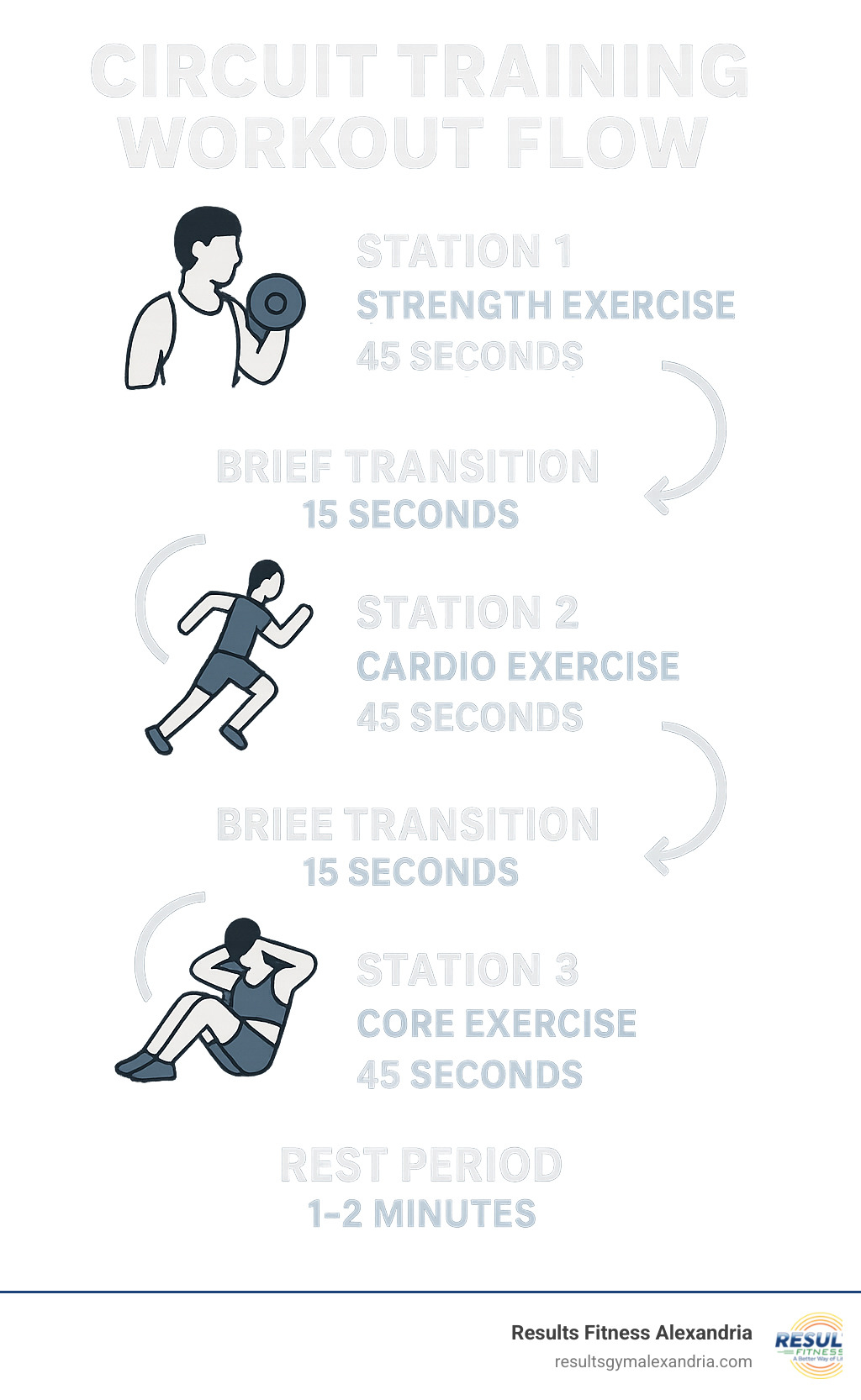
Quick circuit training classes terms:
What Exactly is Circuit Training?
Think of circuit training classes as your fitness playground. Instead of doing the same exercise for long stretches, you move from one activity to another, keeping things fresh and exciting. Picture this: you start with squats at one station, then quickly move to push-ups, followed by jumping jacks, and so on. It’s like having multiple mini-workouts rolled into one efficient session.
The magic happens in the structure. Each exercise becomes a “station” where you’ll work for a specific time (usually 30-60 seconds) or complete a set number of repetitions. The key is minimal rest between stations – just enough time to grab your water and move to the next exercise. This continuous movement keeps your heart pumping while challenging different muscle groups.
What makes circuit training so brilliant is its purpose. You’re not just building strength or just doing cardio – you’re doing both simultaneously. While your legs recover from those squats, your arms take over with push-ups. This smart approach ensures full-body engagement without completely exhausting any single muscle group.
The beauty of Functional Fitness shines through circuit training. Every movement prepares your body for real-life activities, whether you’re lifting groceries, chasing after kids, or climbing stairs. It’s fitness that actually transfers to your daily life.
The Key Components of a Circuit Workout
Understanding what makes circuit training classes tick will help you maximize every session. Let’s break down the essential elements:
Work periods form the heart of your circuit experience. You’ll typically spend 30-90 seconds at each station, though some classes use repetition counts instead. The goal isn’t to pace yourself like a marathon – you want to work with good intensity while maintaining proper form.
Rest periods might seem minimal, but they’re strategically planned. Between individual exercises, you’ll have just 0-15 seconds – barely enough time to transition. After completing a full circuit, you’ll get a well-deserved 1-minute break before diving into the next round. This timing keeps your heart rate in the sweet spot for maximum benefits.
Most circuits feature 8-10 different stations, ensuring variety and comprehensive muscle engagement. You might encounter bodyweight exercises, free weights, or cardio bursts – each targeting different areas of your body.
The number of rounds or cycles depends on your class length and intensity level. Expect to complete the entire circuit 1-3 times, with some classes featuring multiple shorter circuits instead of one long sequence.
Exercise sequencing is where the instructor’s expertise really shines. They’ll typically alternate between upper body, lower body, and core work, or mix Cardio bursts with Strength Training movements. This intelligent design allows muscle groups to recover while keeping your overall intensity high – it’s like having a personal trainer plan your perfect workout flow.
The Powerful Benefits of Joining Circuit Training Classes

Joining circuit training classes offers a treasure trove of benefits that extend far beyond just physical fitness. We’ve seen how these dynamic workouts can transform lives, both inside and outside the gym. Here are some of the powerful advantages:
- Improved Strength: By incorporating a variety of resistance and bodyweight exercises, circuit training challenges your muscles in new ways, leading to significant gains in strength. You’ll build lean muscle mass and tone up what you’ve already got, making everyday tasks feel easier.
- Improved Cardiovascular Health: The minimal rest periods between exercises keep your heart rate liftd throughout the session. This continuous cardiovascular demand is excellent for strengthening your heart and lungs, improving your stamina, and boosting your overall endurance. Studies show impressive Cardiovascular responses to circuit training, helping you go harder for longer and even prepare for events like running races or triathlons.
- Significant Calorie Burn: Because you’re constantly moving and engaging multiple muscle groups, circuit training classes are incredibly effective for burning calories. The intense cardiovascular workout is brilliant for burning excess body fat. Plus, the muscle you build will increase your metabolism, helping you burn more calories even at rest.
- Time Efficiency: In today’s busy world, time is precious. Circuit training is arguably the most time-efficient way to get a full-body workout. Without the long rest periods of traditional weightlifting, you can complete a comprehensive strength and cardio session in just 30-60 minutes. It’s perfect for anyone with a packed schedule who still wants to prioritize their health.
- Muscle Toning: Beyond just building strength, the varied exercises in circuit training help to sculpt and tone your physique. You’ll work all major muscle groups, contributing to a more defined and athletic look.
- Social Motivation: One of the most unique and often underestimated benefits of circuit training classes is the social element. You’re working out alongside others, often in small groups, which fosters a friendly and encouraging environment. This camaraderie can be a huge motivator, making you more likely to keep coming back. As we often say, it’s easier to push through a tough set when your workout buddies are cheering you on! This social aspect aligns perfectly with the Benefits of Group Fitness Classes.
Is Circuit Training Effective for Weight Loss?
Absolutely! Circuit training classes are a fantastic tool for weight loss, and here’s why:
- Metabolism Boost: The combination of strength training and continuous movement lifts your heart rate and engages multiple muscle groups simultaneously. This intense activity significantly boosts your metabolism, turning your body into a more efficient fat-burning machine.
- Post-Workout Calorie Burn (EPOC): Known as Excess Post-exercise Oxygen Consumption, or “afterburn,” circuit training often leads to a higher EPOC compared to steady-state cardio. This means your body continues to burn calories at an liftd rate even after your workout is finished, as it works to recover and repair muscles.
- Building Lean Muscle: Muscle tissue is more metabolically active than fat tissue. By building lean muscle mass through circuit training, you increase your resting metabolic rate, meaning you burn more calories throughout the day, even when you’re not exercising.
- Combining Cardio and Resistance: This blend is the secret sauce for weight loss. While cardio burns calories during the workout, resistance training builds muscle that burns calories 24/7. Circuit training effectively combines both, giving you the best of both worlds for sustainable weight loss.
- Consistency: Because circuit training classes are so engaging, varied, and time-efficient, people are more likely to stick with them. Consistency is the single most important factor for long-term weight loss success.
If you’re looking for comprehensive Weight Loss Solutions, circuit training should definitely be on your radar.
Circuit Training vs. HIIT: Understanding the Key Differences
It’s easy to confuse circuit training classes with High-Intensity Interval Training (HIIT) – they’re like fitness cousins that people often mix up at family gatherings! Both involve intense bursts of exercise, but understanding their differences can help you choose the right workout for your goals.
The biggest difference lies in workout intensity. HIIT is all about going absolutely all-out – we’re talking 95-100% of your maximum effort – followed by complete rest periods. Think of it like sprinting as fast as you possibly can, then walking or even sitting down to recover. Circuit training, while definitely challenging, operates more like a steady jog with hills. You’re working at a medium to high intensity throughout, but you’re not necessarily gasping for air after every single exercise.
Pacing tells another part of the story. HIIT is about explosive, short bursts where you give everything you’ve got, then recover almost completely before the next round. Circuit training classes focus more on maintaining that liftd heart rate throughout the entire session – it’s like keeping a steady rhythm on a dance floor rather than doing occasional breakdancing moves.
The rest periods really set these workouts apart. In HIIT, those rest breaks are generous – often longer than the actual work periods – because you need time to recover from that maximum effort. Circuit training keeps rest minimal between exercises (usually just 0-15 seconds to grab water or transition), with longer breaks only after completing an entire round of exercises.
When it comes to workout duration, HIIT sessions are typically shorter affairs lasting 15-25 minutes, precisely because that maximum intensity is tough to sustain. Circuit training sessions usually run 30-60 minutes since you’re working at a more manageable, though still challenging, pace throughout.
Your fitness goals might help you decide between the two. HIIT leans heavily toward anaerobic conditioning – building explosive power and speed. Circuit training offers a broader fitness buffet, combining aerobic endurance with muscular strength in one efficient package.
| Metric | Circuit Training | HIIT (High-Intensity Interval Training) |
|---|---|---|
| Intensity | Medium to High (continuous, liftd heart rate) | Maximum (95-100% effort in short bursts) |
| Work Interval | 30-90 seconds per exercise | Typically 30 seconds or less |
| Rest Interval | 0-15 seconds between exercises; 1 min after circuit | Ample rest, often longer than work interval |
| Total Workout Time | 30-60 minutes | 15-25 minutes |
| Focus | Blend of strength, endurance, cardio | Anaerobic conditioning, explosive power |
Both workouts have their place in a well-rounded fitness routine, but circuit training’s blend of strength and cardio makes it particularly appealing for people who want maximum bang for their workout buck!
Your First Circuit Training Workout: What to Expect and How to Prepare
Walking into your first circuit training classes can feel like stepping into exciting new territory. Don’t worry – we’ve all been there! The anticipation, the wondering if you’ll keep up, the curiosity about what lies ahead. Here’s the good news: you’re going to love it, and we’re here to make sure you feel completely prepared.
Your circuit training class will begin with a gentle but purposeful warm-up. Think light jogging in place, some arm circles, leg swings, and dynamic stretches that get your blood flowing and muscles ready. This isn’t just going through the motions – it’s your body’s way of saying “let’s do this safely!”
Once everyone’s warmed up, your instructor becomes your friendly guide through the trip ahead. They’ll walk you through each exercise station, demonstrating proper form and explaining the timing. You might think you need to memorize everything instantly, but relax! Your instructor will be your constant companion throughout the class, offering gentle reminders and encouragement at every turn.
Then comes the main event – moving through those exercise stations with energy and purpose. You’ll tackle each exercise for the designated time, transition smoothly to the next, and feel that satisfying rhythm of continuous movement. Your instructor acts as both coach and cheerleader, helping with form tweaks and offering modifications when needed.
The class wraps up with a well-deserved cool-down featuring static stretches that help your muscles relax and your heart rate gradually return to normal. It’s that peaceful moment where you realize you just accomplished something pretty amazing.
Common Exercises in Circuit Training Classes
The variety in circuit training classes keeps things fresh and your body guessing. You’ll encounter movements that work every muscle group, often in ways that feel surprisingly natural and functional.
Bodyweight exercises form the foundation of many circuits because they’re incredibly effective and need no equipment. You’ll likely encounter squats that build powerful glutes and quads, push-ups that strengthen your entire upper body and core, and lunges that challenge your legs while improving balance. Planks will test your core stability, while jumping jacks provide those heart-pumping cardio moments. Don’t be surprised to see burpees – that full-body exercise that combines a squat, push-up, and jump into one challenging movement. Mountain climbers bring dynamic energy to your plank position, and classic crunches round out your core work.
Free weight exercises add another dimension to your workout. Kettlebell swings create powerful full-body movements that especially target your glutes and hamstrings. Dumbbell rows strengthen your back muscles, while medicine ball slams let you build explosive power (and maybe release some stress too!). You might also try goblet squats with a dumbbell held at your chest or overhead presses that challenge your shoulders and triceps.
The beauty lies in how these exercises combine to create workouts that never feel repetitive or boring.
What Equipment Do I Need?
Getting ready for circuit training classes is refreshingly simple. You don’t need to invest in expensive gear or worry about forgetting something crucial.
For your personal preparation, focus on comfortable, breathable clothing that moves with you – nothing too loose that might get in the way or too tight that restricts movement. Good athletic shoes are your most important investment, providing the stability and support you need for all those dynamic movements. Don’t forget your water bottle because you’re definitely going to work up a sweat, and bring along a towel for those moments when you need to wipe your brow.
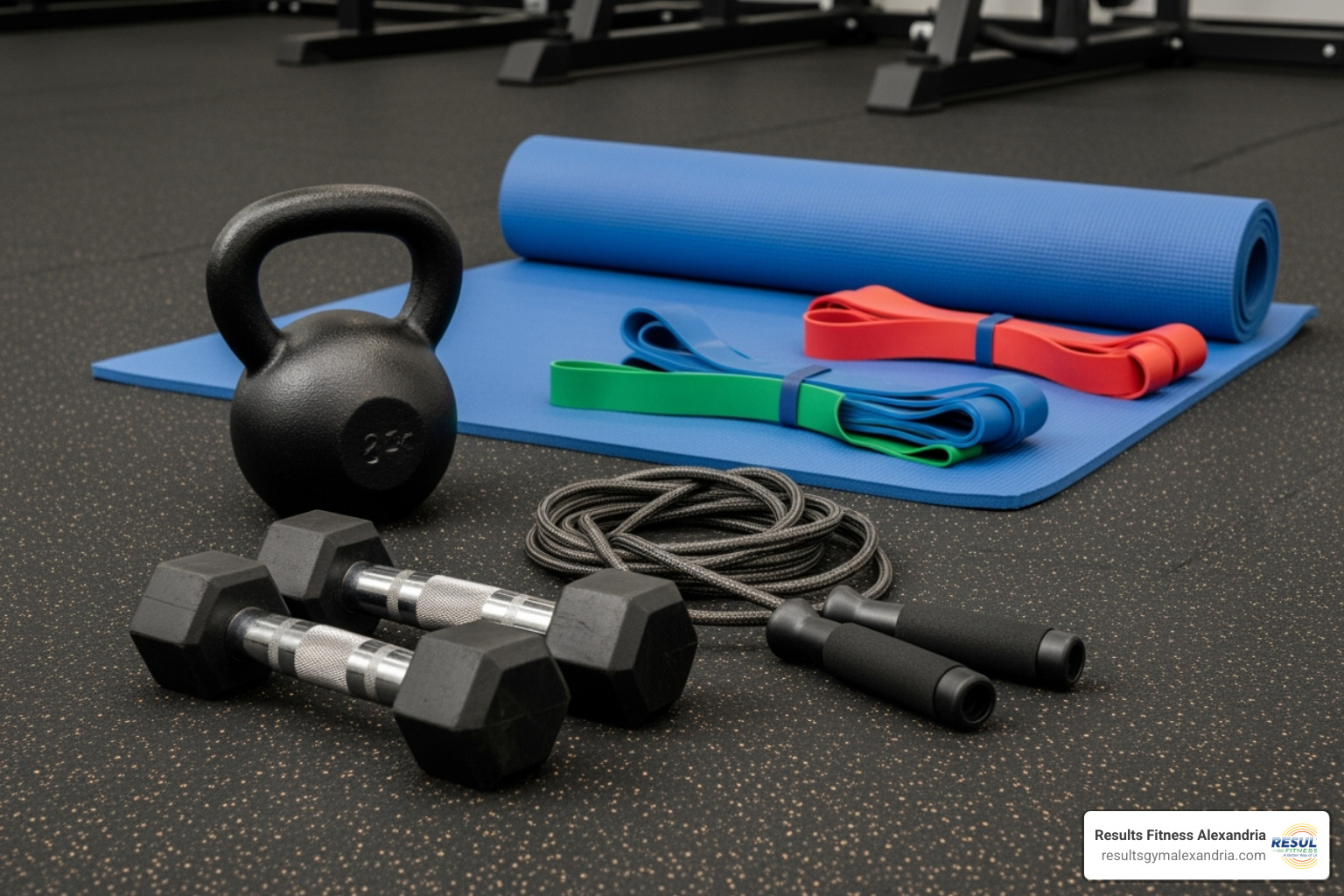
Everything else? We’ve got you covered! Our circuit training classes feature a full array of equipment designed to keep your workouts interesting and effective. You’ll find dumbbells in various weights to match your strength level, kettlebells for those dynamic movements, and resistance bands that add challenge in surprising ways. Stability balls bring an element of balance and core engagement, while jump ropes provide classic cardio fun. Step platforms add vertical challenge with step-ups and box jumps.
The best part? You simply show up and use whatever equipment the circuit calls for that day.
Who Can Participate in circuit training classes?
Here’s what makes circuit training classes truly special – they welcome absolutely everyone. Whether you’re returning to fitness after years away, dealing with an injury, or training for your next athletic challenge, there’s a place for you in these classes.
The self-paced nature of circuit training means you’re always in control of your intensity. Feeling challenged by an exercise? Slow down, reduce your range of motion, or ask for a modification. Feeling strong and energetic? Push harder, move faster, or try the advanced version. It’s like having a personalized workout within a group setting.
Scalability is built into every exercise. Our instructors excel at offering modifications and progressions that meet you exactly where you are. That intimidating push-up can become a knee push-up or wall push-up. That basic squat can transform into a jump squat when you’re ready for more challenge.
Communication with your instructor makes all the difference. Always let them know about any injuries, limitations, or concerns before class begins. This isn’t about holding you back – it’s about helping you move safely and effectively while still getting an amazing workout.
Many instructors will introduce you to the Rate of Perceived Exertion (RPE) scale, a simple 1-10 system that helps you gauge how hard you’re working. This self-awareness tool ensures you’re challenging yourself appropriately without overdoing it, making every session both safe and effective.
Frequently Asked Questions about Circuit Training
We get so many thoughtful questions about circuit training classes from people who are curious but maybe a little nervous about trying something new. Let me share the answers to the most common ones we hear:
How often should I do circuit training?
The sweet spot for most people is 2-3 circuit training sessions per week. This gives you enough challenge to see real improvements in your strength and fitness, while still allowing your muscles the recovery time they need to repair and grow stronger.
Think of it this way – your muscles actually get stronger during rest, not just during the workout itself. If you’re doing full-body circuits (which most of ours are), those rest days between sessions are when the magic happens. Your body rebuilds those muscle fibers stronger than before.
That said, everyone’s different. Some people feel fantastic with three sessions a week, while others find two is their perfect rhythm. The most important thing is listening to your body. If you’re feeling overly tired or unusually sore, it might be your body’s way of asking for an extra day off. There’s no shame in taking it – consistency over the long haul beats burning out after a few weeks.
How long does a typical circuit class last?
Most circuit training classes run between 30 to 60 minutes from start to finish. This includes everything – your warm-up to get your body ready, the main workout moving through all the stations, and a proper cool-down to help your muscles relax.
The actual time you’re moving through the circuit stations is usually around 30 to 45 minutes. The rest of the time is spent on that important warm-up (getting your blood flowing and muscles loose) and cool-down (bringing your heart rate back down and stretching out those hard-working muscles).
This is one of the things I love most about circuit training – you get a complete, comprehensive workout without having to spend hours at the gym. Perfect for busy parents, working professionals, or anyone who wants maximum results in minimum time.
Can I build significant muscle with circuit training?
Absolutely! You can definitely build muscle with circuit training classes, though it might look a little different than what you’d get from traditional heavy weightlifting. Circuit training is particularly excellent at building what we call “functional muscle” – lean, strong muscle that helps you in everyday life, plus great muscular endurance.
The continuous movement and shorter rest periods train your muscles to work harder for longer periods. You’ll definitely see muscle toning and definition, and many people build impressive strength through circuit training alone.
Now, if your main goal is to bulk up with maximum muscle mass (like a bodybuilder), you might want to complement your circuit training with some dedicated heavy lifting sessions using our Strength Training equipment. Traditional muscle building often involves lifting very heavy weights for fewer reps with longer rest periods.
But here’s what’s great about circuit training – you can adjust it to match your goals. Want to focus more on muscle building? Choose heavier weights during the strength stations. Want to emphasize endurance and toning? Go with moderate weights and focus on perfect form. Your instructor can help you find the right balance for what you’re trying to achieve.
Start Your Circuit Training Journey Today
Ready to transform your fitness routine? Circuit training classes offer everything you’ve been looking for in a workout – they’re incredibly time-efficient, effective for all fitness levels, and deliver real results that you can see and feel.
Think about it: where else can you get a complete strength and cardio workout, burn serious calories, build lean muscle, and have fun with others – all in just 30-60 minutes? The beauty of circuit training lies in its simplicity and effectiveness. You don’t need to spend hours at the gym or worry about planning complicated routines. Just show up, follow your instructor’s guidance, and let the circuit do the work.
Whether you’re a busy parent trying to squeeze fitness into your day, a beginner who feels intimidated by traditional gym settings, or someone looking to break out of a workout rut, circuit training classes meet you exactly where you are. The supportive group environment means you’ll never feel alone in your fitness journey, and the scalable nature of the exercises ensures you’ll always be appropriately challenged.
The benefits we’ve discussed – improved strength, better cardiovascular health, significant calorie burn, and that amazing post-workout energy boost – aren’t just theoretical. They’re real changes you’ll experience as you make circuit training a regular part of your routine.
To experience these dynamic workouts firsthand, explore our Group Fitness Classes and see how circuit training can transform your fitness routine. With our free 1-day pass, you can try out everything we offer and find why circuit training classes have become such a popular choice for people who want maximum results in minimum time.
Your fitness journey starts with a single step – and we’d love to help you take it. Come see what all the excitement is about!