
Cardio exercise for stamina: Top 5 Unbeatable Workouts
Why Building Cardiovascular Stamina Is Your Gateway to Better Health
Cardio exercise for stamina is the foundation of feeling energetic throughout your day and sustaining physical activity without getting winded. Whether you’re chasing after your kids, climbing stairs, or simply want to feel more vibrant, improving your cardiovascular endurance is key to open uping that sustained energy.
Top cardio exercises for building stamina include:
- Walking and jogging – Low-impact foundation builders
- Cycling and elliptical – Joint-friendly endurance boosters
- Swimming – Full-body stamina developer
- HIIT workouts – Time-efficient stamina improvers
- Stair climbing – Functional strength and endurance
- Jump rope – Coordination and cardiovascular power
- Rowing – Upper and lower body endurance
The science is clear: cardiovascular endurance refers to your heart, lungs, and blood vessels’ ability to supply oxygen to muscles during sustained physical activity. When you improve this capacity, everyday tasks become easier and you’ll have energy left over for the things you love.
As someone who has struggled with finding time or motivation to exercise, you’re not alone. The good news? Building stamina doesn’t require hours at the gym or complicated routines.
I’m Jennifer Rapchak, Fitness Director at Results Fitness Alexandria, and I’ve spent over 14 years helping people find effective cardio exercise for stamina through personalized training and group fitness programs. My experience with HIIT, core conditioning, and diverse workout formats has shown me that the right approach makes all the difference in building lasting endurance.
Learn more about cardio exercise for stamina:
Why Building Cardiovascular Stamina Matters
Think about the last time you felt genuinely vibrant and ready to tackle your day. That feeling is what happens when your cardiovascular system is working efficiently.
Cardio exercise for stamina isn’t just about lasting longer on the treadmill; it’s about upgrading your body’s internal delivery system. When you build cardiovascular endurance, you teach your heart, lungs, and blood vessels to work together like a well-oiled machine.
-
A Stronger Heart & Better Circulation: Regular cardio strengthens your heart, allowing it to pump more blood with less effort. This leads to a lower resting heart rate and healthier blood pressure. Improved circulation means oxygen-rich blood reaches every corner of your body more effectively, making everyday tasks feel easier.
-
Increased Energy Levels: It seems counterintuitive, but using energy through exercise gives you more energy in return. As your cardiovascular system becomes more efficient, you’ll find yourself with energy reserves you didn’t know you had.
-
Mental Well-being and Better Sleep: Cardiovascular activity releases endorphins, nature’s mood boosters, which help reduce stress and anxiety. This, in turn, leads to improved sleep, leaving you feeling refreshed and restored.
-
Weight Management: Cardio makes your body a more efficient calorie-burning machine. Combined with healthy eating, it helps you manage your weight and feel more comfortable and confident.
-
Reduced Risk of Chronic Disease: Perhaps most importantly, you’re investing in your future. Regular cardio dramatically reduces your risk of developing conditions like type 2 diabetes, certain cancers, and metabolic syndrome.
Building cardiovascular stamina is about reclaiming your vitality. For those ready to take a comprehensive approach, exploring The Benefits of Functional Fitness: Why It’s More Than Just a Workout can show you how cardio fits into a complete wellness picture.
Top Cardio Exercises for Stamina: From Beginner to Advanced
Finding the right cardio exercise for stamina is easier when you choose activities you enjoy. Whether you prefer a steady rhythm on a machine or bodyweight movements at home, there’s a perfect match for your fitness level. The key is to start where you are and gradually build your endurance.
Don’t be afraid to experiment until you find what works for you. For more detailed guidance, check out The Top 5 Cardio Exercises to Boost Your Endurance.
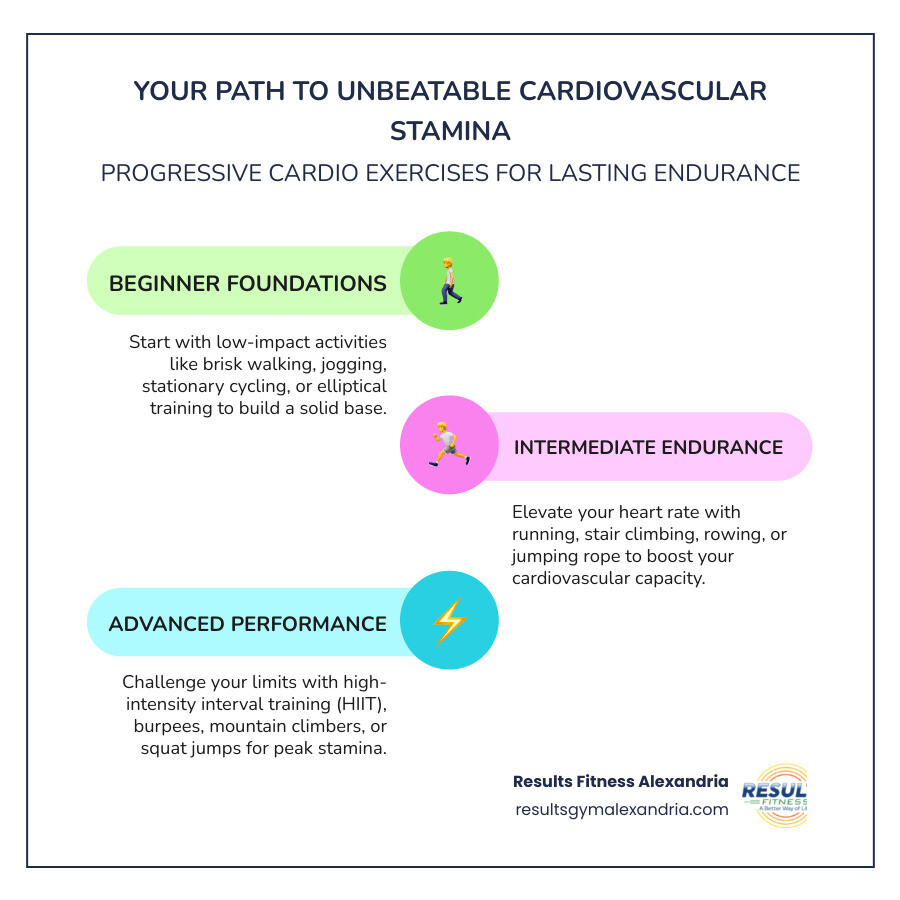
Foundational Exercises for Beginners
These exercises are perfect for building your cardiovascular base while being gentle on your joints. Start with 10-15 minute sessions and add a few minutes each week.
- Brisk walking: A powerful, low-impact way to build a foundation. It raises your heart rate and improves circulation. Progress by adding hills or increasing your pace.
- Jogging: Use a walk-jog approach to build aerobic capacity without burnout. Start by jogging for one minute and walking for five, gradually flipping the ratio as you adapt.

- Stationary cycling: An excellent cardio exercise for stamina without impact stress on your joints. You control the resistance and speed, making it easy to progress at your own pace.
- Elliptical training: Provides a full-body workout that mimics running but is much easier on your joints. The handles engage your upper body for a comprehensive session.
- Water-based activities: The water’s resistance strengthens muscles while its buoyancy supports your body. Swimming or water jogging can transform your fitness. Find more about How Aquatics Classes Can Transform Your Workout Routine.
Intermediate Workouts to Boost Endurance
Once you’ve built a solid foundation, these exercises will push your cardiovascular system harder and deliver noticeable improvements in your energy.
- Running: A natural progression from jogging. Focus on increasing either your distance or your speed, but not both at once.
- Stair climbing: Translates directly to real-world strength, building powerful leg muscles while challenging your heart and lungs.
- Rowing machine workouts: Engage nearly every muscle group for an outstanding cardiovascular challenge. Proper form is key: drive with your legs first, then engage your core and arms.
- Jumping rope: A seriously effective and fun way to lift your heart rate. Start with 30-second intervals to build coordination and stamina.
- Group fitness classes: The social element can be highly motivating. An instructor guides you through varied intensity levels while the group energy keeps you going. Learn more in 10 Benefits of Group Fitness Classes.
Advanced Cardio for Peak Performance
Ready to take your stamina to the next level? These advanced techniques deliver impressive results in less time.
- High-Intensity Interval Training (HIIT): Alternates short bursts of all-out effort with brief recovery. Due to its intensity, limit HIIT to 1-2 times per week. Explore Why You Should Give HIIT Exercises a Try for guidance.

- Burpees: Combine strength and cardio in one challenging movement. They are tough but incredibly effective for building cardio exercise for stamina.
- Mountain climbers: Start in a plank position and rapidly alternate bringing each knee toward your chest. This exercise torches calories while strengthening your core.
- Squat jumps: Add explosive power to the basic squat. This plyometric exercise builds leg strength while providing an intense cardiovascular challenge.
Proper form is critical as intensity increases, so consider working with a fitness professional to ensure you’re performing these advanced movements safely.
How to Structure Your Cardio Exercise for Stamina
An effective cardio exercise for stamina routine is about working smart, not just hard. The key principles are consistency and progression. It’s better to do 20 minutes of cardio three times a week than to go all-out for two hours once a month.
To keep improving, you must apply the overload principle—gradually asking more of your cardiovascular system. This could mean adding five minutes to your walk or increasing the resistance on the bike.
We structure cardio programs using the FITT principle: Frequency (how often), Intensity (how hard), Time (how long), and Type (what exercise). Adjusting these four variables helps you create a routine that grows with you.
For those new to exercise, our guide on Creating an Effective Workout Routine for Beginners offers additional support.
Understanding Intensity for Your Cardio Exercise for Stamina
Getting the intensity right is crucial for cardio exercise for stamina. You want to challenge your heart and lungs enough to adapt without overdoing it.
Your Maximum Heart Rate (MHR) is a useful guide. Estimate it by subtracting your age from 220. From there, you can find your target heart rate zones.
- Zone 1 (50-60% of MHR): For warm-ups and recovery.
- Zone 2 (60-70% of MHR): The sweet spot for building your aerobic base.
- Zone 3 (70-80% of MHR): A challenging but sustainable pace.
- Zones 4 & 5 (80-100% of MHR): For short, intense efforts.

For most stamina-building, you’ll spend time in zones 2 and 3. The Target heart rate zones provide more detail.
No heart rate monitor? Use the Rate of Perceived Exertion (RPE) scale (0-10). Moderate-intensity feels like a 3-4 (you can talk), while vigorous-intensity is a 5-7 (you can only speak short sentences). RPE is a great tool because it accounts for how you feel on any given day.
Weekly Guidelines and Progression
The American Heart Association recommendations suggest 150 minutes of moderate-intensity activity or 75 minutes of vigorous-intensity activity per week. This breaks down to 30 minutes of moderate exercise five days a week.
If you’re just starting, begin slow. Ten-minute sessions are a great starting point. First, gradually increase duration. Once you can comfortably do 30 minutes, you can gradually increase intensity by walking faster or adding hills.
This patient approach builds stamina for life. Consistency trumps intensity every time, especially when establishing new habits. Finding a rhythm where exercise is a regular part of your routine is the key to sustainable cardio exercise for stamina.
Fueling and Professional Guidance
Building cardio exercise for stamina requires more than just workouts; proper nutrition and expert guidance are essential for success. Your body needs the right fuel to adapt and improve, and professional support can help you avoid injury and stay on track.
Fueling and Recovery for Your Cardio Exercise for Stamina
What you eat and drink directly impacts your performance and recovery. Simple, whole foods are your best bet.
- Pre-Workout Fuel: Complex carbohydrates like oatmeal or a banana provide steady energy for longer sessions. For shorter, moderate workouts, you may not need to eat beforehand.
- Post-Workout Recovery: Within two hours of finishing your cardio exercise for stamina, consume a mix of lean protein and carbs to help muscles repair and grow stronger. A smoothie, Greek yogurt, or a turkey sandwich are great options.
- Hydration: Even mild dehydration can sap your energy. Sip water throughout your workout. For sessions over an hour, consider drinks with electrolytes to replace what you lose through sweat.
Your post-workout meal provides the raw materials for your body to rebuild stronger. Don’t skip it!
When to Consult a Fitness Professional
While this guide provides a great start, professional guidance is sometimes essential for safety and success.
- Pre-existing health conditions: Talk with your doctor before starting a new exercise program, especially if you have heart disease, diabetes, or joint issues.
- Personalized plans and realistic goals: A trainer can design a plan that fits your fitness level and schedule, helping you progress safely and effectively.
- Proper form and technique: This is critical for preventing injury and maximizing results. A trainer can correct your form before bad habits lead to problems.
- Special circumstances: If you’re recovering from a cardiac event, medical clearance and supervised exercise are crucial. There is also excellent guidance for exercise after stroke available.
Seeking professional guidance is a smart training strategy that pays dividends in the long run. For a comprehensive approach, consider Maximizing Results: Integrating Strength Training into Your Cardio Routine.
Frequently Asked Questions about Cardio for Stamina
Many of our members at Results Fitness Alexandria are eager to improve their cardio exercise for stamina. Here are answers to some of the most common questions we hear.
How long does it take to build stamina with cardio?
The great news is that you’ll feel a difference relatively quickly. Most people notice noticeable improvements within 2-3 months of consistent training. The key is consistency—regular, moderate workouts are more effective than occasional, intense ones.
Gradual progression is also vital. Start where you are, not where you think you should be. If 10 minutes of walking is your starting point, that’s perfect. Aim for 12 minutes next week. This steady approach prevents burnout and builds lasting stamina.
How do I measure my cardiovascular endurance?
Tracking progress is motivating. Here are a few simple ways to measure how your cardio exercise for stamina is paying off:
- VO2 max: The gold standard for cardiovascular fitness, it measures the maximum oxygen your body can use during exercise. Many fitness trackers now provide reliable estimates.
- Field tests: The 1.5-mile run test is a classic assessment where you time how long it takes to complete the distance. As your stamina improves, your time will decrease. The Mayo Clinic’s fitness assessment guide offers more details.
- The talk test: A simple, real-time check. If you can hold a conversation, you’re in the right zone for building endurance. If you can only manage a few words, you’re at a vigorous intensity.
- The RPE scale: As your fitness improves, activities that once felt like an 8 out of 10 on the RPE scale will start to feel like a 6. This is a clear sign of progress.
Can I build stamina with just bodyweight cardio at home?
Absolutely! You don’t need expensive equipment to build stamina. The key is focusing on intensity and progression with bodyweight exercises.
- Effective exercises: Jumping jacks, high knees, burpees, and mountain climbers are all fantastic for getting your heart rate up and building endurance.
- Create a circuit: Perform an exercise for 45-60 seconds, rest for 15-30 seconds, then move to the next. After completing a circuit of 4-5 exercises, rest for a minute and repeat.
- Progression: As you get stronger, increase the intensity by moving faster, jumping higher, or choosing more complex variations (e.g., moving from squats to jump squats).
Consistency is key, whether you’re at home or in the gym. Aim for 3-5 sessions per week to see significant improvements.
Conclusion
Your journey to better health through cardio exercise for stamina is an achievable and rewarding goal. Building cardiovascular endurance is about more than just running longer—it’s about changing your daily life by strengthening your heart, boosting your energy, improving your mood, and promoting better sleep.
The beauty of cardio exercise for stamina is its accessibility. Whether you’re starting with gentle walks, trying intermediate rowing sessions, or pushing yourself with HIIT, there’s a perfect fit for you. The best exercise is always the one you’ll stick with.
Consistency trumps perfection. It’s better to do 20 minutes of movement you enjoy three times a week than to burn out on sessions you dread. Find activities that bring you joy.
Building stamina is one of the best investments you can make in your future self. Every workout is a deposit in your health bank, paying dividends in energy and vitality for years to come.
At Results Fitness Alexandria, we’re here to support you with experienced trainers and a welcoming community. We can help you find the right cardio exercise for stamina to meet your goals.
Ready to feel the difference? Take advantage of our free 1-day pass and explore our state-of-the-art cardio equipment and start your journey today! Your future, more energetic self will thank you.